The Poseidon Temple is where Fisch stops being a chill fishing loop and starts demanding mastery. This is not a sightseeing location or a casual side quest; it’s a locked endgame dungeon tied directly to ocean dominance, high-tier progression, and some of the strictest unlock conditions in the game. If you’re hearing players talk about being “Poseidon-ready,” this is the content they mean.
Unlike standard islands or NPC unlocks, the Poseidon Temple exists as a layered progression check. You’re gated by fishing power, biome access, and specific interaction triggers that punish rushed builds and underleveled rods. The game is quietly testing whether you actually understand Fisch’s systems, not just whether you’ve grinded XP.
What the Poseidon Temple Actually Is
The Poseidon Temple is a hidden ocean structure tied to late-game sea zones, designed around extreme fish resistance, long reeling windows, and aggressive stamina drain. You don’t stumble into it by accident; reaching it requires deliberate setup and awareness of spawn timing, positioning, and environmental cues. This alone filters out players who rely on brute-force luck instead of mechanical consistency.
Inside, the Temple functions as both a lore endpoint and a mechanical gatekeeper. Every interaction is tuned around endgame expectations, meaning weaker rods physically cannot keep up with the pull strength of the fish guarding access. If your line snaps instantly or stamina evaporates, that’s the game telling you you’re not ready yet.
#1 Best Overall
- 🎣 Warm Prompt: Fishing rod + reel (No Lures & Line) include Only Include 1 Fishing Rod +1 Fishing Reel.
- 🎣 Perfect elasticity, high density Carbon fiber mixed with fiberglass makes your fishing pole hard & durable.
- 🎣 Stainless Steel Hooded Reel Seat is anti-seawater corrosion; EVA Fore Grip for comfort. The telescopic fishing rod is portable, and closed length design is convenient carrying around. Power: Medium.
- 🎣 Instant anti-reverse; Power drive gears equipped for high strength. Deep aluminium spool with double color and one line hole; More short body with large spool and large line capacity. Line capacity: mm/M 0.20/240 0.25/200 0.30/140. Model: HA 3000; Gear ratio: 5.2:1.
- 🎣 It's the best gift to send father, son, husband,fiance, boyfriend for the upcoming Christmas. Want to buy single rod or single reel? Please search the ASIN: B07FT29RJS or B07YFP8KV3.
Why the Poseidon Rod Changes the Entire Meta
The Poseidon Rod isn’t just another stat upgrade; it fundamentally alters how fishing works at high difficulty. Its pull stability, stamina efficiency, and resistance scaling trivialize mechanics that feel impossible with mid-game rods. Fish that used to require perfect reeling and RNG-heavy behavior become consistent, controllable catches.
From a progression standpoint, this rod is a force multiplier. It massively reduces time-to-catch on high-value fish, stabilizes late-game grinding routes, and unlocks access to content that’s otherwise mathematically unrealistic. Once you have it, the game shifts from survival fishing to optimization fishing.
Why Skipping the Poseidon Rod Is a Progression Trap
Many players try to brute-force endgame zones without the Poseidon Rod, assuming patience can replace power. That’s a mistake. The stamina drain and resistance scaling on late-game fish are designed around Poseidon-tier stats, meaning you’re fighting the math, not the mechanics.
Without this rod, you burn consumables faster, lose rare fish to snap failures, and waste hours on low-efficiency attempts. The Poseidon Rod isn’t optional for completionists; it’s the key that turns Fisch’s endgame from frustrating to efficient, and the Temple is the proving ground that decides if you earn it.
Free tools Windows power users keep installed
One-click scans. No signup required.
Full Prerequisites Checklist Before You Can Unlock Poseidon Temple
Before you even think about entering the Poseidon Temple, you need to understand one thing: this isn’t a single switch you flip. The Temple unlock is a layered progression gate that checks your stats, your inventory, and your understanding of Fisch’s endgame systems. Miss even one requirement, and the game hard-stops you without explanation.
Treat the list below as non-negotiable. If any box isn’t checked, you’re not unlocking the Temple, no matter how clean your reeling mechanics are.
Endgame Rod Requirement (Poseidon-Tier or Equivalent)
You cannot access the Poseidon Temple using early or mid-game rods, full stop. The Temple entrance is guarded by fish with pull strength and resistance scaling that instantly overwhelms anything below endgame-tier rods. If your line snaps within the first second or stamina drains before you can stabilize, your rod doesn’t meet the hidden threshold.
While the Poseidon Rod itself is earned inside the Temple, you’ll still need a top-tier precursor rod with high pull stability and stamina efficiency just to survive the unlock sequence. Players attempting this with “almost endgame” rods waste hours on failed attempts due to invisible stat checks.
Recommended Free Tools
Required Ocean Progression and Area Unlocks
The Poseidon Temple is not accessible from the standard map flow. You must have fully unlocked the late-game ocean zones tied to high-difficulty weather events and deep-water fishing nodes. If you haven’t encountered aggressive current zones or multi-phase fish behaviors, you’re not far enough.
This progression isn’t tracked via a quest log. The game checks whether you’ve accessed and fished in specific endgame waters, meaning skipping zones or rushing levels can soft-lock your Temple access without warning.
Specific Weather and Time Conditions
The Temple does not appear under normal conditions. You’ll need to reach the correct ocean location during a specific weather state and time window, both of which are RNG-influenced but predictable if you’re paying attention. Attempting the unlock during clear weather or incorrect time cycles does nothing, even if you’re standing in the right spot.
Veteran players track weather patterns across multiple server hops to force the correct conditions. This is intentional design, filtering out players who rely on static farming instead of adaptive routing.
Windows Errors? Fix Them Before They Spread
Repair common Windows errors and clear accumulated junk for a smoother, more stable PC - no reinstall needed.Free scan · no reinstallOutdated Drivers Are Slowing You Down
One free scan finds every outdated or missing driver and matches the right update for your exact hardware.Free scan · exact hardware matchKey Item Collection (Non-Optional)
Unlocking the Poseidon Temple requires collecting specific late-game items tied to high-resistance fish or rare event spawns. These items do not drop consistently and are heavily affected by rod stats and reeling precision. Failing catches here isn’t bad luck; it’s usually a stat mismatch.
If you’re missing even one required item, the Temple interaction simply fails with no feedback. This leads many players to believe the unlock is bugged when, in reality, their checklist isn’t complete.
Minimum Stamina and Resistance Thresholds
Even if you reach the Temple entrance, the game performs a silent stat validation when you attempt the final interaction. Your stamina pool and resistance scaling must exceed a minimum threshold, or the guarding fish becomes mathematically impossible to reel.
This is why consumable stacking alone doesn’t work. Buffs help, but they cannot compensate for permanently low base stats. If you’re relying on stamina food just to survive normal endgame fishing, you’re underprepared for the Temple.
Quick wins for a faster PC:
Repair Windows errors before they cause bigger problemsFix Now →Fix the driver behind crashes, sound loss and screen glitchesFind Drivers →Common Mistakes That Lock Players Out
The most common failure point is assuming the Temple is a visual discovery rather than a mechanical unlock. Standing at the correct location without the proper items, stats, or conditions achieves nothing. Another frequent mistake is attempting the unlock immediately after server hopping without rechecking weather and time alignment.
Players also underestimate how strict the rod requirement is. If your setup barely handles late-game fish elsewhere, it will fail here. The Poseidon Temple doesn’t reward persistence; it rewards preparation and system mastery.
Rank #2
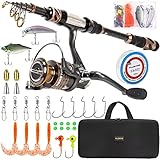
- 🎣 Warm Prompt: Full Kit with Carrier Case Include 1 Fishing Rod + 1 Fishing Reel + Fishing Line + Various Fishing Lures + Fishing Hooks + Some Necessary Accessories + Carrier Bag.
- 🎣 Full Kit with Carrier Case is special made for novice, including nessary accessories for fishing. You can use it without buying any other accessories from anywhere.
- 🎣 PLUSINNO Telescopic Fishing Rod are constructed with High Density 24-Ton Carbon Fiber reinforced with Fiberglass Composite for power,elasticity and durability; The Welded Stainless Steel Guides with Ceramic Inserts for superior casting distance and accuracy while dissipating heat more efficiently which delivers excellent durability with monofilament, fluorocarbon and braided lines; The Exquisite Reel Seat Is Made of Corrosion Resistant CNC Machined Aluminum for a solid base and all-day.
- 🎣 HA 3000 Fishing Reel With CNC Machine Cut Collapsible Handle, Left / Right Interchangeable The Rod Import Adjustable Full Metal Screw Reel Seat,12+1 Corrosion Resistant Smooth Ball Bearings,Line capacity: mm/M 0.20/240 0.25/200 0.30/140, Gear ratio: 5.2:1.
- 🎣 It's the best gift to send father, husband, fiance, boyfriend for the upcoming Christmas Thanksgiving Day.
Exact Poseidon Temple Location & How to Access the Hidden Entrance
Once you’ve cleared the invisible stat checks and item requirements, the game finally allows you to interact with the world itself. This is where most players still fail, because the Poseidon Temple is not marked, surfaced, or visible under normal exploration rules. You are not looking for a dungeon door; you are triggering a conditional world reveal.
Where the Poseidon Temple Actually Spawns
The Poseidon Temple is located in the Abyssal Sea region, directly beneath the open water zone between the Maelstrom Spire and the outer reef line. On the map, this area looks empty, which is intentional. There is no surface structure, glow, or NPC hinting that anything exists below.
You must approach from open water, not from a coastline or island edge. Entering from the wrong angle prevents the spawn trigger from loading, even if all other conditions are met.
Depth, Time, and Weather Alignment
The entrance only becomes interactable at extreme depth during a narrow time window. You need to descend until the ambient lighting shifts to deep-blue darkness, then stop descending entirely. If you continue moving downward, the interaction window is skipped.
The correct time cycle must be active, and storm-class weather must already be in progress before you arrive. Changing weather mid-descent does not work. This is why experienced players wait offshore and only dive once the storm is fully locked in.
Triggering the Hidden Entrance
Once positioned correctly, equip your highest-tier rod and remain completely stationary. After several seconds, the water current will subtly change direction. This is the only visual cue the game gives you.
The Tool Desk
Outbyte Driver Updater FREEScan for outdated or missing drivers - takes under a minuteDriver Scan →Outbyte PC Repair FREERepair Windows errors before they cause bigger problemsFix Now →Interact at that moment. If all prior checks passed, the Poseidon Temple materializes instantly, pulling you into a separate interior instance. If nothing happens, the game is not bugged; one of your prerequisites failed validation.
Why Players Miss the Entrance Repeatedly
Most failed attempts come from overcorrecting movement. Sprint-swimming, camera spinning, or minor depth adjustments reset the interaction timer without notifying the player. Treat this like a precision mechanic, not exploration.
Another common mistake is arriving with stamina already partially drained. The game checks your max stats, but it also checks your current stamina state. Entering exhausted can silently block the entrance trigger, even if your build is otherwise perfect.
Step-by-Step: Unlocking the Poseidon Temple (All Required Actions Explained)
At this point, you should already understand where the temple is hidden and how unforgiving the entrance trigger can be. What follows is the exact action sequence the game expects, with no guesswork and no wasted dives. Treat this like a scripted raid entry, not freeform exploration.
Do these 3 things before closing this tab:
1Scan for outdated or missing drivers - takes under a minute2Repair Windows errors before they cause bigger problems3Fix the driver behind crashes, sound loss and screen glitchesStep 1: Lock In Your Prerequisites Before You Dive
Before touching the water, confirm three things: max stamina, a high-tier rod equipped, and storm-class weather already active. The game snapshot-checks your stats when the entrance loads, not when you interact, so pre-buffing after diving does nothing.
Do not rely on weather items mid-run. If the storm starts after you begin descending, the entrance flag will never arm, even if the visuals look correct.
Step 2: Approach From Open Water at the Correct Angle
Line yourself up between the Maelstrom Spire and the outer reef, entering from open sea with no landmass behind you. The game uses approach vector checks, and entering from a coastline invalidates the spawn logic entirely.
Keep your camera steady and swim at a consistent pace. Sudden directional changes increase the odds of the entrance failing to initialize, especially on lower-end servers.
Step 3: Descend to the Exact Depth Threshold
Dive until the lighting transitions to deep-blue darkness and ambient sound drops out. This is the depth marker, not a specific meter count, so watch the environment rather than your UI.
Once you hit this layer, stop descending completely. Even a small downward input can push you past the interaction band and force a full reset.
Step 4: Full Stop, Full Focus
Equip your highest-tier rod and remain motionless. No camera spinning, no micro-adjustments, and no stamina recovery inputs.
After several seconds, the water current will subtly shift. This is your only confirmation that the hidden interaction window is live.
What’s actually slowing this PC down?
Pick the symptom - the matching free tool is one click away.
Rank #3
- 🎣 Warm Prompt: Full Kit with Carrier Case: 1 Fishing Rod + 1 Fishing Reel + Fishing Line + Various Fishing Lures + Fishing Hooks + Some Necessary Accessories + Carrier Bag.
- 🎣 Full Kit with Carrier Case is specially made for novice, including necessary fishing accessories. With this set, there is no need for you to buy any other fishing stuff.
- 🎣 Perfect elasticity, high density Carbon fiber mixed with fiberglass makes your fishing pole hard & durable. Stainless Steel Hooded Reel Seat is anti-seawater corrosion; EVA Fore Grip for comfort. The telescopic fishing rod is portable, and closed length design is convenient carrying around. Power: Medium.
- 🎣 Instant anti-reverse; Power drive gears equipped for high strength. Deep aluminium spool with double color and one line hole; More short body with large spool and large line capacity. Line capacity: mm/M 0.20/240 0.25/200 0.30/140. Model: HA 3000; Gear ratio: 5.2:1.
- 🎣 It's the best gift to send father, husband, fiance, boyfriend for the upcoming Christmas Thanksgiving Day.
Step 5: Interact to Enter the Poseidon Temple
Interact immediately once the current changes. If all validations pass, the Poseidon Temple will materialize and pull you into a sealed interior instance.
If nothing happens, assume a failed prerequisite rather than a bug. The system is strict, and even one missed condition forces a reset.
Step 6: Surviving the Temple Interior
Inside the temple, movement discipline matters just as much as the entry. Environmental hazards punish sprinting, and several pressure-based traps are tuned to catch players who rush.
Fish encounters here have inflated aggression ranges and tighter hitboxes. Prioritize positioning over speed and let RNG work in your favor rather than forcing casts.
Step 7: Unlocking the Poseidon Rod
The Poseidon Rod is obtained by completing the temple’s final challenge, which tests stamina management, cast timing, and endurance under pressure. Entering with partial stamina or a lower-tier rod drastically increases failure rates.
Once unlocked, the Poseidon Rod immediately stands out for progression. Its superior control, consistency in high-turbulence zones, and efficiency during long fishing sessions make it a defining endgame tool rather than a cosmetic trophy.
Common Failure Points That Still Catch Veterans
The most common mistake is impatience. Players interact too early, drift slightly during the current shift, or descend one input too far and silently fail the check.
Another frequent issue is server instability. If latency feels inconsistent, leave and rejoin before attempting the dive. Precision mechanics like this are far less forgiving under lag, and repeated failures are often technical, not mechanical.
Free tools Windows power users keep installed
One-click scans. No signup required.
Temple Challenges, Mechanics & Common Failure Points to Avoid
Once the Poseidon Temple instance locks in, the game shifts from hidden checks to execution-heavy mechanics. This is where Fisch stops forgiving sloppy habits and starts testing whether you actually understand stamina flow, cast discipline, and environmental reads. Most failures here aren’t caused by bad RNG, but by players treating the temple like standard overworld fishing.
Multi-Phase Temple Layout and Progression Gates
The temple is divided into sequential chambers, each acting as a hard validation gate. You cannot brute-force progress or skip phases, even with top-tier rods. Every room clears only after its internal condition is met, whether that’s stabilizing a turbulent pool, surviving an aggro spike, or completing a timed cast sequence.
The key mechanic is forced pacing. If you rush casts or overcorrect your aim, the room quietly resets without an obvious failure screen. When progress feels stalled, assume you’re violating an unseen condition rather than waiting on luck.
Environmental Hazards That Punish Movement Errors
Several floors use current drift zones that subtly nudge your character during casts. Micro-movement breaks cast stability and immediately lowers catch consistency. This is why sprinting or camera flicking between casts causes sudden streaks of failed interactions.
The Tool Desk
Outbyte PC Repair FREEClear out junk files and repair common Windows errorsFree Scan →Outbyte Driver Updater FREEScan for outdated or missing drivers - takes under a minuteDriver Scan →Treat every chamber like a no-input challenge. Lock your camera, stop moving entirely, and let stamina regen naturally. Players who “feather” movement inputs out of habit often fail without realizing why.
Aggro-Based Fish Encounters and Hitbox Traps
Temple fish behave differently from open-water encounters. Their aggro range expands after missed casts, and repeated failures tighten hitboxes rather than resetting them. This creates a snowball effect where panic casting makes success statistically worse.
The optimal strategy is patience over volume. Fewer, cleaner casts outperform rapid attempts, especially when stamina dips below 40 percent. If you feel pressured, wait, regen, then re-engage on your terms.
Stamina Management Is the Real Final Boss
The final challenge before the Poseidon Rod heavily weights stamina efficiency. Overcasting, early reeling, or entering with partial stamina all reduce your success window. There is no hidden catch-up mechanic here.
Recommended Free Tools
Veteran players fail by assuming their gear can compensate. Even the best rods lose effectiveness if stamina collapses mid-sequence. Treat stamina like a resource you protect, not something you burn aggressively.
Common Failure Points That Reset the Entire Run
One of the most punishing mistakes is reacting too quickly after chamber transitions. Several rooms require a brief stabilization window before inputs are accepted, and early casts silently invalidate the attempt. Waiting an extra second is safer than rushing.
Rank #4

- UGLY STIK 7’ COMPLETE SALTWATER SPINNING COMBO: Includes 9 pieces of Saltwater tackle to catch multiple Saltwater Species: 20lb. mono double hook bottom rig (2), 3oz. pyramid sinker (2) and 3/0 circle hooks (5).
- UGLY TECH CONSTRUCTION: Telescopic - 2-piece, Ugly Tech construction combines graphite and fiberglass, for a strong, yet sensitive rod. Telescoping. Includes 7 year rod warranty. Gear ratio of 5.1:1 provides smooth operation and mechanical advantage.
- SIZE 50 SPINNING REEL: 1 ball bearing system for smooth operation. Features 6 Stainless Steel guides to provide durability and eliminate insert pop-outs during rough treatment. Pre-spooled with 14lb line.
- FRONT DRAG: Graphite spinning reel with ball bearing; Multi-Stop system helps keep fighting the fish on your terms. EVA handle balances durability and comfort. Right/Left handle position.
- 12-25LB LINE RATING, MEDIUM HEAVY POWER: Ugly Stik Clear Tip delivers strength where you need it. Mono Capacity yd/lb: 280/12 215/14 195/17 (m/mm: 255/0.33 195/0.36 180/.038).
Another overlooked issue is server desync during interior instances. If casts feel inconsistent or stamina drains unpredictably, leave and re-enter the temple rather than forcing progress. The Poseidon Temple does not adapt to unstable conditions, and repeated failures here are often technical, not skill-based.
How to Obtain the Poseidon Rod Inside the Temple
Once you clear the final chamber without triggering a reset, the Poseidon Temple shifts from a survival check into a precision reward sequence. This is where most players mentally relax and immediately fail. The rod is not handed to you automatically, and there is no forgiveness window if you misplay the final interaction.
The Poseidon Rod is obtained through a locked altar sequence that only becomes interactable after every prior chamber condition is satisfied in a single run. Leaving the instance, force-resetting, or letting stamina fully deplete at any point before this stage will silently invalidate the altar.
Triggering the Poseidon Altar Interaction
After the final chamber fish is successfully caught, do not move. The altar does not activate instantly, and early movement cancels the interaction flag before it becomes visible. Wait for the ambient water sound to change and the faint blue particle glow to appear at the center platform.
Approach the altar slowly and interact only once. Spamming the interact key can cause the prompt to disappear, forcing a full temple reset. This is one of the most common failure points even among experienced players.
The Altar Trial and Rod Claim Sequence
Interacting with the altar initiates a short, unmarked stamina check rather than a traditional fishing encounter. You are required to hold position and maintain stamina above roughly 60 percent for several seconds. Any movement, camera snapping, or premature input drains stamina and fails the trial instantly.
PC Slower Than It Used to Be?
A free scan shows the junk files, broken settings and background clutter dragging Windows down - then fixes them in one click.Free scan · Windows 10 & 11Crashes, No Sound, or Screen Glitches?
Random freezes, missing sound and display glitches usually trace back to one bad driver. Find and replace yours safely.Free scan · under a minuteIf successful, the Poseidon Rod materializes directly in front of the altar rather than going to your inventory automatically. You must manually interact with it to claim ownership. Failing to pick it up before leaving the temple results in losing the rod and needing to rerun the entire instance.
Common Mistakes That Cause Players to Lose the Rod
The most frequent error is assuming the altar trial is cosmetic. Players sprint toward the glowing rod or rotate the camera aggressively, unknowingly draining stamina and canceling the sequence. Treat this like the final chamber: no inputs, no movement, no impatience.
Another major issue is entering the altar phase with partially depleted stamina. Even if you passed the last chamber cleanly, stamina does not auto-refill. If you finished the final catch below the threshold, the altar will appear but be impossible to complete.
Why the Poseidon Rod Is Worth the Effort
The Poseidon Rod isn’t just a trophy item. It offers top-tier catch stability, significantly reduced stamina drain per reel cycle, and increased success odds against high-aggro fish. This makes it one of the most efficient progression tools for late-game zones and future temple-tier content.
Quick wins for a faster PC:
Clear out junk files and repair common Windows errorsFree Scan →Scan for outdated or missing drivers - takes under a minuteDriver Scan →Repair Windows errors before they cause bigger problemsFix Now →More importantly, it smooths out RNG-heavy encounters by widening success margins rather than brute-forcing stats. Players chasing rare fish, consistent endgame farming routes, or flawless challenge clears will immediately feel the difference once it’s equipped.
Independent reader supportYour contribution helps us test, update, and keep practical guides available for everyone.Poseidon Rod Stats, Passive Effects & Why It Outclasses Other Rods
Once you’ve survived the altar trial and physically claimed the rod, the real payoff begins. The Poseidon Rod fundamentally changes how late-game fishing feels in Fisch, especially in stamina-gated encounters where most rods start to crumble. This isn’t a marginal upgrade; it’s a mechanical leap that reshapes consistency, risk management, and endgame routing.
Core Stats Breakdown
The Poseidon Rod sits at the top tier for catch stability and stamina efficiency. Its reel strength drastically reduces stamina loss per pull, allowing longer engagements without hitting the red zone. This alone makes high-aggro fish significantly less punishing, even if your timing isn’t frame-perfect.
Hook tolerance is also noticeably wider. Missed micro-adjustments that would normally spike stamina drain or cause line instability are partially forgiven, giving players more room to recover mid-fight. In practice, this turns near-fails into recoverable encounters instead of instant losses.
Hidden Passive Effects You’ll Feel Immediately
Beyond raw stats, the Poseidon Rod carries subtle passive behavior that isn’t clearly labeled in-game. The most impactful is its resistance to aggro spikes, meaning sudden movement bursts from rare or enraged fish are dampened rather than fully applied. This keeps the fight readable instead of chaotic.
There’s also an internal smoothing effect on stamina drain during prolonged reeling. Instead of sharp drops, stamina decreases more gradually, which synergizes perfectly with late-game zones where fights are designed to exhaust you over time rather than burst you down.
Why It Dominates Late-Game and Temple-Tier Content
Most high-end rods in Fisch specialize in one area, either raw power or control. The Poseidon Rod excels at both, which is why it outclasses alternatives in temple runs and rare fish hunts. You’re not forced to choose between aggressive reeling and safe play; the rod supports both without punishing indecision.
This matters most in RNG-heavy encounters. When a fish rolls unfavorable patterns back-to-back, the Poseidon Rod keeps you alive long enough to adapt. Other rods often fail not because of player error, but because their stamina curves are too unforgiving under pressure.
Do these 3 things before closing this tab:
1Fix the driver behind crashes, sound loss and screen glitches2Clear out junk files and repair common Windows errors3Scan for outdated or missing drivers - takes under a minuteBest Value

- ALL-IN-ONE COMPLETE FISHING KIT – Most new anglers waste time and money buying fishing gear piece by piece, only to struggle with mismatched components. This complete fishing pole setup arrives pre‑assembled with a rod, reel, line, baits, fish gripper, pliers, bag, and 2 step‑by‑step manuals – everything pre‑matched, no guesswork. Even with zero experience, start fishing right out of the tackle box – no costly trial and error, no empty‑handed frustration. Perfect for beginners, kids, seniors
- ULTRA-TOUGH PREMIUM FISHING COMBO – 36-ton graphene-reinforced carbon fiber fishing rod (20% lighter, 50% stronger) with stainless steel ceramic guides for smooth, tangle-free line flow. Precision CNC-machined reel seat ensures a tight, stable fit; soft non-slip EVA grip delivers long-lasting comfort. 12+1 corrosion-resistant bearings and 5.21:1 gear ratio provide ultra-quiet, silky-smooth, jam-free retrieval. Multi-disc drag system up to 17.5 lbs stopping power. Ambidextrous handle
- WATERPROOF PORTABLE FISHING BAG -Skip wet rusty gear and messy rummaging. Our high-density tear-resistant waterproof fabric shields your gear from rain, splashes & moisture, stopping rust & bait damage in any weather. Classified compartments organize your telescopic fishing rod, reel, pliers, baits & other fishing accessories, saving you time digging messy gear Lightweight & compact, it's easy to carry by hand, store in car trunks or take on boats, perfect for travel, daily fishing
- COMPLETE FISHING ACCESSORIES KIT – Say goodbye to pricked fingers and slimy hands! Fluoropolymer-coated fishing pliers and lip gripper both feature non-slip handles for secure wet grip and easy one-hand operation. Sharp cutters slice fishing line, jaws remove fishing hooks and split rings. One-finger gripper locks fish with anti-drop lanyard. Pre-loaded tackle box packed with hard baits, soft lures and rigs, perfectly suited for bass, trout and other common fish in freshwater and saltwater
- IDEAL GIFT FOR ALL ANGLERS – The ultimate fishing gifts for men — perfect for dads, husbands, boyfriends, brothers, and all angling enthusiasts from beginners to pros. Ideal for Father’s Day, Valentine’s Day, birthdays, Christmas, Thanksgiving, anniversaries, graduation, and retirement. Fully equipped, portable, and durable for camping, angling adventures. It’s a long‑lasting collectible gift that creates unforgettable memories—a heartfelt investment, not disposable cheap fishing set
Comparison Against Other Endgame Rods
Compared to standard legendary rods, Poseidon trades a small amount of burst reel speed for vastly better stamina control. That trade-off is almost always worth it, since failed catches cost more time than slightly longer fights. In extended farming sessions, this difference compounds fast.
Even against other temple-tier equipment, Poseidon stands out for consistency rather than flash. It doesn’t trivialize content, but it flattens the difficulty curve enough that mastery, not luck, becomes the deciding factor. For progression-focused players, that reliability is the real endgame advantage.
Who Benefits Most From the Poseidon Rod
Completionists chasing ultra-rare fish will feel the upgrade immediately. Fewer failed attempts means tighter farming loops and less downtime resetting zones. The rod rewards patience and precision rather than brute force, aligning perfectly with high-skill play.
It’s also ideal for players pushing future content early. Because the Poseidon Rod widens success margins instead of inflating numbers, it remains viable even as difficulty scales. That long-term value is what truly separates it from every other rod currently available in Fisch.
Optimal Strategies, Progression Tips & Mistakes That Delay Unlocking
Unlocking the Poseidon Temple and earning the Poseidon Rod isn’t about brute force. It’s about sequencing your progression correctly, respecting Fisch’s hidden checks, and avoiding time-wasting habits that quietly lock players out of endgame access. If you’re efficient, this entire process feels deliberate and rewarding. If you’re not, it turns into a grind with no visible progress.
Frontload Your Reputation and Zone Flags
The Poseidon Temple does not unlock off a single action. It checks multiple progression flags tied to late-game zones, NPC reputation, and completed high-tier catches. If you rush straight to the temple without stabilizing these, the door simply won’t respond.
Prioritize maxing reputation in at least one late-game fishing hub before attempting the unlock. This ensures all temple dialogue triggers correctly and prevents soft-locks where NPCs refuse to advance the questline. Reputation farming may feel slow, but skipping it costs more time in the long run.
Farm Required Materials Before Triggering the Temple
One of the most common delays happens after players open the Poseidon Temple but can’t progress inside it. The temple demands specific high-rarity fish and upgrade materials that only spawn under narrow conditions. Entering unprepared forces unnecessary backtracking.
Pre-farm storm-locked fish, deep-water spawns, and time-gated catches before you even approach the temple entrance. Having these ready lets you clear temple objectives in one clean run instead of resetting zones and weather cycles repeatedly.
Optimize Rod Loadouts Instead of Chasing Raw Power
Many players delay their Poseidon Rod unlock by over-investing in burst-focused rods. High reel speed looks good on paper, but temple-tier encounters punish stamina mismanagement far more than low DPS. You’ll lose more attempts to exhaustion than slow fights.
Before unlocking Poseidon, prioritize rods and charms that extend stamina regen and reduce reel drain. This makes the temple trials manageable and prevents failed catches that reset progress flags. Survivability is progression in Fisch, not speed.
Understand Temple Aggro and Encounter Flow
The Poseidon Temple isn’t a pure fishing gauntlet. Certain encounters escalate based on how aggressively you reel, subtly increasing stamina drain and pattern complexity. Players who spam reeling often trigger harder phases unintentionally.
What’s actually slowing this PC down?
Pick the symptom - the matching free tool is one click away.
Play reactively. Let the fish reveal its pattern before committing to full pressure. Controlled reeling keeps encounters predictable and dramatically increases your success rate, especially in the final temple sequences tied to the Poseidon Rod unlock.
Mistakes That Quietly Block the Poseidon Rod
The biggest mistake is attempting the temple too early, then assuming it’s bugged. If prerequisite catches, NPC interactions, or reputation thresholds aren’t met, the game provides no explicit warning. Progress simply stops.
Another common error is skipping dialogue after temple milestones. Several unlock conditions only register after fully exhausting NPC conversations. Speedrunners who mash through text often miss these flags and wonder why the rod doesn’t appear.
Why Efficiency Matters More Than Luck Here
The Poseidon Rod is intentionally gated behind mastery, not RNG. Every delay players experience usually traces back to inefficient prep or misunderstood mechanics. Once you align your progression correctly, the unlock feels surprisingly smooth.
Approach the Poseidon Temple like a systems check, not a loot chase. When everything is in place, the final unlock lands exactly when it should, and the Poseidon Rod immediately justifies the effort. In Fisch, smart progression isn’t optional at the endgame. It’s the difference between stalling out and truly finishing the climb.
Quick Recap
Product prices and availability are accurate as of the date/time indicated and are subject to change. Any price and availability information displayed on Amazon at the time of purchase will apply.



