The fastest way to fix a slow Steam download is to identify what is actually slow. Steam may be waiting for a content server, obeying a bandwidth limit, competing with another download, or spending most of its time decrypting, decompressing, allocating, and patching files on your drive. A low network rate does not automatically mean your internet connection is the problem.
- Check the units: Steam may show bytes per second, while your internet plan uses bits per second. Multiply Steam’s byte rate by eight before comparing it with your plan.
- Open Downloads: click Downloads at the bottom of Steam, or use View > Downloads. Confirm the game is not paused, scheduled, queued behind another item, or limited.
- Watch the bottleneck: if Network Usage is low while Disk Usage or CPU is high, Steam is probably installing or patching. If network, disk, and CPU are all idle, investigate Steam settings, the route to Steam’s content server, or the local network.
- Separate downloads from updates: a small update can take longer than a large fresh download because Steam may need to rebuild large local pack files.
- Run one controlled test: pause other downloads, stop streaming and cloud sync, test Ethernet or a different Wi-Fi band, and compare the local Download Region with two or three nearby regions.
This guide gives you the diagnostic method first, then a reference list of 101 possible causes and practical solutions. They are not 101 equally likely faults: start with the measurable causes near the top.
Read Steam’s download screen correctly
Steam’s displayed speed is not always directly comparable with the number advertised by an internet service provider. Steam may display bytes per second, such as KB/s or MB/s, while ISPs generally advertise bits per second, such as Mbps or Gbps. One byte contains eight bits. For example, 768 KB/s × 8 = 6,144 Kb/s, or approximately 6.144 Mbps.
That conversion is only a starting point. Decimal and binary labels, protocol overhead, the speed-test server, and Steam’s particular content-server route can all produce different numbers. The link speed shown for your PC’s Wi-Fi or Ethernet adapter is also the PC-to-router connection rate, not a guarantee of internet throughput. Valve explains the bytes-versus-bits distinction and Steam’s content-server selection in its download-region and bandwidth guidance.
#1 Best Overall

- 40 Gbps 2000 Mhz High Speed: The Cat 8 ethernet cable support max. 40 Gbps data transfer and 2000 MHz Brandwith, ideal for gaming and streaming, greatly improving upload and download speed, sound, image and resolution quality
- Excellent Anti-interference: The ethernet cable comes with 4 shielded foiled twisted pairs (F/FTP), pure copper core and gold-plated RJ45 connector, reducing interference, noise and crosstalk, making network speed faster and more stable
- Marvelous Durability: Internet cable wrapped with quality cotton braided cord, which makes the LAN cable stronger and more durable. The test proves that this internet cable can be bent at least 10000 times without broken, very suitable for long-term use
- PoE Supported: All lengths of ethernet cord can support the PoE power supply function except 65ft. You don't need additional power supply when installing a PoE camera, which is very convenient and safe
- Wide Compatibility: With the RJ45 Connector, network cable can be perfectly compatible with computers, laptops, modems, routers, PS5, X-Box and other networking devices. It can also be fully backward compatible with Cat7, Cat6e, Cat6, Cat5e, Cat5
| Steam display | Approximate ISP equivalent |
|---|---|
| 10 MB/s | 80 Mbps |
| 50 MB/s | 400 Mbps |
| 100 MB/s | 800 Mbps |
| 768 KB/s | 6.144 Mbps |
Steam can also alternate between a high network rate and zero. During a fresh installation, that often means it has received a block and is writing or processing it. During an update, it may be reading existing files, reconstructing a pack file, and writing replacement data. Look at Network Usage, Disk Usage, and the active drive in Steam’s Download Manager, then confirm the same pattern in Windows Task Manager, macOS Activity Monitor, Linux’s system monitor, or Steam Deck’s system performance view.
The 60-second diagnosis
| What you see | Likely explanation | First test |
|---|---|---|
| Network Usage is low; Disk Usage is high | Installation, allocation, decompression, verification, or patching | Wait for the disk phase, identify the busy drive, and stop competing disk tasks. |
| Network Usage is low; CPU is high | Decryption, decompression, or local patch processing | Close CPU-heavy programs and let Steam finish processing. |
| Network, disk, and CPU are mostly idle | Pause, queue, schedule, bandwidth limit, region, cache, firewall, VPN, proxy, or connection problem | Check the Download Manager and Steam > Settings > Downloads. |
| Every launcher and device is slow | Home network, router, ISP, or wider outage | Test Ethernet, reboot the router, and run a wired speed test. |
| Only Steam is slow | Steam region, CDN route, cache, security software, VPN, proxy, or Steam incident | Test another nearby region, clear the cache, and test without a VPN or proxy. |
| Only one game is slow to update | Large pack-file patch, Workshop or DLC activity, storage, or a game-specific issue | Check Disk Usage and the content type in the Download Manager. |
| It is fast at night but slow in the evening | ISP congestion, shaping, regional CDN demand, or release-day traffic | Compare the same test at different times and with nearby regions. |
| The download finishes but Steam keeps working | Final installation, file verification, or patching is still running | Do not repeatedly restart Steam; check CPU and disk activity. |
Five safe fixes to try first
1. Remove an accidental Steam limit
Open Steam > Settings > Downloads and inspect Limit Download Speed, or the equivalent bandwidth-limit control in your client. Disable it for testing or choose an unrestricted setting. Confirm the units at the same time: a limit expressed in KB/s is very different from one expressed in Kb/s. Valve documents the control and its unit behavior in its Steam download-limit support article.
2. Test the Download Region methodically
Go to Steam > Settings > Downloads > Download Region. Select the local region first. If it remains slow, test two or three nearby regions, one at a time, with the same game and the same network. Pause unrelated downloads between tests and compare a sustained average rather than a one-second peak.
Steam uses content servers around the world and attempts to select a suitable one based partly on location. A local server can be temporarily congested, while another nearby server may have a better route from your ISP. This does not make a distant region a guaranteed speed upgrade: a faraway choice can add latency or use a worse backbone route. Regional release traffic, major sales, and ISP-to-CDN peering can all change the result. Valve recommends the local region first and nearby alternatives when it is performing poorly; see its official region guidance.
Outdated Drivers Are Slowing You Down
One free scan finds every outdated or missing driver and matches the right update for your exact hardware.Free scan · exact hardware matchWindows Errors? Fix Them Before They Spread
Repair common Windows errors and clear accumulated junk for a smoother, more stable PC - no reinstall needed.Free scan · no reinstall3. Clear the Steam download cache
Use Steam > Settings > Downloads > Clear Download Cache, confirm, sign in again, and retry the download. Valve says this does not remove installed games, but it does require you to log in again. Clearing the cache can repair an abnormal or stuck download; it is not a universal way to increase the maximum speed of a healthy connection. Follow Valve’s cache-clearing instructions.
4. Test the network without competing traffic
Stop other game launchers, video streams, cloud backups, file synchronization, operating-system updates, torrents, and large uploads. Run a speed test under similar conditions, then test Steam over Ethernet if possible. If Ethernet is not available, test close to the access point on 5 GHz, then compare with 2.4 GHz. A strong-looking Wi-Fi icon does not prove that the radio channel is uncongested or that the connection is stable.
5. Check the active drive before blaming the internet
If the Download Manager shows low network activity but the drive is busy, let Steam complete that phase. In Task Manager, sort the Processes view by Disk and CPU, and inspect which physical drive is active. A slow HDD, external USB drive, SD card, nearly full disk, antivirus scan, backup, or another game update can make Steam appear to download slowly even when the internet is functioning normally.
Rank #2

- Cat 6 performance at a Cat5e price but with higher bandwidth
- High Performance Cat6, 30 AWG, RJ45 Ethernet Patch Cable provides universal connectivity for LAN network components such as PCs,computer servers,printers,routers,switch boxes,network media players,NAS,VoIP phones
- Jadaol cat6 standard cable support Cat8 and Cat7 network and provides performance of up to 250 MHz 10Gbps and is suitable for 10BASE-T, 100BASE-TX (Fast Ethernet), 1000BASE-T/1000BASE-TX (Gigabit Ethernet) and 10GBASE-T (10-Gigabit Ethernet)
- UTP(Unshielded Twisted Pair) patch cable with RJ45 gold-plated Connectors and are made of 100% bare copper wire, ensure minimal noise and interference
- The unique flat cable shape allows for a cleaner and safer installation. You can easily and seamlessly make the cable run along walls, follow edges & corners or even make it completely invisible by sliding it under a carpet.
Steam settings, schedules, and queues
The current desktop paths are generally Steam > Settings > Downloads, Steam > Settings > Storage, and View > Downloads. Exact labels and layout can vary by operating system and Steam client release.
- Limit Download Speed: disable it or set it deliberately rather than assuming it is off.
- Download restrictions while playing or streaming: Steam can pause or throttle downloads while a game is running, and streaming-related controls can reduce available bandwidth. Close the game or change the applicable option for a controlled test.
- Automatic-update schedules: inspect any scheduled update window. A game may be waiting because updates are restricted to a particular time.
- Per-game update policy: right-click a game in Library, choose Properties > Updates, and inspect whether it is set to always stay updated, update only when launched, or use a priority setting. Steam introduced additional scheduling controls in Client Beta announcements in December 2024, so do not assume every client has identical labels; consult the Steam client update notes if an option differs.
- Queue order: in the Download Manager, pause irrelevant items and move the game you want to the front. Steam’s Download Manager identifies game content, DLC, Workshop content, and shader pre-caching; a different item may be consuming the connection.
- Hidden-looking work: Workshop subscriptions, shader pre-caching, language packs, high-resolution texture packs, DLC, and preload data can appear to be part of a general update. Inspect the content type before judging the speed of the base game.
- Storage: use Steam > Settings > Storage to see which library is selected. To move an existing installation, select the game and choose Move. The per-game route is Properties > Installed Files > Move Install Folder. Moving an installation avoids downloading it again; Valve documents both routes in its Steam storage guidance.
Network and ISP troubleshooting, in the right order
- Check Steam’s official status and content statistics. The Valve content-download statistics page can provide regional and ISP context, but it does not diagnose your individual PC.
- Stop all other bandwidth-heavy traffic and repeat the test.
- Restart the modem and router. If they are separate, connect the PC directly to the modem temporarily, only if your service supports that arrangement, and test again. If bypassing the router helps, investigate its firmware, QoS, filtering, or hardware.
- Test a known-good Ethernet cable and router port. An Ethernet connection negotiating at 100 Mbps will cap a fast internet plan well below gigabit speeds.
- Test Wi-Fi near the access point. Compare 2.4 GHz and 5 GHz; 2.4 GHz is more vulnerable to congestion, while 5 GHz generally loses strength more quickly through walls. Mesh roaming and powerline adapters can also change the route or add instability.
- Inspect VPN, proxy, PAC-file, parental-control, DNS-filtering, and endpoint-security settings. Test with the VPN or proxy off, not by assuming either one is beneficial.
- Reauthorize Steam in the firewall after a client update. Do not leave the firewall disabled.
- Compare Steam at different times and, if permitted, on another network such as a phone hotspot. A hotspot may itself have data caps or traffic restrictions, so use it as a diagnostic rather than a permanent solution.
- If a school, workplace, hotel, dormitory, or public network is involved, ask its administrator. Managed networks may block required Steam traffic or route it through a proxy; attempting to bypass those controls may violate policy.
Windows network reset commands
On Windows, Microsoft’s Wi-Fi troubleshooting sequence includes the following commands in an elevated Command Prompt:
netsh winsock reset
netsh int ip reset
ipconfig /release
ipconfig /renew
ipconfig /flushdns
Restart Windows afterward and test Steam again. Microsoft treats a full Network reset as a later step because it removes network adapters and resets their settings. The Microsoft Wi-Fi troubleshooting guidance explains the broader sequence.
Firewall reauthorization
If the problem began immediately after a Steam update, exit Steam and remove stale firewall permission entries for the old executable. Relaunch Steam and authorize the new executable when prompted. Valve lists steaminstall.exe, steam.exe, hl.exe, hl2.exe, and steamTmp.exe among executables that may need permission entries refreshed. Use a supported exception rather than permanently disabling protection; see Valve’s firewall instructions.
Advanced tests: VPN, DNS, IPv6, MTU, and ports
These are diagnostic branches, not universal speed fixes:
Do these 3 things before closing this tab:
1Clear out junk files and repair common Windows errors2Scan for outdated or missing drivers - takes under a minute3Repair Windows errors before they cause bigger problems- A VPN may reveal that your ISP has a poor route to a particular Steam content server, but it can also add distance, congestion, latency, or policy problems. Test with it off first.
- Changing DNS can help a resolver or filtering problem, but DNS does not normally increase the raw throughput of an already established download. Flush DNS or compare resolvers only as a controlled experiment.
- Broken IPv6 routing can cause an individual route to perform badly. Test IPv4-only connectivity temporarily, then restore normal settings if there is no measurable improvement.
- MTU problems can cause packet loss or retransmission, especially on tunnels or unusual WAN configurations. Change MTU only when testing shows a path-specific issue; do not copy a random value from a gaming guide.
- Do not blindly forward Steam ports. Ordinary home users should first check outbound firewall permissions and router interference. Valve’s network guidance is more relevant to blocked or managed networks than to arbitrary port-forwarding tweaks.
- Do not use a router DMZ as a Steam speed fix. Valve says Steam does not support connecting through a network DMZ.
Valve’s recommended network troubleshooting order covers Steam status, wired testing, router isolation, firewalls, interfering background programs, and malware checks in its official network article. Its router guidance discusses conditional tests for QoS, stateful inspection, dynamic packet filtering, UPnP, and direct modem connections. Change one thing at a time and restore it if it is not the cause.
Rank #3

- Designed for Outdoor & Direct Burial Installations – Heavy-duty double-shielded Cat8 Ethernet cable minimizes EMI/RFI interference and delivers stable long-distance performance. Waterproof, anti-corrosion PVC jacket allows safe direct burial and reliable use in outdoor or indoor environments.
- 26AWG for Stable High-Load Networks – Thicker 26AWG conductors provide faster, more stable data transmission than standard 32AWG cables. Ideal for high-performance home networks, gaming setups, smart homes, and data-intensive applications.
- F/FTP Shielding & Hyper-Speed Performance: Cat8 Ethernet cable constructed with 4 shielded foiled twisted pairs and 26AWG OFC conductors; supports bandwidth up to 2000 MHz and data transmission speeds up to 40 Gbps, effectively reducing signal interference and ensuring stable connections. Ideal for low-latency gaming, 4K/8K streaming, and high-speed internet connections.
- RJ45 Connectors & Wide Compatibility: Cat8 Ethernet cable with two shielded RJ45 connectors; compatible with networking switches, IP cameras, routers, Nintendo Switch, modems, PS3, PS4, Xbox, patch panels, servers, smart TVs, and more; works with Cat7, Cat6, Cat5e, and Cat5 devices
- Weatherproof & UV Resistant: Outdoor-rated Cat8 Ethernet cable with UV-resistant PVC jacket; withstands direct sunlight, extreme cold, humidity, and hot weather; anti-aging and durable; Includes 18-month support.
Why Steam updates can be slow when the internet is fast
A fresh installation and an update are different workloads. A fresh installation is often dominated by downloading and writing new data. An update may involve reading old files, allocating space, decrypting and decompressing new chunks, rebuilding archives, writing replacement files, and checking the result.
SteamPipe, Steam’s content-delivery system, divides content into chunks of roughly 1 MB, compresses and encrypts those chunks for delivery, and processes them locally. Ideally, only changed chunks are downloaded. However, a game stored in a large pack file may require Steam to construct a new version alongside the old version, copy substantial data, and then replace the original. The network portion can therefore be small while local disk activity is enormous. Valve’s developer documentation on SteamPipe uploads, chunks, compression, and patching explains this behavior.
This is why a 200 MB update can take longer than downloading several gigabytes of a well-structured game. It is also why the download can appear complete while Steam continues installing. Valve explicitly warns that installation can be CPU- and disk-intensive and that the displayed download rate may be reduced to match installation speed, including on Steam Deck; see the Steam installation-performance guidance.
Storage and hardware checks
- HDD versus SSD/NVMe: an SSD usually handles the random reads and writes of patching better than an older mechanical disk. It cannot make your internet connection faster, but it can shorten installation time.
- External USB drives: cable disconnects, USB power management, enclosure limits, and slower random I/O can interrupt or slow installations. Valve warns that external drives can create Steam performance and connection problems. Move the game to an internal library for testing where practical.
- Steam Deck SD cards: SD-card write speed can be the limiting factor. Test the same installation on internal storage if space allows. A faster network will not solve slow writes to a slow card.
- Free space: leave room on the library drive and the system or temporary-file drive. There is no universal rule that every Steam update needs exactly twice the game’s size; the required workspace depends on the game’s file structure and patch.
- Drive health: repeated pauses, disk-write errors, very high latency, or downloads that reset can indicate a failing drive. Back up important data, check health information with the operating system or drive maker’s tool, and test another drive.
- CPU and memory: decompression can use substantial CPU, while low RAM can cause paging. Close virtual machines, browsers with heavy tabs, video tools, compilers, and other intensive programs during the test. On a laptop or Deck, test on AC power and check for thermal throttling.
- Other disk work: backups, search indexing, cloud sync, another game update, and antivirus scanning can all contend with Steam. Pause them temporarily for a controlled comparison.
- Security scanning: modern antivirus and ransomware protection can inspect every changed file. Prefer a narrowly scoped, vendor-supported exclusion or diagnostic mode, restore protection afterward, and never install unofficial Steam cleanup utilities.
Platform-specific considerations
Windows 11 and Windows 10
Use Task Manager’s Performance and Processes views to compare Wi-Fi or Ethernet, CPU, memory, and each physical disk. Check Settings > Windows Update, cloud-sync clients, security notifications, and Settings > Windows Update > Advanced options > Delivery Optimization. Microsoft says Delivery Optimization can use local caches and other PCs for Windows updates and Store apps, so it can consume bandwidth or disk activity during a Steam test.
If Windows points to an outdated or malfunctioning network-adapter driver, Outbyte Driver Updater is an optional way to check for a compatible update; confirm the adapter and create a restore point before changing it.
Windows 10 support ended on October 14, 2025, according to Microsoft. That date does not prove Windows 10 causes a slow Steam download, but current troubleshooting should not describe Windows 10 as a fully supported current platform without that qualification. Avoid registry edits and third-party network optimizer programs.
macOS
Use Activity Monitor’s Network and Disk views, check available storage in System Settings, and inspect VPN, proxy, login-item, cloud-sync, backup, and security software. Steam’s client controls remain conceptually similar, but labels and placement can differ from Windows. Test a wired adapter or a different Wi-Fi band where possible before changing system-wide network settings.
Recommended Free Tools
Rank #4

- Cat 8 Speed, Cat 5/5e Value Enjoy Cat 8 Ethernet cable performance at a Cat 5/5e-level value. With up to 40Gbps speed and 2000MHz bandwidth, this high speed internet cable delivers more bandwidth than standard Cat 5 and Cat 5e cables, helping support smooth gaming, streaming, video calls, large file transfers and everyday wired network use.
- 40Gbps Speed, Wide Compatibility This Cat 8 Ethernet cable supports up to 40Gbps data transfer and 2000MHz bandwidth for fast, reliable internet performance. Standard RJ45 connectors are backward compatible with Cat7, Cat6, Cat6a and Cat5e devices, including routers, modems, switches, gaming PCs, PS5, PS4, Xbox, smart TVs, laptops and printers.
- Stable U/FTP Shielding Each of the 4 twisted pairs is individually wrapped with aluminum foil to help reduce crosstalk, noise, and signal interference. Combined with RJ45 connectors on both ends, the U/FTP design helps maintain cleaner signal transmission for a stable and reliable wired network connection.
- Nylon Braided Durability The nylon braided jacket adds everyday durability while keeping the cable flexible and easy to route. Reinforced construction helps the cord handle bending, pulling and frequent plugging, making it a reliable choice for desks, gaming rooms, home offices and long-term network setups.
- 50ft Reach for More Setups The 50 ft length makes it easier to connect devices across rooms, along walls, under desks or around corners. Great for router-to-PC connections, modem-to-TV setups, gaming consoles, workstations, printers and other home network equipment that needs a longer Ethernet cable.
Linux
Use the Steam Download Manager alongside your distribution’s system monitor or disk tools. Check whether the library is on an HDD, external drive, encrypted or nearly full filesystem, network mount, or slow removable device. Review desktop proxy settings, VPNs, firewall rules, and background package or backup jobs. Avoid deleting Steam manifests or library metadata unless Steam Support or a distribution-specific recovery procedure tells you to do so.
Steam Deck
On Deck, the download may be limited by CPU and disk processing rather than Wi-Fi. SD-card write performance, internal storage space, Wi-Fi interference, and the access point’s band all matter. Compare internal storage with the SD card if possible, test near the router, and use wired connectivity through a suitable dock or adapter for diagnosis. Valve specifically documents CPU- and disk-intensive installation, SD-card write-speed effects, and testing different Wi-Fi bands for Steam Deck.
The 101 reasons Steam downloads can be slow
Use this as a reference after the short diagnosis. Each item is a possible cause, not a claim that it is present on your system. Common means start there; conditional means the symptom should point toward it; advanced means test only when ordinary checks support it; game-specific and platform-specific identify narrower cases.
Measurement and download-state causes
| # | Possible reason | Practical solution |
|---|---|---|
| 1 | Steam shows MB/s while the ISP advertises Mbps. Common | Multiply the byte rate by eight before comparing it with the plan. |
| 2 | The operating system shows the PC-to-router link, not internet throughput. Common | Run a real internet speed test and compare another large download. |
| 3 | The speed test uses a different server or route from Steam. Common | Test another Steam region and compare at similar times. |
| 4 | Steam alternates between downloading and writing files. Common | Watch Network Usage, Disk Usage, CPU, and the active drive. |
| 5 | Another item is ahead of the game in the queue. Common | Pause unrelated items and reorder the queue. |
| 6 | Steam is allocating or installing rather than receiving data. Common | Let the installation phase finish instead of treating it as a network fault. |
| 7 | A small patch requires extensive local file work. Common | Judge patching time separately from the displayed download size. |
| 8 | A preload has downloaded encrypted data but still needs final processing. Conditional | Wait for the release or unlock and final installation phase. |
| 9 | The content server or Steam service is degraded. Conditional | Check Steam status, then test later or try another nearby region. |
Steam settings and queue causes
| # | Possible reason | Practical solution |
|---|---|---|
| 10 | Limit Download Speed is enabled. Common | Disable it in Steam > Settings > Downloads. |
| 11 | The limit is interpreted in the wrong units. Common | Confirm whether Steam displays bytes or bits. |
| 12 | Steam throttles downloads while streaming. Conditional | Turn off the streaming throttle temporarily if it is shown. |
| 13 | Steam pauses downloads while a game is running. Common | Close the game or change the gameplay-download setting. |
| 14 | Automatic updates are restricted to a schedule. Common | Inspect the scheduled-update window. |
| 15 | The game is set to update only when launched. Common | Change the per-game update policy if immediate updates are wanted. |
| 16 | Another game has higher download priority. Common | Reorder the queue or set the desired game to high priority. |
| 17 | Workshop, shader, DLC, or language content is consuming the queue. Common | Inspect the Download Manager’s content indicators. |
| 18 | The selected Download Region is wrong or unusually distant. Common | Select the local region first. |
| 19 | The local region is temporarily congested. Conditional | Test several nearby regions and compare sustained speed. |
| 20 | Steam’s download cache is stale or corrupted. Conditional | Use Clear Download Cache and sign in again. |
| 21 | A changed setting has not taken effect until Steam restarts. Common | Exit Steam fully and relaunch it. |
| 22 | A Steam client update is pending or incomplete. Conditional | Allow Steam to update, then restart the client and PC. |
| 23 | Steam is offline or authentication has not completed. Conditional | Reconnect, sign in, and confirm the game is not in Offline Mode. |
| 24 | The download was manually paused. Common | Resume it in the Download Manager. |
| 25 | The client’s connection-rate or download-limit setting is inappropriate. Common | Recheck Steam > Settings > Downloads. |
Internet, router, and route causes
| # | Possible reason | Practical solution |
|---|---|---|
| 26 | The internet plan itself is slower than expected. Common | Compare the plan with a wired speed test. |
| 27 | Other household users are consuming the connection. Common | Pause other downloads, streams, uploads, and backups. |
| 28 | OneDrive, Dropbox, iCloud, or another sync service is active. Common | Pause synchronization while testing. |
| 29 | Windows or another operating system is downloading updates. Common | Check update activity and wait or schedule it. |
| 30 | Another launcher is downloading in the background. Common | Pause Epic, Xbox, EA, Ubisoft, Battle.net, and similar clients. |
| 31 | Browser video or cloud streaming is consuming bandwidth. Common | Stop high-bandwidth playback during the test. |
| 32 | BitTorrent or another P2P application is active. Common | Exit it completely; Valve specifically warns that P2P software can consume bandwidth. |
| 33 | A saturated upload is causing bufferbloat. Conditional | Stop uploads, cloud backups, livestreaming, or large file transfers. |
| 34 | The Wi-Fi signal is weak. Common | Move closer to the router or test Ethernet. |
| 35 | The 2.4 GHz band is crowded. Common | Test 5 GHz or change the router channel. |
| 36 | The 5 GHz signal is too weak or the mesh is roaming. Conditional | Test near the access point or use Ethernet. |
| 37 | Powerline networking is introducing interference. Conditional | Bypass the powerline adapters and test directly. |
| 38 | Ethernet negotiated at 100 Mbps or lower. Common | Check the adapter link speed, cable, and router port. |
| 39 | The modem or router is in a bad state. Common | Power-cycle the modem and router, then retry. |
| 40 | Router firmware is outdated or malfunctioning. Conditional | Update firmware using the manufacturer’s instructions. |
| 41 | QoS is prioritizing other traffic or misclassifying Steam. Conditional | Temporarily disable or correct QoS for testing. |
| 42 | Stateful inspection is mishandling Steam traffic. Advanced | Temporarily test with the feature disabled, then consult the router vendor. |
| 43 | Dynamic packet filtering is interfering. Advanced | Test without that router feature and restore it if unrelated. |
| 44 | UPnP is malfunctioning. Advanced | Change UPnP only if router troubleshooting points there. |
| 45 | The router is configured as a DMZ host. Conditional | Remove the DMZ configuration; do not use a DMZ as a Steam speed fix. |
| 46 | A dual-WAN router is selecting an unsuitable route. Advanced | Test on a single WAN connection; Valve documents dual-WAN incompatibility. |
| 47 | A hotel, dormitory, airport, or public-network captive portal is incomplete. Conditional | Complete browser authentication before retrying Steam. |
| 48 | A manual proxy or proxy auto-configuration file is intercepting traffic. Conditional | Inspect system proxy settings and temporarily disable the proxy for testing. |
| 49 | A school or workplace network blocks Steam ports or proxies traffic. Conditional | Ask the network administrator; do not attempt unauthorized bypasses. |
| 50 | Firewall permissions became stale after a Steam update. Common | Remove old entries and reauthorize Steam. |
| 51 | Multiple firewall products are filtering the same traffic. Common | Keep one firewall active and remove conflicting security suites. |
| 52 | Antivirus or internet-security software is packet-filtering Steam. Conditional | Use the product’s supported troubleshooting method and restore protection afterward. |
| 53 | Parental controls or DNS filtering are throttling or blocking content delivery. Conditional | Test on an unrestricted network or adjust the filter. |
| 54 | A VPN exit node has a poor route to Steam. Conditional | Test with the VPN off; do not assume a VPN improves speed. |
| 55 | A VPN is routing Steam through a distant country. Common | Select a nearer exit node or disable the VPN. |
| 56 | IPv6 routing is broken or unstable. Advanced | Test IPv4-only connectivity, then restore normal settings if it makes no difference. |
| 57 | DNS filtering or resolver failure is delaying content-server selection. Advanced | Flush DNS, test the ISP resolver, and change DNS only as a controlled experiment. |
ISP, operating-system, security, and background-process causes
| # | Possible reason | Practical solution |
|---|---|---|
| 58 | The network-adapter driver is outdated or malfunctioning. Conditional | Update or reinstall the adapter driver. |
| 59 | Wi-Fi power saving is reducing stability or throughput. Conditional | Test with adapter power saving disabled. |
| 60 | Windows has marked the network as metered. Conditional | Check the metered-connection setting and its effect on updates and apps. |
| 61 | A mobile carrier is capping or deprioritizing hotspot traffic. Conditional | Compare fixed broadband or ask the carrier about tethering limits. |
| 62 | ISP congestion or shaping occurs at particular hours. Common | Test morning, afternoon, and evening; give the ISP timestamps. |
| 63 | ISP-to-Steam CDN peering is poor. Conditional | Test another region, another network, or Ethernet; one speed test does not prove throttling. |
| 64 | A regional ISP or backbone outage affects Steam routes. Conditional | Check ISP and Steam status pages and wait for restoration. |
| 65 | Corporate endpoint software is inspecting or filtering traffic. Conditional | Contact IT or test on a permitted personal network. |
| 66 | Malware, adware, or a compromised network filter is interfering. Conditional | Run reputable security scans and remove only verified threats. |
| 67 | A CPU-heavy application competes with Steam’s decompression or installation. Common | Close browsers, video tools, virtual machines, compilers, and other heavy applications. |
| 68 | Low available RAM is causing paging. Conditional | Close applications and check memory pressure while Steam installs. |
| 69 | Power-saving mode or thermal throttling reduces CPU or storage performance. Conditional | Test on AC power and a normal or high-performance mode; check temperatures. |
| 70 | Windows Delivery Optimization is downloading or uploading Microsoft content. Common | Inspect Settings > Windows Update > Advanced options > Delivery Optimization. |
| 71 | Cloud sync is scanning or uploading the Steam library. Common | Pause sync during the test or exclude the library when appropriate. |
| 72 | Search indexing is reading newly installed files. Conditional | Let indexing finish or pause it temporarily during a controlled test. |
| 73 | Backup software is reading the game library. Common | Pause scheduled backup activity while testing. |
| 74 | Full-disk encryption or endpoint protection adds I/O overhead. Conditional | Compare with the security vendor’s diagnostic mode; do not disable encryption casually. |
| 75 | Antivirus scans every temporary and game file Steam writes. Common | Use a temporary, narrowly scoped vendor-supported exclusion and restore protection afterward. |
| 76 | Controlled Folder Access or ransomware protection blocks writes. Conditional | Review Windows Security notifications and authorize Steam through supported controls. |
| 77 | Antivirus quarantined or repeatedly rescans a game file. Conditional | Check quarantine, restore only trusted files, and verify the game. |
| 78 | The Steam Library folder has permission problems. Conditional | Confirm the account can read and write the library and use Steam’s storage controls. |
| 79 | Files or folders are read-only or otherwise inaccessible. Conditional | Correct permissions and avoid manually changing files while Steam runs. |
| 80 | Steam client files are corrupted. Conditional | As a late-stage repair, refresh or reinstall the client while preserving steamapps; back up first. |
Drive, installation, patching, and game-specific causes
| # | Possible reason | Practical solution |
|---|---|---|
| 81 | The library is on a slow HDD. Common for updates | Move the game to an internal SSD where practical. |
| 82 | The library is on an external USB drive. Conditional | Test or move it to an internal drive. |
| 83 | The game is installed on a slow SD card. Platform-specific | Use faster storage; SD-card write speed can control total installation time. |
| 84 | The drive is almost full. Common | Free space on the library drive and system drive before retrying. |
| 85 | The update needs temporary workspace beyond the advertised download size. Common for updates | Free substantially more space than the download alone requires; the exact amount is game-specific. |
| 86 | The drive is failing or has severe latency. Conditional | Check drive-health data, test another drive, and back up important data. |
| 87 | An older HDD is heavily fragmented. Conditional | Use the operating system’s supported optimization tool for a mechanical drive; do not defragment an SSD as a speed fix. |
| 88 | Steam is installing to a slower library than expected. Common | Inspect the selected Storage library and move the game if necessary. |
| 89 | Temporary files are written to a different, slower drive. Conditional | Watch per-drive activity and identify the busy disk. |
| 90 | Multiple games are patching or verifying on the same drive. Common | Pause all but one operation. |
| 91 | CPU decompression or decryption is the bottleneck. Common for updates | Close CPU-heavy applications, use AC power, and let processing finish. |
| 92 | A game is running while Steam updates it or another title. Common | Exit games and adjust gameplay throttling only when bandwidth sharing is not needed. |
| 93 | The patch modifies a very large pack file. Game-specific | Expect heavy reads and writes even after the network download completes. |
| 94 | The game’s packaging creates inefficient SteamPipe patches. Game-specific | Check the developer’s patch notes or community reports rather than repeatedly reinstalling Steam. |
| 95 | Other CPU or disk activity limits patching. Common | Use Task Manager or System Monitor to identify the competing process. |
| 96 | Shader pre-caching consumes time or disk activity. Conditional | Inspect the Download Manager’s content type and understand the trade-off before changing shader settings. |
| 97 | Workshop subscriptions are updating. Common | Inspect subscribed Workshop content and pause or remove unnecessary subscriptions. |
| 98 | Optional DLC, high-resolution textures, or language packs are included. Common | Review installed DLC and download options. |
| 99 | A partial download or manifest is corrupted. Conditional | Clear the download cache, restart Steam, and verify the completed game if necessary. |
| 100 | Disk-write errors cause retries, pauses, or a reset download. Conditional | Check free space, permissions, drive health, antivirus quarantine, and library location. |
| 101 | A platform-specific Steam client bug or service incident is involved. Advanced | Test another device or network, check status, preserve game files during any client repair, and contact Steam Support with details if it persists. |
Repair steps that should not be used casually
- Do not permanently disable antivirus or the firewall. Reauthorize Steam, use a supported exception, or perform a brief controlled test, then restore protection.
- Do not blindly forward ports. Port forwarding is not a routine download-speed fix for a normal home connection.
- Do not treat a VPN as a guaranteed accelerator. It is a route diagnostic that may improve or worsen the result.
- Do not change DNS as a universal performance tweak. It can address resolution or filtering, not create more ISP capacity.
- Do not disable IPv6 without evidence. Test it as a route-specific diagnostic and restore it when it does not help.
- Do not edit the registry or install network optimizer utilities. They make the original cause harder to identify and can create new problems.
- Do not delete
appmanifestfiles or the entire Steam library. Those actions can make games appear uninstalled or force unnecessary redownloads. - Do not reinstall a game before proving the problem is not patching, storage, or network-related.
- Do not defragment an SSD. Use the operating system’s normal optimization and health tools instead.
- Do not install unofficial Steam cleanup tools. They are unnecessary for the supported cache-clearing and verification procedures.
Verify game files: useful for corruption, not speed
Use verification when a game has missing or corrupt files, a failed installation, or repeated launch errors—not as a general download accelerator. Restart the computer, open Library, right-click the game or select its gear icon, choose Properties > Installed Files > Verify integrity of game files, and wait for it to finish. Valve notes that one or more files can fail verification normally because they may be local configuration files. The official procedure is in Valve’s file-verification support article.
The Tool Desk
Outbyte PC Repair FREEClear out junk files and repair common Windows errorsFree Scan →Outbyte Driver Updater FREEScan for outdated or missing drivers - takes under a minuteDriver Scan →When to contact Steam Support, your ISP, or a network administrator
Stop changing settings and collect evidence when the basic tests are complete. Contact your ISP when the issue affects multiple devices, follows a time-of-day pattern, appears on Ethernet as well as Wi-Fi, or disappears on another network. Report the affected times, wired speed-test result, Steam speed, and whether nearby Download Regions change the result.
Contact a school, workplace, hotel, or dormitory network administrator when a managed network uses a proxy, blocks Steam traffic, or requires special authentication. Do not attempt to bypass its controls.
Best Value
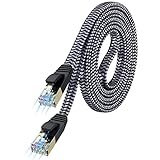
- [Flat Design, Zero Cable Clutter] - Lies perfectly flat against walls, under rugs, along baseboards, and through tight spaces without kinks, tangles, or messy coils. Customers praise it for effortless installation and clean cable management that blends into any room.
- [REINFORCED BRAIDED CONSTRUCTION FOR LONG‑LASTING PERFORMANCE] - Premium cotton braided jacket paired with reinforced RJ45 connectors delivers outstanding durability, rigorously tested for over 15,000 bend cycles. Many customers describe this ethernet cable as rock‑solid and well‑crafted, ideal for long‑term daily use with no worries about premature wear‑and‑tear or connection failure
- [10GBPS SPEED & 600MHZ BANDWIDTH — GAMING, STREAMING & FIBER READY] - Delivers 10Gbps data transfer rate with 600MHz bandwidth for PS5, Xbox, 4K streaming, and fiber internet. Customers report stable performance and fast speeds. Backward compatible with Cat 6 and Cat 5e devices
- [STP SHIELDING & GOLD-PLATED RJ45 — MINIMIZES EMI/RFI INTERFERENCE] - 100% bare copper STP shielding helps protect signal integrity when routed near power cords. Gold-plated RJ45 connectors resist corrosion. Compatible with 2.5GB network card
- [Works with Everything — Router, Modem, PS5, Xbox, PC, Smart TV, Printer More ] - Full backward compatibility with Cat7, Cat6, Cat6a, and Cat5e devices means this one cable works with all your home or office equipment today, and future upgrades tomorrow. Works with 10/100/1000/10G/40G BASE-T speeds. Includes 36-month warranty with free replacement support
Contact Steam Support when the issue survives another network and storage test, Steam status is normal, downloads reset repeatedly, disk-write errors continue, verification fails unexpectedly, or every other plausible bottleneck has been ruled out. Include:
- the Steam Download Region;
- ISP, connection type, and whether the test used Ethernet;
- time of day and duration of the slowdown;
- Steam’s displayed units and sustained rate;
- Network Usage, Disk Usage, CPU, and active-drive behavior;
- whether another region, another launcher, or another network is fast;
- the affected game, update size, and any error message;
- operating system, storage type, and whether the game is on an external drive or SD card;
- screenshots and relevant Steam or system logs requested by support.
Valve’s official support pages should be the primary status and troubleshooting authority. Independent services such as SteamDB’s server-status page can provide additional context, but they are not Valve’s official status source.
Quick wins for a faster PC:
Scan for outdated or missing drivers - takes under a minuteDriver Scan →Clear out junk files and repair common Windows errorsFree Scan →How to prevent future slowdowns
- Keep meaningful free space on both the library drive and system drive.
- Use internal SSD storage for games with frequent, large updates where practical.
- Schedule large updates away from work, streaming, backups, and peak household usage.
- Review Workshop subscriptions and optional DLC periodically.
- Keep Steam, network-adapter drivers, router firmware, and operating-system updates current.
- Use one well-configured firewall rather than several overlapping filtering products.
- Use Ethernet for large downloads when practical, especially on congested Wi-Fi.
- Back up saves and important files before moving libraries or repairing the Steam client.
- Measure the bottleneck before changing a setting. A faster SSD cannot increase an ISP’s bandwidth, and a new Download Region cannot make a disk-bound patch download faster.
Frequently Asked Questions
Why does Steam download at 0 B/s even though my internet works?
If Disk Usage or CPU activity is high at the same time, Steam may be installing, allocating, decompressing, or patching files rather than receiving data. If network, disk, and CPU are all idle, check the queue, pause state, download limit, schedule, region, firewall, VPN, proxy, and router.
Does clearing Steam’s download cache delete my games?
No. Valve says clearing the download cache does not remove installed games, although it signs you out and requires you to log in again. It can repair an abnormal or stuck download, but it is not a guaranteed speed increase.
Why can a 200 MB Steam update take longer than a 50 GB download?
An update’s network size is not its total local workload. Steam may need to read and reconstruct large pack files, decompress data, allocate space, write replacement files, and verify the result. SteamPipe’s documentation explains why large pack files can cause heavy local disk activity.
Should I use a VPN to make Steam faster?
Only use a VPN as a controlled routing test. It may bypass a poor ISP-to-content-server route, but it may also select a distant or congested route and reduce performance. Test with the VPN off first and consider network policy before using one.
Does installing Steam games on an SSD improve download speed?
It cannot increase your internet bandwidth, but it can substantially improve installation and patching when disk I/O, file reconstruction, or decompression is the bottleneck. This is especially relevant for large updates, external HDDs, and slow Steam Deck SD cards.
Should I change DNS, disable IPv6, or forward ports?
Not as routine speed fixes. DNS, IPv6, and port settings are conditional diagnostics for resolver, routing, or filtering problems. Test one change at a time, avoid arbitrary port forwarding, and restore normal settings when a test does not help.
The Bottom Line
Diagnose Steam before tweaking it. Convert bytes to bits, inspect the Download Manager, and compare Network Usage with CPU and Disk Usage. Low network activity with a busy drive usually means installation or patching, not slow internet. If the machine is idle, check limits, queues, schedules, Download Region, cache, Wi-Fi or Ethernet, router, security software, VPN or proxy, and ISP routing in that order. Move update-heavy games to faster internal storage when practical, and reserve advanced changes or client reinstallation for cases supported by evidence.
Quick Recap
Product prices and availability are accurate as of the date/time indicated and are subject to change. Any price and availability information displayed on Amazon at the time of purchase will apply.
What’s actually slowing this PC down?
Pick the symptom - the matching free tool is one click away.



