Some links on this page are affiliate links: if you buy through them we may earn a commission, at no extra cost to you.
Yes—the ESP32-S3 is a genuinely capable classic-gaming platform, but mainly for 8-bit consoles and selected early 16-bit systems. Game Boy, Game Boy Color, NES, Master System, Game Gear, SG-1000, ColecoVision and similar systems are its natural territory. Genesis, PC Engine and Atari Lynx can be practical with the right firmware and hardware. SNES is the boundary case, while PlayStation, Nintendo 64, Dreamcast, PSP and other 3D systems are poor targets.
That makes the ESP32-S3 excellent for a custom, low-power, open-ended handheld—but not a replacement for a Linux or Android retro handheld if your priority is broad, reliable emulation.
What “classic gaming” means on an ESP32-S3
“Classic gaming” covers very different hardware generations. An 8-bit console such as the NES has dramatically different emulation requirements from a 3D system such as the Nintendo 64. The ESP32-S3 should therefore be judged in tiers rather than with a single claim that it “runs retro games.”
| System | Practical expectation | Important qualification |
|---|---|---|
| Game Boy, Game Boy Color | Excellent | Strong, lightweight targets |
| NES | Excellent | A common dependable target |
| Master System, Game Gear | Excellent to very good | Generally suitable for handheld builds |
| SG-1000, ColecoVision, Game & Watch | Very good | Low hardware demands |
| Atari Lynx | Usually practical | Depends on the emulator core and build |
| PC Engine/TurboGrafx-16 | Often practical | Verify the individual target firmware |
| Genesis/Mega Drive | Mixed to good | Game and emulator performance can vary |
| SNES | Experimental or borderline | Do not promise broad, full-speed compatibility |
| PlayStation, Nintendo 64, Dreamcast, PSP | Poor fit | Use a more powerful Linux or Android platform |
This classification reflects listed emulator support and project reports, not a universal benchmark for every ESP32-S3 board. The same microcontroller can feel very different depending on its memory, display interface, audio design and firmware optimization.
#1 Best Overall

- 🔥【Dual Mode & High Performance】 The ESP32-S3 development board features integrated dual-core xtensa 32-bit LX7 microprocessor, clock speed up to 240 MHz, with 16MB Flash and 8 MB PSRAM. Perfect for Arduino IoT projects requiring stable wireless communication with ultra-low power consumption.
- 🔧【Easy Programming & Debugging】 Equipped with dual USB Type-C ports, this ESP32-S3 board supports both USB and UART modes for effortless programming, firmware flashing, and debugging.
- 🌐【Versatile Wireless Connectivity】 Built-in Wi-Fi (2.4GHz) and Bluetooth 5.0 (LE) dual-mode ensure seamless connectivity with a wide range of smart devices, making it ideal for IoT, smart homes projects.
- 🚀【Flexible Download Options】 Supports dual download methods — USB direct download or USB-to-serial download — offering flexibility and convenience for different development needs.Ideal for beginners and developers working with ESP32-S3.
- 🔋【Advanced Power-Saving Modes】 Designed for energy-efficient applications, with 3.3V SPI voltage, the ESP32-S3 board supports multiple low-power modes, allowing you to extend battery life based on different usage scenarios.
Why the ESP32-S3 works so well for 8-bit emulation
The ESP32-S3 combines a dual-core 32-bit Xtensa LX7 processor running at up to 240 MHz with the peripherals needed to build a complete embedded console. Espressif’s ESP32-S3 datasheet lists support for LCD and camera interfaces, I²S digital audio, SD/MMC storage, USB 1.1, Wi-Fi and external memory options.
- CPU: Two cores and vector instructions provide useful headroom for suitable emulator workloads.
- Memory: Flash stores firmware and assets; PSRAM can provide additional space for buffers and applications.
- Display connectivity: SPI, parallel and other supported interfaces let a project choose between simplicity and throughput.
- Audio: I²S can feed an external DAC or amplifier for cleaner sound than a basic GPIO speaker circuit.
- Storage: A microSD card can hold a larger legally obtained game collection than internal flash.
- Wireless: 2.4 GHz Wi-Fi enables features such as network file management.
- Controls: GPIO gives a custom board considerable freedom over button layout and additional inputs.
Memory labels need careful reading. An ESP32-S3-N8R8 module generally has 8 MB of flash and 8 MB of PSRAM; an N16R8 configuration generally has 16 MB of flash and 8 MB of PSRAM. Those labels describe a module configuration, not every board built around the chip. The board still determines whether that memory, a display, an SD slot, battery hardware and useful GPIO are actually available.
More cores or PSRAM do not automatically guarantee better emulation. Timing, memory bandwidth, audio mixing, video conversion, synchronization and the quality of the emulator port all matter. PSRAM is primarily extra capacity and may be slower or less suitable than internal RAM for timing-sensitive code and buffers.
The main software options
Retro-Go
Retro-Go is the central software example for ESP32-based retro projects. It combines a launcher with multiple emulator applications and lists support for Game Boy, Game Boy Color, NES, Game & Watch, Master System, Game Gear, Genesis/Mega Drive, SG-1000, ColecoVision, PC Engine, Atari Lynx and Doom. Its feature set includes save states, multiple save slots, scaling and filtering options, favorites, recently played lists, cover art, save-state previews, Wi-Fi file management and fast-forward features.
The project’s documentation and release assets include ESP32-S3-related targets and community ports. Its releases are volatile, so check the current release page for the version and image appropriate to your board rather than relying on an old filename or guide.
Retro-Go lists SNES support but characterizes it as slow. That is the crucial distinction: a menu entry proves that an emulator exists, not that a large library runs at correct speed with accurate audio and stable video.
ESP-BOX-EMU
ESP-BOX-EMU turns an ESP32-S3-BOX or ESP32-S3-BOX-3 into a Game Boy-style handheld when paired with a custom controller board and enclosure. Its documented targets include NES, Game Boy, Game Boy Color, Sega systems, MSX, Genesis and Doom, alongside save states, box art and an LVGL-based interface.
The Tool Desk
Outbyte PC Repair FREEClear out junk files and repair common Windows errorsFree Scan →Outbyte Driver Updater FREEFix the driver behind crashes, sound loss and screen glitchesFind Drivers →Rank #2

- ESP32-S3-DevKitC-1-N16R8 SPI voltage: 3.3v, ESP32-S3-DevKitC-1 is an entry-level development board equipped with Wi-Fi + Bluetooth module ESP32-S3
- Most of the I/O pins on the module are broken out to the pin headers on both sides of this board for easy interfacing. Developers can either connect peripherals with jumper wires or mount ESP32-S3-DevKitC on a breadboard.
- The ESP32-S3-DevKitC development board equipped with ESP32-S3-DevKitC-1-N16R8, a general-purpose Wi-Fi + Bluetooth LE MCU module that integrates complete Wi-Fi and Bluetooth LE functions.
- ESP32-S3-N16R8 cable can be used: USB Type A to Type-C cable or CC cable Note the distinction between the commonly used USB A port to Type-C cable that can only be charged, which cannot be used for communication between YD-ESP32-S3 and the host.
- USB-to-UART Port and ESP32-S3 USB Port (either one or both), default power supply (recommended)
This is a useful example of the difference between a development platform and a finished handheld. The ESP32-S3-BOX supplies a foundation, but the controls and physical housing still require additional hardware.
Custom emulator projects
Projects such as the ESP32-S3 NES/SNES handheld show how developers are testing memory placement, multicore scheduling, frameskip and rendering changes to improve demanding systems. Its documentation describes a baseline of roughly 15–20 frames per second for one SNES9x-based configuration and optimization goals toward higher perceived frame rates. Those figures belong to that project and configuration; they are not a universal ESP32-S3 benchmark.
Other community builds, including CrokPocket, demonstrate that the platform can support purpose-built handheld designs, but they also underline the assembly, PCB and enclosure work involved.
What an ESP32-S3 handheld actually needs
Display
A modest LCD is enough for low-resolution systems, but the display bus can determine how good the result feels. Check:
PC Slower Than It Used to Be?
A free scan shows the junk files, broken settings and background clutter dragging Windows down - then fixes them in one click.Free scan · Windows 10 & 11Outdated Drivers Are Slowing You Down
One free scan finds every outdated or missing driver and matches the right update for your exact hardware.Free scan · exact hardware match- Native aspect ratio and whether the firmware supports integer scaling.
- Letterboxing versus image stretching.
- SPI, 8-bit 8080 or parallel RGB/I8080 connectivity.
- DMA support and screen-tearing behavior.
- Backlight power consumption.
- Whether the display controller already has a supported driver.
One documented ESP32-S3 design uses a 320×480 ILI9488 panel over an 8-bit 8080 parallel interface, with integer scaling and letterboxing. That illustrates why a faster display path can matter as much as the nominal processor frequency.
Controls
A real handheld needs a D-pad, A and B buttons, Start and Select, and often X, Y, shoulder, menu or volume buttons. The electrical details matter: buttons need debouncing, the correct active-high or active-low configuration, and GPIO assignments that do not conflict with flash, PSRAM, USB, SD or display functions.
The cited custom handheld project uses 13 buttons and 12 GPIO-controlled inputs. ESP-BOX-EMU uses an add-on controller design rather than treating a development board’s built-in buttons as a finished gamepad.
Rank #3

- 【Low-power performance】: The AYWHP ESP32-S3 Core development board integrates a 2.4 GHz Wi-Fi and Bluetooth 5 (LE) dual-mode communication module, perfect for Arduino Internet of Things (IoT) projects.
- 【Simple programming and debugging】: The ESP32-S3 module makes it easy to program and burn in your ESP32-S3 board via dual USB Type-C ports, with a choice of USB or UART modes.
- 【Multiple Power Saving Modes】: The ESP S3 development board supports multiple low-power modes, which can be configured according to different application scenarios to provide longer battery life.
- 【Dual download modes】: The ESP S3-1 module supports both USB direct connection download and USB to serial port download, providing more flexibility and convenience.
- 【Diverse connectivity options】: The ESP32-S3-1 supports dual-mode Wi-Fi and Bluetooth 5.0 (LE) connectivity for a wide range of smart devices, making it ideal for Internet of Things (IoT) applications.
Audio
Audio can use PWM-style output, a DAC-style circuit or I²S. An I²S connection to an external DAC and amplifier generally offers a cleaner architecture, but it adds components and consumes additional power. Speaker size, amplifier gain and enclosure acoustics can affect the result as much as the emulator itself.
What’s actually slowing this PC down?
Pick the symptom - the matching free tool is one click away.
Battery and power
A handheld requires more than a Li-ion cell. Plan for charging, battery protection, 3.3-volt regulation, power-path management if charge-and-play is desired, safe wiring, strain relief and battery-voltage measurement.
Do not promise a runtime based only on battery capacity. Display brightness, amplifier volume, Wi-Fi activity, CPU load and regulator efficiency all affect consumption. One custom design uses a 3.7-volt 5000-mAh LiPo and an IP5306-based power system, but that is a project-specific implementation rather than a universal recommendation.
Storage and ROM legality
MicroSD storage is convenient for firmware and game libraries, but emulator software and game ROMs are separate things. Use ROM backups you legally own or are otherwise licensed to use. Copyright and distribution rules vary by country, and some emulators may have region-specific BIOS requirements. Do not download ROMs from unauthorized distribution sites.
A safe installation path
Installation is target-specific, but the general process is straightforward:
- Identify the exact ESP32-S3 board or handheld model, including its flash and PSRAM configuration.
- Check whether Retro-Go provides a prebuilt image for that target.
- Back up existing firmware and SD-card contents.
- Download the target-specific release image from the project documentation or release page.
- Flash it with
esptoolor the project’s documented web flasher. - Format and insert a microSD card if the target requires one.
- Copy legally obtained ROM backups into the expected directory structure.
- Boot the launcher and confirm that controls, display, audio and storage work.
- Test a simple Game Boy or NES title before trying Genesis, PC Engine or SNES software.
Retro-Go documents a generic command similar to:
esptool.py write_flash --flash_size detect 0x0 retro-go_*.imgDo not assume this command applies to every custom board. Some ESP32-S3 builds require separate binaries at fixed offsets. One community fork documents offsets such as 0x320000, 0x420000 and 0x720000; those addresses are specific to that target and must not be copied to another device.
If it does not boot
- Confirm that the image matches the exact board and memory configuration.
- Enter download or bootloader mode again.
- Use the correct USB port and cable.
- Erase flash only when the project specifically recommends it.
- Restore factory firmware if the board uses a custom bootloader or partition layout.
- Check whether the device uses SD-card flashing rather than USB flashing.
A generic ESP32-S3-DevKitC-1 image is not automatically safe for a custom handheld. Pin assignments, partitions, display drivers and boot procedures can all differ.
Rank #4
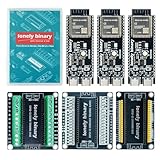
- 【ESP32-S3 PERFORMANCE】Dual-core 240MHz processor with 16MB Flash and 8MB PSRAM for IoT, AI, and machine learning projects.
- 【WIRELESS CONNECTIVITY】Onboard antenna for 2.4GHz WiFi and Bluetooth 5.0 LE — for smart home devices, no external antenna needed.
- 【LEAD-FREE GOLD EDITION DESIGN】Immersion gold (ENIG) plating for durability and conductivity. Lead-free, RoHS-compliant — for long-term prototyping.
- 【PRE-SOLDERED, PLUG-IN DESIGN】ESP32-S3 boards come with pre-soldered headers and plug directly into the included expansion and terminal boards — no soldering required.
- 【MULTI-PLATFORM COMPATIBILITY】Works with C++, MicroPython, ESP-IDF, Raspberry Pi, and STM32 — with online tutorials for quick start. Power via USB-C (5V) or VIN pin (5–12V); do not exceed 5V on the USB-C ports.
How performance feels in practice
For Game Boy, NES, Master System and similar systems, the ESP32-S3 can provide the responsive, instant-start experience people expect from a small retro console. The harder systems expose the compromises:
- Frame rate: Slow emulation may produce visible judder or require frameskip.
- Audio: Poor scheduling or insufficient processing time can cause crackle and dropouts.
- Input latency: Display refresh, buffering and polling choices can matter even when emulation speed is adequate.
- Scaling: A high-resolution panel is not automatically better if the bus cannot refresh it efficiently.
- Game variance: One playable title does not establish compatibility for an entire system.
SNES should therefore be treated as a bonus or experiment unless a specific board, firmware build and game list have been tested. “Supports Genesis” should likewise mean that an emulator core is available—not that every game runs perfectly.
Quick wins for a faster PC:
Fix the driver behind crashes, sound loss and screen glitchesFind Drivers →Clear out junk files and repair common Windows errorsFree Scan →Scan for outdated or missing drivers - takes under a minuteDriver Scan →ESP32-S3 versus buying a retro handheld
| ESP32-S3 build | Linux or Android handheld |
|---|---|
| Highly customizable hardware and software | Ready to use out of the box |
| Fast boot and potentially low power | Much greater emulation headroom |
| Excellent for 8-bit systems | More reliable SNES and 3D-system support |
| Requires display, controls, audio, battery and enclosure work | Usually includes a complete ergonomic design |
| Good for learning and embedded experimentation | Better for large libraries and mature menus |
| Repairable and adaptable when designed well | Less engineering effort |
The board price can be misleading. An ESP32-S3-DevKitC-1 is a development board, not a complete console. You still need a screen, buttons, storage, power electronics, audio, PCB work and an enclosure. For a convenience-focused buyer, a ready-made Linux handheld may offer more capability for only a modest increase over the total DIY bill.
Which ESP32-S3 route makes sense?
Beginner prototype
An ESP32-S3-DevKitC-1 with PSRAM is a sensible firmware-development starting point. It is useful for learning, testing input and display drivers, and evaluating emulator ports, but it is not a complete handheld.
Compact display experiment
The LILYGO T-Display-S3 includes a 1.9-inch ST7789 color display and two programmable buttons. It can be useful for small games and prototypes, but two buttons are insufficient for most traditional console layouts without adding hardware.
Advanced custom handheld
A serious build may combine an ESP32-S3 N8R8 or N16R8 module, a suitably fast LCD, microSD, a full button matrix, I²S audio, battery-management hardware and a 3D-printed case. This route offers the most control and the most engineering work.
Do these 3 things before closing this tab:
1Fix the driver behind crashes, sound loss and screen glitches2Clear out junk files and repair common Windows errors3Scan for outdated or missing drivers - takes under a minuteConvenience-first purchase
If your main targets are reliable SNES, PlayStation, Nintendo 64, Dreamcast or PSP emulation, choose a more powerful Linux or Android handheld instead. The ESP32-S3 is not the right general-purpose emulation machine for those systems.
Best Value
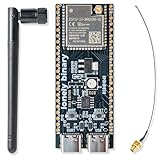
- 【GOLD EDITION — IMMERSION GOLD PCB】The Lonely Binary Gold Edition features a black PCB with lead-free immersion gold (ENIG) plating and clear silkscreen — the signature finish of the Lonely Binary Gold Edition line. RoHS-compliant.
- 【16MB FLASH + 8MB PSRAM】Large memory capacity for OTA updates, large programs, and AI/ML tasks — more headroom than 4MB boards for data-intensive IoT and automation projects.
- 【EXTERNAL IPEX ANTENNA】External IPEX antenna can be positioned for extended WiFi and Bluetooth signal coverage — for remote applications like weather stations, robots, or enclosed builds.
- 【DUAL USB TYPE-C PORTS】Separate power and data ports for macOS, Windows, and Linux. Power via USB-C (5V) or VIN pin (5–12V); do not exceed 5V on the USB-C ports.
- 【FLEXIBLE PROTOTYPING PINS】2x40-pin GPIO headers compatible with breadboards and sensors. Supports external ToF sensors via I2C for distance sensing.
Important misconceptions
“It has two cores, so SNES should be easy.”
Two MCU cores do not make the chip equivalent to a modern application processor. Emulator timing, memory access, video work, audio and synchronization can all become bottlenecks.
“Retro-Go supports SNES, so every SNES game works.”
Retro-Go describes SNES support as slow. Listed support, reported performance and broad, tested compatibility are different claims.
“Any ESP32-S3 board runs the same firmware.”
Boards differ in flash, PSRAM, GPIO wiring, display controller, SD connection, audio hardware, bootloader and partition layout. Use target-specific firmware.
Free tools Windows power users keep installed
One-click scans. No signup required.
“The ESP32-S3 has Bluetooth controller support.”
The ESP32-S3 provides Bluetooth Low Energy, not Bluetooth Classic. That distinction affects compatibility with wireless controllers and audio devices. Consult the official DevKit documentation before planning wireless accessories.
“A development board is already a handheld.”
It is only the computing core. A usable handheld also needs controls, display, power management, audio, storage and an enclosure.
Licensing matters too
Retro-Go is GPLv2, while its repository identifies exceptions for some components, including an MSX emulator with a custom non-commercial license. Anyone redistributing a commercial product or bundled firmware should review each component’s license rather than treating the whole software stack as interchangeable open source.
Final verdict
The ESP32-S3 is a superb classic-gaming platform when the goal is a compact, customizable embedded console. It is especially convincing for Game Boy, Game Boy Color, NES, Master System, Game Gear and comparable 8-bit systems, with Genesis, PC Engine and Atari Lynx available as more conditional targets. SNES is an experimental boundary, not a promise of universal full-speed play.
Build one if you value soldering, firmware, custom controls, 3D printing and the satisfaction of making the hardware yourself. Buy a Linux or Android handheld if you want broad compatibility, analog controls and reliable 16-bit or 3D emulation with minimal setup.
Quick Recap
Product prices and availability are accurate as of the date/time indicated and are subject to change. Any price and availability information displayed on Amazon at the time of purchase will apply.

