In the U.S. bail system, bounty hunters—also called bail enforcement or bail recovery agents—are generally private workers hired by bail-bond companies to locate defendants who failed to appear and return them to custody. They are not ordinary police officers, and there is no single nationwide licensing answer: the rules depend on the state and may cover both the job title and the recovery activity.
What does a bounty hunter do?
A bounty hunter in the bail context works to locate a defendant who has failed to appear in court and return that person to custody. Cornell Legal Information Institute’s Wex entry, last reviewed in June 2021, describes bounty hunters as mostly hired by bail-bond companies and as private actors, not state agents. That is a general description, not a statement of current law in every state.
| # | Preview | Product | Price | |
|---|---|---|---|---|
| 1 |

|
The Bounty Hunters | $9.99 | Buy on Amazon |
| 2 |
|
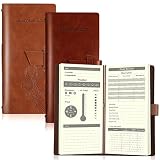
Eaasty 2 Pcs Leather Hunting Log Book Elk Hunt Record,Tan, Reddish Brown | $17.99 | Buy on Amazon |
| 3 |

|
Curtis Duncan, Bounty Hunter | $17.32 | Buy on Amazon |
| 4 |

|
Bounty Hunter: The Black Tulip Chronicles | $15.24 | Buy on Amazon |
| 5 |

|
Eaasty 2 Pcs Leather Hunting Log Book Elk Hunt Record,Black, Brown | $16.99 | Buy on Amazon |
States may use different terminology and define the work differently. For example, Virginia’s regulations use “bail enforcement agent,” also known as “bounty hunter.” Virginia’s definition of bail recovery includes arresting a bailee for surrender to the appropriate court, jail, or police department to discharge the surety’s liability. It also includes certain investigation, surveillance, or locating activity in preparation for an imminent arrest. That is Virginia’s regulatory definition, not a national one.
Are bounty hunters police officers?
No. In this context, bounty hunters are generally private bail-recovery workers, not ordinary law-enforcement officers. Their work does not make them police, confer general police powers, or give them blanket immunity. The precise legal permissions and restrictions depend on the applicable state law and circumstances.
Recommended Free Tools
#1 Best Overall
What laws govern bail recovery?
Federal bail law and state regulation address related but distinct questions. Federal statutes describe release and detention decisions in federal proceedings; state law may regulate private bail-recovery work. A federal provision about a surety on an appearance bond is not a complete nationwide licensing or conduct code for recovery agents.
| Authority | What it addresses | What it does not establish |
|---|---|---|
| 18 U.S.C. § 3142, 2024 edition | Federal pretrial release and detention, including personal recognizance, conditional release, temporary detention, and detention; judicial officers apply a least-restrictive-conditions framework where applicable. | A general state licensing rule for private bounty hunters. |
| 18 U.S.C. § 3149, 2024 edition | For a person released on an appearance bond with a surety, the surety may arrest that person; if arrested, the person must be delivered promptly to a U.S. marshal and brought before a judicial officer. | A full set of nationwide licensing, training, or conduct requirements for all private recovery agents. |
| Florida Statutes § 648.30 | Florida restricts representing oneself as a “bail enforcement agent” or “bounty hunter” and restricts apprehending, detaining, or arresting a bond principal to specified qualified, licensed, and appointed people, subject to the statute’s terms. | Rules for other states, or a substitute for checking Florida’s current statutory text. |
| Virginia Administrative Code 6VAC20-260 | Virginia has a specific regulatory chapter defining bail enforcement agents and bail recovery; its rules address training requirements and firearms endorsements. The accessed text shows an effective/current text date of August 18, 2026. | Requirements that apply nationally or in any state other than Virginia. |
Because state requirements can differ, check the live statute and the relevant state regulator’s guidance for the place where the work will occur. Do not assume that a federal surety provision overrides state rules for private agents.
Rank #2
- What You Will Receive: the package contains 2 pieces of elk hunting books in different colors of tan and reddish brown for you to use, each comes with 96 inner pages, adequate to meet your various using and sharing needs for hunting
- Proper Size to Hold: our leather hunting log comes with a size of about 20.3 x 9.5 cm/ 8 x 3.7 inches, proper for you to hold in hands, and can be easily put in your pockets, backpacks and so on, bringing a lot of convenience
- Record Details: our elk hunting journal is carefully designed and printed with words on each partition, which can help you keep track of the small details in the hunting process, such as date, weather, wind direction, atmospheric pressure, humidity, location, prey species, hunting methods and so on
- Reliable Material: our hunting log book for huntsman is made of PU leather cover and quality paper, which are comfortable to touch and smooth to write, and you can write some message on the notebook directly when holding it, no need to look for a flat pad or tabletop
- Widely Applied: our deer hunting books bring a lot of convenience, you can fully enjoy the convenience, and keep track of the weather, hunting tools, routes, prey, and experience on the hunting day; You can also give them as practical gifts to friends who also like hunting; Please check the item numbers after receiving to avoid part missing
Do bounty hunters need a license?
There is no single answer for all U.S. states in the evidence available here. A 2013 study by Brian R. Johnson and Ruth S. Stevens reviewed state legislative and administrative codes then in force. Its abstract reported that 24 states controlled bail-recovery agents through licensing or other occupational regulation, while 18 states had no licensing or other occupational requirements. Those are historical findings from 2013, not a current 2026 state count. The abstract does not establish a reliable classification for the remaining states, so it should not be used to infer one.
Florida and Virginia illustrate why a national yes-or-no answer is misleading: Florida’s statute restricts the title and specified apprehension activity, while Virginia has a dedicated regulatory chapter that includes training and firearms endorsements. Neither state’s rules should be generalized to another jurisdiction.
Do these 3 things before closing this tab:
1Fix the driver behind crashes, sound loss and screen glitches2Repair Windows errors before they cause bigger problems3Scan for outdated or missing drivers - takes under a minuteRank #3
What does Taylor v. Taintor say?
Taylor v. Taintor, 83 U.S. 366 (1872), concerned an $8,000 Connecticut recognizance for Edward McGuire and whether the sureties remained liable after he was delivered to another state and imprisoned there. Its syllabus addressed the sureties’ liability on those facts. The case is not a current nationwide instruction manual for bounty hunters, nor does it establish blanket permission to conduct recovery work in every state.
The opinion’s syllabus states: “There has been no such ‘act of the law’ in the case as will discharge bail.” Justice Noah H. Swayne wrote that sentence in the context of the surety-liability issue before the Court. It should not be detached from that context or treated as a universal license or operational rule.
How to find out how to become a bounty hunter in your state
Do not enroll in a course, buy equipment, or attempt recovery work based on a generic national checklist. The requirements can depend on the state and on the specific activity or title. Use this verification sequence for the jurisdiction where you intend to work:
- Identify the state where the work will occur. If you expect to operate across state lines, check each relevant state rather than assuming one state’s rules travel with you.
- Find the current statute and regulator guidance. Look for the state’s official legislative text and the state agency that regulates bail enforcement, bail recovery, or related occupations.
- Check whether the title or activity is restricted. Search for both the terms used locally—such as “bounty hunter,” “bail enforcement agent,” and “bail recovery”—and the conduct the law regulates.
- Verify eligibility, licensing, and training before enrolling. Ask the regulator what prerequisites apply, whether training must meet particular requirements, and whether any endorsements are needed. Virginia’s rules show that formal training and firearms endorsements can be part of state regulation, but do not establish a national standard.
- Confirm the rules before accepting work or acting. Check current requirements with the regulator and the relevant bail-bond company; do not rely on an old summary, a course advertisement, or Taylor v. Taintor as a substitute for current local law.
What is not established nationally?
The sources cited here do not establish a current 50-state licensing table, uniform national age or training requirements, typical pay, the number of active bounty hunters, recovery rates, or a standard set of equipment. Those details should not be inferred from the occupation’s general description or from one state’s regulations. For a decision about working in a particular state, the controlling source is that state’s current law and regulator guidance.
Quick Recap
Best Value
- What You Will Receive: the package contains 2 pieces of elk hunting books in different colors of black and brown for you to use, each comes with 96 inner pages, adequate to meet your various using and sharing needs for hunting
- Proper Size to Hold: our leather hunting log comes with a size of about 20.3 x 9.5 cm/ 8 x 3.7 inches, proper for you to hold in hands, and can be easily put in your pockets, backpacks and so on, bringing a lot of convenience
- Record Details: our elk hunting journal is carefully designed and printed with words on each partition, which can help you keep track of the small details in the hunting process, such as date, weather, wind direction, atmospheric pressure, humidity, location, prey species, hunting methods and so on
- Reliable Material: our hunting log book for huntsman is made of PU leather cover and quality paper, which are comfortable to touch and smooth to write, and you can write some message on the notebook directly when holding it, no need to look for a flat pad or tabletop
- Widely Applied: our deer hunting books bring a lot of convenience, you can fully enjoy the convenience, and keep track of the weather, hunting tools, routes, prey, and experience on the hunting day; You can also give them as practical gifts to friends who also like hunting; Please check the item numbers after receiving to avoid part missing
Product prices and availability are accurate as of the date/time indicated and are subject to change. Any price and availability information displayed on Amazon at the time of purchase will apply.



