
The Tool Desk
Outbyte Driver Updater FREEFix the driver behind crashes, sound loss and screen glitchesFind Drivers →Outbyte PC Repair FREEClear out junk files and repair common Windows errorsFree Scan →These twelve games changed PC gaming in different ways: by normalizing persistent online worlds, expanding audiences, moving distribution toward digital stores, defining competitive formats, empowering modders, and making blockbuster storytelling a core design goal. The list needs one factual correction, however: StarCraft II: Wings of Liberty launched in 2010, so it falls outside a strict 2000–2009 definition of the decade.
There is no single way to measure whether a game “changed gaming forever.” A title can alter business models, player communities, competitive rules, technical expectations, or the kinds of people who see themselves as gamers. The twelve games in Cheat Code Central’s list collectively cover all of those dimensions, but they do not all have the same kind of evidence behind their reputations.
As an Amazon Associate I earn from qualifying purchases.
The list has 12 games, but one misses the decade
Eleven entries were released between 2000 and 2009. StarCraft II: Wings of Liberty was released in 2010. It can still belong in a broader discussion of the era’s PC influence, especially because development and anticipation began during the 2000s, but it should be labeled as a post-decade addition rather than a 2000s release.
Windows Errors? Fix Them Before They Spread
Repair common Windows errors and clear accumulated junk for a smoother, more stable PC - no reinstall needed.Free scan · no reinstallCrashes, No Sound, or Screen Glitches?
Random freezes, missing sound and display glitches usually trace back to one bad driver. Find and replace yours safely.Free scan · under a minuteThe phrase “changed gaming” also combines unlike achievements. Persistent subscriptions, retail-to-digital distribution, mod support, esports, accessible life simulation, and cinematic storytelling are not interchangeable outcomes. The useful question is therefore not which game is objectively number one, but what each game changed and how firmly that contribution is documented.
#1 Best Overall
![Classic Card Game Collection - [PC Download]](https://m.media-amazon.com/images/I/518Mx1LHEEL._SL160_.jpg)
- 10 traditional card games the entire family can enjoy.
- Canasta, Gin Rummy, Hearts, Pinochle, Texas Hold’em, Euchre, Go Fish, Old Maid, Spades, Solitaire Mahjong.
- Fast animated play, all new redesigned look, play against the computer.
- Easy to learn games, includes detailed game rules.
- Soothing soundtracks
At a glance: release years and kinds of influence
| Game | Release year | Contribution highlighted by the list | How to interpret the claim |
|---|---|---|---|
| The Sims | 2000 | Life simulation and a broader audience | Strong example of accessibility and everyday-life design; the list’s sales figure is attributed to Cheat Code Central. |
| Counter-Strike | 2000 | Objective-based competitive play and esports | A community-driven competitive model that helped establish round-based tactical shooting. |
| Diablo II | 2000 | Loot-driven action RPG progression | A durable template for randomized rewards, builds, and repeatable character advancement. |
| Battlefield 1942 | 2002 | Large combined-arms battles | Its defining idea was scale across land, sea, and air rather than a single infantry arena. |
| World of Warcraft | 2004 | Persistent online worlds and MMO conventions | Its influence is best understood through social infrastructure, accessibility, and subscription-scale community. |
| Half-Life 2 | 2004 | Physics, narrative presentation, and modding | Valve documents its unusual simultaneous retail and Steam launch; design influence is broader editorial interpretation. |
| Far Cry | 2004 | Open-ended shooter spaces | Its contribution is the expectation that shooters can support multiple approaches in expansive environments. |
| Guild Wars | 2005 | An alternative MMO fee model | Important as a counterexample to the assumption that every online role-playing world needs a recurring subscription. |
| The Elder Scrolls IV: Oblivion | 2006 | Open-world role-playing and mod communities | Its lasting importance lies in player-directed exploration and a culture of user-made additions. |
| Call of Duty 4: Modern Warfare | 2007 | Cinematic shooters and progression systems | It fused scripted presentation with persistent multiplayer unlocks; the list’s sales figure is not independently verified here. |
| BioShock | 2007 | Story-led first-person design | It demonstrated that a first-person game could make authored themes and moral choices central to its appeal. |
| StarCraft II: Wings of Liberty | 2010 | Competitive real-time strategy | Influential for PC strategy and esports, but outside the stated 2000–2009 boundary. |
What each game changed
The Sims (2000): life simulation became mainstream entertainment
The Sims made routine activities—building a home, managing relationships, pursuing a job, and dealing with household needs—the substance of a game rather than an intermission between action sequences. Its systems were legible to people who did not identify with traditional action or strategy genres, while its open-ended goals let players decide what success meant.
That design helped broaden the imagined PC audience. Cheat Code Central reports more than 11 million copies sold, but the article does not identify an original publisher for that figure, so it should be treated as the list’s claim rather than an independently verified total. The more defensible historical point is the model: a game can be commercially significant by simulating social and domestic life, not by escalating combat.
Counter-Strike (2000): the round became a competitive unit
Counter-Strike centered matches on objectives, limited lives, team roles, and information. A round could be won by completing a task or denying it, which made communication and positioning as important as reflexes. The structure was easy to understand for spectators and punishing enough to reward disciplined teams.
The list presents it as an important step toward esports. That is best framed as an influence claim rather than a single-game invention: competitive PC shooters existed before it, but its objective-based format became a durable reference point for organized play, tournament rules, and tactical team identity.
Diablo II (2000): randomized loot became a long-term loop
Diablo II connected fast combat to an endlessly renewable hunt for better equipment. Randomized item properties, class builds, skill choices, and escalating difficulty gave players reasons to replay familiar areas. The result was a progression loop that could continue long after the campaign was finished.
Cheat Code Central says the game sold more than four million copies in its first year; the original source for that number is not identified in the article. The game’s documented modern legacy is easier to state precisely: Diablo II: Resurrected is a digital remaster, and Blizzard’s launch guidance explicitly says it has no physical version. That distinction matters when discussing how players revisit the 2000 original today.
Rank #2

- Collection includes 100 classic board games, from Chess and Checkers to Parcheesi and Ludo
- Full instructions for every game included
- The widest set of family games available
- Fun for children ages and adults alike!
- Never have another predictable game night!
Battlefield 1942 (2002): multiplayer battles expanded beyond infantry arenas
Battlefield 1942 treated the map as a combined-arms battlefield. Players could fight on foot, drive vehicles, fly aircraft, and operate ships, with victory depending on territory and teamwork rather than a simple elimination count. The scale created memorable asymmetry: a tank crew, pilot, engineer, and infantry squad could all contribute differently to the same battle.
Do these 3 things before closing this tab:
1Fix the driver behind crashes, sound loss and screen glitches2Clear out junk files and repair common Windows errors3Scan for outdated or missing drivers - takes under a minuteIts influence is therefore about spatial and role-based design. Large team shooters could be sandboxes of logistics and movement, not merely collections of corridors with weapons. That emphasis also made server communities and informal leadership part of the experience.
World of Warcraft (2004): the MMO became a social platform
World of Warcraft translated many established massively multiplayer role-playing ideas into a more approachable package. Clear quests, readable interfaces, forgiving early progression, and a recognizable fantasy setting lowered the barrier to joining a persistent world. Guilds, raids, economies, and player reputations then turned the game into a social space rather than a series of isolated missions.
Cheat Code Central reports a peak of more than 12 million subscribers, but does not identify the original publisher of that figure. Treat it as an attributed claim, not a verified market statistic. Independent retrospective coverage from PC Gamer also treats World of Warcraft as a major PC game, supporting its importance without proving every downstream effect claimed in the list.
Half-Life 2 (2004): physics, performance, and distribution converged
Half-Life 2 made physics part of ordinary play. Objects could be moved, stacked, thrown, and used to solve problems, while facial animation and tightly staged scenes made the story feel integrated with the player’s perspective. Its mod-friendly ecosystem also reinforced the idea that a PC game could be a platform for experiments created by its community.
Quick wins for a faster PC:
Fix the driver behind crashes, sound loss and screen glitchesFind Drivers →Repair Windows errors before they cause bigger problemsFix Now →Scan for outdated or missing drivers - takes under a minuteDriver Scan →Valve’s official company history records a particularly important business milestone: “HL2 appears as the first game available both through Steam and in retail locations.” That simultaneous availability illustrates the period’s transition from boxed distribution to downloadable PC storefronts. Valve’s own milestones show Steam reaching 15 million active users and more than 200 games in 2007, over 20 million users and more than 500 games in 2008, and over 25 million users and more than 1,000 games in 2009. Those are company-published figures, not independent market measurements, but they give a concrete sense of the platform’s rapid expansion.
Rank #3
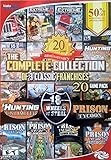
- 20th Anniversary Complete collection of 3 Classic Franchises including 20 games total!
- Includes: 18 Wheels of Steel Extreme Trucker 1 and 2, American Long Haul, Haulin', Convoy, Across America. Take the Wheel of a fast paced, high intensity trucking business. Start as one man show, bidding on jobs, then build your fleet into an unstoppable convoy and deliver the goods. Grow your business and your fleet, but beware - Your reputation is everything. Fail at your job or pass on the wrong offer and you'll find yourself haulin' manure!
- Includes Prison Tycoon 1, 2, 3, 4, Alcatraz. Take the reigns of privately run prisons. You are responsible for the care, custody, and control of the individuals who have been arrested. Begin with a low security prison and build it up to a supermax From construction to daily operations you must protect society while turning a profit.
- Includes: Hunting Unlimited Trophy Collection, 4, 2008, 2009, 2010, 2011 - Become the Ultimate Hunter. Use an Arsenal of weapons from bows to bullets, traveling around the globe to hunt big game and small prey. Hunt in over a hundred locations to bring home your virtual trophies.
Far Cry (2004): shooters opened up their spaces
Far Cry helped establish the appeal of expansive shooter environments in which players could scout, circle, snipe, drive, or improvise instead of following one prescribed route. Open terrain changed pacing: observation and route planning became as important as aim.
The lasting contribution is a design expectation. A first-person shooter could provide authored set pieces while still leaving room for player-led tactics. Later open-world shooters developed that idea in different directions, but the tension between spectacle and freedom was already visible here.
Guild Wars (2005): online role-playing did not require one payment model
Guild Wars challenged the assumption that a persistent online role-playing game had to charge a recurring subscription. Its alternative model made the initial purchase the main access decision, while instanced areas and mission design reduced some of the technical and social pressures associated with a single shared world.
What’s actually slowing this PC down?
Pick the symptom - the matching free tool is one click away.
That distinction matters beyond pricing. Business models shape who can participate, how often players return, and what developers must build to sustain a community. Guild Wars showed that “online RPG” could describe several combinations of world structure, monetization, and social play.
The Elder Scrolls IV: Oblivion (2006): the open world became a personal project
Oblivion presented a fantasy province designed for wandering, side quests, experimentation, and self-directed character development. Players could follow the main story, ignore it for long stretches, or build routines around exploration and faction activities.
Its mod community extended that philosophy. User-made quests, balance changes, visual updates, and total conversions treated the shipped game as a foundation. The influence claim is not that Oblivion invented open-world role-playing, but that it helped normalize a relationship in which players expected to customize and extend a major single-player release.
Rank #4

- Baldurs Gate 4 In 1 Compilation.
- Features: Special 4-game DVD-ROM.
- Play the original Baldur's Gate game.
- Includes Tales of The Sword Coast Expansion.
- Explore unseen lands as you take part in an epic conflict that will define your future, and create your legend. Venture into a deadly new dungeon.
Call of Duty 4: Modern Warfare (2007): cinematic campaigns met persistent unlocks
Call of Duty 4: Modern Warfare combined tightly scripted scenes with a contemporary military setting and a multiplayer progression track. The campaign used controlled pacing and spectacle, while multiplayer rewards encouraged players to keep returning, experimenting with equipment, and unlocking new options.
Cheat Code Central reports more than 16 million copies sold. Because the article does not identify the original publisher source for that number, it should remain attributed to the article. The broader design legacy is clearer: blockbuster shooters increasingly treated campaign presentation and long-term online progression as complementary products rather than separate modes.
BioShock (2007): the first-person game became a vehicle for authored themes
BioShock placed its first-person mechanics inside a heavily authored setting, using environmental detail, audio logs, art direction, and moral decisions to carry the narrative. The player still explored and fought, but the game asked them to interpret a world and question the relationship between agency and control.
Its importance lies in expanding expectations for the genre. A first-person game could be discussed for its themes, writing, and atmosphere as seriously as for its weapons or level design. That did not eliminate action-focused shooters; it widened the range of stories the format could credibly tell.
StarCraft II: Wings of Liberty (2010): a major strategy influence outside the cutoff
StarCraft II: Wings of Liberty belongs in this conversation only with an explicit date warning. Released in 2010, it is not a 2000s game under the ordinary 2000–2009 definition. Its inclusion makes sense as a bridge from the decade’s PC strategy tradition into the next decade’s highly visible competitive scene.
The list highlights competitive real-time strategy: fast decision-making, resource management, build orders, and asymmetrical factions that can be understood by spectators while remaining difficult to master. Those are legitimate reasons to discuss its influence, but the date should not be silently corrected or ignored.
Best Value
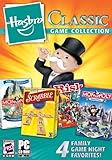
- Hasbro Classic Games Collection 2009 combines four great games in one box:
- Monopoly 2008
- Scrabble Champion Edition
- Monopoly Here & Now
Distribution changed as much as design
The most concrete industry shift represented here is the move from boxed retail toward digital delivery. Valve’s historical record places Half-Life 2 at the center of that transition and documents Steam’s growth from 15 million active users and more than 200 games in 2007 to over 25 million users and more than 1,000 games in 2009. The figures come from Valve, so they describe the company’s own reported milestones rather than an independent audit.
Valve’s Steam listing for The Orange Box identifies an October 10, 2007 release and includes Half-Life 2, Half-Life 2: Episode One, Half-Life 2: Episode Two, Team Fortress 2, and Portal. That package shows another period trend: digital distribution could bundle a back catalog, episodic continuation, multiplayer game, and new experimental title into one platform-centered product.
How to judge “changed gaming” without inventing a ranking
No available source establishes an objective ranking across all twelve games. A practical comparison uses three questions instead:
Recommended Free Tools
- What changed? Identify whether the contribution concerns distribution, online communities, competitive formats, modding, accessibility, simulation, storytelling, or technology.
- What evidence supports it? Separate documented facts—such as a release year, a platform milestone, or an official product description—from editorial interpretations about influence.
- Does the date fit? Keep the 2000–2009 boundary visible, and label StarCraft II as a 2010 exception rather than treating it as a 2000s release.
Using that framework produces a more accurate conclusion than a single numbered ranking. The Sims broadened who PC games were for; Counter-Strike and StarCraft II sharpened competitive formats; World of Warcraft and Guild Wars tested different online structures and payment models; Half-Life 2 connected technology, modding, narrative, and distribution; and the remaining entries pushed scale, openness, progression, or storytelling in distinct directions.
What the list gets right—and where it needs qualification
The selection succeeds because it does not define influence narrowly. It includes a life simulator beside an MMO, a tactical shooter beside an action RPG, and a digital storefront milestone beside a narrative adventure. Together, they show that PC gaming changed through systems and communities as much as through graphics.
Its main weakness is precision. The decade label should exclude or clearly flag StarCraft II, and reported sales or subscriber totals should remain attributed to Cheat Code Central when no original publisher source is identified. The strongest independently documented example in the set is Valve’s account of Half-Life 2 appearing through both Steam and retail, while the broader claims about downstream influence are best presented as reasoned historical interpretations rather than absolute proof.
Quick Recap
Product prices and availability are accurate as of the date/time indicated and are subject to change. Any price and availability information displayed on Amazon at the time of purchase will apply.

