A real-time strategy (RTS) game is a strategy game in which the action keeps moving while players make decisions and issue commands. Rather than waiting for turns to resolve, players manage resources, build or expand their forces, and respond to events as they unfold. Resource gathering, base building, unit production, and battlefield control are common features of classic RTS games, but no single checklist defines every game in the genre.
What does RTS mean in gaming?
RTS stands for real-time strategy. In an RTS, the game state continues to change while you play: units move, battles develop, and opponents act even as you decide what to do next. The defining distinction from turn-based strategy is this timing structure—not the presence or absence of planning. Both genres reward strategic thinking; RTS asks you to plan while events keep unfolding.
In a classic PC RTS, a match often involves securing resources, using them to construct or expand production, creating units, scouting or defending, and then attacking or responding to an opponent doing the same. Fog of war can limit what you see, making scouting and information part of the strategy. Mouse-based unit selection and commands are associated with the classic PC tradition. These are recurring conventions, not requirements that every RTS must follow. Xbox Wire’s genre overview and Game Developer’s Warcraft retrospective describe these familiar mechanics.
What are the main features of an RTS?
Continuous play and real-time decisions
There are no ordinary turn breaks in the genre’s familiar form. You may need to choose a unit command, respond to an attack, and decide how to spend resources while other actions continue. That makes prioritization and timing central to play.
#1 Best Overall
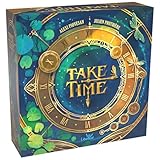
- COOPERATIVE TIME-THEMED CHALLENGE: Work together to strategically place cards around a clock, solving unique puzzles with evolving difficulty.
- 40 INCREASINGLY CHALLENGING TESTS: Progress through 10 chapters, each with 4 unique tests, requiring communication, planning, and logical thinking.
- UNIQUE CARD PLACEMENT MECHANIC: Players must arrange Solar and Lunar cards face down around the clock while following specific rules to succeed.
- HIGHLY REPLAYABLE WITH TEAM STRATEGY: Plan, discuss, and adapt to new challenges as you play through multiple sessions, aiming to complete all 40 tests.
- PERFECT FOR FAMILIES & PUZZLE LOVERS: Designed for 1-4 players, ages 10 and up, offering engaging, thought-provoking gameplay for groups and solo play.
Resources, production, and forces
Many classic RTS games connect an economy to military strength: players gather or secure resources, invest in structures or production, and create units. The exact resources, construction systems, and degree of base building vary from game to game.
Combat, scouting, and information
Players direct forces across a battlefield, but they may not have a complete view of it. Fog of war, scouting, unit roles, and the number of fronts a player must manage all shape decisions. Some games emphasize large armies and broad battlefield control; others ask players to handle a smaller force or more specialized tactics.
Rank #2

- EASY TO LEARN, QUICK TO SET UP: Plays in 60-90 minutes with minimal table space. A perfect gateway for new strategy gamers, families with teens, and fans of Catan, Splendor, and Spice Road who want something fresh.
- THREE STRATEGIC DECKS: Trade cards build gold, Influence cards create ongoing effects you trigger every turn, and Specialty cards unlock powerful one-shot abilities and victory points. Mix and match for a different game every time.
- MULTIPLE PATHS TO VICTORY: Race through medieval trade routes, collect resources to convert into victory points, or build a card engine that pays off late. First to 20 victory points wins, but how you get there is up to you.
- UPGRADE YOUR TRADER: Three permanent upgrade tracks let you move farther, draw more cards, and play more from your hand. Spend gold to compound your options as the game accelerates.
- FITS IN A BACKPACK: 7-inch box sets up in 5 minutes on any table. Easy to throw in a bag for trips and game nights without hauling a giant box around.
Campaigns, multiplayer, and settings
RTS games can be built around missions, competitive matches, cooperative or network play, or a combination of these. Their settings include fantasy, science fiction, and historical worlds. The theme alone does not determine whether a game is an RTS; the game’s real-time command-and-strategy structure matters more.
How is real-time strategy different from turn-based strategy?
In turn-based strategy, players take turns and actions resolve in discrete phases. In an RTS, play continues as players make decisions. This changes the pressure and rhythm: an RTS typically requires players to choose priorities while the situation changes, whereas turn-based play gives players a defined turn in which to consider moves before the next phase.
The Tool Desk
Outbyte PC Repair FREERepair Windows errors before they cause bigger problemsFix Now →Outbyte Driver Updater FREEScan for outdated or missing drivers - takes under a minuteDriver Scan →Rank #3

- COOPERATIVE STRATEGY: Work as a team against the game itself in Pandemic. Players combine their roles and actions to contain four global outbreaks, share knowledge, and race to complete all four cures before time runs out.
- SPECIALIST ROLES: Play as the Medic, Scientist, Researcher, Operations Expert, and more. Each role has distinct abilities that shape team strategy and make every player's decisions important from start to finish.
- TEAMWORK GAMEPLAY: Pandemic rewards planning, card management, and coordinated moves. This cooperative strategy game creates tense decisions each round as players balance immediate threats with long-term progress.
- SERIES ENTRY POINT: Pandemic is the base game that introduces the wider series, including Pandemic Legacy Season 1. Learn the core systems here, then build on that experience in future campaign play.
- GROUP GAME NIGHT: For 2-4 players ages 8 and up, Pandemic plays in about 45-60 minutes. It fits family game nights at home, family vacations, adult board game groups, and players looking for a teamwork-focused tabletop challenge.
That distinction does not mean RTS is simply about speed or that turn-based games lack urgency or complexity. Pace and scale vary among RTS titles, as do the number of units, the importance of economy and construction, and the role of scouting. A useful comparison between two games looks at those systems rather than assuming every RTS follows one fixed formula.
Independent reader supportYour contribution helps us test, update, and keep practical guides available for everyone.How did the RTS genre develop?
Dune II and the recognizable formula
Dune II was released in 1992 and helped establish the recognizable RTS formula. Xbox Wire describes it as a major step in combining elements that became genre staples, including fog of war, precise mouse controls, and resource management. Its developers drew on earlier influences including Herzog Zwei, Populous, and Civilization. Calling Dune II foundational is more precise than declaring it the uncontested first real-time strategy game: earlier games had explored real-time strategy elements.
Rank #4

- A TWIST ON CLASSIC BATTLESHIP GAME: This Amazon Exclusive Battleship with Planes board game features airplanes in addition to ships for awesome strategic gameplay and epic battles
- SINK SHIPS AND CRASH PLANES: With this strategy naval combat game, fans of the Battleship game can crash enemy planes in addition to sinking ships to win
- PORTABLE GAME WITH STORAGE: This Battleship game includes 2 portable battle cases and convenient ship, plane, and peg storage. It's an ideal travel game for kids—dive into an instant game on the go
- A CHILDHOOD FAVORITE: Remember playing the Battleship strategy game as a kid? Enjoy playing this 2 player board game with a new generation
- GREAT FOR FAMILY GAME NIGHT: Looking for fun indoor games for game night? This strategy board game for kids is a great choice
Warcraft broadens the audience
Warcraft: Orcs & Humans arrived in 1994. Activision Blizzard describes it as a breakthrough hit for the company, while Xbox Wire credits the Warcraft series with popularizing randomized maps and multiplayer matches over modem or LAN. These developments helped make the genre’s formula familiar to more players.
StarCraft brings the formula to space
Released in 1998, StarCraft carried the genre into science fiction and became a major RTS and esports touchstone. In a Blizzard interview about the game’s competitive legacy, cofounder Mike Morhaime recalled the creative shift: “The artists were tired of drawing fantasy, so we thought we’d set this one in space.” The quotation describes the original game’s direction, not a rule that defines the genre.
How to compare RTS games
Because RTS is a family of games rather than one ruleset, compare the specific systems that affect how a title plays:
- Pace and scale: How quickly decisions are expected, and how many units or fronts you manage.
- Economy and construction: What resources are available, how they are gathered, and how much base building matters.
- Combat and information: How unit roles, visibility, scouting, and fog of war shape choices.
- Campaign and multiplayer: Whether the game emphasizes missions, competitive matches, cooperative play, or network play.
- Theme and complexity: Whether the setting is fantasy, science fiction, or historical, and how much a new player must learn at once.
These dimensions are more useful than treating one classic title as a template for the entire genre. RTS games can share a real-time decision structure while differing substantially in pace, scale, economy, and modes of play.
Quick Recap
Product prices and availability are accurate as of the date/time indicated and are subject to change. Any price and availability information displayed on Amazon at the time of purchase will apply.