Do these 3 things before closing this tab:
1Fix the driver behind crashes, sound loss and screen glitches2Repair Windows errors before they cause bigger problems3Scan for outdated or missing drivers - takes under a minuteYes, a GTX 970 can be physically modified to detect 8GB of VRAM. Brazilian modder Paulo Gomes and collaborators replaced the card’s original memory chips with higher-density GDDR5 modules, changed board-level configuration components, and produced a working ASUS GTX 970. In the reported Unigine Superposition 8K test, the modified card nearly doubled the stock benchmark score.
That does not make the GTX 970 a modern 8GB gaming GPU. The modification is an advanced board-repair experiment, the card’s unusual split-memory design remains, and no published game-testing suite proves a broad gaming performance gain.
As an Amazon Associate I earn from qualifying purchases.
What was actually upgraded?
The project replaced the GTX 970’s original memory packages with higher-density chips. Reports describe the stock modules as 512MB, approximately 7Gbps GDDR5 chips, while the replacements were 1GB modules rated at roughly 8Gbps.
The modders also altered board-level configuration components, reportedly including a resistor, so the GPU could identify and address the new memory arrangement. VBIOS flashing was part of the experimentation, including unsuccessful attempts, but a BIOS flash alone cannot turn a 4GB GTX 970 into an 8GB card.
#1 Best Overall
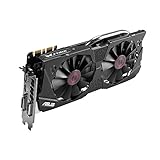
- DirectCU II + 0dB fan technology; silent gaming at 30% cooler. Fits PCI Express 3.0 bus.
- ASUS GPU Tweak Utility Real-time and intuitive tweaking software.
- Gigantic 4GB 7010 MHz GDDR5 memory, 256-bit interface. DIGI+ VRM with 6-phase Super Alloy Power.
- GPU Boost Clock : 1253 MHz, GPU Base Clock : 1114 MHz
- Interface: DVI, Output : Yes x 1 (DVI-I), Yes x 1 (DVI-D), HDMI Output : Yes x 1 (HDMI 2.0), Display Port : Yes x 1 (Regular DP), HDCP Support : Yes
After the physical modification and configuration changes, the ASUS card was reported to detect approximately 8192MB of VRAM. The project was documented by the modding team and discussed by TechSpot, Gizchina, and the original project video.
The GTX 970’s infamous memory split
The original GTX 970 was marketed as a 4GB GDDR5 graphics card, but its memory subsystem was divided into two differently performing regions:
| Configuration | Higher-performance region | Slower region | Total |
|---|---|---|---|
| Stock GTX 970 | Approximately 3.5GB | Approximately 0.5GB | 4GB |
| Modified card | Approximately 7GB | Approximately 1GB | 8GB |
This segmentation became a major controversy after the GTX 970 launched in 2014. NVIDIA acknowledged that its technical communication about the memory configuration had been inaccurate, and the issue led to consumer compensation in the United States. Contemporary specifications still list the card as a 4GB, 256-bit GDDR5 product; see the NVIDIA user guide and EVGA’s GTX 970 specification sheet.
The 8GB modification increases both regions, but it does not redesign the underlying memory architecture. The most accurate description is therefore 8GB of total addressable VRAM, with approximately 7GB in the faster region and 1GB in the slower region, as reported in technical coverage by IT Home and El Chapuzas Informático.
The reported benchmark result
The clearest published comparison used Unigine Superposition’s extremely demanding 8K preset:
Rank #2

- Item Package Dimension -10.699999989086L X 3.699999996226W X 2.49999999745H Inches
- Item Package Weight - 2.1495070545 Pounds
- Item Package Quantity - 1
- Product Type - Video Card
| Card | Reported score | Reported average FPS |
|---|---|---|
| Stock GTX 970 | About 800–866 | About 6.5 |
| Modified GTX 970, 8GB | About 1,500–1,576 | About 11.79 |
| GTX 1060 6GB | About 1,575 | Not consistently reported |
In the comparison reported by TechSpot, the modified GTX 970 scored 1,576 versus 866 for the original card and approximately 1,575 for a GTX 1060 6GB. Other reports rounded the scores to roughly 1,500 and 800. These are results from the modder’s test, not an independently reproduced benchmark database.
The result represents an approximately 80–90% increase in that particular synthetic score. Calling it “double performance” without that qualification would be misleading: the evidence shows a nearly doubled Superposition 8K benchmark score, not twice the frame rate in ordinary games.
Why did the score improve so much?
The benchmark places unusual pressure on memory capacity and bandwidth. A stock GTX 970 can run into the limits of its approximately 3.5GB higher-performance region under an 8K workload. A larger pool may reduce the penalties associated with exhausting that region.
However, this was not a perfectly controlled 4GB-versus-8GB test. The replacement modules were also reported to run at approximately 8Gbps rather than the original chips’ approximately 7Gbps. The score increase may therefore reflect several changes:
- More total VRAM.
- Approximately 7GB available in the faster region instead of 3.5GB.
- Higher-rated memory chips.
- Different memory timing or board configuration.
- A workload specifically capable of exposing the stock card’s memory limitations.
The experiment demonstrates that memory was a meaningful bottleneck in this particular workload. It does not show that VRAM capacity was the only reason the stock card performed poorly.
Rank #3

- NVIDIA GeForce GTX 970 GPU
- 4GB 256-bit GDDR5 VRAM
- DL-DVI-D, DL-DVI-I, HDMI and DisplayPort
- PCI Express 3.0
- 3-way SLI ready
Does the mod fix the 3.5GB problem?
Only partially. The modified card has substantially more memory available before it reaches the slower segment, changing the practical threshold from roughly 3.5GB to roughly 7GB. But the segmented architecture remains. Eight equally fast gigabytes were not created.
That distinction matters because a game or application reporting 8GB does not guarantee identical bandwidth or latency across the entire allocation. The modified card may be more useful in workloads that need a large texture or render-data pool, but the final 1GB should not be treated as equivalent to the first 7GB.
What does it mean for gaming?
At present, not enough to claim a general gaming transformation. IT Home specifically reported that the modders benchmarked the card but did not test games. The available evidence does not establish game-by-game average FPS, minimum FPS, 1% lows, frame-time consistency, texture-streaming behavior, long-session stability, or modern-driver compatibility.
Even if additional VRAM prevents an application from spilling into a slower memory region, the GTX 970 still uses a 2014-era Maxwell GPU. Its shader performance, memory bandwidth, power efficiency, feature support, and driver longevity remain unchanged. More VRAM cannot add ray tracing hardware, modern video features, or the rendering throughput of a newer GPU.
The reported tie with a GTX 1060 in Superposition 8K is similarly narrow. The modified GTX 970 effectively matched or marginally exceeded that card in the cited benchmark, but that does not establish superiority in games, thermals, power consumption, or general workloads.
Recommended Free Tools
Rank #4

- Chipset: NVIDIA GeForce GTX 1070
- Video Memory: 8GB GDDR5;Virtual Reality Ready
- Memory Clock: 8008 MHz ; Memory interface: 256-bit
- Max. Resolution: 7680 x 4320, support 4x Display monitors
- Please Note: Kindly refer the User Guide before use.
Can any GTX 970 be upgraded?
That has not been established. The documented result used an ASUS Strix GTX 970, and GTX 970 boards from different manufacturers can vary in PCB layout, BIOS, memory organization, component placement, cooling, and power delivery.
Compatibility would depend on factors including:
- The exact PCB revision and number and placement of memory packages.
- Supported memory density and organization.
- Memory-controller and strap configuration.
- BIOS compatibility.
- The electrical and thermal suitability of donor chips.
- Board condition and the quality of the rework.
There is no universally validated parts list, resistor value, or VBIOS recipe that can safely be applied to every GTX 970. “The GTX 970 supports 8GB” is therefore too broad; the evidence supports only that one compatible board was successfully modified.
Why this is not a casual upgrade
Replacing graphics-memory packages is board-level rework, not a plug-in memory upgrade. It generally requires specialist hot-air or BGA rework equipment, preheating, magnification, flux, careful thermal control, inspection, and memory-stability testing. A basic soldering iron is not an adequate substitute.
Possible failure modes include:
- No POST: incorrect memory organization, damaged traces, bad solder joints, incompatible configuration, or firmware mismatch.
- Partial VRAM detection: defective chips, poor connections, or unsupported density detection.
- Artifacts and crashes: marginal timings, incompatible memory, overheating, insufficient voltage, or damaged board components.
- No benchmark improvement: the workload may be shader-limited, or the card may not be using the new memory correctly.
- Firmware failure: a bad VBIOS experiment may require specialist recovery, another graphics adapter, or a hardware programmer.
Damage can be irreversible. The modification may also eliminate any remaining resale value and produce memory errors that do not appear immediately at the desktop.
Free tools Windows power users keep installed
One-click scans. No signup required.
Who should consider it?
| Reader situation | Verdict |
|---|---|
| Electronics expert with rework equipment | An interesting engineering and benchmarking project. |
| Ordinary GTX 970 owner | Do not attempt it without a qualified specialist. |
| Gamer seeking more FPS | Use the money and effort toward a newer used GPU instead. |
| Retro-PC or hardware collector | Potentially worthwhile as a preservation experiment. |
| Repair shop or GPU modder | Viable as a board-specific research or commissioned project, with no guaranteed success rate. |
Diagnostic tools such as GPU-Z, Unigine Superposition, and OCCT can help verify detection and stability after a successful repair. They cannot make an incompatible modification safe.
The verdict
The GTX 970’s resurrection is real, but the headline needs context. Modders proved that its physical VRAM capacity could be doubled and showed a major gain in one memory-intensive synthetic benchmark. The project also suggests that the original card’s limited high-performance memory could be a serious bottleneck at extreme settings.
It did not produce a modern 8GB-class GPU, remove the segmented-memory design, or demonstrate twice the gaming performance. For most owners, buying a newer used graphics card is the sensible path. For specialists and preservation-minded enthusiasts, the modified GTX 970 is a remarkable example of what board-level GPU engineering can accomplish.
Quick Recap
Product prices and availability are accurate as of the date/time indicated and are subject to change. Any price and availability information displayed on Amazon at the time of purchase will apply.




