
Do these 3 things before closing this tab:
1Fix the driver behind crashes, sound loss and screen glitches2Repair Windows errors before they cause bigger problems3Scan for outdated or missing drivers - takes under a minuteFor most Valve Index owners, start at 90 Hz with SteamVR Settings > Video > Render Resolution set to Auto. This is the safest balance between image quality and frame-time headroom. Raise resolution only when your target game is consistently meeting its frame cadence; drop to 80 Hz or lower resolution when frames are missed. Use 120 or 144 Hz only with hardware and games that can sustain them, and treat Motion Smoothing as a fallback for inconsistent frame rates rather than a way to hide every performance problem.
What the Index settings actually change
Three SteamVR controls determine most of what you see and feel in a Valve Index: refresh rate, render resolution, and Motion Smoothing. They solve different problems, so changing the wrong one can make the headset look sharper while making tracking feel less consistent.
| # | Preview | Product | Price | |
|---|---|---|---|---|
| 1 |

|
Valve Index VR Headset, Black, for PC/SteamVR, CPS 1-Year Warranty (Renewed) | $469.00 | Buy on Amazon |
| 2 |
|
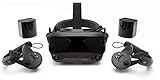
Valve Index VR Full Kit | $1,849.99 | Buy on Amazon |
| 3 |

|
Valve Index VR Full Kit (Renewed) | $1,135.00 | Buy on Amazon |
| 4 |

|
Upgraded Valve Index Face Gasket Complete Set with Magnetic Bracket Dual Covers Joystick Caps Lens... | $32.98 | Buy on Amazon |
As an Amazon Associate I earn from qualifying purchases.
Refresh rate controls the frame-time target
The Index supports 80, 90, 120, and 144 Hz modes. A higher mode gives the headset a shorter interval in which each frame must be delivered. That can make motion appear more immediate when the game and GPU sustain it, but it also reduces the performance margin available for complex scenes. Valve specifically advises trying 90 Hz when GPU load is causing lag.
Quick wins for a faster PC:
Clear out junk files and repair common Windows errorsFree Scan →Fix the driver behind crashes, sound loss and screen glitchesFind Drivers →Render resolution controls clarity
Render Resolution determines how many pixels SteamVR asks the game to render before the image is displayed through the Index lenses. Higher values can improve fine detail and reduce the softness associated with undersampling, but they increase GPU work. Valve describes resolution above the headset-provided value as supersampled anti-aliasing and recommends increasing it only until performance problems begin.
#1 Best Overall
- VR Experience: Immerse yourself in virtual reality with the Valve Index VR headset, designed specifically for PC and SteamVR platforms for seamless gaming and interactive experiences
- Display Quality: Experience crystal-clear visuals with high-resolution displays and optimized optics that deliver stunning graphics and reduced screen-door effect
- Comfort Design: Ergonomically engineered headset with adjustable head strap and face gasket ensures comfortable extended wear during long gaming sessions
- PC Integration: Seamlessly connects with your PC to access SteamVR's extensive library of virtual reality games, applications, and experiences
- Renewed with CPS 1-Year Warranty for added hardware protection.
Motion Smoothing trades artifacts for consistency
Motion Smoothing generates intermediate frames when the application cannot consistently deliver the selected refresh rate. It can make an uneven game feel steadier, but generated frames may show visual artifacts and can change the perceived latency. Steamworks exposes Off, On, and Always-on modes for individual applications, so the most useful choice depends on the specific title.
Before changing anything
Confirm that the PC is suitable
Valve lists a GeForce GTX 970 or Radeon RX 480 as minimum graphics hardware for Index, and a GeForce GTX 1070 or better as recommended. These are baseline requirements, not a promise that every game will run at high resolution or 144 Hz. A demanding simulator can need substantially more headroom than a simple room-scale title.
Run the compatibility check
Use Steam’s VR-ready compatibility test before tuning. It can identify a system that is unlikely to maintain VR frame timing, saving you from trying to solve a hardware limit with a slider. The test does not replace measuring the actual game you intend to play.
Update the graphics driver
Install a current driver from your GPU manufacturer before comparing settings. Steam’s support guidance includes driver updates as a basic performance check. Treat optional driver-maintenance utilities as unnecessary for this process; the important step is that the graphics driver itself is current and installed correctly.
The recommended baseline: 90 Hz and Auto resolution
- Open SteamVR and select the small menu icon in the SteamVR window.
- Choose Settings, then open Video.
- Set the global refresh rate to 90 Hz.
- Set Render Resolution to Auto.
- Start the game you want to tune and play a representative section rather than standing in an empty menu.
- Watch SteamVR’s frame-timing display or the in-game performance overlay. Keep this baseline if frame timing remains stable and the image is acceptable.
Auto is a starting point, not a permanent quality recommendation. Steam Support explicitly says to try Auto when it is not already selected, while Valve’s broader guidance allows owners to raise resolution beyond the headset-provided value until performance problems appear.
Rank #2
- Displays - Dual 1440 x 1600 LCDs, full RGB per pixel, ultra-low persistence global backlight illumination (0.330ms at 144Hz)
- Ergonomic Adjustments - Head size, eye relief (FOV), IPD, speaker positions. Rear cradle adapter included.
- Inter-pupillary Distance (IPD) - 58mm - 70mm range physical adjustment
- Optics - Double element, canted lens design
- NOTE - PC compatible with Valve Index is required
Choosing the right refresh rate
| Mode | When to try it | Trade-off |
|---|---|---|
| 80 Hz | Use when a game is close to missing its frame target at 90 Hz or when reducing GPU load is more important than motion fluidity. | Lowest GPU demand among the Index modes, but less frequent display updates. |
| 90 Hz | Recommended starting point for general play and the best first response to GPU-related lag. | Balanced motion and workload for a wide range of PCs. |
| 120 Hz | Use when the game can sustain the required cadence with spare GPU headroom. | Smoother motion potential, with less time available to render each frame. |
| 144 Hz | Use for especially capable systems and titles that remain stable at the highest Index mode. | Most demanding mode; a missed cadence can be more disruptive than the extra refresh is helpful. |
Do not select 144 Hz simply because the headset offers it. A stable 90 Hz session is preferable to a nominally faster mode that repeatedly misses frames. Test the same busy scene at each candidate rate, because a quiet tutorial area can hide the load of later levels.
How to raise resolution without introducing stutter
Use small increments
After confirming a stable 90 Hz baseline, increase the global Render Resolution one step at a time. Play for several minutes in a GPU-heavy section after each change. If frame timing remains comfortably inside the target, keep the step; if missed frames appear, return to the previous value.
Understand what higher-than-default resolution means
SteamVR may render above the Index’s physical 1440 × 1600 pixels per eye. That additional sampling can improve edge quality and distant detail, but every increase adds GPU work. There is no single official percentage that is correct for every Index owner. The useful limit is the highest value your particular game and graphics card can sustain.
Separate blur from performance limits
If Auto resolution is stable but the image still looks soft, first check that the headset lenses are clean, positioned correctly, and adjusted for your eyes. If the softness is caused by insufficient render resolution, raise it gradually. If doing so causes frame misses, the choice is between a sharper but less stable image and a slightly softer image with consistent motion; stability should win for active gameplay.
Per-application profiles are usually better than one global value
Steamworks documents per-game controls for resolution, minimum refresh rate, half-framerate throttling, and Motion Smoothing mode. Use these overrides when one title behaves differently from the rest of your library.
Rank #3
Set a demanding simulator apart
Keep the global profile at 90 Hz and Auto, then open the game’s SteamVR application settings while that title is running. Lower that game’s resolution or choose a lower minimum refresh rate if its busiest scenes miss frames. This leaves lighter games free to use the global baseline without forcing every title to the same compromise.
Give a lightweight game more clarity
If a simple game has abundant frame-time headroom, raise only its application resolution. A per-game increase lets you improve clarity without making a demanding simulator unstable the next time you launch it.
Use half-framerate throttling deliberately
Steamworks includes a half-framerate option for applications. It can be useful when a title cannot sustain the selected refresh rate but behaves better with a predictable lower cadence. Enable it only after testing the game’s controls and motion, because the result is intentionally different from native full-rate rendering.
Motion Smoothing: when to enable it and when to leave it off
| Mode | Best use | What to watch for |
|---|---|---|
| Off | Use when the game already sustains its selected refresh rate or when generated-frame artifacts are distracting. | Missed frames are shown directly, so inconsistent performance is easier to notice. |
| On | Use as a fallback when frame rate varies in demanding scenes. | Look for warped edges, doubled objects, or other interpolation artifacts in motion. |
| Always-on | Use only when a particular application is more comfortable with a consistently synthesized cadence. | Artifacts and latency characteristics become part of the experience even during scenes the PC could render natively. |
Valve recommends trying Motion Smoothing when frame rates are inconsistent. Evaluate it inside the game rather than in a static test: fast hand movement, thin geometry, animated characters, and crossed motion paths reveal artifacts that a quiet room does not. If the game is stable with Motion Smoothing off, leaving it off preserves the native frames and avoids unnecessary interpolation.
Four practical profiles
| Profile | Refresh rate | Resolution approach | Motion Smoothing | Use case |
|---|---|---|---|---|
| Balanced baseline | 90 Hz | Auto | Off initially | New setup or a mixed library. |
| Clarity-first | 90 Hz | Increase gradually above Auto while frame timing has headroom. | Off if native frames remain stable. | Text-heavy or distant-detail games on a capable GPU. |
| High-refresh | 120 or 144 Hz | Auto or a lower per-game value as needed. | Only after testing native stability. | Games and hardware that sustain the higher cadence. |
| Consistency-first | 80 or 90 Hz | Reduce resolution until busy scenes hold timing. | On, or Always-on for a tested application. | Demanding scenes where uneven frame delivery is worse than artifacts. |
These are starting profiles, not Valve-certified presets. The correct profile is the one that stays stable in the game you actually play while meeting your tolerance for softness and Motion Smoothing artifacts.
The Tool Desk
Outbyte Driver Updater FREEFix the driver behind crashes, sound loss and screen glitchesFind Drivers →Outbyte PC Repair FREEClear out junk files and repair common Windows errorsFree Scan →Rank #4
- All-in-One Set, Ready to Use:The set includes a magnetic bracket, 2 PU leather face covers, an anti-leakage nose pad, a VR lens cover, 4 joystick caps, and 3 high-density lens cleaning cloths. Get all essential accessories in one purchase for a convenient and comfortable VR experience right out of the box.
- Enhanced Comfort & Breathability:The face covers are made of skin-friendly PU leather and breathable memory foam, which softly conforms to your face, effectively absorbs sweat, and is easy to wipe clean. Combined with our unique breathable design, it keeps you cool and comfortable during long VR sessions.
- Complete Protection & Maintenance:The lens cover prevents scratches, and the joystick caps protect against thumbstick wear and dust. These thoughtful accessories work together to safeguard your Valve Index headset and controllers, reducing daily wear and tear to help maintain your equipment's value.
- Immersive Experience, Undisturbed:The magnetic bracket ensures a secure fit and easy handling, while the adjustable anti-leak nose pad effectively blocks outside light. Together, they let you dive into the virtual world faster and stay focused, free from distractions.
- Flexible Sharing For Everyone: Designed specifically for the Valve Index, our set offers two foam widths to fit different face shapes and preferences. Perfect for both personal use and sharing with friends and family, ensuring a hygienic and comfortable fit for every user.
A repeatable tuning procedure
- Record the baseline. Note the current refresh rate, global resolution mode, and whether Motion Smoothing is enabled.
- Test a worst-case scene. Choose a crowded area, a large view, or the section that normally causes slowdowns. Menus and empty rooms are poor benchmarks.
- Change one variable. Adjust refresh rate, resolution, or Motion Smoothing, but not all three at once.
- Allow the scene to settle. Play long enough to expose intermittent spikes rather than judging the first few seconds.
- Keep a stable change. If frame timing worsens, undo the last adjustment before trying another.
- Save the result per application. Use an override when only one title needs the compromise.
This order matters. Refresh rate changes the frame-time target, resolution changes GPU workload, and Motion Smoothing changes how missed frames are presented. Isolating them makes it clear which trade-off solved the problem.
Troubleshooting by symptom
The image is clear but motion stutters
- Return to 90 Hz if you selected 120 or 144 Hz.
- Lower Render Resolution one step and retest the same busy scene.
- Check whether another application has a more demanding per-game override.
- Try Motion Smoothing only after confirming that native rendering cannot remain consistent.
The image is smooth but too soft
- Keep the stable refresh rate and raise resolution gradually rather than jumping directly to a high value.
- Check lens position and cleanliness before spending GPU headroom on supersampling.
- If frame misses begin, restore the previous resolution; the higher value is beyond that game’s practical limit on the current GPU.
Motion Smoothing looks warped
- Switch the application to On or Off instead of Always-on and compare a demanding scene.
- Disable it if the game can sustain native frames.
- Reduce resolution or refresh rate so the title can render more frames directly.
Performance changes between games
That is expected. Rendering cost depends on the game’s engine, scene complexity, CPU workload, and graphics settings. Keep a conservative global profile and use per-application controls for outliers instead of chasing one setting that fits every title.
Hardware headroom and upgrade decisions
A faster GPU increases the room available for supersampling and high refresh rates, but it cannot guarantee a universal setting. Valve’s recommended GTX 1070-or-better class is a useful reference point; owners below the minimum GTX 970 or RX 480 class should address compatibility first, while owners near the recommended level should still tune per game.
When a game misses frames, identify whether the GPU is the limiting component before changing several settings. If lowering resolution fixes the problem, render workload is likely the immediate constraint. If resolution changes have little effect, the bottleneck may be elsewhere in the game or system, and a GPU upgrade alone may not solve it.
Valve Index availability and support
Valve’s current Index information says the headset is no longer being produced. Remaining headsets, controllers, and accessories are available while supplies last, and Valve says existing owners remain supported on Steam and SteamVR. That makes these settings useful both for current owners and for anyone evaluating a remaining-stock replacement: check availability at the time of purchase, and do not assume future hardware inventory.
Quick Recap
A concise decision checklist
- Start at 90 Hz.
- Leave global Render Resolution on Auto.
- Run Steam’s VR-ready test and update the graphics driver.
- Raise resolution only in small steps while frame timing has headroom.
- Use 80 Hz when reducing GPU load is more important than refresh rate.
- Try 120 or 144 Hz only when the target game sustains them.
- Use per-application overrides for demanding or unusually light titles.
- Enable Motion Smoothing only after testing its artifacts in the actual game.
- Prefer the highest clarity and refresh combination that remains stable in the busiest scene.
Product prices and availability are accurate as of the date/time indicated and are subject to change. Any price and availability information displayed on Amazon at the time of purchase will apply.

