
Do these 3 things before closing this tab:
1Clear out junk files and repair common Windows errors2Fix the driver behind crashes, sound loss and screen glitches3Repair Windows errors before they cause bigger problemsThe best Xbox Series X settings for a Samsung TV start with the console’s capability report, not a copied picture-mode preset. Open Settings → General → TV & Display Options → 4K TV details, enable HDMI UHD Color on the Samsung input used by the Xbox, select the highest combination of resolution and refresh rate that the report confirms, and run Xbox’s HDR calibration. Xbox Series X|S can output up to 120 Hz, but 4K at 120 Hz depends on the television model, the specific HDMI port and the cable.
The title says “Samson.” Samsung is the working interpretation here. Samsung menu names and HDMI capabilities vary, so exact values for contrast, gamma, local dimming or color temperature cannot be given safely without the TV’s full model number and your room’s viewing conditions.
As an Amazon Associate I earn from qualifying purchases.
What “best settings” means for an Xbox Series X and Samsung TV
A good setup does three things in the right order: confirms what the display can actually accept, opens the bandwidth features on the correct HDMI input, and calibrates HDR using the console’s own test patterns. This avoids two common errors: forcing a mode the television cannot display and applying numeric picture values intended for a different Samsung panel.
There is no universal Samsung preset. Two televisions sold in the same year can have different panel brightness, HDMI bandwidth, tone-mapping controls and game-mode behavior. Treat the settings below as a capability-led baseline. The final picture controls should be adjusted only after the Xbox reports the available modes and the HDR calibration patterns look correct.
#1 Best Overall

- Quality Visuals: The VG270K 27" IPS monitor with 3840 x 2160 UHD resolution in a 16:9 aspect ratio presents stunning, high-quality images with excellent detail. The zero-frame design does away with the thick frames found on conventional monitors freeing up precious screen space.
- AMD FreeSync Premium Technology: Say “goodbye” to stuttering and tearing. With AMD FreeSync Premium, the monitor’s frames are synced with the graphics card’s frames, which eliminates screen tearing and provides the smoothest gaming experience.
- Quick Refresh Rate: Different content has different refresh rate and resolution requirements. If you are playing an FPS or racing game, you will need a monitor with a high refresh rate. However, if you are doing office work or streaming videos, a higher resolution will be more beneficial. With DFR technology, users can choose a higher resolution, or a higher refresh rate based on what is suitable for them.
- Responsive: Up to 0.5ms GTG (Gray to Gray) response time enhanced gamers’ in-game experience. No matter if the fast-moving action or any dramatic transitions will be rendered smoothly without the annoying effects of smearing or ghosting.
- ZeroFrame Design: With a Nitro VG270K monitor, you’ll want to see as much of the display as possible. Get more real estate with the near bezel-less design, allowing you to see more and do more. The ZeroFrame design lets you place multiple monitors next to each other for a seamless, almost uninterrupted view.
Check the Xbox capability report first
- On Xbox Series X, open Settings.
- Choose General, then TV & Display Options.
- Select 4K TV details.
- Read every line for 4K resolution, HDR and refresh-rate support. This screen describes the combination the console and connected display negotiate, rather than what the console can do in isolation.
Use this report as the authoritative starting point. Xbox Series X|S support refresh rates up to 120 Hz, along with Auto Low Latency Mode (ALLM) and Variable Refresh Rate (VRR), but the television, its HDMI port and the cable must all support the requested mode. A display may advertise 120 Hz yet offer it only at a lower resolution, or on one HDMI input rather than every input.
If the report confirms 4K and 120 Hz, you can target 4K/120. If it confirms 4K only at 60 Hz, leave the console at 4K/60; forcing an unsupported combination can produce a blank screen, an unstable signal or a fallback to a lower mode. If 4K itself is missing, resolve the connection and input settings before changing picture controls.
Enable Samsung’s HDMI UHD Color on the Xbox input
Samsung televisions commonly gate their full HDMI bandwidth and HDR signaling behind an input option called HDMI UHD Color. Turn it on for the HDMI port where the Xbox is physically connected:
- Open the Samsung TV’s Settings.
- Go to Picture.
- Open Expert Settings or, on some models, Picture Options.
- Choose HDMI UHD Color.
- Enable it for the Xbox-connected HDMI port.
The exact navigation differs by model and software version; consult the television’s manual if the label or location is different. Selecting the wrong port is a frequent cause of missing HDR or a 4K/120 option: the setting must be enabled on the same input that carries the Xbox signal.
After changing the option, return to the Xbox’s 4K TV details page. The reported capabilities should update after the HDMI handshake. If they do not, power-cycle the TV and console, then recheck the cable and port before changing any picture value.
Rank #2

- 27-inch 4K Ultra HD Display: Features 3840 x 2160 resolution gaming monitor with ultra-fast 160Hz refresh rate designed for professional gamers and immersive gameplay
- ASUS Extreme Low Motion Blur Sync Technology: ELMB Sync technology enables ELMB and variable-refresh-rate technologies to work simultaneously to eliminate ghosting and tearing for sharp gaming visuals with high frame rates
- Advanced Synchronization Technologies: NVIDIA G-SYNC Compatible, AMD FreeSync Premium, and exclusive Variable Overdrive technology ensure seamless, tear-free gaming experience
- Superior Color Performance: High dynamic range (HDR) technology and 95% DCI-P3 professional color gamut provide amazing color accuracy and vibrant visuals
- Package Contents: Includes DisplayPort cable, L-shaped Screwdriver, Power cord, Quick start guide, and Warranty Card
Choose the highest mode the report confirms
| Capability report | Xbox output to select | What it means |
|---|---|---|
| 4K and 120 Hz available | Resolution: 4K UHD; choose 120 Hz where the display option is offered | The television, selected HDMI input and cable have negotiated a 4K/120 mode. |
| 4K available, 120 Hz unavailable | Resolution: 4K UHD; Refresh rate: 60 Hz | Keep the supported 4K/60 combination instead of forcing 120 Hz. |
| 4K unavailable | Do not guess at a resolution; inspect the HDMI port, HDMI UHD Color setting and cable, then recheck 4K TV details | The current connection is not reporting 4K support. |
| HDR unavailable | Leave HDR options off until the display reports support, then recheck the input setting and connection | HDR requires support from the display and the active HDMI path. |
Xbox’s “up to 120 Hz” specification is a ceiling, not a guarantee that every Samsung model reaches 120 Hz at 4K. Some screens provide 120 Hz only at a lower resolution. The capability page, not a marketing label on the television, determines the mode you should use.
Turn on HDR10 and decide how to use Auto HDR
HDR10
HDR10 is the baseline HDR format Xbox tells users to look for. When the 4K TV details page reports HDR support, leave the Xbox HDR option enabled. HDR games can then send HDR10 output through the Samsung’s compatible HDMI input.
What’s actually slowing this PC down?
Pick the symptom - the matching free tool is one click away.
Auto HDR
Auto HDR can add HDR enhancements to compatible games that were originally released in standard dynamic range (SDR). It is an Xbox processing option, not a replacement for a television’s native HDR support. Keep it enabled when the display reports HDR and the resulting image looks correct. If a particular older game appears unnaturally bright, washed out or has clipped highlights, compare it with Auto HDR disabled; the setting can be changed without altering your saved games.
Do not use Auto HDR as a reason to force HDR on a display that does not report HDR capability. First establish a valid HDR signal, then judge whether the enhancement benefits the individual game.
Calibrate HDR on the Xbox
Once the correct resolution, refresh rate and HDR capability are visible, run the console’s calibration tool. It accounts for the interaction between the Xbox output and the television’s current HDR behavior.
Rank #3
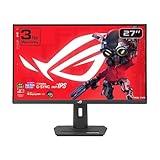
- Dual Mode Display Technology: 27-inch 4K (3840 x 2160) gaming monitor with versatile dual mode capability supporting 4K at 160 Hz or FHD at 320 Hz for flexible gaming performance
- Fast IPS Response Time: ASUS Fast IPS technology enables a 1ms response time (GTG) for sharp gaming visuals with high frame rates and minimal motion blur
- Advanced Motion Blur Reduction: ASUS Extreme Low Motion Blur Sync (ELMB SYNC) technology enables ELMB together with variable refresh rate, eliminating ghosting and tearing for sharp gaming visuals with high frame rates
- Superior Color Accuracy: 95% DCI-P3 color gamut with ASUS advanced gray-scale tracking technology ensures smoother color gradation delivered and uniformity for vibrant and accurate colors
- Convenient Settings Management: DisplayWidget Center enables easy monitor settings adjustments with a mouse for streamlined control and customization
- On Xbox, open Settings.
- Choose General, then TV & Display Options.
- Select Setup.
- Choose Calibrate HDR for Games.
- Follow each on-screen pattern instruction. Adjust only what the pattern asks for, stopping when the reference symbol is barely visible or disappears as instructed.
Xbox also provides a general TV calibration tool for brightness, sharpness and contrast. Use it after HDR calibration if you need to correct basic visibility. Perform the process with the TV in the mode you actually use for games; changing the Samsung picture mode afterward can change the result and require another pass.
Free tools Windows power users keep installed
One-click scans. No signup required.
Calibration is especially important for shadow detail. If dark steps in the pattern disappear, black crush can hide objects in games. If every bright step remains visible when the instruction calls for clipping, the television may be mapping highlights differently than intended. The calibration screen gives you a repeatable reference without inventing a numeric preset.
Use Samsung’s game or low-latency mode
Enable the Samsung mode intended for gaming or low latency. The exact name, location and available controls depend on the model. A game-oriented mode generally reduces processing that adds delay, while the Xbox can request ALLM so the television switches into that low-latency behavior automatically when a game starts.
Do not assume that every Samsung model exposes the same ALLM, VRR or tone-mapping controls. Confirm the result in the TV’s information panel and on the Xbox capability page. When VRR is supported by both devices, it can match the display’s refresh timing to fluctuating game frame rates. If VRR is absent from the report, leave it unavailable rather than forcing a hidden service-menu setting.
Keep motion interpolation, artificial sharpness and noise-reduction controls at their game-mode defaults unless you have a specific reason to change them. These controls are model-dependent and can add latency or alter the calibration patterns. There is no model-independent “correct” value for contrast, gamma, local dimming or color temperature in the supplied official guidance.
Windows Errors? Fix Them Before They Spread
Repair common Windows errors and clear accumulated junk for a smoother, more stable PC - no reinstall needed.Free scan · no reinstallCrashes, No Sound, or Screen Glitches?
Random freezes, missing sound and display glitches usually trace back to one bad driver. Find and replace yours safely.Free scan · under a minuteRank #4

- Dual Mode Display Technology: 32-inch 4K (3840 x 2160) gaming monitor with versatile dual mode (4K @ 160 Hz or FHD @ 320 Hz)
- Ultra-Fast Response Time: ASUS Fast IPS technology enables a 0.3ms response time (minimum) for sharp gaming visuals with high frame rates
- Advanced Motion Blur Reduction: ASUS Extreme Low Motion Blur Sync (ELMB SYNC) technology enables ELMB together with variable refresh rate, eliminating ghosting and tearing for sharp gaming visuals with high frame rates
- Superior Color Accuracy: 95% DCI-P3 color gamut with ASUS advanced gray-scale tracking technology ensures smoother color gradation delivered and uniformity
- Convenient Settings Management: DisplayWidget Center enables easy monitor settings adjustments with a mouse
Why Xbox may show only 60 Hz
The television supports 120 Hz, but not on this HDMI port
Check the label and manual for the port connected to the Xbox. Some Samsung models reserve their highest bandwidth for one or two inputs. Move the cable to a compatible port, enable HDMI UHD Color on that port, and revisit 4K TV details.
The cable cannot carry the requested signal
For 4K at 120 Hz, use a certified Ultra High Speed HDMI cable suitable for Xbox Series X. A cable that works at 4K/60 may not successfully negotiate 4K/120. Keep the cable path direct while troubleshooting; remove switches, receivers or adapters until the console and television report the desired mode.
The display reaches 120 Hz only below 4K
Some displays offer 120 Hz at a lower resolution. If the capability page lists that limitation, choose between the sharper 4K/60 mode and the lower-resolution 120 Hz mode according to the game and your priority. Do not describe the television as a 4K/120 display when its own report does not provide that combination.
The HDMI handshake is stale
Turn off the Xbox and Samsung, disconnect power briefly, reconnect the HDMI cable firmly, and power the TV on before the console. Then inspect 4K TV details again. A changed port setting may not be visible until both devices renegotiate the signal.
The Tool Desk
Outbyte PC Repair FREERepair Windows errors before they cause bigger problemsFix Now →Outbyte Driver Updater FREEScan for outdated or missing drivers - takes under a minuteDriver Scan →HDR is missing even though 4K works
Confirm HDMI UHD Color is enabled for the active port, verify that the television’s picture mode is not restricting HDR, and check the Xbox HDR line in 4K TV details. If HDR remains absent, test the Xbox directly on the TV without an intermediary device and use a known certified high-speed cable.
Best Value

- Improved ComfortView Plus: Reduces harmful blue light emissions to ≤35%, for all-day comfort without sacrificing color accuracy.
- Refresh rate: A smooth, tear-free experience with AMD FreeSync Premium (refresh rate up to 120Hz) and an ultra-low 0.03ms response time create a captivating experience for work and play.
- Vivid colors: Immerse yourself in breathtaking 4K visuals with in-plane switching technology. Enjoy vibrant colors with 99% sRGB. The 1500:1 contrast ratio and HDR readiness deliver excellent depth and detail.
- Re-engineered sound quality: Enjoy more detailed sound with spacious audio featuring greater output power, deeper frequency response and more decibel range than the previous generation.
- Ultra-thin bezel: Designed with a sleek, modern aesthetic and an ash white finish, this display features ultra-thin bezels for a refined, minimalist design.
How to compare Samsung models for Xbox use
When choosing between Samsung displays, compare the complete gaming signal path rather than one headline specification. The following axes identify differences that affect an Xbox Series X:
| Comparison axis | Questions to ask | Why it matters |
|---|---|---|
| Resolution and refresh combinations | Does the model report 4K at 120 Hz, or only 4K at 60 Hz or 120 Hz at a lower resolution? | Determines whether you can prioritize maximum sharpness, maximum refresh or both. |
| HDMI 2.1 availability | Which physical HDMI inputs support the required bandwidth? | 4K/120 may require HDMI 2.1 hardware, a compatible port and a suitable cable. |
| HDR peak brightness and tone mapping | How does the model handle bright highlights during the Xbox HDR patterns? | Affects whether highlights retain detail or clip and how bright scenes are mapped. |
| VRR and ALLM | Are both features reported for the Xbox-connected input? | VRR can smooth variable frame rates; ALLM can switch to a low-latency mode. |
| Game-mode input lag | What latency does the model specify or measure in its game mode? | Lower delay improves controller response, but only when the mode is active. |
| Shadow-detail behavior | Can dark steps remain visible during the Xbox HDR calibration patterns? | Preserving shadow detail prevents black crush in dark game scenes. |
If a specification is not stated for a model, treat it as unknown rather than assuming every HDMI input behaves like the best one. The Xbox report remains the final check after installation.
A complete setup checklist
- Identify the Samsung TV’s exact model and the HDMI input that will be used.
- Connect the Xbox directly to that input with a certified Ultra High Speed HDMI cable when targeting 4K/120.
- Enable Settings → Picture → Expert Settings (or Picture Options) → HDMI UHD Color for that port.
- Open Xbox Settings → General → TV & Display Options → 4K TV details.
- Select 4K UHD only when the capability page confirms it.
- Use 120 Hz only when the connected display reports that refresh rate at the chosen resolution.
- Enable HDR10 when HDR support is reported.
- Enable Auto HDR for compatible SDR games, then disable it for an individual title if its image is visibly incorrect.
- Run Setup → Calibrate HDR for Games and follow the patterns.
- Activate the Samsung game or low-latency mode and verify ALLM or VRR only if the model reports those features.
What not to copy from a generic preset
A numeric “best Samsung settings” list can be misleading because panel brightness, local-dimming behavior, firmware labels and room lighting differ. Do not copy a universal gamma, contrast, sharpness, color-temperature or local-dimming number when the TV model is unknown. Start with the console and HDMI capability checks, then use the Xbox patterns and the Samsung’s own game mode to make controlled adjustments.
If you later change the TV’s picture mode, move the Xbox to another HDMI input, add an AV receiver or replace the cable, repeat the capability check. The negotiated signal can change even though the Xbox itself has not changed.
The practical recommendation
For a Samsung display that reports the full combination, the target is 4K UHD at 120 Hz with HDR10, Auto HDR available for compatible games, and the TV in its game or low-latency mode. For a display that reports only 4K/60, the correct target is stable 4K/60 with HDR10 rather than an unsupported 120 Hz setting. In both cases, HDMI UHD Color must be enabled on the Xbox-connected input and HDR must be calibrated on the console.
Quick Recap
Product prices and availability are accurate as of the date/time indicated and are subject to change. Any price and availability information displayed on Amazon at the time of purchase will apply.

