
Do these 3 things before closing this tab:
1Clear out junk files and repair common Windows errors2Scan for outdated or missing drivers - takes under a minute3Repair Windows errors before they cause bigger problemsYes. Call of Duty: Black Ops II has multiple campaign outcomes and different ending sequences. Your decisions, the results of missions—including Strike Force operations—and other actions made during the campaign can change what happens later. There is no single, officially confirmed number of endings: one guide counts four major endings, while another describes eight possible endings because they group variations differently.
What the game’s “different endings” actually means
Black Ops II is not built around one final choice that simply swaps one cutscene for another. Its campaign tracks consequences across earlier missions. Activision’s official description specifically says that actions in Strike Force missions affect both gameplay and the overall campaign. Campaign guides likewise describe ending variation as the result of decisions and combinations of actions rather than one isolated prompt.
As an Amazon Associate I earn from qualifying purchases.
That makes the most accurate short explanation: the game has multiple campaign conclusions and variations within its ending sequence. A decision can influence a later event, a mission result can change the state of the story, and the combination of those outcomes can determine which scenes and character fates you see.
What’s actually slowing this PC down?
Pick the symptom - the matching free tool is one click away.
“Different endings” therefore covers more than a different final shot. Two playthroughs can reach recognizably different story outcomes, show different consequences for characters, or present altered scenes at the end while still sharing parts of the campaign on the way there.
#1 Best Overall

- Disc only. Original case and manual not included. Will come packaged in a generic case.
- This renewed game has been cleaned, tested, and shows minimal wear.
Which campaign actions affect the outcome?
Strike Force mission results
Strike Force missions are the clearest officially identified example. Activision describes them as consequential operations whose outcomes affect the overall campaign, not as optional combat exercises with no narrative effect. Completing, failing, or otherwise resolving one of these operations can change the conditions that later scenes use.
The important distinction is that “optional” in the campaign structure does not necessarily mean “irrelevant.” If you skip a Strike Force operation, lose it, or complete it under different circumstances, the campaign may proceed with a different set of consequences. The official description confirms the connection, but it does not publish a complete list matching every mission result to every final scene.
Obvious dialogue and story decisions
Some decisions are presented directly to you. A character may ask you to choose an approach, spare or pursue someone, or select between competing objectives. Contemporary campaign coverage describes these visible choices as one layer of the branching design.
Do not assume that only a clearly labeled decision matters. The game can carry the consequences of a choice forward, so an action that appears local to one mission may affect a later scene. The exact condition for each branch is not established in an official route-by-route chart, which is why a guide that promises a guaranteed finale from one choice should be treated cautiously.
Rank #2

- Strike Force Levels: New to the Call of Duty Franchise, strike force levels provide sandbox style game play experiences, allowing players to take command of any element of their squad at any time
- Branching Story lines: Choices the player makes could mean the difference between life and death for some characters and there exists an even greater opportunity for multiple endings
- Single Player Character Customization: Choose from a variety of weapons and load outs providing multiple choices for how you approach single player missions
Less obvious mission actions
Retrospective coverage of the campaign also points to less obvious actions inside missions. These may be decisions made during an objective, the way an encounter is resolved, or the result of an operation rather than a dialogue selection. In practical terms, your playthrough is shaped by what you do and by what happens while you are doing it.
This is why two players who remember making the same headline choice can still report different endings: their earlier mission results may not match. The ending is better understood as the product of a chain of campaign states than as a single branch selected at the finale.
What can change between ending variants?
The broad story outcome
The largest variation is the state in which the campaign ends. Different combinations of decisions and mission results can lead to a different resolution of the central conflict. The available coverage describes these as distinct campaign outcomes, not merely cosmetic edits to one universal conclusion.
Because the game’s consequences accumulate, a late decision may matter differently depending on what happened earlier. The same action can be part of a different overall combination in two playthroughs, producing a different final state even when the last mission feels familiar.
Rank #3

- This renewed game may come repackaged in a generic case. It has been cleaned, tested, and shows minimal wear.
Character fates
Ending variations can also change what happens to individual characters. Guides discussing the campaign specifically describe different character fates among the possible outcomes. That does not mean every character has an entirely separate storyline, nor does the available evidence provide a complete list of who survives or what condition applies in each route.
For a spoiler-light player, the useful rule is simple: choices can have consequences for people, not just for mission order. If you want to preserve uncertainty, avoid reading a decision-by-decision guide before your first run.
The ending scenes themselves
The final sequence can contain altered scenes, not merely a different line of dialogue over identical footage. Some variations are therefore easy to notice, while others may be differences in what is shown, who is present, or how the campaign’s consequences are framed.
The available guides do not establish a definitive scene-by-scene matrix. It is safer to describe the game as having multiple ending sequences and variations than to claim that every possible combination produces a wholly unique cinematic.
Rank #4
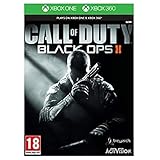
- Futuristic missions give you new weapons and scenarios to get to grips with The CLAW is a Cognitive Land Assault
- Weapon that can be utilised as an in-game vehicle Call of Duty: Black Ops II is a new story with elements and characters from previous games
- The non-linear storyline will see you battling during a futuristic Cold War, as well as tackling flashbacks from historical missions and playing as various members of the Mason family. Every decision you make during this story will affect future consequences, giving you a different experience every time you play
- Alongside the epic Campaign and branching story is the all-new Multiplayer mode. New maps, new game-styles and new perks make this the most engaging Multiplayer yet
- Zombies Mode also makes a comeback with a series of challenging maps and missions that enable you to fight off the dead in even more ways.
How many endings does Black Ops II have?
There is no single official count confirmed by the material available for this question. Different counts reflect different ways of grouping major conclusions, character outcomes, and scene variations.
| Count | Where it appears | How to interpret it |
|---|---|---|
| Four “major” endings | GameFront guide published in 2012 | A count of broad, headline campaign conclusions. It may group several scene or character variations together. |
| Eight possible endings | GamesRadar retrospective coverage | A wider count that treats more combinations or ending variations as separate outcomes. |
| Official enumeration | Activision’s official game material | Not stated. Activision confirms that campaign actions affect the overall outcome but does not provide a numbered ending list in the cited material. |
Both four and eight can therefore be useful shorthand, but neither should be presented as an uncontested official total. The difference is likely a matter of classification: one writer may count only major story resolutions, while another separates additional character or scene states. Without an official decision tree, saying “multiple endings, commonly counted as four major or eight possible variations” is more precise than declaring one number as definitive.
How to experience the variations without spoiling your first run
For a first playthrough
- Play the campaign without consulting a branch list. The design is intended to let decisions and mission results matter organically. A blind run gives you the clearest experience of consequences.
- Treat Strike Force operations as consequential. Do not assume that an operation described as optional is narratively disposable. The official game description links Strike Force actions to the overall campaign.
- Pay attention to objectives and decisions. Record choices you make if you expect to compare the result later. Include mission outcomes, not just dialogue selections.
- Finish the campaign before looking up other routes. Guides can reveal character fates and final scenes, so reading one mid-run can remove the uncertainty the branching system is designed to create.
For a comparison run
- Keep a simple decision log. Write down the mission, the visible choice, the result of any Strike Force operation, and whether an objective was completed or failed. This will help you compare runs without relying on memory.
- Change one meaningful variable at a time when possible. If you alter several decisions and mission results together, you will know that the ending changed but not which condition caused it.
- Use the campaign’s available replay tools. Editions and platforms can expose replay or mission-selection features differently. Use the options your copy provides, and verify the resulting ending rather than assuming a replayed scene has reset every earlier campaign condition.
- Compare the final state, not only the last cinematic. Note the broad story outcome, the characters affected, and the scenes shown. This avoids treating a small scene change as an entirely separate storyline—or overlooking a meaningful consequence because the final mission looked familiar.
What the available evidence does—and does not—tell us
Established with reasonable confidence
- The campaign has multiple outcomes and ending-sequence variations.
- Player decisions and mission results help determine those outcomes.
- Strike Force actions can affect gameplay and the overall campaign.
- Different combinations can alter character fates and the scenes shown at the end.
- Published guides use different totals, including four major endings and eight possible endings.
Not established as a definitive list
- A complete route-by-route decision tree.
- An official number that resolves the four-versus-eight disagreement.
- A guaranteed mapping from one individual choice to one specific ending.
- A published percentage showing how often players reach each outcome.
No named, relevant statistic establishes the distribution of endings among players, so claims such as “most players get ending X” should not be treated as verified. Likewise, a guide that lists exact triggers may be useful for its own methodology, but the official material cited here does not independently confirm a complete trigger matrix.
Free tools Windows power users keep installed
One-click scans. No signup required.
Why the branching campaign was notable
The consequential structure was part of the game’s intended identity rather than an accidental side effect. In an investor release, Activision identified Dave Anthony as the game’s director and co-writer and quoted him describing a shared goal “to rewrite the rules of storytelling in the Call of Duty franchise and deliver a truly innovative experience for players.” The Strike Force system and its campaign consequences fit that stated ambition: the player’s performance is incorporated into the story instead of being isolated from it.
Best Value
![Call of Duty: Black Ops II [Standard edition] (PS3) (Renewed)](https://m.media-amazon.com/images/I/51NfwZsN7IL._SL160_.jpg)
- All-new create-a-class: Create-a-class has been re-imagined, introducing players to a new "pick-10" allocation system, allowing an unprecedented number of combinations of create-a-class content. Players no longer have to take content from each category instead, trade items from one category for extra items in another - any combination of 10 items makes almost anything possible.
- Pick 10 System: Ten points and nearly endless combinations: every piece of content is worth one point, and you can spend your 10 points in any way you like, encouraging a greater level of customization for individual play styles
- Wildcards: Also a point each, Wildcards allow players to "extend the system" and configure classes in more unique ways - players can take multiple perks from one category, equip their primary with three attachments, carry two lethals, and more
- All-new score streaks: Score Streaks reward players for helping their team win the game - capturing flags, defending your teammate with an assault shield, getting kills and assists are all examples of actions that help your team win and thus give you score.
- Upgraded weapons, attachments and equipment: Near-future warfare means upgrades in technology that soldiers will use in the field. Additionally, weapon perks are now built into the attachments.
That context also explains why the ending question cannot be answered by pointing to one alternate final cutscene. The design treats the campaign as a connected sequence in which actions can carry forward. The result is a family of outcomes rather than a simple binary ending switch.
Common misconceptions
“There is one final prompt that chooses everything.”
Not according to the campaign descriptions. Visible choices matter, but so do earlier actions and mission results. The ending reflects combinations of conditions accumulated across the campaign.
“Optional missions cannot affect the story.”
That assumption conflicts with Activision’s description of Strike Force missions. Their outcomes are explicitly tied to the overall campaign, so optional presentation does not guarantee narrative irrelevance.
“Four and eight are contradictory errors.”
They are better understood as different editorial counting methods. One source counts four major endings; another counts eight possible endings. Neither cited source supplies an official universal taxonomy that makes one count categorically correct.
“Every variation is a completely separate campaign.”
The available evidence supports different conclusions, character fates, and ending scenes, but it does not say that every route has unique missions from beginning to end. Expect shared campaign material with consequential differences, not eight wholly independent games.
Bottom line for players deciding whether to replay
If you have finished Black Ops II once, a replay can show more than a cosmetic alternate clip. Changing decisions and mission results—especially in consequential Strike Force operations—can produce a different campaign state, affect character fates, and alter the ending sequence. If you are trying to catalog every variation, use the four-versus-eight figures as guide-specific classifications, not as a settled official count, and keep your own record of the choices and outcomes that lead to each result.
Quick Recap
Product prices and availability are accurate as of the date/time indicated and are subject to change. Any price and availability information displayed on Amazon at the time of purchase will apply.

