
Recommended Free Tools
Yes—but only the damage that belongs to the melee weapon attack is doubled. Under the 2014 fifth-edition rules, a critical hit with booming blade doubles the weapon’s damage dice and, at 5th level or higher, the cantrip’s extra thunder-damage dice added to that hit. The separate thunder damage caused if the target later willingly moves 5 feet or more is a new spell effect, so the original critical hit does not double it.
This ruling applies to the Sword Coast Adventurer’s Guide wording and the 2014 Basic Rules. If your table uses a different edition or a revised spell text, compare that exact wording before applying the result.
As an Amazon Associate I earn from qualifying purchases.
What a critical booming blade hit actually doubles
Booming blade is not a spell attack. The spell has you “make a melee attack with it” using the weapon brandished during casting. Sage Advice describes that attack as a normal melee weapon attack rather than a spell attack. Consequently, the attack can score a critical hit under the ordinary weapon-attack rules.
What’s actually slowing this PC down?
Pick the symptom - the matching free tool is one click away.
The 2014 Basic Rules state: “When you score a critical hit, you get to roll extra dice for the attack’s damage against the target. Roll all of the attack’s damage dice twice and add them together. Then add any relevant modifiers as normal.” The rule doubles damage dice that are part of that attack; it does not double flat modifiers.
#1 Best Overall

- COMPLETE YOUR COLLECTION—Get all three 2024 Core Rulebooks and discover new character options you’ll love, creative world-building inspiration, stunning artwork, and monsters galore
- STUNNING ARTWORK—Delight in spectacular new artwork for character classes, subclasses, weapons, armor, legendary D&D figures, almost every monster, and so much more
- FRESH & ENGAGING GAMEPLAY—Change up your combat style with fascinating new Weapon Masteries for your character class. Our new Tools and Crafting system lets you use your tools to craft items and impact travel and exploration
- NEW CHARACTER OPTIONS YOU’LL LOVE—Create unforgettable characters with 12 core classes, 48 intriguing subclasses, and 10 distinctive species. Buff up your character’s backstory with 16 compelling backgrounds and 75 fantastic feats
That produces two categories of damage in the spell:
- Damage delivered by the melee attack: the weapon’s normal damage and, from 5th level onward, the cantrip’s extra thunder dice added “on a hit.” These dice are doubled when the attack is critical.
- Damage triggered later by movement: thunder damage dealt only if the target willingly moves 5 feet or more before the start of your next turn. This occurs after the attack as a separate spell trigger, so it is not doubled by the earlier critical hit.
How to resolve the interaction at the table
- Confirm that the attack is critical. Resolve booming blade as a melee weapon attack, using the ability modifier normally used with that weapon. If the attack is a critical hit, proceed with the critical-damage rule.
- List every damage die in the attack itself. Include the weapon’s damage die, any additional dice that are part of the attack, and the cantrip’s extra thunder die or dice if the caster is at least 5th level.
- Roll each attack die twice. The critical-hit rule says to roll all of the attack’s damage dice twice and add the results together. This is also why another feature that adds damage dice to the same attack, such as Sneak Attack, uses doubled dice under the 2014 rule.
- Add modifiers once. Add the relevant ability modifier and other applicable flat modifiers normally. A critical hit doubles dice, not those modifiers.
- Keep the movement trigger separate. Record the spell’s ongoing effect. If the target later willingly moves at least 5 feet before the start of your next turn, roll the movement damage using the spell’s listed amount. Do not double those dice because the initial attack was critical.
What the spell adds at each tier
The 2014 Sword Coast Adventurer’s Guide reprint describes the spell’s timing this way: on a hit, the target suffers the weapon attack’s normal effects and becomes sheathed in booming energy until the start of your next turn. At 5th level, the melee attack also deals an extra 1d8 thunder damage on a hit, while the movement damage increases to 2d8. Both values increase by 1d8 at 11th and 17th level.
| Caster level | Thunder dice added to the attack on a hit | Thunder dice if the target later moves | What a critical hit doubles |
|---|---|---|---|
| 1st–4th | None | 1d8 | The weapon’s attack dice and any other dice belonging to that attack; not the later 1d8 movement damage |
| 5th–10th | 1d8 | 2d8 | The weapon’s dice plus 1d8 thunder from the attack |
| 11th–16th | 2d8 | 3d8 | The weapon’s dice plus 2d8 thunder from the attack |
| 17th and higher | 3d8 | 4d8 | The weapon’s dice plus 3d8 thunder from the attack |
The table separates the two rolls because the spell gives them different timing. The attack thunder is part of the hit’s damage at higher levels; the movement thunder is conditional damage that may never occur.
Free tools Windows power users keep installed
One-click scans. No signup required.
Rank #2

- UNLEASH NEW POSSIBILITIES—Introducing the 2024 Player’s Handbook, the new and improved guide for fifth edition Dungeons and Dragons. Redesigned with 10 years of feedback from the D and D community, the essential Dungeons and Dragons rulebook is bigger and better than ever before
- NEW CHARACTER OPTIONS YOU’LL LOVE—Create unforgettable characters with 12 core classes, 48 intriguing subclasses, and 10 distinctive species. Buff up your character’s backstory with 16 compelling backgrounds and 75 fantastic feats.
- STUNNING ARTWORK—With vibrant new illustrations of every single character class, subclass, background, species, weapon, and armor, our thrilling artwork also features new and familiar spells, brought to life for the first time ever.
- FRESH and ENGAGING GAMEPLAY—Change up your combat style with fascinating new Weapon Masteries for your character class. Our new Tools and Crafting system lets you use your tools to craft items and impact travel and exploration.
- DESIGNED JUST FOR YOU—We’ve thoughtfully redesigned this book with an improved layout, better organization, and an alphabetized Rules Glossary. Find whatever you’re looking for with ease
Worked critical-hit examples
Levels 1–4: only the weapon damage is part of the critical hit
Suppose a 3rd-level character uses booming blade with a weapon whose normal damage is 1d8 plus an ability modifier. On a critical hit, roll 2d8 for the weapon and add the ability modifier once. The target is also wrapped in booming energy. If it willingly moves 5 feet or more before the caster’s next turn, it later takes 1d8 thunder damage. That later roll remains 1d8 whether or not the original attack was critical.
Levels 5–10: the 1d8 attack thunder also doubles
At 5th level, use the same 1d8 weapon as an example. A normal hit’s immediate damage is 1d8 weapon damage plus 1d8 thunder damage, plus the relevant modifier. On a critical hit, roll 2d8 for the weapon and 2d8 for the cantrip’s attack thunder, then add the modifier once. If the target subsequently moves, roll the separate 2d8 movement damage normally; it does not become 4d8.
Levels 11–16: two attack thunder dice become four
At 11th level, the spell adds 2d8 thunder to the melee attack. With a 1d8 weapon, a critical hit therefore uses 2d8 weapon dice and 4d8 cantrip dice, followed by the normal flat modifier. The movement clause has increased to 3d8, but those 3d8 are rolled only if the target willingly moves and are not affected by the earlier critical.
Rank #3

- ALL THE TOOLS: The Dungeons & Dragons Core Rules Gift Set includes a copy of all three core rulebooks (Player's Handbook, Dungeon Master's Guide, Monster Manual) plus a Dungeon Master's Screen, all collected in a stylish slipcase. It's the perfect gift for any D&D fan.
- PLAYER'S HANDBOOK: The essential reference for every D&D player, the Player's Handbook contains rules for character creation and advancement, backgrounds and skills, exploration and combat, equipment, spells, and much more.
- DUNGEON MASTER'S GUIDE: Teaches how to run D&D adventures for other players and how to give them monsters to fight, mysteries to solve, and fantasy worlds to explore.
- MONSTER MANUAL: Helps the Dungeon Master (the game's narrator) fill games with iconic fantasy creatures. Includes details and rules for over 400 monsters from goblins to dragons, with over 150 illustrations.
- DUNGEON MASTER'S SCREEN: Helps the Dungeon Master keep die rolls and notes hidden from players. Plus, the inside is filled with quick references for the most commonly used in-game information to help keep things running smoothly..UNLEASH YOUR IMAGINATION: Dungeons & Dragons is a cooperative storytelling game that harnesses your imagination and invites you to explore a fantastic world of adventure, where heroes battle monsters, find treasures, and overcome quests.
Levels 17 and higher: three attack thunder dice become six
At 17th level, the attack portion contains 3d8 extra thunder. With a 1d8 weapon, a critical hit rolls 2d8 for the weapon and 6d8 for the attack’s booming energy, then adds modifiers once. The possible movement damage is 4d8 and remains a separate, undoubled roll.
Quick wins for a faster PC:
Repair Windows errors before they cause bigger problemsFix Now →Scan for outdated or missing drivers - takes under a minuteDriver Scan →Why the movement damage is not critical damage
The spell’s wording creates a timeline rather than one enlarged damage roll. First, you make the melee attack. On a hit, the target suffers the weapon attack’s normal effects and, at the relevant levels, the spell’s extra thunder damage on that hit. The target then becomes sheathed in energy until the start of your next turn. Only after that does the conditional clause matter: “If the target willingly moves 5 feet or more before then, the target takes 1d8 thunder damage, and the spell ends.”
The critical-hit rule applies to “the attack’s damage.” The movement clause is not rolled as part of the attack that scored the critical hit. It is a later effect that depends on a new event—the target’s willing movement. Because the critical has already been resolved, there is no rule basis for carrying the doubling forward to that later trigger.
Rank #4

- NIFTY RESOURCES FOR DUNGEON MASTERS—We've packed this book with incredibly useful tools and advice for Dungeon Masters of all levels. Make your game sessions special with over 400 total and 18 new magic items, practical solutions for common Dungeon Master pitfalls, and Greyhawk, a customizable premade campaign setting.
- WONDERFUL WORLDBUILDING INSPIRATION—Introduce inspiring new mechanics into your game! Tinker away with revised rules for crafting magic items, creating NPCs, and more. Excite your party and keep them engaged between sessions with the new system for bastions, which are strongholds built and controlled by players.
- STUNNING ARTWORK—Delight in spectacular artwork featuring new magic items, legendary D&D figures, cinematic fantasy landscapes, a double-sided poster map of the Greyhawk setting, and more!
- LEVEL UP YOUR DUNGEON MASTER EXPERIENCE—We’ve built useful handouts and resources to help you keep track of your campaigns and added a Lore Glossary that helps you easily find information about key D&D characters and locations.
- PART OF THE 2024 CORE COLLECTION—1 of 3 revised Dungeons & Dragons core rulebooks, the 2024 Dungeon Master’s Guide is designed for use with the fifth edition 2024 Player’s Handbook and 2024 Monster Manual
The target can therefore take both kinds of damage in one turn sequence: doubled attack damage immediately, followed by the normal movement damage if it chooses to move far enough. If the target never willingly moves 5 feet or more before the caster’s next turn, the movement damage is never rolled at all.
Independent reader supportYour contribution helps us test, update, and keep practical guides available for everyone.Modifiers, extra dice, and common edge cases
Ability and other flat modifiers
The weapon’s relevant ability modifier is added once, not twice. The same treatment applies to other flat modifiers that the attack qualifies for. Critical hits increase the number of damage dice; they do not multiply a static bonus.
Do these 3 things before closing this tab:
1Scan for outdated or missing drivers - takes under a minute2Clear out junk files and repair common Windows errors3Fix the driver behind crashes, sound loss and screen glitchesOther damage dice attached to the attack
The 2014 critical-hit explanation specifically notes that when an attack involves other damage dice, such as Sneak Attack, those dice are also rolled twice. Apply that principle to any feature that genuinely adds dice to this same melee attack. Do not add unrelated dice merely because they occur during the same round.
Best Value
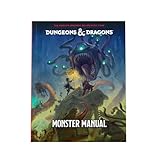
- MONSTERS GALORE—Venture into the mightiest Monster Manual yet! In addition to iconic D&D favorites like dragons and mind flayers, this monstrous menagerie introduces over 75 brand-new monsters and contains over 500 unique creatures in total.
- INTRIGUING NEW ENCOUNTERS—Inject more variety into your games with unique encounters! Raise the stakes with terrifying new monsters for higher level play, such as the arch-hag and blob of annihilation. Craft unusual and memorable NPC encounters by using over 40 humanoid stat blocks as inspiration.
- STUNNING ARTWORK—Gaze upon the legendary D&D dragons in all their splendor. In this book of majestic beasts, we’ve created stunning redesigns of the chromatic and metallic dragons, and over 300 pieces of breathtaking new artwork for almost every monster.
- DESIGNED JUST FOR YOU—Easily locate whatever monster you’re looking for and save prep time with revised, easy-to-use stat blocks. We’ve categorized all monsters by creature type and have redesigned their stat blocks to be easier to use and understand. Running encounters has never been easier!
- PART OF THE 2024 CORE COLLECTION—1 of 3 revised Dungeons & Dragons core rulebooks, the 2024 Monster Manual is designed for use with the fifth edition 2024 Player’s Handbook and 2024 Dungeon Master’s Guide
Weapon choice
Booming blade uses the weapon’s normal damage and attack rules. A weapon with a d10 damage die, for example, contributes two d10s on a critical instead of one; a weapon with a d6 contributes two d6s. The cantrip’s own attack thunder dice are doubled in addition to the weapon dice at the levels shown above.
Movement that does not qualify
The spell requires the target to willingly move 5 feet or more before the start of your next turn. Forced movement does not satisfy that wording, and movement shorter than 5 feet does not satisfy it either. If the condition is not met, no movement damage occurs, regardless of whether the original hit was critical.
When the target moves after the spell ends
The effect lasts only until the start of the caster’s next turn unless the movement clause ends it sooner. Movement after that window cannot trigger the stored damage. This timing is independent of whether the initial attack was a normal hit or a critical hit.
Edition and wording checks
This answer uses the 2014 fifth-edition critical-hit rule and the Sword Coast Adventurer’s Guide wording cited above. The critical rule’s phrase “all of the attack’s damage dice” is the key text, while the spell separately identifies damage added “on a hit” and damage caused by later movement.
If a table is using another edition, an erratum, a digital rules update, or a house rule, read that version’s booming blade text and critical-hit section together. Small wording changes can alter whether a damage die is attached to the attack or to a later effect. Do not import this conclusion automatically without checking the edition in use.
A quick ruling checklist for a critical booming blade hit
- Was the spell resolved as a normal melee weapon attack? If yes, it can critically hit.
- Which dice were rolled for the attack itself? Double all of those dice.
- Is the caster 5th level or higher? Double the spell’s extra thunder dice added to the hit.
- Were any other damage dice legitimately added to that attack? Double those too under the 2014 rule.
- Were flat modifiers added? Add them once.
- Did the target later willingly move at least 5 feet before the caster’s next turn? If so, roll the movement damage at its normal, undoubled value.
The practical ruling is therefore precise: booming blade gets critical damage for the weapon attack and for the cantrip’s attack-phase thunder dice, but not for the separate movement-triggered thunder damage.
Quick Recap
Product prices and availability are accurate as of the date/time indicated and are subject to change. Any price and availability information displayed on Amazon at the time of purchase will apply.
The Tool Desk
Outbyte Driver Updater FREEFix the driver behind crashes, sound loss and screen glitchesFind Drivers →Outbyte PC Repair FREEClear out junk files and repair common Windows errorsFree Scan →
