
Do these 3 things before closing this tab:
1Clear out junk files and repair common Windows errors2Scan for outdated or missing drivers - takes under a minute3Repair Windows errors before they cause bigger problemsThere is no safe universal mileage or minutes-per-mile target for cross-country. Your weekly volume and pace should reflect your age, experience, current conditioning, injury history, terrain, and coach’s plan. Run easy days by effort, add harder work gradually, use shoes suited to the surface, and treat persistent or sudden pain as a medical issue rather than a problem to run through.
What makes cross-country training different?
USA Track & Field defines cross country as “a sport in which teams and individuals run races on outdoor courses over natural terrain.” Courses may use open country, fields, parks, golf courses, and grasslands; paved-road running should be minimized. In the United States, the season is usually held in fall.
As an Amazon Associate I earn from qualifying purchases.
That terrain changes the meaning of both mileage and pace. A mile on firm, flat grass has a different mechanical and cardiovascular cost from a mile through mud, loose ground, sharp turns, or sustained hills. Weather, footing, elevation and course congestion can also alter effort from one day to the next. A plan that treats every mile as interchangeable can therefore increase fatigue without improving race readiness.
Windows Errors? Fix Them Before They Spread
Repair common Windows errors and clear accumulated junk for a smoother, more stable PC - no reinstall needed.Free scan · no reinstallOutdated Drivers Are Slowing You Down
One free scan finds every outdated or missing driver and matches the right update for your exact hardware.Free scan · exact hardware matchHow many miles should you run?
Choose mileage from your current training, not from a number copied from another runner. The most important planning variables are your current weekly volume, number of hard sessions, long-run length, hills and other terrain, recovery days, and whether you are a novice, returning from injury, or experienced.
#1 Best Overall

- VERSARUN cushioning keeps you moving in balanced comfort all day long.
- Grippy carbon-rubber lugs provide the best traction, so no matter what kind of terrain you cross, you’ll feel unstoppable.
- Fresh design details deliver the trail protection you need with a look that goes beyond the outdoors.
Novice runners
A novice needs a repeatable routine before trying to maximize distance. Start with the amount of running you can complete while maintaining controlled mechanics and recovering by the next planned session. Walking breaks or run-walk intervals are legitimate tools, especially when fatigue makes your form deteriorate. Build consistency first; distance is secondary.
Runners returning from injury or a layoff
Use the last pain-free level that your clinician or coach considers appropriate as the starting point. A return plan may need fewer hard sessions, a shorter long run, more rest days, and low-impact cross-training. Increasing both distance and intensity at the same time makes it difficult to identify what caused a flare-up.
Experienced runners
Experienced athletes can often tolerate more volume, but their limit still depends on terrain, school or work stress, sleep, previous injuries and the coach’s periodization. More miles are not automatically better if they reduce the quality of key workouts or leave you unable to recover.
Using the 10 percent rule carefully
The American Orthopaedic Society for Sports Medicine describes a commonly used rule that limits an increase in weekly mileage or pace to about 10 percent per week. Treat that figure as a conservative coaching heuristic, not a law or a guarantee against injury. A 10-percent increase can still be too much for a young, deconditioned or recently injured runner, while a coach may deliberately hold or reduce volume during a recovery week. NCAA overuse guidance emphasizes periodization and reducing overuse risk across an athlete’s development rather than following one rigid formula.
Rank #2

- Lightweight mesh upper with 3-color digital print delivers complete breathability
- Durable leather overlays for stability & that locks in your midfoot
- EVA sockliner provides soft, step-in comfort
- Charged Cushioning midsole uses compression molded foam for ultimate responsiveness & durability
- Solid rubber outsole covers high impact zones for greater durability with less weight
A mileage decision checklist
- Can you complete the present week without pain that changes your stride?
- Are easy days actually easy enough to recover before the next hard session?
- Are hills, soft ground, heat or racing adding load that is not visible in the mileage total?
- Is your long run proportionate to the rest of the week rather than dominating it?
- Do you have at least one genuine recovery opportunity after demanding work?
- Has a coach or medical professional set a different progression because of age, injury or another condition?
What pace should easy, long and hard runs use?
Use effort first and pace second. Because cross-country surfaces and gradients vary, a fixed minutes-per-mile target can turn an easy run into a hard workout or make a purposeful session too gentle. The right easy pace is sustainable and leaves you able to recover for the next session.
| Session | Primary purpose | How to judge it on changing terrain | Recovery cost |
|---|---|---|---|
| Easy or recovery run | Maintain aerobic activity while restoring the ability to train | Comfortable, controlled effort; slow down on hills, soft ground and turns | Low |
| Long aerobic run | Build endurance and tolerance for time on feet | Steady effort that can be sustained without racing the final miles | Moderate; depends on duration and terrain |
| Tempo or threshold work | Develop the ability to hold a strong aerobic effort | Firm but controlled; the course may make pace uneven, so preserve the intended effort | Moderate to high |
| Hill repetitions | Train climbing power and running mechanics | Run by effort up the hill; recover enough to repeat with sound form | High for muscles even when speed is low |
| Intervals | Practice faster running with planned recoveries | Follow the coach’s work-to-recovery design rather than forcing a road pace | High |
| Race effort | Compete over the actual course and conditions | Use terrain awareness, positioning and sustainable effort; expect pace to fluctuate | High; schedule recovery afterward |
The American College of Sports Medicine advises breaking up a run or using intervals when fatigue appears. Continuing while fatigue degrades mechanics can raise stress on the body and reduce the quality of the session. A practical rule is to shorten, slow or stop a workout when you can no longer maintain controlled posture, foot placement and rhythm.
NCAA training resources place pace within a larger system of periodization, fueling, hydration, sleep and recovery. If your watch reports a slower pace on a muddy or hilly course, that does not by itself mean your fitness has declined. Compare sessions by intended physiological load and recovery cost, not by the displayed pace alone.
Quick wins for a faster PC:
Scan for outdated or missing drivers - takes under a minuteDriver Scan →Repair Windows errors before they cause bigger problemsFix Now →Fix the driver behind crashes, sound loss and screen glitchesFind Drivers →Do you need cross-country spikes or regular running shoes?
Most runners need comfortable running shoes for ordinary mileage and a separate pair of cross-country shoes or spikes only when the course and competition rules make them useful. USA Track & Field states that running-specific shoes are vital for supporting and cushioning the knees and feet. Its guidance also recommends telling a running-store expert which surfaces you typically use so the shoe can be matched to that need.
Rank #3
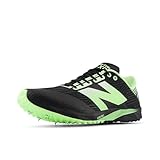
- FuelCell foam delivers a propulsive feel to help drive you forward
- Angular midsole design reduces weight
- Rubber outsole with 6 removable spike pins for traction in any condition
- Breathable mesh upper
- Lightweight synthetic material
Training shoes for daily mileage
Use a comfortable, running-specific shoe for easy runs, long runs and most mixed-surface training. Fit, cushioning preference, stability needs and the surfaces you actually run on matter more than a label. A shoe that feels secure on grass, paths and occasional pavement is generally more versatile than a highly specialized racing shoe.
Cross-country shoes and spikes
Purpose-built cross-country shoes or spikes can provide traction and a lower, more race-specific platform on grass, dirt or soft ground. Their usefulness depends on the course, weather, rules and your ability to run safely in them. Do not assume a spike is appropriate for every surface: hard pavement, rocky paths or a course with little traction demand may call for another option.
Break in new footwear during short, controlled sessions before racing. Check that the fit remains secure downhill and through turns, and stop using a pair that creates rubbing, numbness or pain. No shoe, spike plate or cushioning design can guarantee injury prevention.
When should running shoes be replaced?
Two published ranges are useful as inspection prompts, not promises. USA Track & Field describes a common consensus of about 300–500 miles before replacement. The American Orthopaedic Society for Sports Medicine gives a broader guideline of about 500–600 miles. The difference reflects the fact that durability varies with the runner, shoe construction, body size, surfaces, weather and maintenance.
Rank #4

- Mesh on upper adds breathability.
- Foam midsole delivers a soft ride.
- Flex grooves create a cushioned effect for your run.
- Waffle outsole is a made of a durable, flexible material that helps keep you on the move.
- HM9594-001
| Signal | What to do |
|---|---|
| Outsole tread is visibly worn or uneven | Compare both shoes and replace if traction or alignment has changed. |
| Foam feels compressed or the shoe no longer feels protective | Retire it even if the mileage estimate has not been reached. |
| Comfort declines during familiar runs | Test a newer pair; a persistent change can indicate that the old shoe is spent. |
| Recurring aches appear without another clear change | Check footwear, training load and mechanics, and seek professional assessment if discomfort persists. |
Track approximate mileage, but inspect the shoes regularly. A 300-mile replacement may be sensible for one runner on abrasive, wet ground, while another pair can remain comfortable longer. The published ranges should never override obvious wear or pain.
Independent reader supportYour contribution helps us test, update, and keep practical guides available for everyone.How should you recover between hard workouts and races?
Sleep and easy days
Recovery begins with enough sleep and genuinely easy running or rest between demanding sessions. Alternating periods of training load and recovery is the purpose of periodization. If an easy day repeatedly becomes a moderate workout, the next hard session arrives before you have recovered.
Food and fluids
NCAA guidance says athletic performance and recovery are enhanced by the appropriate quantity, quality and timing of food and fluids. Eat regular meals that provide enough energy for your training, and replace fluids before, during and after activity. Adequate hydration is critical; dehydration can compromise performance and increase the risk of exertional heat injury. Hot, humid or unusually long sessions require closer attention than a short, cool run.
Low-impact cross-training
Cycling, swimming and elliptical exercise can maintain aerobic activity while reducing running impact. The American Orthopaedic Society for Sports Medicine identifies cross-training as useful during injury recovery or when starting a running program. If you are injured, obtain medical clearance before using cross-training as part of a return plan; a low-impact activity can still aggravate some conditions.
Best Value

- MULTI-USE OUTDOOR ADVENTURE VERSATILITY: Extend your range beyond pavement with lightweight trail running shoes engineered for diverse terrain; adapt from maintained trails to technical routes for reliable performance
- KEEP FEET FRESH AND DRY: Lock out storms and stay dry with advanced CLIMAPROOF technology that blocks external moisture while allowing sweat to escape; this wind-resistant yet breathable system ensures comfort when conditions deteriorate
- COMFORTABLE AND SUPPORTIVE: Softer LIGHTMOTION foam provides step-in plushness and sustained support across uneven ground; midsole stays responsive for efficient forward propulsion during uphill climbs and technical descents
- TRACTION FOR TRAIL SURFACES: Move confidently across all surfaces thanks to trusted TRAXION rubber compound for reliable multi-directional grip; aggressive lugged tread pattern bites into loose dirt, grips wet roots, and holds firm on rocky sections
- MADE TO LAST ON ROUGH TERRAIN: Durable upper reinforcements shield feet from trail hazards; Ortholite sockliner delivers comfortable cushioning, while the soft collar reduces friction; higher toe box balances protection with all-day wearability
After a race or hard workout
- Cool down with easy movement if your coach or clinician permits it; do not turn the cooldown into another race.
- Replace fluids and eat a regular meal or snack rather than waiting until you feel depleted.
- Record unusual pain, illness symptoms, heat exposure and how the session felt, not just the finishing time.
- Make the next session easy or take rest according to the training plan, especially after a race.
What should you do if your knee or shin hurts?
Do not treat pain as a normal test of toughness. USA Track & Field recommends professional evaluation for persistent discomfort and prompt care for sudden severe pain. A sudden sharp pain, inability to bear weight, major swelling, deformity, numbness or rapidly worsening symptoms warrants urgent medical attention.
If discomfort begins during a run
- Reduce speed or stop; do not continue to the planned distance simply to complete the workout.
- Check whether your stride has changed, whether the surface is unusually hard or uneven, and whether new shoes or a recent training increase could be contributing.
- Use rest or an agreed low-impact alternative only if it is comfortable and medically appropriate.
- Tell your coach and arrange assessment when pain persists, recurs or affects normal walking.
Shin pain that is localized, worsening or painful at rest should not be self-diagnosed as ordinary soreness. Knee pain accompanied by swelling, locking, giving way or a changed stride also deserves evaluation. A professional can distinguish training soreness from conditions that need a different return-to-running plan.
Habits that can reduce preventable overload
USATF recommends strength and flexibility work, cross-training, running-specific shoes and professional gait evaluation when needed. These are risk-management tools, not guarantees. Strength work should support the demands of your program, while flexibility work should not be used to force a painful range of motion.
The Tool Desk
Outbyte Driver Updater FREEScan for outdated or missing drivers - takes under a minuteDriver Scan →Outbyte PC Repair FREERepair Windows errors before they cause bigger problemsFix Now →ACSM reports that studied interventions increasing cadence by approximately 5–30% reduced several impact-related mechanical measures. This does not mean every runner should immediately adopt a particular cadence or that a cadence change prevents injury. If a qualified coach or clinician recommends experimenting with a slightly quicker, lighter rhythm, make the change gradually and keep the effort comfortable. Stop if symptoms worsen.
Quick Recap
A practical way to adjust a weekly plan
- Identify the purpose of each session. Label runs as easy, long, threshold, hills, intervals, race or recovery rather than judging the week by mileage alone.
- Count total stress. Include hills, soft or slippery terrain, races, strength work, poor sleep and outside responsibilities.
- Protect recovery. Place easy days or rest after hard sessions and avoid stacking several high-cost workouts.
- Progress one variable at a time. Increase volume, intensity, hills or frequency only when the current load is well tolerated.
- Use symptoms as feedback. Alter or stop training for pain that changes mechanics, persists or escalates, and seek qualified care.
- Review footwear and conditions. Match shoes to the surface, inspect wear and account for weather before interpreting pace.
Product prices and availability are accurate as of the date/time indicated and are subject to change. Any price and availability information displayed on Amazon at the time of purchase will apply.

