
What’s actually slowing this PC down?
Pick the symptom - the matching free tool is one click away.
No. In the original Darkest Dungeon, an affliction is temporary. It is triggered when a hero reaches 100 stress, and it can be removed by bringing stress back to 0 or by sending the hero to a stress-relief activity in the Abbey or Tavern. Town treatment advances the Hamlet by one in-game week, while remaining in a dungeon carries the danger of stress rising to 200 and causing a heart attack.
What an affliction is
An affliction is a stress-related condition, not a permanent injury and not a permanent personality trait. The game’s in-game Glossary describes it as “A temporary condition that may be triggered when a hero reaches 100 stress.” That wording answers the central question: reaching the affliction threshold does not permanently mark the hero.

As an Amazon Associate I earn from qualifying purchases.
The status can still feel long-lasting because the hero may leave the dungeon with high stress, and stress can continue accumulating after the affliction appears. Removing the label does not make the stress system harmless. If stress reaches 200, the hero suffers a heart attack, so an afflicted hero needs either immediate stress relief or a carefully managed route back to safety.
Free tools Windows power users keep installed
One-click scans. No signup required.
How to remove an affliction
Use the Abbey or Tavern in the Hamlet
The normal solution is to return to the Hamlet and place the afflicted hero in a stress-relief activity at the Abbey or Tavern. Either facility removes the acquired affliction while reducing stress. The activity holds the hero for an in-game week, so the hero will not be available for the next expedition during that time.
#1 Best Overall

- Join the Adventure: Darkest Dungeon: The Board Game is a cooperative dungeon crawler for 1-4 players, where you complete missions and restore the Heir's mansion.
- Face the Darkness: Battle evil forces and overcome challenges as you explore the treacherous Darkest Dungeon.
- Game Components (2 boxes in 1 game!): The Core Game includes all cardboard/paper pieces, while the Strongbox contains detailed miniatures.
- Popular Origin: Based on the critically acclaimed video game by Red Hook Studios, which has sold over 8 million copies.
- Tabletop Transition: Experience the dark and immersive world of Darkest Dungeon now in a board game format.
- Finish the current expedition or retreat to the Hamlet if continuing would expose the hero to dangerous stress levels.
- Open the Abbey or Tavern and choose an available stress-relief activity.
- Select the afflicted hero and confirm the treatment.
- Advance the Hamlet’s week by completing the treatment period.
- Inspect the hero’s status and stress before assigning another mission.
For a new player, this is the most reliable answer to “How do I get rid of an affliction?” The key is not merely entering the facility: the hero must be assigned to a stress-relief activity and the in-game week must advance.
Reduce stress to 0 during a dungeon
An affliction can also clear before the expedition ends if the hero’s stress is reduced all the way to 0 while still in the dungeon. The condition is the stress total, not the number of rooms completed or the passage of a certain number of turns. If stress never reaches 0, the affliction can remain active through the rest of that expedition.
This route avoids spending a Hamlet week, but it depends on the expedition providing enough opportunities to lower stress. The longer the party remains in the dungeon while trying to recover, the more chances there are for additional stress to push the hero toward the 200-stress heart-attack threshold.
Allow passive recovery in town
A hero can eventually lose an affliction through passive recovery after reaching 0 stress in town. This is distinct from the immediate, deliberate Abbey or Tavern treatment: the hero must naturally get to 0 stress while in the Hamlet, and the affliction ends once that condition is met.
Rank #2

- Enter the Crimson Court expansion and uncover a decayed Courtyard filled with bloodthirsty aristocrats and insect-like horrors.
- Enhance your Darkest Dungeon adventure with new room tiles, monsters, bosses, quests, and curios that deepen the challenge.
- Face fresh mechanics like stress, bleed, and blight, pushing your heroes to the limits of endurance and strategy.
- Expand replayability with diverse encounters, immersive miniatures, and treacherous objectives to overcome.
- Designed for cooperative play, this expansion heightens tension and adds new layers of danger to your dungeon crawl.
Do afflictions disappear after a dungeon?
Completing or abandoning a dungeon does not, by itself, guarantee that an affliction disappears. The relevant question is whether the hero’s stress reaches 0. If it reaches 0 during the expedition, the affliction can clear there. If the hero returns to the Hamlet still carrying stress, the affliction may remain until stress relief or passive recovery brings the total to 0.
That distinction explains two common outcomes:
- Hero reaches 0 stress before the expedition ends: the affliction can clear in the dungeon.
- Hero exits with stress above 0: the affliction can persist in town until an Abbey or Tavern activity, or passive recovery, removes it.
Therefore, “after a dungeon” is not a separate cure. The dungeon’s result matters only insofar as it changes the hero’s stress.
Comparing the available cures
| Option | Where it happens | Time cost | Stress requirement or effect | Primary risk |
|---|---|---|---|---|
| Abbey or Tavern activity | Hamlet | One in-game week | Reduces stress and removes the acquired affliction | Hero is unavailable for the treatment week |
| Stress reduction during the expedition | Dungeon | Depends on the expedition | Affliction clears when stress reaches 0 | Stress can keep rising; 200 stress causes a heart attack |
| Passive recovery | Hamlet | Eventually, as recovery occurs | Affliction is lost after stress reaches 0 in town | Recovery is not as immediate or controllable as assigning a facility activity |
The Abbey and Tavern trade a guaranteed, clearly defined week of downtime for predictable relief. In-dungeon recovery preserves the hero’s schedule only if stress can actually be lowered to 0 without exposing the party to further danger. Passive recovery costs no assigned facility slot, but it is the least direct option because the condition ends only after the stress total reaches 0.
The Tool Desk
Outbyte Driver Updater FREEFix the driver behind crashes, sound loss and screen glitchesFind Drivers →Outbyte PC Repair FREEClear out junk files and repair common Windows errorsFree Scan →Why an affliction can come back
Curing an affliction does not make a hero resistant to stress. Once the status is gone, the same hero can become afflicted again if stress reaches 100 on a later expedition. Stress continues to accumulate after the first affliction appears, and reaching 200 causes a heart attack. In practice, a cure is a reset of the current condition, not a permanent upgrade to the hero.
Before sending the hero back out, check the stress total and decide whether the planned expedition gives the party a realistic way to control it. A hero who has just recovered but is pushed straight into another high-stress run can cross the threshold again, making it seem as though the first affliction was never cured.
Affliction versus a negative quirk
An affliction and a negative quirk are different systems. An affliction is a temporary stress condition that can be cleared by reaching 0 stress or using Abbey or Tavern treatment. A quirk is a semi-permanent hero trait. A negative quirk can remain after the affliction disappears and may require treatment in the Sanitarium.
This distinction answers the question, “Why is my hero still suffering after the affliction disappeared?” Look at the hero’s quirk list rather than the affliction indicator. If a negative quirk is present, removing the temporary stress condition has not removed that separate trait. The Sanitarium is the relevant Hamlet facility for treating such a quirk; Abbey and Tavern activities address stress and afflictions instead.
A practical decision process
Step 1: Check the stress number
Do not decide based only on the red or negative status text. Confirm the hero’s current stress. A status that has disappeared may still leave the hero vulnerable if stress is high enough to climb back to 100, while a hero at 200 is in immediate heart-attack danger.
Rank #4
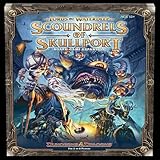
- For 2-6 players
- 60 minute playing time
- Scoundrels of skull port adds brand new content for owners of the Lords Of water deep. It is not one, but two, complete expansions, the sprawling dungeon of under Mountain and the criminal Haven of skull port.
- Adds a 6th player to the game.
Step 2: Decide whether to stay in the dungeon
Stay only if the party can realistically reduce the afflicted hero’s stress to 0 before the expedition becomes more dangerous. The potential benefit is clearing the condition without spending a Hamlet week. The cost is continued exposure to stress and the possibility of reaching 200.
Step 3: Retreat and schedule treatment when safety matters more
If stress is still rising, return to the Hamlet and assign the hero to the Abbey or Tavern. Accept the one-week absence as the predictable cost of removing the condition. This is generally the clearer choice when the party cannot bring stress to 0 in the current expedition.
Step 4: Recheck traits after recovery
Once the affliction is gone, inspect the hero’s quirk list. A remaining negative quirk is not evidence that the affliction was permanent; it is a separate, semi-permanent trait with its own Sanitarium treatment path.
Common misconceptions
“The affliction is permanent because the hero still has it in town.”
Not necessarily. Returning to town does not instantly set stress to 0. Assign the hero to an Abbey or Tavern activity, or allow passive recovery to bring stress down to 0. The condition can remain visible until that requirement is met.
Best Value

- Complete five-piece accessory bundle designed to expand, organize, and protect your Darkest Dungeon: The Board Game collection
- Includes two Musketeer Hero Boxes featuring one pre-painted miniature and one unpainted miniature, giving collectors a display-ready hero and a version ready for hobby assembly and custom painting
- Protect your game components with two Heroic Protection from Darkness sleeve sets, plus 10 Imp Mini Sleeve Packs providing 500 mini sleeves and 1 Hydra Sleeve Pack providing 100 standard sleeves for long-lasting card protection
- Darkest Organizer features a durable plastic design with 25 individual compartments that store and organize more than 300 tokens from the Darkest Dungeon core game and expansions for quicker setup and easier cleanup
- Keeps cards, tokens, and accessories neatly organized while reducing table clutter, helping streamline gameplay and making storage and transport more convenient between gaming sessions
“Finishing the dungeon automatically cures it.”
Finishing the dungeon is not the trigger. Reaching 0 stress is. A hero can complete an expedition and still carry the affliction if the stress total never reached 0.
“Removing the affliction removes every negative effect on the hero.”
No. Negative quirks are separate and can persist. If the hero still has a lasting disadvantage after the affliction indicator is gone, check for a quirk and consider the Sanitarium.
“A cured hero cannot be afflicted again.”
Curing the current condition does not prevent another one. Stress reaching 100 can trigger a new affliction, and stress reaching 200 causes a heart attack.
Recommended Free Tools
Bottom line for new players
Afflictions in the original Darkest Dungeon are temporary. The dependable Hamlet cure is to place the hero in an Abbey or Tavern stress-relief activity and let the one-week treatment period pass. An affliction can also clear inside a dungeon, or through passive recovery in town, when the hero’s stress reaches 0. If the hero remains troubled afterward, look for a negative quirk rather than assuming the affliction was permanent.
Quick Recap
Product prices and availability are accurate as of the date/time indicated and are subject to change. Any price and availability information displayed on Amazon at the time of purchase will apply.

