
No. In Dungeons & Dragons, the Ritual tag is an option, not a requirement. A spell carrying that tag can be cast either under its ordinary spellcasting rules or as a ritual, provided the caster meets the eligibility rules for the edition in use. The important difference between the 2014 and 2024 rules is how a character qualifies to cast the spell as a ritual.
Use the normal casting method when you need the spell’s regular casting time or other ordinary resource rules. Choose ritual casting when the extra time is acceptable and avoiding a spell-slot expenditure is more valuable.
As an Amazon Associate I earn from qualifying purchases.
What the Ritual tag means
The tag appears in a spell’s rules to show that ritual casting is available. It does not replace the spell’s normal casting method and does not force you to use the ritual procedure. The 2014 Basic Rules describe a tagged spell as one that can be cast “following the normal rules for spellcasting” or as a ritual (D&D Beyond, 2014 Basic Rules). The 2024 Basic Rules use the same either-or structure for spells with the Ritual tag in the Casting Time entry (D&D Beyond, 2024 Basic Rules).
That means the tag answers one question—“Can this spell be performed as a ritual?”—but not the separate question of whether a particular character is allowed to do so. Eligibility depends on the rules version, the character’s spell access, and any class feature that changes the general requirement.
#1 Best Overall

- UNLEASH NEW POSSIBILITIES—Introducing the 2024 Player’s Handbook, the new and improved guide for fifth edition Dungeons and Dragons. Redesigned with 10 years of feedback from the D and D community, the essential Dungeons and Dragons rulebook is bigger and better than ever before
- NEW CHARACTER OPTIONS YOU’LL LOVE—Create unforgettable characters with 12 core classes, 48 intriguing subclasses, and 10 distinctive species. Buff up your character’s backstory with 16 compelling backgrounds and 75 fantastic feats.
- STUNNING ARTWORK—With vibrant new illustrations of every single character class, subclass, background, species, weapon, and armor, our thrilling artwork also features new and familiar spells, brought to life for the first time ever.
- FRESH and ENGAGING GAMEPLAY—Change up your combat style with fascinating new Weapon Masteries for your character class. Our new Tools and Crafting system lets you use your tools to craft items and impact travel and exploration.
- DESIGNED JUST FOR YOU—We’ve thoughtfully redesigned this book with an improved layout, better organization, and an alphabetized Rules Glossary. Find whatever you’re looking for with ease
Normal casting versus ritual casting
| Question | Normal casting | Ritual casting |
|---|---|---|
| Is it available for a Ritual-tagged spell? | Yes, if the character can cast the spell normally. | Yes, if the character satisfies the edition’s ritual-eligibility requirement. |
| How long does it take? | The spell’s listed casting time. | Ten minutes longer than the spell’s normal casting time under both cited editions. |
| Does it use a spell slot? | It follows the spell’s ordinary resource rules. | No spell slot is expended. |
| Can you choose the method each time? | Yes. The player can select normal casting when that is preferable. | Yes, but only after confirming the character qualifies to cast it as a ritual. |
| Can it be cast at a higher level? | Use the spell’s normal rules for higher-level casting, if any. | Under the 2014 rules, a ritual cannot be cast at a higher level through a spell slot. The 2024 Basic Rules passage cited here does not state an equivalent higher-level restriction. |
The ten-minute increase is added to the spell’s normal casting time; ritual casting is not a separate fixed-length action. A spell with a short ordinary casting time therefore takes that time plus ten minutes when performed as a ritual. If the situation cannot spare those additional minutes, normal casting remains available.
Who could ritual-cast under the 2014 rules?
The 2014 rules require a feature that grants ritual casting. Having a spell with the Ritual tag on the page is not, by itself, enough for every character. The character must also satisfy that feature’s spell-access condition: generally, the spell must be prepared or appear on the character’s known-spell list unless the feature provides a different rule.
The wizard exception
The 2014 wizard feature is the clearest exception. A wizard can ritual-cast a tagged wizard spell that is in the wizard’s spellbook without preparing it. The System Reference Document 5.1 states: “You can cast a wizard spell as a ritual if that spell has the ritual tag and you have the spell in your spellbook. You don’t need to have the spell prepared” (Wizards of the Coast, SRD 5.1).
Rank #2

- COMPLETE YOUR COLLECTION—Get all three 2024 Core Rulebooks and discover new character options you’ll love, creative world-building inspiration, stunning artwork, and monsters galore
- STUNNING ARTWORK—Delight in spectacular new artwork for character classes, subclasses, weapons, armor, legendary D&D figures, almost every monster, and so much more
- FRESH & ENGAGING GAMEPLAY—Change up your combat style with fascinating new Weapon Masteries for your character class. Our new Tools and Crafting system lets you use your tools to craft items and impact travel and exploration
- NEW CHARACTER OPTIONS YOU’LL LOVE—Create unforgettable characters with 12 core classes, 48 intriguing subclasses, and 10 distinctive species. Buff up your character’s backstory with 16 compelling backgrounds and 75 fantastic feats
That exception is narrower than “every wizard can ritual-cast every tagged spell.” The spell still has to be a wizard spell, it must carry the Ritual tag, and it must be in that wizard’s spellbook. A tagged spell that fails one of those conditions cannot use the wizard’s 2014 ritual option.
Other 2014 characters
For another 2014 character, identify the exact class feature or other rule that grants ritual casting. Then check whether the spell is prepared or known as required by that feature. Do not assume that the Ritual tag alone grants permission, and do not apply the wizard’s spellbook exception to a different class.
How the 2024 rules change the check
The 2024 Basic Rules place the Ritual tag in the spell’s Casting Time entry and say that the spell can be cast normally or as a Ritual. The general preparation rule in the cited Basic Rules requires the caster to have the spell prepared before casting it as a ritual (D&D Beyond, 2024 Basic Rules).
Rank #3
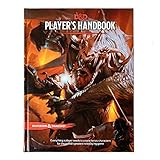
- The essential rulebook for Dungeons & Dragons (5th edition)
- Contains all the rules you need to know to play D&D
- Step-by-step guide to creating and leveling up characters
- Go-to player reference for over 350 spells, equipment, and more
- 1 of 3 D&D Core Rulebooks—the Player’s Handbook (rules for playing the game), the Dungeon Master’s Guide (how to run the game), and Monster Manual (creatures to encounter in your game)
Wizard Ritual Adept
The official comparison of the two wizard classes describes the 2024 Wizard’s Ritual Adept feature as an exception: a tagged spell in the wizard’s spellbook can be cast as a Ritual without being prepared (D&D Beyond, “2024 Wizard vs. 2014 Wizard: What’s New”). This preserves the practical wizard distinction while changing the general starting point to “prepared unless a feature says otherwise.”
What’s actually slowing this PC down?
Pick the symptom - the matching free tool is one click away.
For a 2024 character who is not using such an exception, verify that the spell is prepared before choosing ritual casting. The cited passages establish the general preparation rule and the wizard exception; they do not, by themselves, settle every class-specific feature or subclass interaction. For those cases, read the exact feature wording in the character’s rules.
A reliable decision process at the table
When a player asks whether a particular spell can be cast as a ritual, resolve it in this order:
Rank #4

- NIFTY RESOURCES FOR DUNGEON MASTERS—We've packed this book with incredibly useful tools and advice for Dungeon Masters of all levels. Make your game sessions special with over 400 total and 18 new magic items, practical solutions for common Dungeon Master pitfalls, and Greyhawk, a customizable premade campaign setting.
- WONDERFUL WORLDBUILDING INSPIRATION—Introduce inspiring new mechanics into your game! Tinker away with revised rules for crafting magic items, creating NPCs, and more. Excite your party and keep them engaged between sessions with the new system for bastions, which are strongholds built and controlled by players.
- STUNNING ARTWORK—Delight in spectacular artwork featuring new magic items, legendary D&D figures, cinematic fantasy landscapes, a double-sided poster map of the Greyhawk setting, and more!
- LEVEL UP YOUR DUNGEON MASTER EXPERIENCE—We’ve built useful handouts and resources to help you keep track of your campaigns and added a Lore Glossary that helps you easily find information about key D&D characters and locations.
- PART OF THE 2024 CORE COLLECTION—1 of 3 revised Dungeons & Dragons core rulebooks, the 2024 Dungeon Master’s Guide is designed for use with the fifth edition 2024 Player’s Handbook and 2024 Monster Manual
- Identify the rules version. Ask whether the table is using the 2014 rules or the 2024 rules. The answer affects the preparation and feature check.
- Confirm the tag. Look at the spell’s Casting Time entry and verify that it has the Ritual tag. A spell without the tag cannot be converted into a ritual by simply adding ten minutes.
- Check the character’s permission. Under 2014, find the feature that grants ritual casting and apply its “prepared,” “known,” or other access requirement. Under 2024, start with the prepared-spell requirement and then check for an exception such as Ritual Adept.
- Choose the timing. Compare the spell’s ordinary casting time with that time plus ten minutes. If the added time is not workable, use normal casting when the character can cast the spell that way.
- Apply the resource rule for the chosen method. A ritual does not expend a spell slot. Normal casting uses the spell’s ordinary casting and resource rules.
- Resolve any edition-specific limitation. In 2014, do not use a spell slot to cast a ritual at a higher level. For 2024 questions not answered by the general Basic Rules text, use the specific class or feature wording rather than importing a 2014 restriction.
This sequence separates two decisions that are often confused: whether the character is eligible and whether ritual casting is tactically worthwhile. Passing the eligibility check does not obligate the player to take the slower option.
Worked examples
A 2014 wizard with an unprepared spell
A 2014 wizard sees a Ritual-tagged wizard spell in the spellbook but did not prepare it that day. The wizard feature’s spellbook exception satisfies the access requirement, so the spell can be cast as a ritual. The player still has the choice to cast it normally only if the wizard otherwise meets the ordinary requirements for normal spellcasting; ritual eligibility does not automatically create a normal-casting slot or preparation.
A 2014 character whose feature requires preparation
A character has a feature that grants ritual casting, but the tagged spell is neither prepared nor on the feature’s permitted known-spell list. The tag is present, yet the feature’s access condition is not met. That character cannot ritual-cast the spell until the relevant preparation or known-spell requirement is satisfied.
Best Value

- 𝟮𝟬𝟮𝟰 𝗣𝗹𝗮𝘆𝗲𝗿’𝘀 𝗛𝗮𝗻𝗱𝗯𝗼𝗼𝗸: It is an upgraded rule book based on ten years of feedback from the D&D community; improved edition is bigger and better; includes vibrant new illustrations and exciting artwork for fresh and engaging gameplay
- 𝗜𝗻 𝘁𝗵𝗲 𝗦𝗲𝘁: The Player's Handbook, six additional dice sets in various colors, six flannel dice storage bags for added mystery, also quest, status, initiative cards and battlemap, e-materials for downloading and printing additional game content online, and many other exciting features
- 𝗔𝗱𝗱𝗶𝘁𝗶𝗼𝗻𝗮𝗹 𝗛𝗲𝗿𝗼𝗲𝘀 & 𝗠𝗶𝗻𝗶𝗮𝘁𝘂𝗿𝗲𝘀: Printable 1 000 characters with descriptions; each character has its own skills and statistics; 30 mini figures of heroes for more realistic and immersive experience in the D&D world of fantasy
- 𝗚𝗮𝗺𝗲 𝗛𝗼𝘀𝘁 𝗕𝗼𝗻𝘂𝘀: The master screen is an essential thing for the game host, providing quick access to all necessary information; If your imagination leads you beyond the main storyline, use the sheets to create a new battle map for your adventure; a dice guide is also included, offering tips on rolling to maximize your chances of success
- 𝗣𝗿𝗶𝗻𝘁𝗮𝗯𝗹𝗲 𝗠𝗮𝘁𝗲𝗿𝗶𝗮𝗹𝘀 𝗳𝗼𝗿 𝘁𝗵𝗲 𝗚𝗮𝗺𝗲: To get additional materials for core book scan the QR code on the insert found with rulebook to access printable materials, including the Master Screen, 1 000 Extra Heroes, 30 Action Figures, Hero Statistic Record Cards, Battle Map Foams, and a Dice Guide
A 2024 caster with the spell prepared
A 2024 caster has a Ritual-tagged spell prepared. The general rule allows the player to select either ordinary casting or a Ritual. Choosing the Ritual adds ten minutes and avoids expending a spell slot; choosing the normal method keeps the spell’s listed casting time and ordinary resource procedure.
A 2024 wizard using Ritual Adept
A 2024 wizard has a tagged wizard spell in the spellbook but has not prepared it. Ritual Adept is the stated class-specific exception, so the wizard can cast that spell as a Ritual without preparation. The exception does not turn every spell in the spellbook into a ritual: the spell must still have the Ritual tag and be a wizard spell covered by the feature.
Independent reader supportYour contribution helps us test, update, and keep practical guides available for everyone.Common mistakes and how to correct them
- “The tag means I must spend ten extra minutes.” Correction: the extra time applies only when you select ritual casting. Normal casting remains an option.
- “The tag alone gives every character ritual casting.” Correction: under 2014, a granting feature is required; under 2024, the general rule requires preparation unless a feature creates an exception.
- “A ritual is always free.” Correction: ritual casting avoids a spell slot, but it still takes the spell’s normal casting time plus ten minutes and still requires eligibility.
- “The wizard exception applies to all classes.” Correction: the spellbook-without-preparation rule is the wizard feature described in the cited 2014 and 2024 materials. Use another class’s own wording for that class.
- “Ritual casting is a way to upcast without a slot.” Correction: the 2014 rules specifically prohibit casting a ritual at a higher level through a spell slot. Do not treat ritual casting as a general substitute for higher-level spellcasting.
- “2014 and 2024 use identical preparation language.” Correction: 2014 starts with a feature that grants ritual casting and then applies that feature’s access condition; 2024 states a general prepared-spell requirement and identifies Ritual Adept as a wizard exception.
2014 and 2024 at a glance
| Rule point | 2014 Basic Rules | 2024 Basic Rules and cited wizard comparison |
|---|---|---|
| Meaning of Ritual tag | Normal casting or ritual casting; ritual is optional. | Normal casting or a Ritual; ritual is optional. |
| Extra casting time | Ten minutes longer than normal. | Ten minutes longer than normal. |
| Spell slot | No slot for a ritual. | No slot for a Ritual. |
| General eligibility | A feature must grant ritual casting; apply its preparation or known-spell condition. | The spell generally must be prepared. |
| Wizard exception | Tagged wizard spell in the spellbook can be ritual-cast without preparation. | Ritual Adept is described as allowing a tagged spell in the spellbook to be cast as a Ritual without preparation. |
| Higher-level ritual | Cannot be cast at a higher level through a spell slot. | The cited Basic Rules passage does not establish the same restriction; check the applicable 2024 wording before making a broader ruling. |
Why the normal-casting option matters
Ritual casting trades time for slot conservation. That trade is useful when the group can wait and the spell’s effect is worth preserving a slot for later. It is a poor fit when the spell must take effect immediately, when the scene can change during the added ten minutes, or when the character does not meet the edition’s eligibility condition.
Quick wins for a faster PC:
Clear out junk files and repair common Windows errorsFree Scan →Fix the driver behind crashes, sound loss and screen glitchesFind Drivers →The player therefore makes two separate choices every time: first, whether the rules permit a ritual; second, whether the slower, slot-free method is better than ordinary casting in the current scene. A “yes” to the first question never forces a “yes” to the second.
Quick checklist
- Which rules version is the table using: 2014 or 2024?
- Does the spell actually have the Ritual tag in its Casting Time entry?
- What feature or preparation rule gives this character permission to ritual-cast it?
- Is the spell prepared, known, or in the spellbook as the applicable rule requires?
- Can the scene spare the spell’s normal casting time plus ten minutes?
- Would preserving the spell slot be more valuable than acting immediately?
- If using 2014, are you avoiding higher-level ritual casting through a spell slot?
If those checks are satisfied, ritual casting is available but optional. The player may cast the spell normally whenever the character can do so under the ordinary spellcasting rules.
Quick Recap
Product prices and availability are accurate as of the date/time indicated and are subject to change. Any price and availability information displayed on Amazon at the time of purchase will apply.

