
Start with Survivor if you are new to Dead by Daylight, want teammates while you learn, or enjoy stealth, support and shared responsibility. Start with Killer if you prefer complete control, hunting and prediction, and can handle four opponents depending on every decision you make.
Neither side is universally easier or more successful. Dead by Daylight is an asymmetric match built around one Killer facing four Survivors, so the roles demand different kinds of attention. The most useful choice is the one that matches how you like to learn, make decisions and deal with pressure.
As an Amazon Associate I earn from qualifying purchases.
What the two roles actually do
Behaviour Interactive describes Dead by Daylight as “A deadly game of hide and seek.” That description is short, but it captures the central difference: four players cooperate to complete an escape plan while one player tries to locate and stop them.
Survivor: complete a shared escape plan
Survivors play as a team of four. Their central task is to repair five of the seven generators placed around the map. Once those generators are repaired, the exit gates can be powered so Survivors can attempt to leave. During that process, teammates divide attention between repairing, watching for danger, rescuing captured allies, and choosing safe routes through the map.
#1 Best Overall
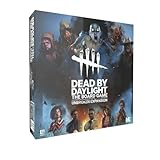
- Play as 5 new resourceful Survivors with their own unique Perks!
- Play as 5 new Killers with horrifying Powers that defy logic to hunt your prey!
- Customize your experience with all-new Perks and set-up options!
- Bring the game to life with 10 hauntingly detailed miniature figurines!
A Survivor can contribute without being the player in the most visible chase. Repair progress, a timely rescue, a warning to a teammate and a well-chosen escape route all support the same team objective. You therefore measure a good match by more than personal survival: useful decisions can give another player time to finish a generator or reach an exit.
Killer: stop four escape attempts
The Killer plays alone against all four Survivors. The objective is to find them, begin chases, down them, place them on hooks and prevent enough generator progress for the team to escape. Every decision belongs to you: where to search, which chase to continue, when to abandon a target, and where to apply pressure next.
Killer play is an information-and-time problem. You are constantly interpreting signs that Survivors have been active, predicting where they will move, and deciding whether a pursuit is worth the seconds it costs elsewhere. A strong plan can unravel if you spend too long on one chase, while a quick change of target can force the team to divide its attention.
Recommended Free Tools
Survivor and Killer compared
| Decision axis | Survivor | Killer |
|---|---|---|
| Team structure | One of four teammates; coordination can cover individual mistakes. | Alone against four opponents; every strategic decision is yours. |
| Main objective | Repair generators, cooperate, rescue teammates and reach powered exits. | Find, chase, down and hook Survivors before they escape. |
| Best fit | Social players, shared learners, and people who like stealth or support. | Independent players who enjoy pursuit, prediction, map control and pressure. |
| Early learning | Teammates provide examples and can compensate for mistakes, but their behavior is unpredictable. | Your agency is clear, but there is no teammate to compensate when a decision fails. |
| Emotional texture | Periods of repairing or hiding interrupted by rescues and sudden chases. | Continuous information gathering, chase choices and time pressure. |
This comparison describes the structure of the roles, not a guaranteed difficulty ranking. Matchmaking, your opponents, your familiarity with a map and the current live balance all affect how a session feels.
Choose Survivor first when these statements sound like you
You want a social learning environment
Survivor gives you three teammates to observe and learn from. You can see how other players approach a generator, rotate away from danger or rescue someone under pressure. Even when a teammate makes a poor choice, that choice teaches you what the Killer can exploit. Shared responsibility also means one mistake does not automatically decide the entire match.
This does not mean Survivor is passive. You still make independent route and timing decisions, but the role gives you more opportunities to learn by watching events elsewhere on the map. If you are unfamiliar with asymmetric games, that extra context can make the first sessions less overwhelming.
You prefer stealth, support and short bursts of danger
Survivor alternates between relatively quiet work and urgent reactions. You may spend time repairing, checking your surroundings and moving between objectives before a chase suddenly begins. Players who like hiding, rescuing, guiding teammates away from danger or choosing when to reveal themselves often find this rhythm satisfying.
Quick wins for a faster PC:
Repair Windows errors before they cause bigger problemsFix Now →Fix the driver behind crashes, sound loss and screen glitchesFind Drivers →Clear out junk files and repair common Windows errorsFree Scan →Support does not require constant voice communication. In a coordinated group, callouts can help, but the role still has meaningful decisions for players who queue alone. You can decide when to leave a generator, whether a rescue is safe enough to attempt and which route gives you the best chance of breaking line of sight.
You want to learn the map before taking full responsibility
New players must learn where generators, hooks, pallets, windows, hiding spaces and common chase routes are located. Survivor lets you study those landmarks while the Killer’s attention is often elsewhere. A teammate’s chase can also reveal which areas are dangerous and how much distance particular routes provide.
That map knowledge remains valuable if you later switch to Killer. Understanding where Survivors want to repair, where they can run after being spotted and which areas connect to one another improves your search and chase decisions.
Choose Killer first when these statements sound like you
You want complete control of the plan
Killer is a self-directed role. You choose the opening search, the first target, the next patrol area and the moment to end a chase. There is no teammate to coordinate with and no need to wait for another player to take a role you consider necessary. If you enjoy setting priorities and adapting your plan without relying on strangers, that autonomy is a major attraction.
Do these 3 things before closing this tab:
1Clear out junk files and repair common Windows errors2Scan for outdated or missing drivers - takes under a minute3Repair Windows errors before they cause bigger problemsAutonomy also creates accountability. When a generator is completed or a chase consumes too much time, you cannot attribute the decision to a teammate. That clarity is useful for improvement: after a match, you can identify the exact choice that cost time and decide what you will change next time.
You enjoy pursuit and prediction
Killer play rewards reading intentions. A Survivor may run toward a familiar route, leave an area early, hide near an objective or double back after expecting you to continue forward. Your task is not simply to move toward a visible opponent; it is to predict the next safe option and decide whether the pursuit is producing enough value.
Players who like mind games, pressure and rapidly changing information often prefer this role. A successful chase is satisfying because it combines observation, movement and a strategic decision about what to do afterward.
You can accept visible mistakes and time pressure
As Killer, errors are exposed immediately. Spending too long on one Survivor can give the other three time to repair generators. Searching the wrong area can leave you with little information. A failed prediction may allow an escape route that you must account for in the next encounter.
What’s actually slowing this PC down?
Pick the symptom - the matching free tool is one click away.
If that pressure feels motivating rather than discouraging, Killer can be rewarding from the first session. If every mistake feels like a personal failure, beginning with Survivor may provide a gentler route into the same systems.
Which role is easier for a beginner?
Survivor is generally the easier starting point for players who have never played an asymmetric game. Teammates share the workload, and you can learn objectives, map landmarks, chase routes and rescue decisions while another player is being pursued. A difficult match can still teach you something even when you do not survive.
Killer can be easier for a different kind of beginner: someone who dislikes depending on teammates and prefers one clear set of controls and decisions. You always know that your job is to locate, chase and stop Survivors. The challenge is that four opponents can exploit any period in which your attention is in the wrong place, and there is no partner to cover the mistake.
“Easier” therefore depends on what causes difficulty for you. If uncertainty about other players is the problem, Killer’s independence may feel better. If simultaneous threats and map awareness are the problem, Survivor’s shared workload may feel better. Try several matches rather than judging a role from one unusually good or bad game.
How stressful is each role?
Survivor stress: uncertainty and dependence
Survivor stress comes from incomplete information. You may not know where the Killer is, whether a teammate can complete a rescue, or whether leaving a generator will help or hurt the team. Waiting in cover can feel tense because doing nothing has a cost, while moving can expose you.
Rank #2

- EXPAND YOUR GAMEPLAY – Take your Dead by Daylight board game further with 5 new Survivors and 5 terrifying Killers, each with unique abilities for fresh strategies and tension. Requires the base set to play.
- HORROR-THEMED STRATEGY – Escape or become the ultimate ghost killer game villain with new Perks and Powers that heighten suspense and excitement. Will you survive the night or fall to the darkness?
- DETAILED MINIATURES – Includes 10 hauntingly sculpted miniatures, bringing characters to life with eerie precision. A must-have for fans of horror board games, collectible art, and immersive tabletop play.
- MULTIPLE WAYS TO PLAY – Customize matches with new setup options, creating fresh scenarios for replayability. Whether you love betrayal, hidden movement, or outsmarting foes, this expansion enhances your Dead by Daylight experience.
- PERFECT FOR HORROR FANS – Great for teens, adults, and couples who love strategy, tabletop, or party games. A top pick for game nights, mystery lovers, and fans of monsters and survival horror.
Team dependence adds another layer. A teammate may take a risk you would not take, fail to repair an objective or attempt a rescue at a poor time. You can reduce the impact of those choices through your own positioning and timing, but you cannot control them.
Killer stress: constant responsibility
Killer stress is more continuous. You are gathering information, choosing a target and watching the clock while four opponents progress toward the same escape condition. A single chase can feel urgent because every second spent there is a second in which other Survivors may be repairing.
The role can nevertheless feel less emotionally complicated for players who prefer agency. You do not need to persuade teammates or predict whether they will help. Your task is demanding, but the plan and its adjustments remain yours.
The Tool Desk
Outbyte PC Repair FREERepair Windows errors before they cause bigger problemsFix Now →Outbyte Driver Updater FREEFix the driver behind crashes, sound loss and screen glitchesFind Drivers →A practical first-session plan for Survivor
Use your first several matches to learn the loop rather than to chase a perfect result. The following sequence keeps the focus on transferable fundamentals.
- Learn the generator objective. Identify a generator, begin repairing and notice how progress changes when another Survivor joins you. Your immediate goal is to understand how the team advances toward five completed generators out of seven.
- Read the map while working. Note nearby pallets, windows, hooks and routes between objectives. You are building a mental map that will matter during both repairs and chases.
- Leave before danger arrives. When you have a credible reason to believe the Killer is approaching, move toward a route with more than one option instead of waiting until you are trapped beside the generator.
- Practice a short chase. Do not treat every chase as a test you must win. Concentrate on turning corners, choosing when to continue and recognizing when a route has become unsafe.
- Make rescues deliberately. Check the area and the Killer’s position before approaching a hooked teammate. A rescue is valuable only if it does not immediately create another preventable loss.
- Review one decision after the match. Pick a single moment—leaving a generator, entering a chase or attempting a rescue—and decide what information you lacked. Improvement is easier when the review is specific.
A practical first-session plan for Killer
- Start with information, not a fixed chase. Search likely generator areas and observe where activity is occurring. Your opening route should create information even if it does not produce an immediate down.
- Commit only when the chase is productive. Pursue while you are gaining distance or forcing a Survivor away from an important area. If the route repeatedly favors the Survivor, reassess instead of treating persistence as progress.
- After a down, reset your priorities. Hook the Survivor, then decide which generator or area deserves attention next. The other three Survivors are still advancing their objective.
- Patrol with a reason. Move between areas where you expect progress or where a previous encounter revealed activity. Random movement creates fewer useful decisions than a patrol built around information.
- Track patterns, not just locations. Notice which Survivors take similar routes, return to unfinished objectives or avoid particular areas. Those habits can make your next search faster.
- Review time management. After the match, identify the longest chase and ask whether its result justified the time spent. This single review develops the pressure judgment that separates a reactive Killer from a planned one.
Why learning both roles improves your play
Switching sides is one of the most efficient ways to understand Dead by Daylight because each role reveals the other’s priorities. Survivor teaches you which sightlines feel safe, when a generator is tempting enough to risk and how much distance a chase route provides. Killer teaches you what information is visible, which searches waste time and how quickly pressure can move from one part of the map to another.
You do not need to become equally comfortable on both sides. Even a short experiment with the opposite role can answer questions that are difficult to solve from one perspective. If a Killer repeatedly finds you near objectives, try Killer long enough to see what clues make those searches attractive. If Survivors keep escaping after long chases, try Survivor to understand why those routes are so valuable and then adjust your target selection.
How updates affect role advice
Perks, chase balance and anti-tunneling or anti-slugging systems can change over time. Behaviour Interactive’s August 2025 developer update recorded changes affecting both Survivor and Killer perks and systems, so advice tied to a particular build should be checked against the live game before you rely on it.
Free tools Windows power users keep installed
One-click scans. No signup required.
The underlying role choice is more stable than any individual perk effect. Five of seven generators, four Survivors cooperating and one Killer applying pressure remain the basic structure described on the official gameplay page, while the best perk combinations and tactical details can shift with patches. Treat build recommendations as date-sensitive; treat the role comparison as a playstyle decision.
Common mistakes when choosing a role
Assuming one side is always easier
A role can feel easy in one match and impossible in the next because opponents, map conditions and your own familiarity vary. Use several sessions and judge whether the decision-making itself is enjoyable, not only whether the result is a win.
Confusing a bad team with a bad role
Survivor outcomes depend partly on three other players. A difficult team experience may be frustrating without proving that Survivor is wrong for you. Try another match and focus on the decisions you control before changing sides.
Confusing a lost match with failed learning
Killer losses can reveal exactly where pressure disappeared, and Survivor losses can reveal unsafe routes or mistimed rescues. Record one concrete lesson instead of using the final result as your only measure.
Outdated Drivers Are Slowing You Down
One free scan finds every outdated or missing driver and matches the right update for your exact hardware.Free scan · exact hardware matchPC Slower Than It Used to Be?
A free scan shows the junk files, broken settings and background clutter dragging Windows down - then fixes them in one click.Free scan · Windows 10 & 11Copying a build before learning the objective
Perks and systems evolve, and a build cannot replace knowledge of generators, hooks, pallets, sightlines, rescues and chase timing. Learn the basic loop first, then select tools that address a problem you can describe.
Decision guide: make the choice in one minute
Choose Survivor first if most of these are true:
- You enjoy cooperating even when teammates are strangers.
- You want to observe fundamentals before carrying an entire match.
- You like stealth, support actions and choosing when to take a risk.
- You would rather recover from mistakes with a team than own every decision.
- You want map and chase knowledge that can later transfer to Killer.
Choose Killer first if most of these are true:
- You prefer a self-directed plan with no teammate dependency.
- You enjoy hunting, prediction, mind games and pressure.
- You like making rapid target and route decisions.
- You can treat visible mistakes as information for the next match.
- You want direct responsibility for stopping four opposing players.
If the lists are close, begin with Survivor for a few matches, then play Killer immediately afterward. The contrast will show whether you prefer shared uncertainty or solo responsibility more clearly than a description can.
Bottom line
Survivor is the stronger starting recommendation for most newcomers because four players share the escape plan and the role exposes you to generators, rescues, hooks, pallets and chase routes without making you responsible for the entire opposing side. Killer is the better first choice for players who actively want autonomy, pursuit and pressure and who are comfortable learning through highly visible mistakes.
After you have learned one side’s objective, spend some time on the other. Knowledge transfers in both directions: understanding Survivor priorities helps a Killer apply pressure, while understanding Killer sightlines helps a Survivor choose safer paths. Pick the role whose decisions you want to make repeatedly, then use the other role as a laboratory for understanding the match.
Frequently Asked Questions
Can I change from Survivor to Killer whenever I want?
Yes. The roles are separate choices in the match lobby, so you can alternate between them between games. Switching does not require you to abandon the knowledge learned on the other side.
Is playing with friends a reason to choose Survivor?
It can be. Survivor is built around four cooperating players, so a group that enjoys coordinating objectives and rescues may find the communication itself rewarding. Playing alone still works, but you have less influence over teammate decisions.
What should I do if I lose repeatedly as Killer?
Review your longest chase and your first patrol after each match. Identify whether you spent too long pursuing one target, searched without a clear information goal or ignored generator pressure. Change one decision pattern at a time rather than replacing every part of your approach.
What should I practice when Survivor matches end quickly?
Practice reading the map before danger arrives. Locate a generator, identify two possible escape routes and note nearby pallets, windows and hooks. This gives you a plan before a chase starts and makes later failures easier to diagnose.
Are Survivor and Killer equally popular?
No reliable survey or role-popularity figure is established here, so popularity should not guide your choice. Your preferred decision-making style is a more useful criterion.
Quick Recap
Product prices and availability are accurate as of the date/time indicated and are subject to change. Any price and availability information displayed on Amazon at the time of purchase will apply.

