
Crashes, No Sound, or Screen Glitches?
Random freezes, missing sound and display glitches usually trace back to one bad driver. Find and replace yours safely.Free scan · under a minutePC Slower Than It Used to Be?
A free scan shows the junk files, broken settings and background clutter dragging Windows down - then fixes them in one click.Free scan · Windows 10 & 11The original PlayStation did not use cartridges. Sony’s first home console, launched in Japan on December 3, 1994, used CD-ROMs for games. The answer changes only if “PlayStation” means the entire product family: the PlayStation Vita later accepted physical game cards, while the PSP used UMD optical discs and other PlayStation consoles used CD, DVD or Blu-ray media.
That distinction matters because a Vita card is sometimes casually called a cartridge, but it was never the format for the 1990s PlayStation. The clearest answer is therefore: original PlayStation, no; PlayStation family, yes, through PS Vita cards.
| # | Preview | Product | Price | |
|---|---|---|---|---|
| 1 |

|
Sony PlayStation 4 500GB Console (Renewed) | $160.53 | Buy on Amazon |
| 2 |
|
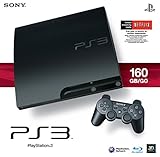
Sony Playstation 3 160GB System (Renewed) | $184.24 | Buy on Amazon |
| 3 |

|
PlayStation 4 Console - 1TB Slim Edition (Renewed) | $189.99 | Buy on Amazon |
| 4 |

|
Sony PlayStation 2 Console - Black (Renewed) | $185.51 | Buy on Amazon |
As an Amazon Associate I earn from qualifying purchases.
What the original PlayStation actually used
The console commonly called the PS1 or PSone launched in Japan on December 3, 1994. Sony Group’s corporate history lists a launch price of 39,800 yen and identifies CD-ROM as the system’s primary game medium. Games were supplied on optical discs that the console read with a laser, not on plug-in ROM cartridges containing memory chips.
In practical terms, an original PlayStation game required the console’s optical drive. A cartridge slot was not part of the hardware design, and PlayStation software was not distributed in a cartridge format for the system. This remains true for the original Japanese model and the later international versions of that same console family.
#1 Best Overall
- "Suspend mode" eliminates the load time on your saved game and allows you to immediately return to where you left off by pressing the power button.
- Enables the greatest game developers in the world to unlock their creativity and push the boundaries of play through a platform that is tuned specifically to their needs.
- Engage in endless personal challenges between you and your community, and share your epic moments for the world to see.
- Gamers can share their epic triumphs by hitting the "SHARE button" on the controller, scan through the last few minutes of gameplay, tag it and return to the game.
Why the cartridge question comes up
Cartridges were the dominant physical game format before Sony entered the market. Players who remember earlier cartridge-based consoles may assume every major 1990s system offered one. Sony’s own historical account explicitly contrasts the two media: ROM cartridges were the standard form of video-game media up to the PlayStation, while CD-ROMs could be produced and supplied more quickly.
The PlayStation also used separate memory cards for saved games. Those cards are easy to confuse with game cartridges in photographs or modern listings, but they stored save data rather than the game software itself. A memory card did not replace the CD-ROM and could not be used to launch a game on its own.
Why Sony chose CD-ROM instead of cartridges
Sony’s explanation is primarily about manufacturing and replenishment. In its corporate history of the PlayStation, Sony says ROM cartridges took longer to produce than CD-ROMs. According to that historical account, a CD-ROM order could be fulfilled in a maximum of six days, even when the order was a small lot. If cartridge stock ran out, replenishment could take several months.
Those figures describe Sony’s experience and supply conditions at the time; they are not a universal production rule for every cartridge manufacturer. They do, however, explain the business problem Sony was trying to solve. Faster disc production made it easier to manufacture an initial run, respond to demand and replace depleted inventory without waiting months.
The format decision also separated the console from the cartridge expectations of the previous generation. Rather than building a cartridge connector and relying on chip-based game boards, Sony designed the original PlayStation around an optical drive and pressed-disc distribution. That choice became one of the defining characteristics of the platform.
PlayStation formats by system
“PlayStation” has covered several generations and handhelds. Their physical media are not interchangeable, so identifying the specific system is essential.
| System | Physical or primary game format | What that means |
|---|---|---|
| Original PlayStation | CD-ROM | Optical discs; no game-cartridge slot. |
| PlayStation 2 | DVD-ROM | Sony’s platform timeline identifies DVD-ROM as the adopted game format. |
| PlayStation Portable (PSP) | UMD discs | Small optical discs, not cartridges. |
| PSP Go | Networked and digital distribution | Sony described it as the first PSP platform designed exclusively as a networked device; do not assume it had a UMD drive. |
| PlayStation 3 | BD-ROM | Sony’s timeline identifies Blu-ray Disc ROM as the platform’s optical format. |
| PlayStation Vita | PS Vita cards and downloadable software | The family’s cartridge-like physical card exception. |
The table shows why a one-word answer can mislead. The original console used CD-ROM, PS2 moved to DVD-ROM, PS3 adopted BD-ROM, and the handheld line used two different approaches: UMD discs for PSP and cards for Vita.
Rank #2
- Internet Ready With Built-in Wi-Fi with a Cell Broadband Engine Advanced Microprocessor
- When starting up the system for the first time, hold the power button until a "screen display" message shows up on screen. Select the desired output, and the system will startup normally.
- 160GB system
- Blu-ray player to give you pristine picture quality
- The best high-definition viewing experience available
PSP used UMD discs, not cartridges
The PlayStation Portable introduced a proprietary optical format called Universal Media Disc, or UMD. A UMD was a small disc enclosed in a protective shell. It looked unlike a full-size CD or DVD, but it was still optical media: the game data was read from a disc rather than from a cartridge’s ROM chips.
Sony Computer Entertainment reported more than 3,200 UMD titles worldwide as of the end of March 2011. That is a historical count from Sony’s announcement at that time, not a current catalog total. It demonstrates the scale of the PSP’s disc-based library without changing the format classification.
Why UMD can be mistaken for a cartridge
UMD packaging was compact and rigid, and the disc itself was enclosed rather than exposed. Those physical traits can make a UMD resemble a card or cartridge when viewed in a collection. The distinction is technical: the PSP reads an optical disc inside the shell, while a cartridge or game card contains solid-state memory and uses electrical contacts.
That difference affects hardware and compatibility. A PSP UMD cannot be inserted into an original PlayStation, and a PlayStation CD-ROM cannot be used in a PSP. Each format requires the drive or slot designed for it.
What’s actually slowing this PC down?
Pick the symptom - the matching free tool is one click away.
PSP Go was a digital exception within the PSP line
PSP Go should not be treated as another physical-media format. Sony identified it as the first PSP platform exclusively designed as a networked device. Its distinction is the absence of a conventional UMD-based distribution path, not the adoption of cartridges.
When comparing PSP models, separate the original PSP hardware with its UMD drive from PSP Go’s network-focused design. Calling PSP Go a cartridge system would be doubly inaccurate: it did not use cartridges, and its defining change was moving away from the standard physical UMD model.
PlayStation Vita is the cartridge-like exception
The PlayStation Vita is the reason the broader answer cannot simply be “PlayStation never used cartridges.” Vita games were distributed both as downloads and on dedicated PS Vita cards. The system’s official quick-start guide identifies a PS Vita card slot and states that the card contains PS Vita format software.
Rank #3
- Includes a new slim 1TB PlayStation 4 system, a matching DualShock 4 Wireless Controller.
- Play online with your friends, save games online and more with PlayStation Plus membership (sold separately).
- All the greatest, games, TV, music and more. Connect with your friends to broadcast and celebrate your epic moments at the press of the Share button to Twitch, YouTube, Facebook and Twitter.
- Mount is not included
In everyday conversation, people often call these cards cartridges because they are small, removable solid-state game media inserted into a dedicated slot. “Game card” is the more precise label used by Sony’s documentation. Either term should be qualified: Vita cards belong to the Vita, not to the original PlayStation.
What a Vita card does and does not prove
A physical Vita card proves that one PlayStation-branded system used card-based game distribution. It does not mean that the 1994 console had a hidden cartridge model, that PlayStation CD games were converted into cartridges, or that Vita cards work in earlier hardware. The card format arrived with a later handheld platform and its own software and hardware ecosystem.
Vita also supported downloadable software, so the platform was not limited to cards. A physical card is one delivery option alongside digital distribution, whereas the original PlayStation’s standard game delivery was CD-ROM.
Optical discs, cards and digital delivery: the useful distinction
Grouping every removable game object under “cartridge” hides the differences that matter when buying, collecting or troubleshooting software.
| Media type | How the system reads it | PlayStation examples |
|---|---|---|
| Optical disc | A laser reads data from a disc in a drive. | Original PlayStation CD-ROM, PS2 DVD-ROM, PS3 BD-ROM and PSP UMD. |
| Game card or cartridge-like card | Electrical contacts connect solid-state storage to a card slot. | PS Vita card. |
| Digital or networked delivery | Software is downloaded and stored by the device rather than supplied on removable media. | PSP Go’s network-focused model and downloadable Vita software. |
This classification is more useful than judging by appearance. A disc sealed in a shell is still a disc, and a small solid-state card is the item that most closely matches the traditional meaning of cartridge.
Do these 3 things before closing this tab:
1Scan for outdated or missing drivers - takes under a minute2Clear out junk files and repair common Windows errors3Fix the driver behind crashes, sound loss and screen glitchesA short historical timeline
1994: original PlayStation launches on CD-ROM
Sony launched the first PlayStation in Japan on December 3, 1994, at 39,800 yen. Its primary game medium was CD-ROM. This is the system most people mean when they ask whether “the PlayStation” used cartridges, and the answer for that machine is no.
PlayStation 2: DVD-ROM
Sony’s 2014 platform timeline identifies PlayStation 2 with DVD-ROM adoption. The second home console therefore continued the optical-disc strategy, moving to a different disc standard rather than returning to cartridges.
Rank #4
- The Playstation 2 system lets you play original PS1 games as well as the huge selection of PS2 games
- Includes: Playstation 2 System, 1 Dual Shock 2 Controller, AC Cable, AV Cable
- Color: Black
- PlayStation2 is equipped with a 128-bit Emotion Engine processor that enables lightning-fast gameplay and impressive graphics power
PSP: UMD
The PlayStation Portable used UMD discs. Sony later reported more than 3,200 UMD titles worldwide as of the end of March 2011, confirming the handheld’s substantial disc library.
PSP Go: networked design
PSP Go was described by Sony as the first PSP platform exclusively designed as a networked device. It belongs in the digital-distribution column, not the cartridge column.
PlayStation 3: BD-ROM
Sony’s platform timeline identifies PlayStation 3 with BD-ROM, another optical format. The progression from CD-ROM to DVD-ROM to BD-ROM shows the home consoles retaining disc-based distribution across generations.
PlayStation Vita: cards plus downloads
Vita introduced the family’s physical game-card format. Its official guide documents the card slot and software stored on PS Vita cards, while the platform also offered downloadable games.
How to answer the question without confusion
If someone asks about a particular game, start by naming the hardware. Use this checklist:
- Original PlayStation or PSone: say CD-ROM, not cartridge.
- PlayStation 2: say DVD-ROM.
- PlayStation Portable: say UMD disc.
- PSP Go: describe its networked, digital-first design rather than assigning it a physical cartridge format.
- PlayStation 3: say BD-ROM.
- PlayStation Vita: say PS Vita game card, with downloads also available.
This wording prevents two common errors: calling every small removable item a cartridge and extending the Vita’s card format backward to the original console.
The Tool Desk
Outbyte Driver Updater FREEFix the driver behind crashes, sound loss and screen glitchesFind Drivers →Outbyte PC Repair FREEClear out junk files and repair common Windows errorsFree Scan →Bottom line for collectors and historians
For the 1990s PlayStation, there is no cartridge catalog to find: its games were CD-ROM releases. When discussing the full brand, mention the later Vita card as a separate handheld format. UMD belongs in the optical-disc category, and PSP Go represents networked distribution rather than a new cartridge type.
The historical reason for the original choice is equally clear. Sony’s account says CD-ROM orders could be fulfilled in a maximum of six days, including small lots, whereas depleted cartridge stock could take several months to replenish. That supply advantage helped define PlayStation’s disc-based identity from its 1994 launch.
Quick Recap
Product prices and availability are accurate as of the date/time indicated and are subject to change. Any price and availability information displayed on Amazon at the time of purchase will apply.

