
The Tool Desk
Outbyte PC Repair FREERepair Windows errors before they cause bigger problemsFix Now →Outbyte Driver Updater FREEScan for outdated or missing drivers - takes under a minuteDriver Scan →Yes. The best-supported worldwide comparison puts Nintendo’s Super Nintendo Entertainment System (SNES, also called Super Famicom) ahead of Sega’s Genesis/Mega Drive. Nintendo reports 49.10 million SNES-family hardware units sold worldwide over the system’s lifetime. Sega’s official history confirms strong regional sales for the same Genesis/Mega Drive family, but it does not publish a directly comparable worldwide lifetime total on that page, so an exact sales margin should not be presented as settled.
The short answer, with the numbers that can actually be compared
Nintendo’s official investor data lists 49.10 million Super Family Computer/SNES hardware units sold worldwide on a consolidated lifetime basis. The data is marked as of June 30, 2026, and the page was accessed October 13, 2026. That is the clearest worldwide figure available for either console in the sources examined.
As an Amazon Associate I earn from qualifying purchases.
Sega’s official company history gives regional figures for the Genesis/Mega Drive after the arrival of Sonic the Hedgehog: more than 15 million units in North America and 8 million in Europe. Those figures are substantial, but they are not a complete worldwide lifetime total. Because one side has a consolidated global number and the other has selected regional numbers, the evidence supports the winner more firmly than it supports a precise difference.
| Console family | Figure | Geography and scope | Source and date |
|---|---|---|---|
| SNES/Super Famicom | 49.10 million hardware units | Worldwide, consolidated lifetime sales | Nintendo sales data, figures as of June 30, 2026 |
| SNES/Super Famicom | 49.1 million units | Record listing for the fourth-generation category | Guinness World Records, record dated 2003 |
| Genesis/Mega Drive | More than 15 million units | North America | SEGA official history |
| Genesis/Mega Drive | 8 million units | Europe | SEGA official history |
The regional Genesis and Mega Drive figures cannot simply be added and compared with 49.10 million as though they represented the same territory and accounting method. They are useful evidence of scale, not a substitute for a worldwide total.
#1 Best Overall

- HD audio and video (720p), 16:9/4:3 aspect ratio switch (Patent Pending)
- High compatibility for NTSC AND PAL SNES cartridges (via bottom case switch)
- Hyperkin-engineered Pin Perfect (Patent Pending) technology sets a new standard for state-of-the-art, high-quality pins.
- (2) x "Scout" premium classic-style controller (8 ft. cable)
- 3 ft. HD cable, 6 ft. Micro USB charge cable with USB AC adapter, AV ports with AV cable
Genesis and Mega Drive are the same console family
One common source of confusion is that Sega used different names in different markets. The hardware launched as the Mega Drive in Japan in 1988. It was released as the Genesis in North America in 1989 and launched in Europe in 1990, according to Sega’s corporate history.
Therefore, “Genesis sales” and “Mega Drive sales” should normally be treated as regional labels for one console family when comparing lifetime hardware performance. Counting only the North American name would understate the family’s reach; counting Genesis and Mega Drive as two unrelated systems would double-count it.
Regional differences went beyond the badge on the front of the console. Cartridge standards, television formats, software availability and accessories could vary by market. Those differences matter to collectors and to regional sales reporting, but they do not change the identity of the family being compared with the SNES/Super Famicom line.
Quick wins for a faster PC:
Clear out junk files and repair common Windows errorsFree Scan →Scan for outdated or missing drivers - takes under a minuteDriver Scan →Repair Windows errors before they cause bigger problemsFix Now →What Nintendo’s SNES figure includes
A worldwide consolidated lifetime total
Nintendo’s sales page reports 49.10 million hardware units for the Super Family Computer/SNES. Nintendo describes the figures as worldwide consolidated lifetime sales, which is the type of scope needed for a global console comparison. The same page lists 379.06 million software units for the platform; that software number is not a hardware figure and should not be mixed into the console-unit comparison.
Rank #2
![SUPER NINTENDO CLASSIC EDITION CONSOLE Renewed [NINTENDO]](https://m.media-amazon.com/images/I/31OpAJQNQML._SL160_.jpg)
- The Super NES Classic Edition system has the original look and feel of the ’90s home console, only smaller. Plus, this one comes fully loaded with 21 games!
- Get your hands on some of the best 2-player games of the era, including Super Mario Kart and Street Fighter II Turbo: Hyper Fighting.
- The Super NES Classic Edition is compatible with the Classic Controller and Classic Controller Pro accessories. Just plug it in and play
- From your first ride on Yoshi to the final heart-pounding escape from Planet Zebes, the Super Nintendo Entertainment System is pure 16-bit retro gaming perfection.
“Consolidated” is important wording. It indicates Nintendo’s reported total for the platform across its worldwide business rather than a single country, launch window or one retailer channel. It also gives the figure a clear cutoff: June 30, 2026. The number is not a forecast, a shipment estimate for one quarter or a regional tally.
Independent corroboration from Guinness
Guinness World Records identifies the SNES as the best-selling fourth-generation video-game console and gives a total of 49.1 million sales, with the record dated 2003. The Guinness entry corroborates the approximate scale of Nintendo’s figure, although it is not an independent Genesis-versus-SNES accounting exercise. Its role is confirmation of the SNES side, not proof of an exact gap.
What Sega’s official history establishes about Genesis/Mega Drive sales
Release history and regional performance
Sega’s official timeline says the Mega Drive launched in 1988, reached North America as Genesis in 1989 and launched in Europe in 1990. It also states that, following the 1991 release of Sonic The Hedgehog, the console sold more than 15 million units in North America and 8 million in Europe.
Crashes, No Sound, or Screen Glitches?
Random freezes, missing sound and display glitches usually trace back to one bad driver. Find and replace yours safely.Free scan · under a minutePC Slower Than It Used to Be?
A free scan shows the junk files, broken settings and background clutter dragging Windows down - then fixes them in one click.Free scan · Windows 10 & 11The corporate page’s wording is significant: it gives two regional milestones, not a single worldwide lifetime number. It does not state how many units were sold in Japan, Latin America, Australia, Asia or other markets, nor does it explain on that page whether every licensed manufacturer and later reissue is included in a global total.
Rank #3
![Nintendo Super Entertainment System SNES Classic Edition with Two 6-ft. Extension Cable [video game]](https://m.media-amazon.com/images/I/517MdbK-cqL._SL160_.jpg)
- Comes with 21 games pre-installed.
- Mini, classic edition. Will not play original SNES cartridges. Games come pre-installed on console.
Why the quote should not be turned into a global figure
Sega’s statement is sometimes paraphrased as though “15 million plus 8 million” were the system’s worldwide result. That would be an overreach. The figures cover North America and Europe only, and “more than 15 million” is open-ended rather than an exact count. They establish that the Genesis/Mega Drive was a major commercial rival, but they do not supply the like-for-like worldwide denominator needed to calculate a definitive margin against 49.10 million.
Why published Genesis totals do not always match
Sega-produced hardware versus the broader ecosystem
Different accounts may define “Genesis sales” differently. One total might count only consoles manufactured or sold directly by Sega. Another might include licensed versions, third-party production, regional reissues or later hardware that used the Genesis/Mega Drive identity. If those scopes are mixed, two apparently authoritative numbers can disagree without either being a simple arithmetic error.
The 30.75 million figure and its limitation
A secondary reference repeats an estimate of 30.75 million Sega-produced Genesis/Mega Drive units. That number is not verified by the official Sega history page cited above, and its scope is narrower than an all-licensees lifetime total if licensed or projected sales are discussed separately. It can be mentioned as a reported estimate, but it should not be presented as Sega’s official worldwide total or used to announce an exact SNES victory margin.
The distinction is practical: a Sega-produced estimate and Nintendo’s consolidated worldwide total may not count the same kinds of hardware. A comparison is only mathematically fair when both figures cover the same territories, manufacturers, reissues and time span.
Rank #4

- 16-bit Core Video Game Console
- Stereo sound
- For up to 2 players
Can we calculate exactly how many units SNES sold more?
Not from the official figures cited here. Subtracting a regional Genesis number from Nintendo’s 49.10 million would combine unlike measurements. Subtracting the 30.75 million secondary estimate would produce a neat result, but it would imply that the estimate has the same official status and scope as Nintendo’s consolidated number. The available evidence does not justify that assumption.
The defensible statement is therefore directional rather than margin-specific: the documented worldwide SNES total is higher, while the exact worldwide Genesis/Mega Drive lifetime total—and consequently the exact difference—remains unresolved in the cited official material.
Independent reader supportYour contribution helps us test, update, and keep practical guides available for everyone.How the release timeline fits the sales result
Mega Drive first, SNES later
The Mega Drive reached Japan in 1988, before the SNES launch. North American Genesis followed in 1989, while the SNES arrived in North America in 1991. Europe received the Mega Drive in 1990 and the SNES in 1992. These staggered launches gave Sega an early presence in several markets.
Free tools Windows power users keep installed
One-click scans. No signup required.
Release order explains why the comparison is historically close and why regional leadership varied. It does not change lifetime totals: a console can launch earlier yet finish behind, or launch later yet sell more over the full generation. Dates are context for the competition, not a substitute for audited unit counts.
Best Value
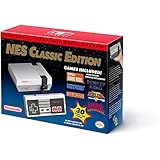
- The system comes bundled with: an HDMI cable
- an AC adapter
- one NES Classic Controller
- and all 30 games, installed and ready-to-play.
- E10+ w/ Mild Violence
The role of Sonic in Sega’s momentum
Sega’s own history links a major acceleration to Sonic The Hedgehog in 1991, after which it records more than 15 million North American and 8 million European sales. That institutional account supports the familiar picture of Genesis momentum during the early 1990s. It still does not answer how the family performed worldwide after every market, licensed system and later reissue is counted.
What “SNES outsold Genesis” should mean
For a reader asking which console sold more worldwide, the phrase should mean the SNES/Super Famicom family’s consolidated lifetime hardware total compared with the complete Genesis/Mega Drive family total across all regions. Under the evidence available, Nintendo supplies the complete global figure and Sega supplies partial regional evidence, so SNES is the documented leader.
That conclusion should not be stretched into claims that SNES won every country, every year or every retail period. Sega’s regional numbers show that Genesis/Mega Drive was highly successful, and market outcomes differed by territory. A worldwide lifetime result is an aggregate, not a statement that one machine dominated every local market.
A reliable way to read future sales claims
- Check the territory. “Worldwide,” “North America” and “Europe” are not interchangeable.
- Check the unit type. Hardware units, software units, shipments and sell-through can describe different things.
- Check the manufacturer scope. Ask whether licensed consoles, reissues and third-party production are included.
- Check the date. A historical record entry and a current corporate data page may use different reporting cutoffs.
- Check whether the number is official. A corporate total, a record listing and a secondary estimate should be labeled according to their source.
Applying those checks prevents the most common mistake in this debate: treating a partial regional figure or a narrowly defined estimate as though it were a complete worldwide lifetime total.
The defensible conclusion
Nintendo’s 49.10 million worldwide lifetime hardware figure gives SNES the stronger documented sales result. Sega’s official history confirms that Genesis/Mega Drive sold more than 15 million in North America and 8 million in Europe, but it does not provide a matching global lifetime total on the cited page. The winner is therefore clear on the best-supported comparison, while the precise size of the lead is not.
Quick Recap
Product prices and availability are accurate as of the date/time indicated and are subject to change. Any price and availability information displayed on Amazon at the time of purchase will apply.

