
Do these 3 things before closing this tab:
1Repair Windows errors before they cause bigger problems2Fix the driver behind crashes, sound loss and screen glitches3Clear out junk files and repair common Windows errorsVerdict: The DJI RS 4 Pro is a professional three-axis stabilizer built for camera rigs that exceed the practical range of lighter gimbals. Its strongest reasons to exist are higher payload capacity, improved balancing and vertical-shooting hardware, and integration with DJI’s Focus Pro and Transmission ecosystem. It is harder to justify if your camera is light, you do not need lens-control accessories, or you already own an RS 3 Pro that handles your setup comfortably.
This review uses DJI’s current specifications and product information, plus Digital Camera World’s 2026 buying-guide assessment. The figures below are manufacturer claims unless explicitly identified as an independent editorial judgment; they are not results from hands-on testing.
As an Amazon Associate I earn from qualifying purchases.
What the DJI RS 4 Pro is
The RS 4 Pro is DJI’s flagship single-handed camera gimbal for mirrorless and cinema-style rigs. It combines motorized pan, tilt and roll stabilization with electronic camera control, a quick-release mounting system, vertical-shooting support and optional focus, tracking and transmission accessories.
What’s actually slowing this PC down?
Pick the symptom - the matching free tool is one click away.
The product is aimed at crews carrying a camera body, a substantial lens and several mounted accessories rather than a bare lightweight mirrorless camera. That distinction matters: a rig can be physically mountable yet still be outside DJI’s supported electronic-control combinations, difficult to balance, or too heavy for practical handheld use.
#1 Best Overall

- 2nd-Gen Native Vertical Shooting - Camera gimbal stabilizer, just release the horizontal plate and secure it into the vertical position for an effortless switch to vertical social content.
- 4.5kg (10lbs) Payload Capacity, 20% Increase in Motor Torque - Equipped with carbon fiber axis arms and an increase in capacity and torque, DJI RS 4 Pro easily accommodates mainstream mirrorless/cinema camera and lens setups.
- Remote Dual Focus & Zoom Motor Control - With the new joystick mode switch, cinematographers can conveniently go between controlling DJI gimbal movement or lens zoom with precise joystick control.
- LiDAR Focusing: 76,800 Ranging Points Within 20m - Camera stabilizer, with the new Focus Pro LiDAR and Motor, DJI RS 4 Pro gives solo creators a more accurate and intelligent LiDAR autofocus experience at greater distances.
- Video Transmission Ecosystem - An extensive control ecosystem that broadens production possibilities via integrated installation and power supply, intelligent focus assistance, and precise parameter control.
DJI describes the RS 4 Pro as part of a wider Focus Pro and DJI Transmission ecosystem. The base stabilizer does not automatically include every motor, LiDAR unit or transmitter shown in promotional demonstrations, so the configuration you buy determines which advertised functions are available.
Payload: how much can it actually carry?
DJI’s tested ceiling
DJI lists a tested payload of 4.5 kg (10 lb). This is a maximum load figure, not a guarantee that every camera, lens and accessory combination will balance well or support electronic control. Count the complete mounted rig, including the camera battery, lens, cage, baseplate, monitor, wireless receiver, follow-focus hardware and cables.
A rig close to the ceiling can still be inconvenient. Larger lenses move the center of gravity farther from the tilt axis, increasing the time needed to balance and leaving less reserve for accessories. A sensible purchase decision leaves margin below the published limit instead of treating 4.5 kg as a target operating weight.
The Tool Desk
Outbyte Driver Updater FREEScan for outdated or missing drivers - takes under a minuteDriver Scan →Outbyte PC Repair FREERepair Windows errors before they cause bigger problemsFix Now →Physical fit versus electronic compatibility
DJI advises checking two separate things: whether the complete rig is within the payload specification and whether the exact camera-and-lens pairing appears in its current compatibility search. A camera may sit securely on the plate while offering only partial control, or no control, through the gimbal.
- Confirm the camera body, lens model and firmware combination in DJI’s compatibility tool.
- Check which functions are supported: record start/stop, shutter or aperture changes, focus, zoom and other controls are not universal.
- Include every accessory that will remain attached during a shot when calculating mass and balance.
- Plan cable routing before final balancing; a stiff or short cable can pull an axis off-center during movement.
Key specifications
| Specification | DJI-listed value or condition |
|---|---|
| Tested payload | 4.5 kg (10 lb) |
| Maximum standard-grip runtime | Up to 13 hours with the gimbal balanced level and stationary, while powering only the gimbal |
| Optional BG70 runtime | Up to 29 hours, according to DJI’s product-page claim |
| Approximate charging time | 1.5 hours with a 24 W fast charger |
| Gimbal body weight | Approximately 1,242 g before grip, plates, camera and accessories |
| Grip weight | Approximately 265 g |
| Extended grip/tripod weight | Approximately 226 g |
| Quick-release plate weight | Approximately 110 g |
| Pan range | Continuous 360 degrees |
| Roll range | -95 to +240 degrees |
| Tilt range | -112 to +214 degrees |
| Maximum controlled rotation speed | 360 degrees per second on each axis |
| Published software-update commitment | DJI specifies guaranteed updates until 2026-12-31 |
The runtime, payload, rotation-speed and range figures are specification-sheet values. They describe the hardware under DJI’s stated conditions and should not be read as a promise of identical performance with every camera configuration.
Balancing and handling
Why the Pro model is easier to prepare
The RS 4 Pro uses axis locks and balancing aids intended to make repeated setup faster. Locking an axis while mounting a camera prevents unwanted movement, and the adjustable mounting system gives you room to center heavier bodies and lenses before powering the motors.
Rank #2
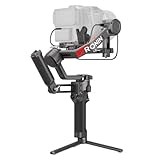
- 2nd-Gen Native Vertical Shooting - Camera gimbal stabilizer, just release the horizontal plate and secure it into the vertical position for an effortless switch to vertical social content.
- 4.5kg (10lbs) Payload Capacity, 20% Increase in Motor Torque - Equipped with carbon fiber axis arms and an increase in capacity and torque, DJI RS 4 Pro easily accommodates mainstream mirrorless/cinema camera and lens setups.
- Remote Dual Focus & Zoom Motor Control - With the new joystick mode switch, cinematographers can conveniently go between controlling DJI gimbal movement or lens zoom with precise joystick control.
- LiDAR Focusing: 76,800 Ranging Points Within 20m - Camera stabilizer, with the new Focus Pro LiDAR and Motor, DJI RS 4 Pro gives solo creators a more accurate and intelligent LiDAR autofocus experience at greater distances.
- Video Transmission Ecosystem - An extensive control ecosystem that broadens production possibilities via integrated installation and power supply, intelligent focus assistance, and precise parameter control.
Balancing is still a required procedure, not an optional refinement. With the gimbal powered off, adjust the camera so it remains in place when each axis is released. A poorly balanced rig asks the motors to fight gravity continuously, which increases heat, noise and battery consumption.
- Remove the lens cap and install the exact lens, battery, cage and accessories you will use.
- Mount the camera on the quick-release plate and slide it into the gimbal’s mounting system.
- Balance tilt first by moving the camera forward or backward, then adjust its vertical position.
- Balance roll by shifting the camera laterally until it no longer falls to one side.
- Balance pan by sliding the upper assembly until the camera stays centered when the arm is angled.
- Power on the gimbal and run its motor-tuning or balance check in the Ronin app before filming.
The included plate and grip add weight before a camera is attached. The body alone is approximately 1,242 g, while the listed grip, extended grip/tripod and plate add about 265 g, 226 g and 110 g respectively. That makes the complete handheld package substantially heavier than the headline body figure.
Movement range and speed
DJI lists continuous 360-degree pan rotation, a roll range from -95 to +240 degrees and a tilt range from -112 to +214 degrees. Maximum controlled rotation is listed as 360 degrees per second on each axis. These numbers indicate available mechanical and motor range; they do not predict how smooth a specific heavy rig will look at a given walking speed or focal length.
Camera control, focus and tracking
Native vertical shooting
The RS 4 Pro supports DJI’s second-generation native vertical-shooting design. Switching to a vertical configuration is intended to be faster than building a separate portrait rig, which is useful when one production alternates between conventional widescreen footage and vertical deliverables.
Balance must be checked after changing orientation. A camera that is balanced horizontally can become front- or side-heavy when rotated, especially with a large lens, monitor or top-mounted accessory.
Windows Errors? Fix Them Before They Spread
Repair common Windows errors and clear accumulated junk for a smoother, more stable PC - no reinstall needed.Free scan · no reinstallCrashes, No Sound, or Screen Glitches?
Random freezes, missing sound and display glitches usually trace back to one bad driver. Find and replace yours safely.Free scan · under a minuteJoystick modes and lens control
DJI provides a joystick mode that can control gimbal movement or lens zoom, depending on the connected setup and selected mode. The RS 4 Pro also supports two Focus Pro Motors for wireless or motorized lens-control workflows. The motors are not a substitute for verifying the lens and camera combination: control behavior depends on the installed accessories and supported equipment.
Rank #3

- 2nd-Gen Native Vertical Shooting - Camera gimbal stabilizer, just release the horizontal plate and secure it into the vertical position for an effortless switch to vertical social content.
- 4.5kg (10lbs) Payload Capacity, 20% Increase in Motor Torque - Equipped with carbon fiber axis arms and an increase in capacity and torque, DJI RS 4 Pro easily accommodates mainstream mirrorless/cinema camera and lens setups.
- Remote Dual Focus & Zoom Motor Control - With the new joystick mode switch, cinematographers can conveniently go between controlling DJI gimbal movement or lens zoom with precise joystick control.
- LiDAR Focusing: 76,800 Ranging Points Within 20m - Camera stabilizer, with the new Focus Pro LiDAR and Motor, DJI RS 4 Pro gives solo creators a more accurate and intelligent LiDAR autofocus experience at greater distances.
- Video Transmission Ecosystem - An extensive control ecosystem that broadens production possibilities via integrated installation and power supply, intelligent focus assistance, and precise parameter control.
LiDAR and ActiveTrack Pro
On its product page, DJI describes a Focus Pro LiDAR system with 76,800 ranging points within 20 m and identifies next-generation ActiveTrack Pro functionality. Those are DJI figures and feature descriptions, not independently measured results.
LiDAR features require compatible add-ons. The Focus Pro LiDAR unit is sold separately, and DJI says LiDAR Waveform requires pairing with a Focus Pro Motor. The base RS 4 Pro therefore should not be purchased on the assumption that LiDAR autofocus or waveform tools are already in the box.
DJI Transmission integration
The RS 4 Pro is designed to work within DJI’s Transmission ecosystem, allowing a production to combine stabilized camera movement with wireless video and control equipment. This can be valuable on a crew that already owns compatible DJI devices, but it adds cost, setup time and power-management requirements for operators starting from scratch.
Battery life and charging
What the 13-hour figure means
DJI’s standard-grip headline is up to 13 hours when the gimbal is balanced level and stationary, with the battery powering only the gimbal. DJI explicitly warns that movement reduces runtime. A moving, heavily loaded rig with camera-control accessories should therefore be planned around a shorter practical interval than the maximum specification.
The figure is also not a camera-runtime estimate. If the camera, monitor, transmitter or focus system draws power from separate batteries, those devices can become the limiting factor even while the gimbal still has charge.
BG70 high-capacity grip
DJI says the optional BG70 High-Capacity Battery Grip can extend runtime to 29 hours. It can provide up to 18 W through USB-C for camera or accessory power. DJI qualifies camera charging: it is supported only for mainstream cameras while powered off and depends on the camera’s charging protocol.
Rank #4

- INCLUDED: DJI RS 4 Pro Combo 3-Axis Gimbal Stabilizer | BG30 Battery Grip | Quick-Release Plates | Extended Grip/Tripod | Briefcase Handle | Lens Support | Ronin Image Transmitter | Focus Pro Motor | Phone Holder | Camera Control Cables | Charging & HDMI Cables | Carrying Case | DJI 1-Year Limited Warranty | KIT ACCESSORY: Condenser Shotgun Microphone
- POWERFUL 3-AXIS STABILIZATION – Lightweight professional gimbal supporting up to 4.5kg / 9.9 lb payload capacity, making it ideal for mirrorless and cinema camera setups while maintaining smooth cinematic stabilization.
- NATIVE VERTICAL SHOOTING – Features 2nd-generation native vertical shooting, allowing creators to quickly switch from horizontal filming to vertical content for social media without additional accessories.
- ADVANCED CONTROL & AUTOMATION – Built with an OLED touchscreen with auto-lock, automated axis locks, and joystick or Bluetooth mode switching for intuitive operation and faster setup on set.
- PRECISION FOCUS & TRACKING – Compatible with Focus Pro Motor, LiDAR focusing, wireless image transmitter, and ActiveTrack Pro, enabling intelligent subject tracking, accurate focusing, and advanced production workflows.
The 29-hour number is a DJI product-page claim, not independent runtime testing. The BG70 also increases the rig’s size and weight, so it is most useful for long events, remote shoots or setups where changing batteries is disruptive.
Recommended Free Tools
Charging time
DJI lists approximately 1.5 hours to charge with a 24 W fast charger. Charging time varies with charger, cable, battery temperature and the battery’s starting level. Bring a compatible charger and allow time for the camera and accessory batteries as well; charging only the gimbal does not make a complete production package ready.
RS 4 Pro standalone versus RS 4 Pro Combo
The package choice changes which control functions you can use immediately.
| Package | What DJI identifies | Practical implication |
|---|---|---|
| RS 4 Pro standalone | The gimbal package without the Combo-specific transmitter and Focus Pro Motor | Suitable when you already own compatible control equipment or need the stabilizer alone |
| RS 4 Pro Combo | Adds a Ronin Image Transmitter and a Focus Pro Motor, according to DJI | Better starting point for wireless monitoring and motorized lens-control workflows |
DJI notes that package contents can vary by region and listing. Check the exact contents on the store page for your country before ordering; do not assume every listing contains the same transmitter, motor, cables or accessories.
Independent reader supportYour contribution helps us test, update, and keep practical guides available for everyone.RS 4 versus RS 4 Pro
The clearest difference is capacity. DJI states a maximum payload of 3 kg for the RS 4 and 4.5 kg for the RS 4 Pro. DJI also states that the RS 4 Pro supports Focus Pro LiDAR while the RS 4 does not.
Free tools Windows power users keep installed
One-click scans. No signup required.
| Decision point | RS 4 | RS 4 Pro |
|---|---|---|
| DJI-stated maximum payload | 3 kg | 4.5 kg |
| Focus Pro LiDAR support | DJI says it is not supported | DJI says it is supported with compatible add-ons |
| Best fit | Lighter camera kits that remain below its payload ceiling | Heavier bodies, lenses and accessory-rich rigs |
Choose based on the complete camera-plus-lens margin, not on the model name. If your rig is comfortably below 3 kg and does not need LiDAR or the larger ecosystem, the Pro’s additional capacity may not improve your footage enough to justify its extra cost and weight.
Best Value

- 2nd-Gen Native Vertical Shooting - DJI RS 4 features a new horizontal plate for efficient content creation; simply release it and secure it into the vertical position for an easy switch to vertical shooting [1] without additional accessories.
- Joystick Mode Switch for Zoom/Gimbal Control - Quickly switch between PF, PTF, and FPV modes by toggling the gimbal mode switch. Set FPV mode to 3D Roll 360 mode or Custom mode according to the shooting requirements, ensuring DJI gimbal RS 4 is precision-ready.
- Teflon - Coated Axis Arms for Smoother Balancing - Camera gimbal stabilizer features a Teflon coating for all three axes, resulting in reduced friction and ultra-precise balancing.
- 3kg (6.6lbs) Payload Capacity With Extended Tilt Axis -Compared with the previous generation, RS 4's tilt axis has been extended by 8.5 mm, offering expanded balancing space. Mount mainstream mirrorless camera and lens combinations and more.
- RSA Communication Port for Extensive Control Ecosystem - Tailor your setup to you and connect more accessories through a newly added RSA port like the DJI RS Tethered Control Handle or third-party accessories like control and remote-control ring handles.
Activation and first setup
DJI requires activation through the Ronin app. Complete activation before a paid shoot so firmware, account access and camera-control settings are not first-time tasks on location.
- Install the current Ronin app on a compatible phone or tablet.
- Power on the RS 4 Pro and follow the app’s activation prompts.
- Update firmware when the app offers an update, then restart the gimbal.
- Use DJI’s compatibility search for the exact camera body and lens.
- Mount the complete working rig, including the intended battery, cage, monitor and cables.
- Balance all three axes mechanically before enabling the motors.
- Run motor tuning and set the appropriate follow, joystick and camera-control modes.
- Test record control, focus or zoom commands, vertical orientation and any transmitter connection before the shoot.
Do not infer camera-control support from a successful Bluetooth or cable connection. Test the specific command you need, such as record start/stop or lens zoom, with the camera in its operating mode.
Weight, portability and operator fatigue
The RS 4 Pro is not a lightweight travel gimbal. Its approximately 1,242 g body is measured before the grip, plate, camera, lens and accessories. Once a professional camera, fast zoom, cage, monitor and transmitter are added, the operator is carrying a substantial system for every take.
That weight can improve stability with a heavier camera, but it also increases fatigue during long handheld sessions. Use the extended grip or tripod when you can, alternate operators on extended shoots, and plan rests between takes. A gimbal that is technically capable of carrying a rig may still be the wrong tool if the operator cannot hold it steadily for the required duration.
Strengths and limitations
What the RS 4 Pro does well
- Provides DJI’s higher 4.5 kg tested payload for larger camera setups.
- Offers second-generation native vertical shooting for mixed horizontal and vertical production.
- Includes axis locks and balancing aids intended to speed repeated setup.
- Supports joystick control for gimbal movement or lens zoom, depending on the configuration.
- Connects to the Focus Pro and DJI Transmission ecosystem.
- Can use two Focus Pro Motors for more advanced lens-control workflows.
Where it demands caution
- Payload capacity does not guarantee balance, comfort or electronic control for a specific rig.
- Maximum runtime is measured under stationary, level conditions and falls during movement.
- LiDAR, Focus Pro Motors, transmitters and extended battery options may be additional purchases.
- The complete setup becomes heavy once the camera, lens and accessories are installed.
- Regional prices and package contents vary, so a store listing is not a universal price reference.
- DJI’s published software-update guarantee currently runs through 2026-12-31; check the support information after that date for any change.
Is the DJI RS 4 Pro worth it?
It is worth considering when your camera package needs more capacity than the RS 4 provides, when you regularly switch between horizontal and vertical shooting, or when your production already uses DJI’s Focus Pro or Transmission equipment. The extra headroom is most useful when it prevents you from removing a monitor, cage or lens-control system merely to stay within a smaller gimbal’s limits.
It is a weaker value for a light mirrorless setup that never approaches 3 kg. In that case, the Pro’s larger motors and ecosystem can add cost and carrying weight without solving a problem you actually have. The same is true if you do not intend to buy or use the optional focus, LiDAR, transmission or high-capacity-battery accessories.
Digital Camera World’s 2026 buying guide calls the RS 4 Pro the best gimbal for heavy camera setups and praises its payload capacity, balancing aids and axis locks. That guide also flags the expense and describes the improvement over the RS 3 Pro as incremental. This is that publication’s editorial assessment, not a hands-on test conducted for this review.
Buying checklist
- Weigh the complete camera, lens and accessory rig, not just the camera body.
- Leave practical payload margin instead of operating at the 4.5 kg ceiling.
- Confirm the exact camera-and-lens control pairing in DJI’s compatibility search.
- Decide whether the standalone package or Combo’s Ronin Image Transmitter and Focus Pro Motor better matches your workflow.
- Budget separately for LiDAR, additional motors, the BG70 and any transmission equipment you need.
- Check regional listing contents and pricing before purchase.
- Plan for operator fatigue and the lower real-world runtime that comes with movement and accessory power draw.
Final verdict
The DJI RS 4 Pro is a high-capacity platform rather than an automatic upgrade for every camera owner. Its combination of payload margin, balancing hardware, vertical-shooting support and optional Focus Pro, LiDAR and Transmission integration makes sense for professional crews with demanding rigs. Buy it when those capabilities solve a defined production requirement, and verify the exact camera, lens, accessory weight and control support before committing to the Pro package.
Quick Recap
Product prices and availability are accurate as of the date/time indicated and are subject to change. Any price and availability information displayed on Amazon at the time of purchase will apply.

