
Free tools Windows power users keep installed
One-click scans. No signup required.
Yes—babies grow up in the original Tomodachi Life for Nintendo 3DS. After a baby born on your island grows up, the game lets you choose whether to make that character a traveler. Nintendo’s manual does not state how long the growth process takes, so there is no Nintendo-confirmed number of days to quote. The newer Nintendo Switch game, Tomodachi Life: Living the Dream, is a separate version: its official FAQ confirms that married couples can have babies, but the cited FAQ does not explain when those babies grow up or what happens afterward.
What happens to a baby in Tomodachi Life?
In Tomodachi Life on Nintendo 3DS, a baby born on your island does not remain a baby permanently. The character grows up, and that change unlocks a decision about the character’s future. Nintendo’s electronic manual describes the rule in its “Travelers” section: “When a baby is born on the island and grows up, you can choose to make him or her a traveler.”
| # | Preview | Product | Price | |
|---|---|---|---|---|
| 1 |

|
Tomodachi Life - Nintendo 3DS | $129.99 | Buy on Amazon |
| 2 |

|
Tomodachi Life (Renewed) | $115.94 | Buy on Amazon |
| 3 |
|
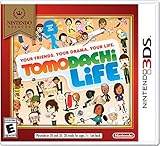
Nintendo Selects: Tomodachi Life - Nintendo 3DS | $109.97 | Buy on Amazon |
| 4 |
|
Tomodachi Life - Nintendo 3DS (Renewed) | $158.06 | Buy on Amazon |
| 5 |
![Animal Crossing New Leaf -Nintendo 3DS (World Edition) [video game]](https://m.media-amazon.com/images/I/51ae7NTwpoL._SL160_.jpg)
|
Animal Crossing New Leaf -Nintendo 3DS (World Edition) [video game] | $37.79 | Buy on Amazon |
As an Amazon Associate I earn from qualifying purchases.
That sentence answers the central question directly. Growing up is an intended part of the 3DS game’s island life, not a player rumor or a mechanic inferred from ordinary Mii behavior. The wording also establishes the important sequence: the child must be born on the island, then grow up, and only then does the traveler choice become available.
Outdated Drivers Are Slowing You Down
One free scan finds every outdated or missing driver and matches the right update for your exact hardware.Free scan · exact hardware matchWindows Errors? Fix Them Before They Spread
Repair common Windows errors and clear accumulated junk for a smoother, more stable PC - no reinstall needed.Free scan · no reinstallThe manual does not describe the child as automatically leaving. Instead, it says you can choose to make the grown character a traveler. That means the traveler outcome is a player decision presented after growth, rather than an unavoidable result of having a baby.
#1 Best Overall
- Create Mii characters for people you know, such as your friends, parents, your teacher, plus anyone else you’ve ever dreamt of befriending
- Characters in Tomodachi Life act as living, relatable characters with a voice and a personality all their own
- Players become the director to their Mii characters' lives by helping them find love and happiness
Which Tomodachi Life game does this answer apply to?
The documented baby-growth rule applies specifically to the Nintendo 3DS release of Tomodachi Life. This distinction matters because Nintendo has also announced Tomodachi Life: Living the Dream for Nintendo Switch. The titles share a life-simulation concept, but an answer supported by the 3DS manual should not automatically be treated as a description of the newer game.
| Game | What the cited Nintendo material confirms | What it does not establish |
|---|---|---|
| Tomodachi Life (Nintendo 3DS) | Island-born babies grow up; after growth, you can choose to make the character a traveler. | The manual passage gives no exact growth duration. |
| Tomodachi Life: Living the Dream (Nintendo Switch) | Nintendo’s FAQ says married couples may have babies, regardless of gender. | The cited FAQ does not specify when babies grow up, whether the same traveler choice exists, or what destinations and outcomes apply. |
If you are looking for an answer about the 3DS game, the manual’s traveler passage is the relevant evidence. If you mean Living the Dream, the careful answer is narrower: Nintendo confirms that babies can be born to married couples, but the cited FAQ does not document their growth process.
What can you choose when the baby grows up?
You can make the grown child a traveler
Once an island-born baby has grown up in the 3DS game, you can choose to make that character a traveler. The manual presents this as the defining next-step option for a grown child. The decision belongs to the player, so you do not need to assume that every grown child must be sent away.
The traveler system gives the character a role connected to other islands rather than ordinary permanent residence on your island. Nintendo’s manual says travelers send letters from the islands they visit and may return to visit the island where they were born. Those visits make the choice more than a one-time removal: the character can continue to appear in the game’s broader travel system.
Letters and return visits are part of the traveler role
A traveler can send letters back from islands visited during the character’s travels. The manual also notes that travelers may return to visit the original island. These are the documented continuing interactions after the traveler choice.
Rank #2
- This renewed game will not come with the original case or manual; cartridge only. It has been cleaned, tested, and is in nice condition.
The wording supports two different possibilities that should not be conflated. A traveler can be away and still communicate through letters, and a traveler may come back for a visit. A return visit does not turn the character into a regular resident again.
How are travelers different from residents and visitors?
Island-born children and visiting travelers are not the same category
Nintendo’s manual includes a restriction that is easy to misread: “It is not possible to make visiting travelers into permanent residents on your island.” This rule concerns travelers who arrive as visitors from elsewhere. It does not say that a baby born on your island is forbidden from remaining there, and it does not cancel the traveler choice offered after an island-born child grows up.
The sequence is therefore important:
- A baby is born on your island.
- The baby grows up.
- You receive the option to make that grown character a traveler.
- If the character becomes a traveler, the character can send letters and may return for visits.
- A traveler who is merely visiting cannot be converted into a permanent resident under the manual’s rule.
Readers sometimes combine the final rule with the first three steps and conclude that all grown children must leave or that no grown child can stay. The manual does not make either claim. It distinguishes a child born on the island from a traveler who visits from another island.
Does Nintendo say how many days growth takes?
No exact duration is stated in the cited Nintendo 3DS manual passage. Nintendo confirms the event—an island-born baby grows up—but does not give a number of in-game days, real-world days, sleep cycles, or calendar milestones for reaching that stage.
Because the official source does not provide a duration, an exact figure should not be presented as a Nintendo-confirmed rule. Player reports may describe what happened in an individual island, but those reports are not equivalent to a timing specification in Nintendo’s manual. Conditions such as how often an island is played, what date settings are used, or which game events have occurred should not be treated as established explanations unless Nintendo documents them.
Rank #3
- Create Mii characters for people you know, such as your friends, parents, your teacher, plus anyone else you've ever dreamt of befriending
- Characters in Tomodachi Life act as living, relatable characters with a voice and a personality all their own
- Players become the director to their Mii characters' lives by helping them find love and happiness
- “E”; Everyone w/Comic Mischief and Mild Fantasy Violence
The practical implication is simple: you can know that growth is part of the 3DS game, but you cannot use the cited manual to calculate the precise day on which a particular baby will grow up. If your baby has not changed yet, the manual alone cannot tell you that the game is malfunctioning or that a particular number of days has been missed.
What’s actually slowing this PC down?
Pick the symptom - the matching free tool is one click away.
What does the newer Living the Dream FAQ confirm?
Nintendo’s official FAQ for Tomodachi Life: Living the Dream confirms that married couples may have babies, and it states that this can happen regardless of the couple’s gender. That is useful confirmation that babies are part of the newer game’s family system.
However, the cited FAQ does not answer the follow-up questions many players have:
- It does not state when a baby grows up.
- It does not say whether the growth event uses the same rules as the 3DS game.
- It does not document a traveler option for a grown child.
- It does not describe letters from visiting islands or a return-visit system for those children.
Accordingly, the 3DS answer should not be copied into a guide to Living the Dream as though Nintendo had confirmed identical mechanics. The safest version-specific wording is that the Switch FAQ confirms baby births, while the cited material leaves growth and post-growth outcomes unspecified.
How to interpret the game’s baby and traveler rules
Check the platform before looking for an answer
Start by identifying whether you are playing the Nintendo 3DS game or the Nintendo Switch title. “Tomodachi Life” without a platform usually refers to the original 3DS release, while “Living the Dream” is the newer Switch title. The platform determines which official documentation applies.
Separate documented mechanics from timing guesses
For the 3DS game, three points are documented: a baby born on the island grows up, the player can choose to make the grown child a traveler, and travelers can send letters and may return to visit. The duration of growth is not documented in the cited manual. Keep those confirmed mechanics separate from any community estimate of how long the process appears to take.
Read the visitor restriction in context
The statement that visiting travelers cannot become permanent residents is a rule about visitors arriving from other islands. It is not a statement that an island-born child disappears permanently, nor is it evidence that every baby must become a traveler. The traveler choice follows growth and is described separately in the manual.
Independent reader supportYour contribution helps us test, update, and keep practical guides available for everyone.Common questions and misconceptions
“Does a baby stay a baby forever?”
No, not in the original Nintendo 3DS game. The manual explicitly refers to a baby being born on the island and then growing up.
“Does every grown child automatically become a traveler?”
No automatic outcome is stated. Nintendo says you can choose to make the grown child a traveler, which describes an available decision.
Do these 3 things before closing this tab:
1Clear out junk files and repair common Windows errors2Scan for outdated or missing drivers - takes under a minute3Repair Windows errors before they cause bigger problems“Can a visiting traveler become one of my island’s residents?”
No. The manual specifically says visiting travelers cannot be made permanent residents. That restriction applies to visitors, not to the manual’s description of a child born on your island.
“How long should I wait?”
Nintendo’s cited manual does not provide a growth timetable. Any exact day count should therefore be labeled as a player observation rather than an official Nintendo figure.
“Does the same answer apply to Living the Dream?”
Not on the evidence cited here. Nintendo’s FAQ for the Switch game confirms that married couples can have babies, but it does not specify growth timing or the traveler outcome documented for the 3DS game.
What the official documentation establishes
The Nintendo 3DS electronic manual is the source for the baby-growth and traveler rules. Its “Travelers” section explicitly connects an island-born baby’s growth with the option to make that character a traveler, then describes letters and possible return visits. The same section states that visiting travelers cannot be made permanent residents.
Nintendo’s Tomodachi Life: Living the Dream FAQ is a separate source for the newer game. It confirms baby births for married couples, including couples regardless of gender, but does not provide the growth and traveler details found in the 3DS manual passage. Keeping those sources attached to their respective games avoids turning an answer about one release into an unsupported claim about the other.
Quick Recap
Product prices and availability are accurate as of the date/time indicated and are subject to change. Any price and availability information displayed on Amazon at the time of purchase will apply.

