
Do these 3 things before closing this tab:
1Clear out junk files and repair common Windows errors2Scan for outdated or missing drivers - takes under a minute3Repair Windows errors before they cause bigger problemsNo. In Dungeons & Dragons, a bard uses Charisma for spellcasting, so the ability score matters mechanically. But the rules do not require the player to be charming, confident, extroverted, or socially polished. You can play a quiet, awkward, blunt, scholarly, anxious, or unconventional bard while still following the class rules.
The useful distinction is between Charisma as a game statistic and charisma as a personality stereotype. The first affects spells and some checks. The second is a roleplaying choice.
As an Amazon Associate I earn from qualifying purchases.
What Charisma means for a bard
The 2024 Basic Rules identify Charisma as the bard’s primary ability and spellcasting ability. The class states, “Charisma is your spellcasting ability for your Bard spells.” When a bard spell uses the character’s spellcasting ability, Charisma is the score that supplies it. Charisma therefore affects the bard’s spell save DC and spell attack modifier, so a low score can make Charisma-based spells less effective in play. See the 2024 Basic Rules bard class for the current class wording.
Free tools Windows power users keep installed
One-click scans. No signup required.
This is a rule about a character sheet, not an instruction to perform a particular personality at the table. A player does not have to make speeches, sing in front of the group, flirt with nonplayer characters, or improvise jokes in order to qualify as a bard. The game resolves uncertain actions with ability checks and other mechanics; it does not require the player to possess the same traits represented by the character’s numbers.
#1 Best Overall

- UNLEASH NEW POSSIBILITIES—Introducing the 2024 Player’s Handbook, the new and improved guide for fifth edition Dungeons and Dragons. Redesigned with 10 years of feedback from the D and D community, the essential Dungeons and Dragons rulebook is bigger and better than ever before
- NEW CHARACTER OPTIONS YOU’LL LOVE—Create unforgettable characters with 12 core classes, 48 intriguing subclasses, and 10 distinctive species. Buff up your character’s backstory with 16 compelling backgrounds and 75 fantastic feats.
- STUNNING ARTWORK—With vibrant new illustrations of every single character class, subclass, background, species, weapon, and armor, our thrilling artwork also features new and familiar spells, brought to life for the first time ever.
- FRESH and ENGAGING GAMEPLAY—Change up your combat style with fascinating new Weapon Masteries for your character class. Our new Tools and Crafting system lets you use your tools to craft items and impact travel and exploration.
- DESIGNED JUST FOR YOU—We’ve thoughtfully redesigned this book with an improved layout, better organization, and an alphabetized Rules Glossary. Find whatever you’re looking for with ease
Low Charisma has a real mechanical cost
If you deliberately build a bard with a lower Charisma score, you are accepting a trade-off. Spells that depend on your spellcasting ability may have a lower chance of affecting targets, and Charisma checks will generally be weaker than they would be for a high-Charisma bard. That choice does not invalidate the class, but it changes which situations favor your character.
A low-Charisma bard can still contribute through spell selection, tactics, support, exploration, knowledge, and the skills chosen at character creation. The important question is not whether the character is “allowed” to be a bard; it is whether you are comfortable giving up some effectiveness in the class’s primary ability in exchange for the concept you want to play.
Charisma is not a command to act charming
The rules describe what an ability can represent when a check is called for. The Wizards of the Coast SRD 5.1 says, “A Charisma check might arise when you try to influence or entertain others, when you try to make an impression or tell a convincing lie, or when you are navigating a tricky social situation.” Those examples include more than charm. Confidence and eloquence are possible expressions, but so are forceful arguments, carefully prepared explanations, performance skill, deception, or the ability to project authority.
Recommended Free Tools
How a player describes an attempt and how the Dungeon Master resolves its uncertain outcome are separate matters. A shy bard might choose words slowly and rely on a rehearsed speech. An abrasive bard might issue a blunt demand. A bookish bard could cite history to establish credibility. A nervous bard may communicate through a song, written note, puppet show, or carefully practiced routine. If the result is uncertain and a Charisma check is appropriate, the roll determines whether the attempt succeeds; the player does not need to imitate a professional entertainer.
Rank #2

- COMPLETE YOUR COLLECTION—Get all three 2024 Core Rulebooks and discover new character options you’ll love, creative world-building inspiration, stunning artwork, and monsters galore
- STUNNING ARTWORK—Delight in spectacular new artwork for character classes, subclasses, weapons, armor, legendary D&D figures, almost every monster, and so much more
- FRESH & ENGAGING GAMEPLAY—Change up your combat style with fascinating new Weapon Masteries for your character class. Our new Tools and Crafting system lets you use your tools to craft items and impact travel and exploration
- NEW CHARACTER OPTIONS YOU’LL LOVE—Create unforgettable characters with 12 core classes, 48 intriguing subclasses, and 10 distinctive species. Buff up your character’s backstory with 16 compelling backgrounds and 75 fantastic feats
What the 2024 bard rules actually require
Charisma for bard spellcasting
The class’s mechanical dependency is straightforward: Charisma is the ability used for bard spells. This matters whenever a spell refers to your spellcasting ability and when the game calculates the save DC or attack modifier for one of your spells. A bard who wants the strongest spellcasting usually prioritizes Charisma, just as characters in other classes usually prioritize their listed primary ability.
Any three skill proficiencies
The 2024 bard chooses any three skill proficiencies. The class does not force you to select Persuasion, Performance, Deception, or another social skill. You can choose skills that fit a detective, archivist, scout, negotiator, historian, street performer, court musician, or itinerant storyteller. Your choices can support a reserved concept without breaking the class’s design.
| Question | What the rules establish | What remains your choice |
|---|---|---|
| What ability powers bard spells? | Charisma is the bard’s spellcasting ability. | Whether the character is socially confident or outgoing. |
| Which skills must a bard take? | The 2024 bard selects any three skill proficiencies. | Whether those skills are social, academic, practical, or exploratory. |
| How should a bard perform? | The class presents artistic performance as a broad concept. | The medium, mood, tone, and level of public visibility. |
| Must the bard use a musical instrument? | A musical instrument can serve as a spellcasting focus. | Whether the character uses an instrument, voice, dance, recitation, or another artistic identity. |
Artistic performance does not mean extroversion
The 2024 class guidance asks players to consider the style of artistic performance they favor, the moods they invoke, and the themes that inspire their creations. That language leaves room for many forms of expression. A bard might sing, recite poetry, dance, act, tell stories, create visual art, perform with puppets, or use an unusual technical discipline. The rules do not say that the performance must be loud, cheerful, seductive, or performed for a crowd.
Consider how different artistic choices change the character without changing the class:
Rank #3
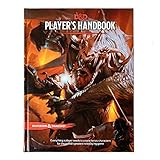
- The essential rulebook for Dungeons & Dragons (5th edition)
- Contains all the rules you need to know to play D&D
- Step-by-step guide to creating and leveling up characters
- Go-to player reference for over 350 spells, equipment, and more
- 1 of 3 D&D Core Rulebooks—the Player’s Handbook (rules for playing the game), the Dungeon Master’s Guide (how to run the game), and Monster Manual (creatures to encounter in your game)
- The quiet composer: writes haunting melodies and performs only for trusted companions, using music as a way to organize thoughts.
- The academic reciter: delivers precise historical quotations and battlefield chants rather than jokes or small talk.
- The awkward folklorist: knows hundreds of legends but struggles with ordinary conversation.
- The severe choreographer: communicates through disciplined movement and treats every gesture as deliberate.
- The private storyteller: records tales in a journal or enchanted book and shares them only when the party needs a particular lesson.
Each concept can have high Charisma on the sheet while presenting as reserved or unconventional. High Charisma can represent force of presence, artistic impact, confidence under pressure, or the ability to shape how others respond; it does not have to look like constant friendliness.
Does every bard have to be the party’s face?
No. A party’s “face” is a table role, not a class requirement. A bard often makes a convenient face because Charisma supports social checks and spellcasting, but another character can handle negotiations while the bard focuses on scouting, lore, support magic, or tactical control.
Before play, tell the group what your bard is comfortable doing. You might say that the character avoids casual conversation but can deliver a formal speech, prefers written communication, or only speaks when a subject falls within their expertise. This gives the Dungeon Master a clear target for scenes without forcing you to perform outside your comfort zone.
It also helps to distinguish the player’s comfort from the character’s capability. You can say, “My bard gives a persuasive argument,” and make the appropriate check without personally acting out every sentence. If you enjoy acting, describe the approach in detail. If you do not, summarize the intent and let the dice handle the uncertain result.
Rank #4

- NIFTY RESOURCES FOR DUNGEON MASTERS—We've packed this book with incredibly useful tools and advice for Dungeon Masters of all levels. Make your game sessions special with over 400 total and 18 new magic items, practical solutions for common Dungeon Master pitfalls, and Greyhawk, a customizable premade campaign setting.
- WONDERFUL WORLDBUILDING INSPIRATION—Introduce inspiring new mechanics into your game! Tinker away with revised rules for crafting magic items, creating NPCs, and more. Excite your party and keep them engaged between sessions with the new system for bastions, which are strongholds built and controlled by players.
- STUNNING ARTWORK—Delight in spectacular artwork featuring new magic items, legendary D&D figures, cinematic fantasy landscapes, a double-sided poster map of the Greyhawk setting, and more!
- LEVEL UP YOUR DUNGEON MASTER EXPERIENCE—We’ve built useful handouts and resources to help you keep track of your campaigns and added a Lore Glossary that helps you easily find information about key D&D characters and locations.
- PART OF THE 2024 CORE COLLECTION—1 of 3 revised Dungeons & Dragons core rulebooks, the 2024 Dungeon Master’s Guide is designed for use with the fifth edition 2024 Player’s Handbook and 2024 Monster Manual
How Charisma checks can work for an unconventional bard
A Charisma check should follow the character’s approach, not a demand that the player be charismatic in real life. The same goal can produce different descriptions:
- Influencing a guard: a confident bard might appeal to duty; a quiet bard might present a documented precedent; an intimidating performer might use controlled silence.
- Entertaining a crowd: one bard sings, another performs sleight of hand, and another delivers a technically flawless lecture that fascinates the audience.
- Making an impression: a character may display an unusual costume, recite a famous lineage, demonstrate mastery of an instrument, or reveal an emotionally powerful story.
- Telling a convincing lie: the bard might rely on elaborate preparation, carefully chosen details, or an authoritative tone rather than charm.
- Navigating a difficult social situation: the bard can ask a precise question, acknowledge a mistake, offer a compromise, or use knowledge of local customs.
The Dungeon Master can ask for a different ability when the approach genuinely relies on something else, using the game’s normal ability-check rules. The character’s concept should inform the description and proficiency, while the table decides which mechanic fits the attempted action.
Independent reader supportYour contribution helps us test, update, and keep practical guides available for everyone.Building a bard who is not socially confident
Choose how much mechanical compromise you want
There are two broad approaches. You can keep Charisma high and roleplay the bard as shy, blunt, or private. This preserves the class’s spellcasting effectiveness while separating the number from the personality. Or you can lower Charisma to support a deliberately weak-social or eccentric concept, accepting weaker Charisma-based spellcasting and checks.
The Tool Desk
Outbyte Driver Updater FREEScan for outdated or missing drivers - takes under a minuteDriver Scan →Outbyte PC Repair FREERepair Windows errors before they cause bigger problemsFix Now →The first approach is usually easier if you want the bard’s full mechanical performance without portraying an extrovert. The second is valid when the limitation is central to the character and the group understands the trade-off. Neither choice is more “correct”; they create different play experiences.
Best Value

- 𝟮𝟬𝟮𝟰 𝗣𝗹𝗮𝘆𝗲𝗿’𝘀 𝗛𝗮𝗻𝗱𝗯𝗼𝗼𝗸: It is an upgraded rule book based on ten years of feedback from the D&D community; improved edition is bigger and better; includes vibrant new illustrations and exciting artwork for fresh and engaging gameplay
- 𝗜𝗻 𝘁𝗵𝗲 𝗦𝗲𝘁: The Player's Handbook, six additional dice sets in various colors, six flannel dice storage bags for added mystery, also quest, status, initiative cards and battlemap, e-materials for downloading and printing additional game content online, and many other exciting features
- 𝗔𝗱𝗱𝗶𝘁𝗶𝗼𝗻𝗮𝗹 𝗛𝗲𝗿𝗼𝗲𝘀 & 𝗠𝗶𝗻𝗶𝗮𝘁𝘂𝗿𝗲𝘀: Printable 1 000 characters with descriptions; each character has its own skills and statistics; 30 mini figures of heroes for more realistic and immersive experience in the D&D world of fantasy
- 𝗚𝗮𝗺𝗲 𝗛𝗼𝘀𝘁 𝗕𝗼𝗻𝘂𝘀: The master screen is an essential thing for the game host, providing quick access to all necessary information; If your imagination leads you beyond the main storyline, use the sheets to create a new battle map for your adventure; a dice guide is also included, offering tips on rolling to maximize your chances of success
- 𝗣𝗿𝗶𝗻𝘁𝗮𝗯𝗹𝗲 𝗠𝗮𝘁𝗲𝗿𝗶𝗮𝗹𝘀 𝗳𝗼𝗿 𝘁𝗵𝗲 𝗚𝗮𝗺𝗲: To get additional materials for core book scan the QR code on the insert found with rulebook to access printable materials, including the Master Screen, 1 000 Extra Heroes, 30 Action Figures, Hero Statistic Record Cards, Battle Map Foams, and a Dice Guide
Select skills that reinforce the concept
Because the 2024 bard can choose any three skills, pick proficiencies that show what the character actually does. Investigation and History suit a researcher. Stealth and Survival fit a traveling performer who works outside cities. Insight supports someone who reads a room without enjoying conversation. Sleight of Hand can represent stagecraft, while Acrobatics can support a dance-focused performer. Social skills remain available if you want a reserved character who is effective in specific situations, but they are not mandatory.
Use spells that do not depend on constant social performance
Review each spell’s description and note whether it uses your spellcasting ability, calls for an attack roll, requires a saving throw, or simply produces an effect without a social exchange. A low-Charisma bard should expect the greatest impact from choices that do not repeatedly demand high spell attack modifiers or save DCs, while a high-Charisma introvert can use the full range of bard magic. Your Dungeon Master can help you identify how a proposed spell list interacts with your chosen score.
Do you need a lute or another instrument?
No. The 2024 rules allow a musical instrument to be used as a bard spellcasting focus, but that is an equipment option, not a personality test. A character can carry an instrument without being a flamboyant performer, and a bard can define their artistry through voice, movement, recitation, storytelling, or another medium.
The older Fifth Edition bard class page lists a lute or another instrument among equipment choices. Because equipment examples can differ between the 2014-era material and the 2024 rules, use the edition your group is playing when deciding starting gear. Nothing in either example requires you to purchase or perform with a real-world instrument.
Common misconceptions to avoid
- “A bard must be flirty.” Romance is one possible characterization and is never a class requirement.
- “A bard must sing.” The class supports a range of artistic styles and moods.
- “The player must be good at improvising.” You can summarize an attempt, use prepared lines, or let a check resolve uncertainty.
- “Every bard must take Persuasion and Performance.” The 2024 rules allow any three skill proficiencies.
- “A low Charisma bard is illegal.” It is a legal character choice with a known mechanical cost.
- “High Charisma forces a cheerful personality.” The score can represent presence, authority, artistic impact, or composure rather than friendliness.
A practical session-zero checklist
- Decide whether “charisma” describes social confidence, artistic force, authority, confidence under pressure, or another quality in your interpretation.
- Choose the bard’s artistic medium and decide whether performances are public, private, formal, improvised, or mostly nonverbal.
- Set Charisma at the level you want mechanically, then acknowledge the effect that score will have on spells and checks.
- Select three skill proficiencies that match the character’s history and preferred problem-solving methods.
- Tell the group how you want to handle social scenes: full in-character dialogue, brief summaries, written notes, prepared speeches, or a mixture.
- Clarify whether another party member will usually lead negotiations so the table does not assume the bard must speak first.
- Choose equipment, including an instrument if desired, based on the concept rather than an assumption about what every bard carries.
Bottom line
Bards do not have to be charismatic in the everyday sense. They do need Charisma as their spellcasting ability under the 2024 rules, and lowering it affects spellcasting and Charisma checks. Everything beyond that—the bard’s temperament, social role, artistic medium, and comfort with public performance—is yours to define.
Quick Recap
Product prices and availability are accurate as of the date/time indicated and are subject to change. Any price and availability information displayed on Amazon at the time of purchase will apply.

