
Short answer: Sekiro: Shadows Die Twice clearly tracks the consequences of death, but the official manual and publisher explanations do not document a normal, player-facing lifetime death counter. Dying without resurrecting can permanently remove half your carried sen and half of your progress toward the next skill point. Unseen Aid may prevent that loss, while repeated deaths can spread Dragonrot to characters you have met. Resurrection charges are a separate combat system, not evidence that the game displays a running total of every death.
What “tracking deaths” means in Sekiro
The question has two different meanings. A game can track death internally so that it applies penalties and changes the world, or it can show you a statistic such as “Deaths: 37” on a menu or profile screen. Sekiro definitely does the first. The available official documentation does not establish the second.
| # | Preview | Product | Price | |
|---|---|---|---|---|
| 1 |
|
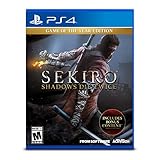
Sekiro Shadows Die Twice - PlayStation 4 | $77.99 | Buy on Amazon |
| 2 |
![Sekiro: Shadows Die Twice [Game of the Year Edition]](https://m.media-amazon.com/images/I/51umFzUyMBL._SL160_.jpg)
|
Sekiro: Shadows Die Twice [Game of the Year Edition] | $54.90 | Buy on Amazon |
| 3 |
|
Sekiro Shadows Die Twice - PlayStation 4 (Renewed) | $68.99 | Buy on Amazon |
| 4 |

|
Sekiro Shadows Die Twice (PS4) | $69.88 | Buy on Amazon |
| 5 |
|
Nier, Automata Game of the Yorha Edition - PlayStation 4 | $24.70 | Buy on Amazon |
As an Amazon Associate I earn from qualifying purchases.
FromSoftware’s official mechanics manual explains what happens to your money, experience, resurrection ability and the people affected by Dragonrot. Activision Support describes how resurrection charges return. Those sources do not identify a standard screen that totals Wolf’s lifetime deaths across the game. Because platform-specific interface behavior was not documented in those materials, the careful answer is that a cumulative counter is unconfirmed, not that every possible version or menu can never display one.
Free tools Windows power users keep installed
One-click scans. No signup required.
Death-related systems the game does confirm
True death costs resources
When Wolf dies without using an available resurrection, the manual says that current sen and experience accumulated toward the next skill point are halved. The lost amounts are gone permanently. This is not a temporary fee that returns after you retrieve your body, and it does not remove skill points you have already earned.
#1 Best Overall
- Carve your own clever path to vengeance in an all-new adventure from developer fromsoftware
- Explore late 1500S sengoku Japan, a brutal period of constant life and death conflict, as you come face to face with larger than life foes in a dark and twisted world
- Take revenge. Restore your honor. Kill ingeniously
Only what you are carrying and what you have accumulated toward the next point are at risk. That distinction matters when deciding whether to spend sen, bank experience through another skill point, or attempt a dangerous route while carrying a large balance.
Unseen Aid can cancel the loss
Unseen Aid gives you a chance to keep all of that sen and experience when you die without resurrecting. The manual characterizes the chance as relatively low, so it should be treated as luck rather than insurance. The producer interview published by Xbox Wire adds an important interaction: as more characters become infected with Dragonrot, the likelihood of receiving Unseen Aid falls.
A successful Unseen Aid event does not mean the death never happened. The game still treats the encounter as a death for its other systems; it simply spares the immediate sen and experience loss on that occasion.
Quick wins for a faster PC:
Fix the driver behind crashes, sound loss and screen glitchesFind Drivers →Clear out junk files and repair common Windows errorsFree Scan →Resurrection interrupts a death
Resurrection is a combat resource that lets Wolf return after being defeated when a charge is available. Activision Support describes one charge as recoverable by resting at a Sculptor’s Idol. Additional charges refill gradually as you defeat enemies. After resurrecting, Wolf must take enough enemy life before the ability becomes available again.
Rank #2
- Kill Ingeniously – FromSoftware delivers their best in class combat in this fast-paced, action-adventure game featuring all new mechanics
- Exploration is key – Players will experience the thrill of exploration and discovery in Sekiro: Shadows Die Twice like never before. Through exploration, players can uncover new items, meet new characters, and encounter hidden enemies
- One-armed wolf – Play as a highly talented shinobi in the service of a young lord raised in isolation. After suffering defeat at the hands of a shadowy Ashina samurai seeking the unique heritage of your master, the two of you are separated. Deep in the mountains, in a dilapidated temple, you reawaken to your fate. You must take back your master and exact revenge on your enemy at all cost
- Hard to the core – Sekiro: Shadows Die Twice is a hard-core game worthy of the name FromSoftware. Miyazaki designed Sekiro: Shadows Die Twice this way! Fans of FromSoftware will find the gameplay challenging, yet fun and rewarding. The quality of combat, level of challenge, and creative enemies and bosses are something that can only be found in a FromSoftware title
- Reimagined world – This reimagining of Japanese aesthetic blends a withered, yet vivid, world of the late 1500s Sengoku Japan as the age of warring states nears its end. Witness a world brought to its knees by constant bloodshed; a ravaged world on the brink of destruction. Explore these environments, rich with FromSoftware’s intricate design and steeped with secrets to discover
Choosing resurrection therefore changes the state of the encounter. You have not completed a true death with the normal loss rules yet. If you are defeated again and cannot, or choose not to, resurrect, the game proceeds to the resource penalty and the other consequences associated with dying.
Dragonrot changes the world around Wolf
Repeated deaths can cause Dragonrot to afflict characters Wolf has interacted with. The condition can affect interactions and may create story consequences for certain characters. The official explanations do not provide a universal numerical threshold such as “every fifth death,” and the effect should not be described as a simple visible death tally.
Dragonrot is evidence that the game keeps state related to dying. It is not evidence that the player is shown a lifetime total. A character can be infected because the game’s conditions have been met even when no counter is presented to you.
Resurrection versus true death
These states are easiest to understand side by side:
Rank #3
- CARVE your own clever path to vengeance in an all-new adventure from developer fromsoftware
- Explore late 1500S sengoku Japan, a brutal period of constant life and Death conflict, as you come face to face with larger than life foes in a dark and twisted world
- Take revenge. Restore your honor. Kill ingeniously
| Situation | What happens immediately | Resource or world effect |
|---|---|---|
| Wolf is defeated and a resurrection charge is available | You can return during the fight by spending the charge | No normal sen or next-skill-point loss is applied at that interruption |
| Wolf dies without resurrecting | The death resolves and the game applies its loss rules | Half of carried sen and progress toward the next skill point are lost permanently unless Unseen Aid prevents it |
| Resurrection charge has been spent | The ability is unavailable until its recovery conditions are met | Resting at a Sculptor’s Idol restores one charge; further recovery comes through defeating enemies |
| Deaths accumulate under the game’s conditions | Characters Wolf has met may contract Dragonrot | Interactions can be affected, with possible story consequences for some characters |
The table shows why “How many times have I died?” is not the same question as “What has the game recorded?” Resurrection charges, resource losses and Dragonrot each represent different pieces of state.
How resurrection works in a fight
- Check whether a charge is available. The resurrection prompt appears only when the ability can be used. A spent or unavailable charge cannot be used simply because Wolf has been defeated.
- Activate resurrection instead of accepting the defeat. Wolf returns to combat and the charge is consumed. This is the interruption that separates resurrection from a completed death.
- Continue fighting to restore access. The ability does not become endlessly reusable. Wolf must take enough life from enemies before another use is possible under the game’s rules.
- Recover charges between encounters. Resting at a Sculptor’s Idol restores one charge. Additional charges replenish gradually by defeating enemies, as described by Activision Support.
- If you finally die, account for the true-death rules. A death that ends without resurrection can trigger the sen and experience loss, an Unseen Aid check and the broader conditions associated with repeated deaths.
This design lets you take a calculated second chance in a duel without making every defeat free. It also means a player who counts only the moments that produce a game-over screen will not be measuring every resurrection interruption.
What Unseen Aid does—and does not do
Unseen Aid is a probability check attached to dying without resurrecting. On a successful result, your current sen and experience progress are preserved. On a failure, the ordinary halving rule applies. The manual calls the chance relatively low, and the producer explanation says the chance decreases as Dragonrot spreads among characters.
What’s actually slowing this PC down?
Pick the symptom - the matching free tool is one click away.
- It is not a guaranteed refund.
- It does not restore a resurrection charge.
- It does not cure Dragonrot.
- It does not prove that the game has displayed or stored a lifetime death number.
Because the chance can change with the condition of the world, two deaths that look identical in combat can have different financial results. Plan around the normal loss rule and regard Unseen Aid as an occasional exception.
Rank #4
- Carve your own clever path to vengeance in an all-new adventure from developer FromSoftware, creators of Bloodborne and the Dark Souls series
- In Sekiro: Shadows Die Twice you are the “one-armed wolf”, a disgraced and disfigured warrior rescued from the brink of death. Bound to protect a young lord who is the descendant of an ancient bloodline, you become the target of many vicious enemies, including the dangerous Ashina clan. When the young lord is captured, nothing will stop you on a perilous quest to regain your honor, not even death itself.;Number of Players: 1 player; ESRB Content: Blood and gore|Violence; Genre: Action and Adventure
- Explore late 1500s Sengoku Japan, a brutal period of constant life and death conflict, as you come face to face with larger than life foes in a dark and twisted world. Unleash an arsenal of deadly prosthetic tools and powerful ninja abilities while you blend stealth, vertical traversal, and visceral head to head combat in a bloody confrontation.
- Take Revenge. Restore your honor. Kill Ingeniously.
Dragonrot: the persistent consequence of repeated deaths
Dragonrot connects Wolf’s deaths to characters he has encountered. Once the game’s conditions are met, those characters can become afflicted, which may interfere with interactions and can matter to the stories of some of them. The official sources deliberately describe the trigger as dying “enough times” rather than giving one fixed number that applies in every situation.
That qualification is important for troubleshooting. You cannot reliably predict an infection by counting a universal number of defeats, and you should not infer that a character’s infection is a direct readout of your total deaths. Dragonrot is a state involving the people Wolf has met, not a public scoreboard.
The producer interview also links Dragonrot to Unseen Aid: more infected characters reduce the chance that the aid will occur. Death therefore has both an immediate economic risk and a longer-term effect on the probability of avoiding that risk.
Why players may remember seeing a death count
Several different numbers can be mistaken for a death counter:
Best Value
- Game of the YoRHa Edition includes the game along with DLC and bonus content for the full experience of the award winning post-apocalyptic action RPG; See description below for complete details
- Action packed battles and fluid combat perfect for both newcomers and experienced action gamers
- Includes RPG elements such as leveling, different weapon types, combat skills, and customizable load outs
- The desolate open world features beautiful vistas and a wealth of sidequests in addition to the main storyline
- Pods assist in and outside of battle and can be upgraded with new attack variations and abilities
- Resurrection charges: icons show how many returns are available, but they measure a combat resource, not lifetime defeats.
- Sen and experience: losing half of each after true death can make the system feel like it is keeping a running record, even though the visible result is a changed balance.
- Dragonrot status: afflicted characters and related world information show that deaths have been processed, but they do not state how many times Wolf has died.
- Save, achievement or platform statistics: a platform may expose information outside the game, but the official mechanics references used for this explanation do not verify a universal, in-game cumulative statistic.
If you are checking a particular release, platform or remaster for a number shown in a menu, treat that as a version-specific interface question. The documented mechanics support the consequences above; they do not provide a platform-wide inventory of every statistics screen.
How to manage death consequences while playing
Before a risky attempt
- Spend sen when a purchase or upgrade is useful instead of carrying an unnecessarily large balance.
- Build enough experience to secure a skill point when practical; progress toward the next point is the portion exposed to the death penalty.
- Note your available resurrection charges before entering a boss arena or a route with no nearby Idol.
After Wolf is defeated
- Decide whether the available resurrection is worth using in the current position. Returning may preserve your attempt and avoid a completed death.
- If you accept the death, expect the standard loss rather than relying on Unseen Aid.
- Check your sen and experience after the outcome so you know whether the aid succeeded.
- Watch for changes affecting characters you have met if deaths continue to accumulate.
When Dragonrot appears
Do not treat an infected character as a precise counter. It tells you that the world has reached a Dragonrot state, not the exact number of deaths that caused it. The official material confirms interaction and possible story effects but does not establish one universal threshold.
What the developers said about the system
In a PlayStation Blog interview conducted during development, director Hidetaka Miyazaki explained that resurrection served three purposes: maintaining the flow of risky gameplay, allowing players to use the mechanic creatively, and supporting a story centered on resurrection. He also said the system was not introduced simply to make the game easier.
The Tool Desk
Outbyte PC Repair FREEClear out junk files and repair common Windows errorsFree Scan →Outbyte Driver Updater FREEFix the driver behind crashes, sound loss and screen glitchesFind Drivers →Those comments are design context rather than a specification for a final statistics menu. They explain why Sekiro distinguishes a combat resurrection from a completed death, but they should not be used to claim that every interface detail or platform behavior was confirmed in that development-era conversation.
Bottom line on Sekiro’s death tracking
Sekiro tracks death as a set of gameplay states: resurrection charges, permanent sen and next-skill-point losses, probabilistic Unseen Aid, and Dragonrot affecting characters Wolf has met. What is not established by the official manual and publisher explanations is a normal player-facing counter showing your cumulative deaths. If you need an exact number for a specific platform or release, that requires direct inspection of that version’s menus rather than an assumption based on the documented death mechanics.
Quick Recap
Product prices and availability are accurate as of the date/time indicated and are subject to change. Any price and availability information displayed on Amazon at the time of purchase will apply.

