
Free tools Windows power users keep installed
One-click scans. No signup required.
No automatic legal claim is established. The Last Dragonborn has a powerful symbolic connection to the Dragonborn emperors, and the Greybeards deliberately compare the player character with the young Talos. However, neither their ceremony nor the historical tradition of Dragon Blood says that the Last Dragonborn inherits the Imperial throne.
A throne bid therefore works as a compelling role-playing interpretation, a political ambition, or even a conquest scenario. It is not a settled canon entitlement. Skyrim leaves the post-Septim succession rules undefined, so the strongest defensible answer separates symbolic legitimacy from enforceable inheritance.
As an Amazon Associate I earn from qualifying purchases.
What kind of “claim” could the Dragonborn have?
The question has two different meanings. A legal succession claim would mean that Imperial law, a recognized hereditary line, or a formal act of succession makes the Last Dragonborn the rightful ruler. A symbolic or political claim would mean that the character can point to sacred tradition, historical precedent, popular authority, military power, or the Greybeards’ recognition when arguing for the throne.
Skyrim provides substantial material for the second kind of claim. It does not provide a clear statute, coronation, inheritance document, or official declaration establishing the first. Treating those categories as identical is what turns suggestive lore into an answer the game never actually gives.
#1 Best Overall

- Winner of more than 200 Game of the Year Awards, Skyrim Special Edition brings the epic fantasy to life in stunning detail.
- The Special Edition includes the critically acclaimed game and add-ons with all-new features.
- All-new features include remastered art and effects, volumetric god rays, dynamic depth of field, screen-space reflections, and more.
- Entertainment Software Rating Board (ESRB) Content Description: Blood and gore, intense violence, sexual themes, use of alcohol
The Greybeards invoke Talos, but they do not appoint an Emperor
The most striking evidence appears when the Greybeards greet the player character at High Hrothgar. Arngeir explains that the same words were used for the young Talos before he became Emperor Tiber Septim:
“The same words were used to greet the young Talos, when he came to High Hrothgar, before he became the Emperor Tiber Septim.”
The translated ceremony also includes the line, “Long has the Stormcrown languished, with no worthy brow to sit upon.” Those words make the scene feel like a recognition of destiny. The Stormcrown image places the Dragonborn in a ritual and historical frame associated with Talos, one of the setting’s most important imperial figures.
Yet the dialogue never says that the Greybeards have crowned the player, named the player Emperor, or transferred a legal title. Their words are a religious and poetic comparison. The ceremony identifies an exceptional figure in the tradition of the Voice; it does not describe a succession procedure. A reader can reasonably treat the greeting as support for a future claim, but not as proof that the throne has already passed to the player.
Why the Talos comparison matters
The comparison is stronger than a generic compliment. Arngeir specifically connects the player’s arrival with Talos before his imperial reign, and the Stormcrown language presents the moment as the end of a long period without a worthy bearer. That gives the Last Dragonborn a narrative parallel to a founder of an empire.
But a parallel is not an identity. Talos’s later career does not establish a rule that every person recognized by the Greybeards must become Emperor. The scene can foreshadow greatness, legitimize a character’s self-image, or invite the player to pursue power. It does not settle the legal question.
Rank #2
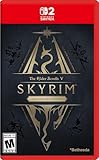
- ANNIVERSARY EDITION CONTENT — Includes the base game, Dawnguard, Hearthfire, Dragonborn, and hundreds of Creation Club items such as quests, weapons, armor, spells, and dungeons.
- SWITCH 2 ENHANCEMENTS — Explore Skyrim with updated visuals, improved load times, and optimized performance for Nintendo Switch 2.
- SHAPE YOUR ADVENTURE — Choose your character and decide how to play in an open world that responds to your actions.
- BUILD YOUR CHARACTER — Choose from hundreds of weapons, spells, and abilities to define your play style.
- BATTLE DRAGONS — Face ancient dragons as the Dragonborn, learn their secrets, and harness their power.
What the Book of the Dragonborn actually establishes
The Book of the Dragonborn presents a historical association between Dragon Blood and the Empire’s early rulers. It discusses the Amulet of Kings and the Dragonfires as part of that tradition, linking imperial legitimacy with a lineage or condition recognized as Dragon Blood.
This is important evidence that Dragonborn identity has had political significance. The Empire’s foundational history is not unrelated to dragons, Dragon Blood, or sacred symbols of rulership. A character who is visibly Dragonborn could therefore invoke a real historical precedent when making a political argument.
The book is still an in-world author’s account of tradition, not an imperial succession statute. It explains why earlier rulers were associated with Dragon Blood; it does not say that a later Dragonborn automatically inherits the throne. It also does not establish that every Dragonborn belongs to the same family, descends from the same line, or possesses a transferable legal title.
Historical association versus hereditary inheritance
Three claims should be kept separate:
- Earlier imperial rulers were associated with Dragon Blood.
- The Amulet of Kings and Dragonfires were tied to the Empire’s historical legitimacy.
- Any Dragonborn who appears in a later era is therefore the lawful heir.
The first two are supported by the book’s historical argument. The third is an additional conclusion that the text does not make. A tradition can support a coronation speech or a popular movement without functioning as an automatic inheritance mechanism.
Dragonborn is a broader identity than the imperial family
Bethesda’s official description of the Dragonborn add-on identifies Miraak as the first Dragonborn. That fact is significant because it shows that “Dragonborn” is not simply another name for a member of one Imperial dynasty. The identity can exist outside the line of rulers associated with the Empire.
Recommended Free Tools
Miraak’s existence does not answer who should rule in the Fourth Era, but it blocks an overly simple argument: “The player is Dragonborn, therefore the player is a Septim heir.” Being Dragonborn is a broader category than belonging to a particular succession line. The historical relationship between Dragon Blood and emperors cannot be converted into a universal family-tree claim without evidence the game does not provide.
Rank #3

- Live Another Life, In Another World: Play any type of character you can imagine, and do whatever you want; the freedom of choice, storytelling, and adventure of The Elder Scrolls comes to life in one legendary experience from all three official add-ons.
- Dawnguard: The Vampire Lord Harkon has returned to power. By using the Elder Scrolls, he seeks to do the unthinkable - to end the sun itself. Will you join the ancient order of the Dawnguard and stop him? Or will you become a Vampire Lord?
- Hearthfire: Purchase land and build your own home from the ground up - from a simple one-room cottage to a sprawling compound complete with an armory, alchemy laboratory, and more.
- Dragonborn: Journey off the coast of Morrowind, to the vast island of Solstheim. Traverse the ash wastes and glacial valleys of this new land as you become more powerful with shouts that bend the will of your enemies and even tame dragons.
Does the Last Dragonborn descend from the Septims?
Skyrim does not establish that the player character is a hidden Septim, a biological descendant of Tiber Septim, or a member of any recognized imperial house. The character’s ancestry, birthplace, and family are intentionally open so that players can create different identities.
That openness is not a secret confirmation of royal blood. It is a design choice that allows the player to decide whether the character is a commoner, an outsider, a noble, or something else. A player may invent Septim ancestry for role-playing purposes, but the game does not require it and does not present it as canon.
What happened to the old succession mechanism?
The evidence available for this question does not provide a comprehensive succession law for the Imperial throne after the Septim line and the Amulet of Kings. That gap matters. Without a stated rule, it is impossible to prove that the throne must pass through blood descent, Dragonborn status, a religious selection, an election, military victory, or another mechanism.
Crashes, No Sound, or Screen Glitches?
Random freezes, missing sound and display glitches usually trace back to one bad driver. Find and replace yours safely.Free scan · under a minutePC Slower Than It Used to Be?
A free scan shows the junk files, broken settings and background clutter dragging Windows down - then fixes them in one click.Free scan · Windows 10 & 11The safest conclusion is therefore limited: Skyrim does not establish the Last Dragonborn’s legal claim. It also does not establish a post-Septim rule that would automatically disqualify the character. The absence of a rule is not evidence for either entitlement or exclusion.
Why the Amulet of Kings does not settle the issue
The Amulet of Kings and Dragonfires carry enormous historical and religious weight in the imperial tradition described by the book. Their association with earlier rulers helps explain why Dragonborn symbolism feels politically potent.
That historical role should not be treated as a current title deed. The cited material does not say that possession of Dragon Blood alone activates an inheritance right, nor does it describe a ceremony in which the Last Dragonborn receives the Amulet or the authority once attached to it.
Rank #4
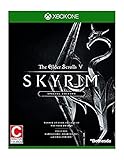
- Winner of more than 200 game of the year awards, Skyrim special edition brings the epic fantasy to life in stunning detail
- The special edition includes the critically acclaimed game and add-ons with all-new features
- All-new features include remastered art and effects, volumetric god rays, dynamic depth of field, screen-space reflections, and more
- Entertainment Software Rating Board (ESRB) Content Description: Blood and gore, intense violence, sexual themes, use of alcohol
Canon, interpretation, and role-playing choice
Bethesda presents the player’s journey as unique and shaped by player choice. That framing is crucial when discussing a possible reign. The game can support many futures for the character without declaring one of them the canonical political outcome.
A player can interpret the main character as someone who refuses power, serves an existing government, builds an independent faction, or claims the throne. Each approach can be consistent with the open-ended structure. None becomes an official historical fact merely because the player chooses it.
A canon reading
Under a strict canon reading, the Last Dragonborn is a uniquely important hero whose Dragonborn nature connects them symbolically to imperial history. The Greybeards’ words are an allusion to Talos, and the in-world book records the older Dragon Blood tradition. The game does not state that the character becomes Emperor or possesses an enforceable succession right.
A role-playing reading
Under a role-playing reading, those same details can justify a campaign for the throne. The character might argue that the Stormcrown has found its worthy brow, present the Greybeards’ greeting as sacred recognition, and invoke the precedent of Dragonborn emperors. That is a coherent political narrative built from the game’s evidence, even though it remains the player’s interpretation.
How a throne claim could work in a player’s story
If you want to play the Last Dragonborn as a claimant, define the basis of the claim before deciding the outcome. Different foundations produce different stories and different weaknesses.
What’s actually slowing this PC down?
Pick the symptom - the matching free tool is one click away.
| Claim foundation | What the game supports | What remains unproven |
|---|---|---|
| Greybeard recognition | The ceremony deliberately echoes Talos and refers to the Stormcrown. | That the Greybeards possess authority to appoint an Emperor or grant legal title. |
| Dragon Blood tradition | The Book of the Dragonborn links Dragon Blood with early imperial rulers, the Amulet of Kings, and the Dragonfires. | That every later Dragonborn inherits the throne or belongs to the imperial family. |
| Secret Septim descent | A player may invent this as backstory. | That Skyrim confirms such ancestry for the player character. |
| Military or political victory | The open-ended game permits a player to imagine a future built through alliances, conquest, or public support. | That any such outcome is canonically declared by the game. |
| Religious destiny | The Stormcrown language supports a prophetic or sacred interpretation. | That prophecy functions as a binding legal succession rule. |
What would make the claim persuasive in-universe?
A convincing political campaign would need more than the word “Dragonborn.” It would have to translate symbolism into institutions that other people recognize. In a role-playing narrative, the character could seek support from the Greybeards, demonstrate mastery of the Voice, cite the older imperial tradition, and build alliances with groups that value stability or sacred legitimacy.
Best Value
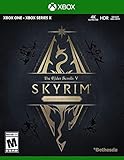
- EPIC FANTASY REBORN - Skyrim reimagines and revolutionizes the open-world fantasy epic, bringing to life a complete virtual world open for you to explore any way you choose.
- LIVE ANOTHER LIFE, IN ANOTHER WORLD - Play any type of character you can imagine, and do whatever you want; the legendary freedom of choice, storytelling, and adventure of The Elder Scrolls is realized like never before.
- YOU ARE WHAT YOU PLAY - Choose from hundreds of weapons, spells, and abilities. The new character system allows you to play any way you want and define yourself through your actions.
- BATTLE DRAGONS - Battle ancient dragons like you’ve never seen. As Dragonborn, learn their secrets and harness their power for yourself.
- INCLUDED CONTENT - The Anniversary Edition includes the core game, pre-existing and new Creation Club content, plus all three official add-ons: Dawnguard, Hearthfire, and Dragonborn.
Opponents could answer that the greeting was ceremonial, that Dragonborn identity is not hereditary proof, and that no current succession law names the Last Dragonborn. They might also demand a recognized coronation, a political settlement, or acceptance from the Empire’s existing authorities. Those objections are not contradicted by the available evidence; they are exactly why the claim remains contestable.
Would the Last Dragonborn be Emperor if the player chooses that ending?
Choosing to pursue the throne can establish a personal or fan-created ending, but it does not rewrite the game’s stated canon. Skyrim’s open structure allows a player to imagine the character becoming Emperor, founding a new order, or abandoning politics entirely. The choice answers “what happens in my story,” not “what legal status does every Dragonborn possess?”
For a story, mod, tabletop campaign, or fan theory, the distinction can be useful rather than limiting. You can make the claim succeed, fail, or remain unresolved while preserving the lore: the character has extraordinary symbolic credentials, but must persuade or defeat people who do not accept symbolism as law.
Common mistakes in interpreting the evidence
- Calling the Greybeards’ greeting a coronation. The dialogue records a comparison with Talos and ritual language, not a formal appointment.
- Assuming every Dragonborn is a Septim. Miraak’s identification as the first Dragonborn shows that the identity is broader than one imperial family.
- Turning the historical book into a statute. The book describes a tradition; it does not publish a succession code.
- Claiming the throne must pass to the Last Dragonborn. The available material does not establish a post-Septim rule requiring that result.
- Treating player choice as universal canon. A chosen political future belongs to that playthrough or interpretation unless the game explicitly confirms it.
Verdict: symbolic legitimacy, not automatic inheritance
The Last Dragonborn has the strongest possible symbolic case short of an explicit legal grant. The Greybeards place the character in Talos’s narrative shadow, and The Book of the Dragonborn records a genuine connection between Dragon Blood and the Empire’s early rulers. Those details make a throne claim believable, dramatic, and easy to support in role-play.
They do not establish an automatic legal claim. Skyrim does not confirm that the player is a Septim descendant, does not say that the Greybeards can confer imperial authority, and does not provide a post-Septim succession statute awarding the throne to any Dragonborn. “The Last Dragonborn becomes Emperor” is therefore a possible player-created future, not a settled canon entitlement.
Quick Recap
Product prices and availability are accurate as of the date/time indicated and are subject to change. Any price and availability information displayed on Amazon at the time of purchase will apply.

