
Start with Normal/Casual if Fire Emblem or tactical RPGs are new to you. Choose Hard/Casual when you want enemies that demand planning without permanently losing characters. Hard/Classic delivers the traditional high-stakes campaign. Maddening or Lunatic/Classic is best saved for a later run unless you already know that specific game’s maps, classes, recruitment rules and resource economy.
Difficulty controls combat pressure; Casual and Classic control what a defeat means. Treat them as two separate decisions rather than one easy-to-hard slider.
| # | Preview | Product | Price | |
|---|---|---|---|---|
| 1 |
|
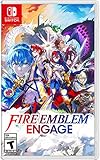
Fire Emblem™ Engage - Nintendo Switch | $66.95 | Buy on Amazon |
| 2 |
![Fire Emblem: Engage Expansion Pass - Nintendo Switch [Digital Code]](https://m.media-amazon.com/images/I/41dNEszfEVL._SL160_.jpg)
|
Fire Emblem: Engage Expansion Pass - Nintendo Switch [Digital Code] | $29.93 | Buy on Amazon |
| 3 |

|
Fire Emblem: Awakening | $57.99 | Buy on Amazon |
As an Amazon Associate I earn from qualifying purchases.
Difficulty and mode are separate choices
Fire Emblem’s difficulty setting changes the opposition. Depending on the game, higher tiers increase enemy strength, enemy density, skills or the precision required to meet map objectives. The exact scaling is different in every title, so a label such as Hard is not a series-wide performance standard.
The Tool Desk
Outbyte PC Repair FREEClear out junk files and repair common Windows errorsFree Scan →Outbyte Driver Updater FREEScan for outdated or missing drivers - takes under a minuteDriver Scan →The mode setting changes the cost of losing a unit. Nintendo describes the choice in Fire Emblem Engage as affecting both “enemy strength and what happens to your allies when they are defeated in battle.” That distinction is the key to building a first-playthrough setup.
#1 Best Overall
- Reawaken as a Divine Dragon and take down a thousand-year-old threat
- Take on turn-based, tactical combat and use Emblem Rings to customize your strategy
- Collect Emblem Rings and use them to summon heroes from past Fire EmblemTM games
- Fire EmblemTM Engage launches on January 20, 2023 alongside Fire Emblem Engage: Divine Edition featuring a steelbook case and art book
| Decision | What it changes | Question to ask yourself |
|---|---|---|
| Difficulty | Enemy power, map pressure, skills and tactical requirements | How hard should each battle be to solve? |
| Mode | Whether a defeated ally returns or is permanently unavailable | How costly should a mistake be? |
You can therefore play a demanding difficulty with a safety net, or a lower difficulty while still protecting every unit. “Hard” does not automatically mean Classic, and Casual does not automatically mean an unchallenging campaign.
Casual, Classic and Fates’ Phoenix Mode
Casual Mode
Casual Mode restores fallen allies for a later battle or the next chapter, depending on the game’s implementation. It is useful when you are learning how movement, weapon matchups, terrain, objectives and recruitment work. A critical hit or an unfamiliar ambush can cost a battle without forcing you to replay a long stretch of the campaign.
Casual is also a practical choice for experimenting with classes and team compositions. You can test a new role, discover that a unit does not fit your plan and continue learning without turning that experiment into a permanent campaign loss.
Windows Errors? Fix Them Before They Spread
Repair common Windows errors and clear accumulated junk for a smoother, more stable PC - no reinstall needed.Free scan · no reinstallCrashes, No Sound, or Screen Glitches?
Random freezes, missing sound and display glitches usually trace back to one bad driver. Find and replace yours safely.Free scan · under a minuteClassic Mode
Classic Mode makes a fallen ally unavailable for the rest of the campaign. It creates pressure before every engagement: positioning, rescue actions, enemy ranges and retreat plans matter because one error can remove a character you have invested in.
Classic is the better fit when permanent consequences are part of the appeal. It does not, by itself, increase enemy statistics. The added difficulty comes from the decisions you make to avoid losses and from the resets many players choose after a death.
Phoenix Mode in Fire Emblem Fates
Fire Emblem Fates includes Phoenix Mode, which revives a fallen character during the next turn. It is more forgiving than the standard Casual arrangement and is distinct from the usual Casual/Classic choice. If you want the lowest penalty for experimentation in Fates, Phoenix Mode changes the recovery timing rather than simply returning units between chapters.
Rank #2
- Reawaken as a Divine Dragon and take down a thousand-year-old threat
- Take on turn-based, tactical combat and use Emblem Rings to customize your strategy
- Collect Emblem Rings and use them to summon heroes from past Fire EmblemTM games
- Fire EmblemTM Engage launches on January 20, 2023 alongside Fire Emblem Engage: Divine Edition featuring a steelbook case and art book
What the difficulty names mean
Normal
Normal is the most approachable combat tier in the games covered here. It leaves more room to learn a map’s objective, understand enemy ranges and recover from an inefficient turn. Normal/Casual is the clearest story-first setup, while Normal/Classic preserves the tension of protecting characters without adding the largest enemy-stat burden.
Hard
Hard asks you to plan attacks, positioning and resources more carefully. It is often the best middle ground for someone familiar with turn-based strategy who does not yet know a particular Fire Emblem title. Pairing Hard with Casual lets you experience stronger tactical pressure while avoiding a permanent loss caused by a blind encounter.
Maddening and Lunatic
Maddening and Lunatic are high-end labels, but they are not interchangeable across the series. Engage uses Maddening; Fates uses Lunatic; other entries use their own balance and terminology. These tiers assume that you understand the game’s economy, growth systems, class options, recruitment windows and map patterns. On a blind first run, the learning cost can be greater than the value of the extra challenge.
Recommendations by player situation
| Your situation | Good starting setup | Why it fits |
|---|---|---|
| New to Fire Emblem or tactical RPGs | Normal/Casual | You can learn movement, matchups and objectives without a campaign-long penalty for a mistake. |
| New to Fire Emblem but wants stakes | Normal/Classic or Hard/Casual | Normal/Classic makes protection meaningful; Hard/Casual raises combat pressure while preserving recovery. |
| Comfortable with turn-based strategy | Hard/Casual or Hard/Classic | Hard provides substantial planning; the mode determines whether losses are permanent. |
| Experienced with that exact game | Maddening/Classic or Lunatic/Classic | Knowledge of maps, recruitment, classes and resource timing offsets the blind-learning burden. |
| Primarily interested in story and characters | Normal/Casual | Fewer forced replays keep attention on the campaign and its cast. |
How recent games handle the settings
Fire Emblem Engage
Engage offers Normal, Hard and Maddening difficulties, with Casual and Classic as separate mode choices. Nintendo’s product description says, “Normal, Hard and Maddening difficulties await,” and notes that players seeking a more relaxed experience can use Auto-Battle to handle combat. Auto-Battle is an optional convenience; it does not make the selected difficulty equivalent to a lower tier.
Nintendo’s gameplay information says you select the mode and difficulty when the game starts. Casual returns defeated allies for a later battle or the next chapter, while Classic removes them from the campaign permanently. For a first Engage run, Normal/Casual teaches the Emblem, class and map systems with the least friction; Hard/Casual is the stronger choice if Normal feels too forgiving.
Fire Emblem: Three Houses
Three Houses presents difficulty and gameplay mode as mix-and-match decisions. Nintendo uses “play Casual mode on Normal” and “try Classic mode on Hard” as examples of different play styles, illustrating that the two settings are independent.
Rank #3
- IMMERSIVE STORY AND VISUALS:The deep and immersive fantasy storyline is told throughbeautiful 3D visuals and movies.
- DEEP CAST OF CHARACTERS: A massive selection of characters are at your command,withal with a unique personality and background story and different class types and skill sets.
- BONDS GROWN IN BATTLE: Team up characters to strengthen their friendships on the battlefield. The closer they grow, the better these friends and allies will fight together. Some characters can even get married!
- "9.6 out of 10. Fire Emblem Awakening is the most fluid and stunning strategy RPG experience available on a portable, and features the best storytelling and production value of any 3DS game to date" - IGN
- "4.5 out of 4 (Editor's Choice). The best Nintendo 3DS RPG to date" - Gamesradar
Availability of Maddening depends on the installed update and downloadable-content context documented by Nintendo. Check the version on your system before assuming every copy exposes the same highest tier. If Maddening is available, treat it as a later run unless you already understand the monastery schedule, recruitment requirements, class progression and battle objectives.
Fire Emblem Awakening
Nintendo’s developers describe Awakening as having two modes and three difficulty settings. They also explain that Casual was important for players who found Classic too difficult but still wanted to finish the main story. That makes Normal/Casual a legitimate completion-focused option rather than a mode reserved only for beginners.
Fire Emblem Fates
Fates lists Normal, Hard and Lunatic difficulties. Alongside the usual Casual and Classic choices, it adds Phoenix Mode, which revives fallen characters during the next turn. Because Phoenix recovery happens inside the battle, it changes the consequences of an error more dramatically than a mode that restores units between chapters.
What’s actually slowing this PC down?
Pick the symptom - the matching free tool is one click away.
What higher difficulty demands from you
Combat pressure
Higher tiers can require more exact answers to enemy ranges, formations and map objectives. You may need to calculate whether a unit survives a counterattack, assign the right matchup before moving and reserve healing or other resources for a specific turn. The relevant enemy-stat and skill changes are title-specific, so use the in-game description and community documentation for the particular release rather than assuming that every Hard or Maddening mode scales identically.
Learning cost
A first playthrough teaches systems and content simultaneously. On a top tier, an unfamiliar class interaction or recruitment condition can invalidate a plan before you know why it failed. Starting lower can provide more information per hour: you see how maps are structured, which roles your roster needs and when resources become scarce. That knowledge transfers to a later high-difficulty run more reliably than repeated blind restarts.
Time commitment
Classic and the highest difficulty tiers usually require more planning and more resets after a costly mistake. Normal/Casual reduces repetition and is better suited to a limited schedule. Hard/Classic is a deliberate time commitment because every permanent loss can require replaying a battle or accepting a changed roster.
A practical way to choose before you start
- Rate your series knowledge. If you do not know the game’s movement rules, matchup system or map objectives, begin at Normal. Familiarity with another strategy game helps, but it does not replace knowledge of a specific Fire Emblem title.
- Decide how you feel about permanent loss. Choose Casual if you want to keep progressing after an unlucky critical hit or an experiment. Choose Classic if protecting each ally is central to the experience.
- Choose the pressure level separately. Use Hard/Casual when you want demanding fights without campaign-long losses. Use Normal/Classic when you want a gentler battle curve but still want every defeat to matter.
- Account for your available time. A setting that requires frequent resets may be satisfying with a flexible schedule and frustrating during short sessions.
- Save the highest tier for informed attempts. Maddening or Lunatic/Classic makes the most sense after you understand recruitment, classes, growth systems, resource timing and the game’s map logic.
Common mistakes when selecting a mode
- Assuming Casual means no challenge. Casual changes the consequence of defeat; Hard/Casual can still demand careful tactical play.
- Assuming Classic makes enemies stronger. Classic changes loss permanence, not the enemy-strength setting.
- Treating difficulty names as standardized. Maddening in Engage and Lunatic in Fates represent each game’s own balance. A label cannot predict exact enemy skills or map design in another entry.
- Choosing a top tier without learning the economy. Class access, recruitment timing and resource management can matter as much as battle calculations.
- Ignoring version requirements. In Three Houses, confirm that your update and downloadable-content state includes Maddening before planning around it.
Final recommendation
For most first-time players, Normal/Casual is the safest entry point. If you already enjoy tactical games, Hard/Casual gives a better test of planning while protecting the campaign from one bad roll. Choose Hard/Classic when permanent loss is part of why you are playing. Maddening or Lunatic/Classic should be a deliberate second-run challenge, not an obligation attached to being a serious fan.
Free tools Windows power users keep installed
One-click scans. No signup required.
Quick Recap
Product prices and availability are accurate as of the date/time indicated and are subject to change. Any price and availability information displayed on Amazon at the time of purchase will apply.

