
PC Slower Than It Used to Be?
A free scan shows the junk files, broken settings and background clutter dragging Windows down - then fixes them in one click.Free scan · Windows 10 & 11Crashes, No Sound, or Screen Glitches?
Random freezes, missing sound and display glitches usually trace back to one bad driver. Find and replace yours safely.Free scan · under a minuteStart by choosing a class your group can pilot confidently, then build a balanced party around roles, positioning, and resource demands. Frosthaven does not have one universally best beginner class. Your party size, scenario objectives, experience with tactical card games, and tolerance for hand-management all change which of the six starting classes is appropriate.
The campaign is a long settlement-management game as well as a scenario crawler: you will play linked tactical missions, return to Frosthaven for outpost administration, draw seasonal road and outpost events, improve buildings, manage resources, and unlock more content over time. This guide explains that complete loop without revealing locked event results or class content.
As an Amazon Associate I earn from qualifying purchases.
What Frosthaven is and what a first campaign involves
Frosthaven is a legacy campaign board game built around a persistent settlement. Cephalofair describes 139 scenarios, 17 new classes, a summer-and-winter calendar, and separate seasonal road and outpost event decks. Those systems mean that a campaign is not simply a sequence of disconnected dungeon runs: decisions in one phase can affect what is available in later phases.
The core box is the physical product required for this guide. If you are starting a campaign, look for the Frosthaven board game core box and verify the edition and component language before buying. Cephalofair’s official Welcome to Frosthaven page calls it the company’s “biggest, boldest game” and recommends experiencing both Jaws of the Lion and Gloomhaven first. That is a recommendation about learning curve, not a rule that prevents a new group from starting here.
#1 Best Overall

- Award-winning base game in the Gloomhaven universe that includes everything you need to have 90+ thematic roleplaying sessions with tactical combat.
- Play together with up to 4 players or tackle the campaign alone as a solo mercenary. Decide and shape how your character grows and their story progresses.
- No GM or Gamemaster needed! Everyone is a player and there's no homework before game sessions. Turn to your next scenario and start playing immediately.
- Includes miniature figures for each character and detailed standees for all monsters and creatures in the game. Use the immersive map tiles and tokens included to get a real feel of the fight.
- Unique card based fighting system that allows you to have more control over your choices each round than just dice would allow.
Six classes are available to a new party. Additional classes become available as the campaign progresses, so your opening choice is important without being permanent for the entire game. The most reliable way to choose is to compare complexity, party role, action economy, positioning, resource pressure, and synergy rather than search for a tier list.
Choosing your first Frosthaven class
The six starting classes named in the rulebook are Drifter, Banner Spear, Boneshaper, Geminate, Blinkblade, and Deathwalker. The rulebook does not make one of them the correct universal first pick. Treat the following table as a decision aid, not a ranking.
| Starting class | Questions to ask before selecting it | Best fit when… |
|---|---|---|
| Drifter | Does the player enjoy planning a hand over several turns and tracking personal resources? | The player wants a class whose decisions can be evaluated through sustained action economy rather than a simple turn-by-turn script. |
| Banner Spear | Is the group comfortable discussing positioning and coordinating adjacent allies? | The party is willing to plan formations and treat movement as a team problem. |
| Boneshaper | Will the player enjoy managing summons and accepting the extra board-state bookkeeping they create? | The player likes directing additional figures and can keep summoned pieces, health, and locations organized. |
| Geminate | Does the player want a higher teaching load and enjoy switching between different ability patterns? | The player is comfortable learning a more demanding class while the rest of the group is still learning Frosthaven’s basic rules. |
| Blinkblade | Does the player enjoy precise timing, movement planning, and making each action count? | The player likes tactical turns in which sequencing and speed-related decisions matter. |
| Deathwalker | Will the player track positioning and recurring effects carefully from turn to turn? | The player prefers planning a board position and setting up future turns instead of improvising every action. |
These descriptions identify the questions that should drive a conversation at setup; they are not claims that one class is stronger. A class that is excellent in one party can be awkward in another because scenario objectives, player count, and experience change the value of damage, control, healing, support, mobility, durability, and summons.
Build around party roles, not individual popularity
Before opening character sheets, agree on the jobs your party wants to cover. You do not need every role in every scenario, but a group with no answer to a common problem will feel the gap repeatedly.
- Damage: Can the party remove priority enemies before they overwhelm the map?
- Control: Can someone hinder enemy movement, deny dangerous attacks, or manipulate positioning?
- Healing and support: Can the group recover from chip damage and maintain its plan when a turn goes badly?
- Mobility: Can characters reach objectives, escape hazards, and split up when the map demands it?
- Durability: Can at least one character absorb pressure without forcing every other player to spend actions defensively?
Then inspect interactions between attacks, conditions, summons, forced movement, and support effects. A party does not need identical play styles, but players should understand when one character’s setup enables another character’s attack. If two players both choose classes that require the same space or the same type of setup, discuss that conflict before starting.
Account for teaching load and hand management
At least one player should choose a class they can operate confidently while the group learns Frosthaven’s initiative, ability-card, monster, loot, and scenario-objective systems. A table full of high-complexity classes can turn every round into a rules conference. Conversely, experienced players may prefer to give a demanding class to the person who enjoys planning and tracking.
Ask each player how much information they want to manage:
What’s actually slowing this PC down?
Pick the symptom - the matching free tool is one click away.
- Do they enjoy planning several turns ahead or prefer obvious, self-contained actions?
- Are they comfortable tracking resources, summons, persistent effects, and card timing?
- Do they like close positioning puzzles, or would they rather operate from a safer distance?
- Will they remember a multi-step setup after an unexpected monster activation changes the map?
Answering those questions honestly produces a better first party than copying a supposed best-class list. There is no independent win-rate or completion-time statistic that establishes a universal ranking for these six classes.
Rank #2
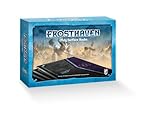
- Includes scenario narrative text and special rules for all 138 Frosthaven scenarios!
- 4 Scenario Play Surface Books, 96 pages each
- 16 "Destroyed" obstacle tokens
- ACCESSORY ONLY. REQUIRES A COPY OF THE FROSTHAVEN BOARD GAME TO PLAY
How Frosthaven’s seasonal events work
Road and outpost events are tied to the campaign calendar. At setup, each of the four event decks begins with cards 1–20 available. When an event is required, use the season shown by the next unmarked box on the campaign calendar. The calendar, not the month in your real life, determines which seasonal deck you draw.
The event procedure
- Finish the scenario and record its rewards, experience, loot, links, and calendar instructions.
- Read or mark the next campaign-calendar section as instructed by the scenario or campaign rules.
- When the campaign calls for a road or outpost event, identify the season indicated by the next unmarked calendar box.
- Draw from that season’s event deck and read the card aloud.
- Resolve the choices, costs, and outcomes exactly as written before continuing with campaign administration.
Collective event costs can be paid from resources in the Frosthaven Supply, according to the official FAQ. Decide who is tracking that supply before your first event so the group does not accidentally spend a character’s personal materials or forget a shared payment.
How to stay spoiler-light
Do not search for every event card before your campaign reaches it. Locked outcomes and later class information are intended to be discovered through play. For a card-specific rules question, use the official Frosthaven FAQ and its printing-correction information rather than relying on an image or an old community post. You can learn the calendar procedure without learning the consequences of cards you have not drawn.
Free tools Windows power users keep installed
One-click scans. No signup required.
The normal campaign progression loop
Most Frosthaven sessions follow a repeating structure. Keeping the phases separate prevents missed rewards and makes the settlement’s growth understandable.
- Prepare and play a scenario in Campaign Mode. Set up the map, monsters, characters, and scenario-specific rules, then play under the campaign rules.
- Record the result. Note rewards, experience, loot, scenario links, and every calendar instruction. Record unlooted treasure and eligible random loot as required by the campaign rules.
- Return to Frosthaven. After most successful scenarios, the party returns to the settlement for the outpost phase.
- Resolve the outpost phase. Handle events, calendar timing, buildings, resources, character upkeep, and any systems your campaign has unlocked.
- Select the next available scenario. Check links and requirements, choose a legal destination, and begin the next preparation phase.
The important exception is a scenario that is linked or force-linked to another scenario. Those scenarios can require the party to continue without a normal return to Frosthaven. Check the scenario’s instructions before assuming you can shop, build, or resolve an outpost event.
What Campaign Mode can award
Campaign Mode advances the persistent game. It can award resources, experience, quest progress, unlooted treasure, and eligible random loot, in addition to whatever the scenario states. Write down these results immediately; reconstructing them later is difficult when several players remember different outcomes.
Campaign Mode versus Casual Mode
Use the mode that matches your goal for the session. The distinction is mechanical, not merely a label on the scenario sheet.
Do these 3 things before closing this tab:
1Fix the driver behind crashes, sound loss and screen glitches2Repair Windows errors before they cause bigger problems3Scan for outdated or missing drivers - takes under a minuteRank #3
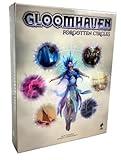
- This is the first expansion for Gloomhaven featuring twenty new scenarios that take place after the events of the original Gloomhaven campaign which involve one new character class the Aesther Diviner and her attempts to prevent an approaching calamity.
- Players will delve into twenty new scenarios that take place after the events of the original Gloomhaven campaign. These new adventures will involve one new character class—the Aesther Diviner—and her attempts to prevent an approaching calamity. The accompanying scenario book breaks up these scenarios across multiple pages to create more dynamic and surprising encounters.
- Expansion also features seven new monster types (including three new bosses) and fourteen new items.
- 1-4 players, Ages: 12+ 60–120 play time
| Feature | Campaign Mode | Casual Mode |
|---|---|---|
| Progression | Advances the campaign and can grant the scenario’s eligible rewards. | Does not advance the campaign. |
| Resources and experience | Record them according to campaign rules. | No campaign impact from the replay. |
| Events and outpost | Follow the campaign calendar and resolve the appropriate phase. | No event draw or outpost phase for the replay. |
| Best use | First attempts and any session intended to change the settlement or characters. | Practice, teaching, testing a party, or replaying a favorite scenario without consequences. |
If you are learning the game, Casual Mode is a safe place to practice a difficult scenario or explain rules to a new player. Once you want the result to count, restart that scenario in Campaign Mode and record the outcome from that attempt.
What the Frosthaven outpost phase manages
The settlement is governed by several connected systems: Prosperity, Defense, buildings, resources, and calendar sections. The outpost phase is where those systems are applied between scenarios.
Starting settlement state
The official FAQ lists the following starting conditions:
| System | Starting value or contents |
|---|---|
| Prosperity | 1 |
| Defense | 0 |
| Level-1 buildings | Barracks, Alchemist, Craftsman, and Workshop |
| Barracks setup | Initial setup adds four Soldiers through the Barracks. |
Prosperity measures the settlement’s development and controls which building options become available. Defense is a separate settlement value; do not treat a prosperous town as automatically well defended. Resources are tracked in the Frosthaven Supply and must be available when a building, event, or other rule requires them.
Recommended Free Tools
Options available at Prosperity 1
At Prosperity 1, the FAQ says the party can choose among several construction and upgrade options, subject to each option’s printed cost:
- Build the foundation for a Logging Camp.
- Build the foundation for a Mining Camp.
- Build the foundation for a Hunter’s Lodge.
- Build Wall Section J.
- Upgrade the Craftsman.
- Upgrade the Alchemist.
- Build any of the three Travel Tools as a Workshop upgrade.
The list describes what is legal, not what is optimal. Your campaign’s resource mix, next scenarios, party composition, and appetite for infrastructure should determine the first purchase.
Independent reader supportYour contribution helps us test, update, and keep practical guides available for everyone.How to decide what to build first
There is no single optimal opening build order that fits every party. Use a short decision process at each building opportunity.
Rank #4

- REDUCE THE CLUTTER - This character dashboard is the perfect solution for managing your character by providing a neat or tidy place. It saves a lot of room on the table and holds pretty much all of the player items. No more table clutter for your characters, just enjoying the fun of Gloomhaven!
- SPEEDS UP YOUR GAME - Game time preparation become shorter and you can save more time as players can easily take all the elements of the last game setup from the player dashboard, instead of looking for them all over the table. This hero organizer makes Gloomhaven so much easier and quicker gameplay.
- DURABILITY AND QUALITY - This character organizer is made of high quality birch plywood. It's much stronger and lighter than similar materials. Character boards can be inserted into the middle layer of this player dashboard.
- REQUIRE ASSEMBLY - If you in love with painstaking and lengthy strategy board games, then you will be delighted with the assembly of our organizer. Bring your family or friend in assembly, follow the easy instructions and become real creators!
- IDEAL GIFT FOR GLOOMHAVEN LOVER - Give an unexpected and very necessary gift to your friends, acquaintances or best half and you will see what impression the player board Gloomhaven board game will make. Organize the atmosphere of a real Gloomhaven game around you by using CZYY character organizer!
- Inventory the Supply. Identify which resource types you have in quantity and which one repeatedly blocks planned purchases.
- Check the next scenarios. Look for travel, objective, or survival demands that make a settlement improvement immediately useful.
- Compare permanent development with immediate utility. A building or upgrade that helps every future scenario may be preferable to a tool that solves only one short-term problem, but only if you can afford it without starving other plans.
- Protect the campaign calendar. Confirm that the purchase will not cause you to overlook an event, required section, or linked scenario.
- Record the decision. Note the building level, remaining resources, and any new options so the next outpost phase begins with an accurate state.
Coordinate rather than letting one player spend the entire supply based on a personal preference. The best early choice is the one that removes your group’s most frequent bottleneck while preserving enough resources for required events and scenario preparation.
Beginner mistakes and how to correct them
Choosing a class from a universal tier list
Problem: The party selects a supposedly strongest class and discovers that its complexity or positioning does not suit the player. Correction: Revisit role coverage, teaching load, action economy, and resource tracking before comparing power.
Drawing the wrong seasonal event
Problem: Players draw based on the real-world season or the previous card. Correction: Find the next unmarked campaign-calendar box and use the season shown there.
Returning to town during a linked scenario
Problem: The group starts an outpost phase between scenarios that are explicitly linked or force-linked. Correction: Read the scenario connection first; the link is the main exception to the normal return-to-Frosthaven flow.
Mixing Campaign and Casual records
Problem: A practice replay accidentally changes the settlement or character sheets. Correction: Label the session before setup. Casual Mode produces no campaign event draw, outpost phase, or progression record.
Spending resources without checking upcoming needs
Problem: The group buys an attractive upgrade and cannot pay a required event or planned construction cost. Correction: Check the Supply, next scenario, and calendar instructions before confirming a purchase.
Losing track of rewards and links
Problem: The party remembers the victory but not the experience, loot, treasure, or scenario connection. Correction: Use one campaign log immediately after every scenario and assign one player to verify it before packing away the map.
A practical first-session checklist
- Confirm that every player understands the six starting-class choices and selects according to role and complexity.
- Write each character’s class, personal goals, resources, and card-management reminders in the campaign log.
- Label the session Campaign or Casual before scenario setup.
- After the scenario, record rewards, experience, loot, treasure, links, and calendar instructions.
- Check whether the next scenario is linked or force-linked before opening the outpost phase.
- If an event is required, draw from the season indicated by the next unmarked calendar box.
- Pay shared event costs from the Frosthaven Supply when the rules call for it.
- At the settlement, check Prosperity, Defense, building levels, available resources, and the next scenario before spending.
Frosthaven becomes easier to manage when the group treats the settlement log as part of play rather than paperwork added afterward. The tactical scenario, seasonal event, and building decision are separate steps in one campaign system; recording each one keeps your choices meaningful over all 139 scenarios.
Quick Recap
Product prices and availability are accurate as of the date/time indicated and are subject to change. Any price and availability information displayed on Amazon at the time of purchase will apply.
Quick wins for a faster PC:
Scan for outdated or missing drivers - takes under a minuteDriver Scan →Repair Windows errors before they cause bigger problemsFix Now →
