
What’s actually slowing this PC down?
Pick the symptom - the matching free tool is one click away.
Choose PlateUp! if you want to design a restaurant, buy and place equipment, plan between service days and work toward a new franchise. Choose Overcooked! 2 if you want immediate, scenario-based kitchen chaos with authored levels, hazards and score-driven teamwork. Both support up to four players, but they create very different kinds of cooperative cooking sessions.
PlateUp! or Overcooked! 2: the short answer
These are the two clearest alternatives for someone asking for a cooperative cooking game with more than simple recipe completion. PlateUp! makes the restaurant itself the project: the team chooses dishes, buys appliances, places equipment, serves customers and expands the operation across a service-and-franchise loop. Overcooked! 2 makes each kitchen the challenge: players move through a campaign of themed levels, divide cooking tasks under time pressure and cope with hazards that disrupt the layout.
| # | Preview | Product | Price | |
|---|---|---|---|---|
| 1 |

|
Overcooked! + Overcooked! 2 (Nintendo Switch) | $30.99 | Buy on Amazon |
| 2 |
|
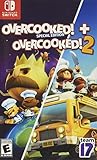
Overcooked! Special Edition + Overcooked! 2 | $30.92 | Buy on Amazon |
| 3 |

|
Overcooked! All You Can Eat - Nintendo Switch | $33.66 | Buy on Amazon |
| 4 |
![Overcooked! 2 - Nintendo Switch [Digital Code]](https://m.media-amazon.com/images/I/51iE31xauSL._SL160_.jpg)
|
Overcooked! 2 - Nintendo Switch [Digital Code] | $24.99 | Buy on Amazon |
| 5 |

|
Overcooked! 2 - Nintendo Switch | $32.55 | Buy on Amazon |
As an Amazon Associate I earn from qualifying purchases.
The better choice depends on what you want to repeat. If the satisfying part of One More Plate! is arranging an efficient room and deciding how a restaurant should grow, start with PlateUp!. If it is shouting instructions, recovering from mistakes and chasing a better run in a changing kitchen, start with Overcooked! 2.
The Tool Desk
Outbyte PC Repair FREERepair Windows errors before they cause bigger problemsFix Now →Outbyte Driver Updater FREEFix the driver behind crashes, sound loss and screen glitchesFind Drivers →At a glance: how the two games differ
| Comparison | PlateUp! | Overcooked! 2 |
|---|---|---|
| Core structure | Build and operate a restaurant, then develop it through service days and franchise progression | Campaign of authored kitchens with themed settings, hazards and score chasing |
| Management depth | Menu choices, appliance purchasing, equipment placement, restaurant expansion and between-shift planning | Execution-focused; the main decisions happen while completing recipes and serving orders inside each level |
| Pressure style | Service-day pressure within a longer restaurant and franchise loop | Chaotic time pressure, changing kitchen layouts and hazards such as teleporters and moving platforms |
| Players | Up to four players | Up to four players |
| Multiplayer listed by the official store pages | Online and shared/split-screen co-op on Steam | Couch co-op and online co-op on Steam |
| Progression | A restaurant can be developed and a new franchise unlocked after a 15-day challenge | Campaign map, themed kitchens and additional downloadable content listed on Steam |
| Platforms documented here | Steam and Nintendo Switch listings | Steam listing |
Store pages and platform availability can change by territory and edition. Check the current storefront for your region before buying, especially if your group needs a particular local multiplayer arrangement.
#1 Best Overall
- Get ready for a double helping of cooperative cooking as Overcooked! And Overcooked! 2 come together in chaotic Harmony.
- Overcooked! Play solo or engage in classic, chaotic couch co-op for up to four players in both co-operative and competitive challenge modes.
- hold onto your aprons… it's time to save the world (again!)
- Chop, Fry and serve your way through a series of unconventional kitchens. Play with over 20 chefs in 75 levels across both games!
- includes the base game for both Overcooked! And Overcooked! 2
Why PlateUp! is the closest fit for restaurant management
You build the operation, not just the meal
PlateUp!’s official Steam listing describes up to four players building and running a restaurant from scratch. The team chooses dishes, buys appliances and places them in the restaurant before and during the broader operating loop. That makes the room’s layout part of the problem: equipment location and the way the team moves through the space matter alongside cooking itself.
Nintendo’s listing adds front-of-house duties such as seating customers, delivering orders and managing patience. In other words, the game covers the restaurant’s visible service as well as its kitchen work. A group can therefore divide responsibilities around cooking, delivery and customer flow rather than having every player perform the same recipe actions.
Its pressure arrives in service days
The Nintendo listing frames the restaurant around a 15-day challenge. Each service is a test of the setup the team has created, and the run is connected to a longer progression loop rather than being an isolated level. The practical appeal is that a successful shift can inform the next round of planning: the team has to think about what it can serve, where its appliances belong and how much customer pressure its layout can handle.
Free tools Windows power users keep installed
One-click scans. No signup required.
This structure suits players who enjoy making a plan, discovering that the plan has a bottleneck and adjusting the restaurant before the next service. It also gives a session a shared objective beyond a single high score: keep the restaurant operating and reach the point where a new franchise can be unlocked after the 15-day challenge.
Why four-player groups may prefer it
With up to four players, PlateUp! can support distinct jobs across the restaurant. One player may focus on preparation, another on cooking, another on delivering orders and another on seating customers or handling other front-of-house work. The game’s listed online and shared/split-screen options on Steam let a group choose whether to play remotely or in the same room, subject to the current platform listing and edition.
Rank #2
- Get ready for a double helping of cooperative cooking as Overcooked! and Overcooked! 2 come together in chaotic harmony.
- Overcooked! Play solo or engage in classic, chaotic couch co-op for up to four players in both co-operative and competitive challenge modes.
- You must cook up a range of different dishes and work together in order to become the Ultimate, effective team!
- Overcooked! 2 Overcooked returns with a brand-new helping of chaotic cooking action! Journey back to the Onion Kingdom and assemble your team of chefs in classic couch co-op or online play for up to four players. Hold onto your aprons… it’s time to save the world (again!)
- Chop, fry and serve your way through a series of unconventional kitchens. Play with over 20 chefs in 75 levels across both games!
The important distinction is that more players do not automatically turn PlateUp! into a pure reflex test. Additional people can also create a coordination and layout problem: the restaurant must give everyone a useful route and the team must agree on priorities when several customer-facing tasks compete for attention.
Who should choose PlateUp!
- Players who want restaurant layout and appliance placement to matter.
- Groups that enjoy planning between shifts instead of only reacting inside a level.
- Anyone looking for a progression loop built around service days and a new franchise.
- Teams that want front-of-house duties, including seating customers, delivering orders and managing patience, alongside cooking.
Why Overcooked! 2 is the better chaotic co-op game
Its campaign gives each kitchen a defined scenario
Overcooked! 2 released on 7 August 2018. The official Steam listing presents a journey back to the Onion Kingdom and supports classic couch co-op or online play for up to four players. Rather than asking the group to develop one restaurant over a series of service days, it moves the team through a campaign map and a sequence of themed kitchens.
That authored structure makes the game a strong choice when you want a clear run to attempt immediately. The level itself establishes the kitchen, the available routes and the problem the team must solve. Replay comes from improving coordination and score performance in that scenario, not from expanding a persistent restaurant.
Hazards change the teamwork problem
The Steam description calls out dynamic kitchens and hazards including teleporters and moving platforms. Those hazards can interrupt a routine that would work in a static room. Players have to communicate not only about which recipe is next, but also about where the kitchen currently allows them to move and when a route is about to change.
The listing also names recipes and food themes including sushi, cakes, burgers and pizzas. The variety gives the campaign different cooking situations while keeping the central co-op task recognizable: prepare the required food, pass it through the kitchen and serve orders under pressure.
Rank #3
- Overcooked! Goes online- for the first time ever, online multiplayer has been fully integrated into Overcooked!
- Enjoy the cooking chaos with all of your friends using cross platform multiplayer and voice chat. A shared multiplayer queue means reduced waiting times for games, more time for culinary carnage!
- Tasty new content! New levels, new chefs and new mayhem - all exclusive to Overcooked! All you can eat.
- Multiple modes! Players can enjoy campaign, survival and Practice modes, and new to all you can eat - assist mode!
- Overcooked! All you can eat contains a features to allow as many players as possible to join in the food frenzy! Scalable UI, dyslexia friendly text and Color blindness options are all available.
Its pressure is immediate and score-oriented
Overcooked! 2 is built for groups that enjoy a loud, reactive style of cooperation. The challenge is concentrated inside the level, where timing, movement and communication determine how many orders the team can complete. A failed handoff or a hazard-induced detour can affect the run straight away, which makes repeating a level with a better division of labor part of the appeal.
Because the core structure is a campaign of themed kitchens, it is a better match than PlateUp! when the group wants to start playing without first designing a restaurant. It is also the clearer choice for players who want environmental surprises and a conventional level-by-level path.
Who should choose Overcooked! 2
- Players who want scenario-based co-op rather than a persistent restaurant.
- Groups that enjoy chaotic communication, rapid task switching and score chasing.
- Anyone attracted to moving platforms, teleporters and other dynamic kitchen hazards.
- Players who want couch or online co-op for up to four people in a campaign format.
Management versus execution: the decision that matters most
Pick PlateUp! for planning and optimization
PlateUp! puts decisions around the service loop at the center. The team chooses dishes, purchases appliances and places them in the restaurant, then uses that setup while serving customers. The 15-day challenge and franchise progression give those decisions a longer horizon: you are not only trying to finish the next order, but also trying to keep the overall operation viable.
This is the right fit if your group likes discussing a layout before a shift, assigning responsibilities and changing the plan after seeing where customers, equipment or movement create friction.
Pick Overcooked! 2 for authored chaos
Overcooked! 2 concentrates its design around the kitchen scenario. The campaign supplies the setting, recipes and hazards, while the players solve the immediate execution problem together. The result is less about building an enduring restaurant and more about mastering a sequence of demanding levels.
Quick wins for a faster PC:
Repair Windows errors before they cause bigger problemsFix Now →Fix the driver behind crashes, sound loss and screen glitchesFind Drivers →Clear out junk files and repair common Windows errorsFree Scan →Rank #4
- ONLINE/LOCAL MULTIPLAYER MADNESS - You’ll knead to work together (or against each other) to get the highest score in chaotic local and online multiplayer with up to 3 other chefs
- FEAST YOUR EYES ON THIS - Journey across a brand new overworld map by land, sea and air. Get cooking in new themes ranging from sushi restaurants, magic schools, mines and even alien planets!
- WHET YOUR APPETITE! - Travel the land cooking up a range of new recipes that are sure to cater to any tastes, including sushi, cakes, burgers and pizzas.
- ROMAINE CALM! - Travel through teleporters, across moving platforms and save time by throwing ingredients across dynamic kitchens that shift and evolve. Some kitchens even whisk your chefs away to new locations.
This is the right fit if your group wants every session to present a recognizable objective quickly and if the fun comes from recovering when a moving platform, teleporter or crowded workflow breaks the original plan.
How to choose for your group size and play setting
Two players
Both games list support for up to four players, so a two-person team is within the documented multiplayer range. The meaningful choice is workload. PlateUp! asks the pair to cover both kitchen and front-of-house responsibilities while also making restaurant decisions. Overcooked! 2 asks the pair to divide the active recipe and delivery work inside each campaign kitchen.
Three or four players
Larger groups can divide jobs more explicitly in either game. PlateUp! offers more room for separate kitchen and customer-facing roles, while Overcooked! 2 can turn four-person communication into part of the challenge as everyone navigates the same hazardous kitchen. If your group enjoys assigning stable roles and refining a shared layout, PlateUp! has the more management-oriented structure. If everyone wants fast handoffs and constant callouts, Overcooked! 2 is the more direct fit.
Playing locally or online
PlateUp!’s Steam listing specifies online and shared/split-screen co-op. Overcooked! 2’s Steam listing specifies couch and online co-op. Those labels establish the modes listed for the Steam versions; they do not by themselves establish cross-play between different platforms. Confirm the current store page and edition for every player before purchasing.
Windows Errors? Fix Them Before They Spread
Repair common Windows errors and clear accumulated junk for a smoother, more stable PC - no reinstall needed.Free scan · no reinstallCrashes, No Sound, or Screen Glitches?
Random freezes, missing sound and display glitches usually trace back to one bad driver. Find and replace yours safely.Free scan · under a minuteA practical first-session plan
If you start with PlateUp!
- Agree on the restaurant goal. Decide whether the group is primarily trying to experiment with layout, survive the service-day challenge or work toward the new-franchise progression described by the Nintendo listing.
- Assign responsibilities before the shift. Use the game’s documented duties as a starting point: cooking and preparation, delivering orders, seating customers and managing patience.
- Place equipment around movement. Appliance purchasing and placement are core parts of the Steam listing’s build-and-run loop, so treat the room’s routes as a team decision rather than leaving every item wherever it was bought.
- Review the shift together. Identify which customer-facing or kitchen task slowed the service, then adjust the restaurant or the role split before the next service day.
If you start with Overcooked! 2
- Choose a campaign kitchen and establish simple callouts. Decide who handles which part of the recipe and who communicates when a hazard changes the route.
- Watch the kitchen before committing to a routine. Teleporters and moving platforms can alter how players reach ingredients, preparation areas and serving points.
- Keep orders and movement visible to the whole team. The game’s challenge is immediate execution, so concise communication is more useful than a long-term restaurant plan.
- Replay with one change at a time. After a failed run, alter the task division or movement route, then see whether the score and order flow improve.
Progression and replay value
PlateUp!’s replay loop
PlateUp! ties replay to the restaurant you are building. The Steam listing describes restaurant expansion and unlocking a new franchise after 15 hectic days. That gives each run a management arc: select a menu, operate the restaurant, respond to service pressure and try to reach the next franchise milestone.
Best Value
- Online/local multiplayer madness- you'll need to work together to get the highest score in chaotic local and online multiplayer
- Feast your eyes on this- cook in new kitchens ranging from sushi Restaurant, magic schools and mines!
- Romaine calm! travel through teleporters, across moving platforms and save time by throwing ingredients across dynamic kitchens that shift and evolve
- Whet your appetite! cook up a range of new recipes including sushi, cakes, burgers and Pizzas
- Entertainment Software Rating Board (ESRB) Content Description: Suitable_for_all_users
Its replay value therefore comes from experimenting with how a restaurant is arranged and operated. A group that enjoys optimizing a system can return with a different approach to equipment, menu and role allocation.
Overcooked! 2’s replay loop
Overcooked! 2 offers a campaign map, themed kitchens and additional downloadable content listed on Steam. Its replay value is tied to the levels themselves: learn a kitchen, adapt to its hazards, improve the team’s execution and chase a stronger result.
This structure works well for groups that prefer a sequence of discrete challenges. You can finish a session after a few kitchens or return to a familiar level specifically to improve coordination and score.
Platform and purchase checks
The documented listings cover PlateUp! on Steam and Nintendo Switch, and Overcooked! 2 on Steam. Availability, editions and online requirements can vary by territory and may change after a listing is published. Check the current storefront for the platform you own, verify that the listed multiplayer mode matches your group and confirm that every player is buying the same edition when that matters.
No current price, discount, cross-platform multiplayer support or retailer inventory is established here, so those details should be checked at the time of purchase rather than assumed from an older listing.
Which game should you buy?
Buy PlateUp! when the phrase “restaurant-management alternative” describes what you want: a shared restaurant to lay out, appliances to purchase, dishes to choose and service days to survive before unlocking a new franchise. Its online and shared/split-screen co-op listing also makes it a natural choice for groups that want to organize a longer-running operation.
Buy Overcooked! 2 when “cooperative cooking” means immediate, chaotic teamwork. Its campaign map, themed kitchens, named recipes and hazards such as teleporters and moving platforms provide a more authored, level-based challenge, with couch and online co-op for up to four players listed on Steam.
In one sentence: PlateUp! is the stronger One More Plate! alternative for planning and progression; Overcooked! 2 is the stronger alternative for fast, hazard-filled kitchen action.
Quick Recap
Product prices and availability are accurate as of the date/time indicated and are subject to change. Any price and availability information displayed on Amazon at the time of purchase will apply.

