
No game is an objective replacement for P.T., but five psychological-horror games capture different parts of its appeal. Visage is the closest documented match in influence and domestic dread; MADiSON is the strongest choice for camera-based puzzles; Layers of Fear is built around a house that refuses to stay stable; SOMA trades ghosts for existential terror; and Silent Hill 2 expands psychological horror into a symbolic, combat-supported journey.
The useful question is not which game copies P.T., but which ingredient you want next: a looping-feeling home, slow exploration, environmental puzzles, gradual dread, or a story that becomes more disturbing as the space changes.

As an Amazon Associate I earn from qualifying purchases.
What “games like P.T.” really means
P.T. remains a reference point because it concentrates several forms of fear into a very small space. You repeatedly move through an apparently ordinary corridor, notice tiny environmental changes, solve opaque problems, and gradually realize that the setting itself is unreliable. The horror is largely anticipatory: sound, repetition, and implication do as much work as any visible monster.
The Tool Desk
Outbyte PC Repair FREEClear out junk files and repair common Windows errorsFree Scan →Outbyte Driver Updater FREEScan for outdated or missing drivers - takes under a minuteDriver Scan →The recommendations below share some of those ingredients, but none reproduces the whole experience. Their differences matter. Some give you a house with a history; others provide explicit systems, combat, or a much larger narrative. Use the comparison as a way to choose the type of discomfort you want rather than expecting a one-for-one substitute.
#1 Best Overall

- Test How Well You Know Each Other: Guess how closely players feel two personality traits describe themselves on a scale of 1–10 (e.g., Competitive and Funny). The closer you guess, the more points you score
- Never the Same Game Twice: With thousands of possible personality trait combinations, every game helps you uncover new insights about one another
- Fun that Builds Connection: Enjoy laughter and surprising reveals as you learn how your friends and family really see themselves
- Easy-to-Learn Gameplay: The rules are simple—the real challenge is how well you can read other players' minds as you tap into your inner psychoanalyst
- Game-Night Ready: Designed for 3–6 players, ages 8 and up, this set includes everything you need to play: a board, 250 cards, 6 magnetic scoring tiles, 6 character pieces, and a scoring trophy
| Game | Closest shared quality | Puzzle and investigation style | How danger works |
|---|---|---|---|
| Visage | Claustrophobic domestic dread and a changing house | Environmental clues, exploration, and sanity management | The player is defenseless and must evade threats |
| MADiSON | Supernatural tension built around a familiar interior | Interactions and discoveries made through a possessed instant camera | Survival against a hostile supernatural presence |
| Layers of Fear | Rooms and architecture becoming psychologically unstable | Investigation and puzzles while the environment shifts | Evasion as the domestic setting turns threatening |
| SOMA | Slow-burn unease, isolation, and an unsettling mystery | Terminals, documents, exploration, and machine-human questions | Outsmarting or fleeing rather than fighting |
| Silent Hill 2 | Symbolic psychological horror with a deeply troubled protagonist | Survival-horror puzzles and investigation across a larger world | A broader structure that includes combat as well as avoidance |
Visage: the closest documented P.T. influence
If you want the most direct connection to P.T., start with Visage. SadSquare Studio explicitly identifies the game as heavily inspired by P.T., alongside Phantasmagoria, Amnesia: The Dark Descent, and the film The Grudge. That statement establishes influence; it does not mean the games play identically.
“Though we were heavily inspired by the brilliant and matchless P.T., we also drew upon influences from classic psychological horror games like Phantasmagoria and from more recent ones like Amnesia: The Dark Descent, as well as from horror movies like The Grudge.” — SadSquare Studio
You explore a house with a terrible history, looking for environmental clues while its layout and details become increasingly untrustworthy. The pace is intentionally slow. The house is not merely a backdrop for jump scares; it is the main puzzle, a place whose changes force you to reconsider routes and assumptions.
PC Slower Than It Used to Be?
A free scan shows the junk files, broken settings and background clutter dragging Windows down - then fixes them in one click.Free scan · Windows 10 & 11Crashes, No Sound, or Screen Glitches?
Random freezes, missing sound and display glitches usually trace back to one bad driver. Find and replace yours safely.Free scan · under a minuteWhy it fits
- Domestic claustrophobia: ordinary rooms become threatening because you learn their history and notice their alterations.
- Gradual pressure: tension accumulates through sound, darkness, discoveries, and the expectation that something is nearby.
- Sanity as a concern: psychological stability affects how safe and readable the environment feels.
- Defenseless play: when danger appears, evasion and careful movement are your tools rather than direct combat.
Who should choose it
Choose Visage if the part of P.T. you miss most is the feeling that a familiar home has become an impossible loop. It is less suitable if you want frequent action, clear objectives, or a conventional weapon-based survival-horror rhythm.
MADiSON: the best choice for camera-led puzzles
MADiSON makes a possessed instant camera the central instrument of its horror. The camera connects the human world with the beyond, revealing information and interactions that ordinary observation cannot. Its official description calls it a “FIRST PERSON PSYCHOLOGICAL HORROR GAME” and identifies it as “OUT NOW.”
Rank #2

- TWISTED TERROR: Challenge your friends on frightening facts with a trivia game that tests your knowledge on horror facts in every genre. Call a priest, gas up the chainsaw, and sharpen the machete…will you survive the night?
- HORROR FANS: Think you know all there is to know about creepy dolls, psycho killers, haunted places and legendary monsters? Try to answer trivia questions with your knowledge of scary movies, books and tv shows to win.
- QUICK PLAY TRIVIA GAME: Survive the night by answering multiple questions correctly to collect weapon cards. The first player or team to collect 3 different weapons cards wins. Each card has 2 ghoulish questions, play time: 20 mins.
- GAME NIGHT GORE: A variety of questions covers classic and modern horror. Easy questions for the horror novice and more challenging questions for die hard fans make the game fun for the whole group!
- THE GORY DETAILS: Horror Trivia is perfect for 2 or more players or teams and is an absolute "scream" at parties. Ideal for horror fans, adults and teens ages 13 years and older, game includes 150 cards with 300 questions and answers.
This focus gives the game a distinct relationship between looking and understanding. Taking a photograph is not a cosmetic action: it can expose a clue, alter what you can perceive, or open the next step in a puzzle. The act of documenting a room therefore becomes a source of anxiety. You are encouraged to inspect the environment, but every inspection can make the supernatural presence feel closer.
What makes its puzzles different
- Camera-based discovery: progress depends on using the instant camera to bridge two realities.
- Object-focused exploration: rooms contain items whose purpose becomes clear only after careful examination.
- Supernatural escalation: the same spaces can acquire a different meaning once the camera reveals what is hidden.
MADiSON is the right follow-up when you want the investigative curiosity of P.T. but prefer a more explicit tool-driven puzzle structure. It is not documented as a direct P.T. recreation; its similarity is thematic and atmospheric rather than a stated development lineage.
Layers of Fear: when the house itself becomes the threat
Layers of Fear centers on a Victorian house that twists through fear and decay. Rooms can spin, reconnect, or seem endless, turning movement through the building into an investigation of unstable reality. The domestic setting is recognizable enough to feel intimate, yet every return can produce a new arrangement or implication.
The game combines exploration, puzzles, and evasive action. Rather than presenting a fixed maze to memorize, it uses architectural change to undermine your confidence in memory. A door, hallway, or workroom can become part of a different sequence after you have already learned its apparent logic.
Why it belongs on a P.T. shortlist
- Shifting-space unease: the environment changes in ways that make repetition feel dangerous.
- Investigation through objects: details in the house provide context for the story and clues for progress.
- Threatening domesticity: the fear comes from a home that should be private and predictable but is neither.
Pick Layers of Fear if your favorite P.T. moments were the visual transitions and the suspicion that the corridor was rewriting itself. Its structure is more openly theatrical, so players seeking a completely opaque, minimalist puzzle may find it less restrained.
SOMA: existential dread instead of a haunted-house loop
SOMA moves psychological horror into the underwater PATHOS-II facility. Terminals, documents, failing resources, and a machine-human mystery replace the narrow domestic setting, but the underlying method is familiar: explore a hostile place, collect fragments of information, and let those fragments change what you think is happening.
Free tools Windows power users keep installed
One-click scans. No signup required.
The facility’s isolation creates a different kind of claustrophobia. You are surrounded by machinery, dark water, and failing infrastructure rather than a suburban hallway. The fear grows from questions about identity, consciousness, and what it means for a copy of a person to continue existing. Those ideas are delivered through investigation instead of long explanatory lectures, so optional reading and terminal use can materially deepen the experience.
How its danger model changes the experience
- No conventional power fantasy: encounters are handled by understanding, hiding, outsmarting, or fleeing.
- Resource anxiety: the environment and its systems are failing, making every route feel temporary.
- Information-driven horror: documents and machines gradually reveal the logic behind the threats.
SOMA is the best recommendation when what you want from P.T. is creeping uncertainty and a story that makes the setting intellectually disturbing. It is not a haunted-house imitation, and its science-fiction premise gives the horror a much broader scope.
Silent Hill 2: a larger symbolic psychological-horror journey
Silent Hill 2 is the choice for players who want psychological horror expressed through symbolism, character guilt, and a substantial survival-horror structure. Konami’s premise follows James Sunderland as he travels to Silent Hill after receiving a letter from his deceased wife. The town’s fog, monsters, and locations externalize emotional conflicts rather than functioning as a simple sequence of scares.
Compared with the other recommendations, it offers a wider world and a more conventional mixture of exploration, puzzles, and combat. That makes it less like the confined experiment of P.T., but it also gives the psychological material room to develop through characters, locations, and recurring images.
What’s actually slowing this PC down?
Pick the symptom - the matching free tool is one click away.
Rank #4

- Play a German soldier haunted by horrors of the Great War and break the cycle of suffering while your mind drifts between memories and the trenches
- Wake up as a teenager in a deserted house and suddenly find yourself in the trenches surrounded by horrific monsters; Confront your trauma and demons
- To escape the death traps and terrifying creatures you must understand each monster and solve the puzzles that stand in your way
- Peel back the shroud that hides the secrets of your family torn apart by the Great War and try to remember your past
- Through exploration and solving riddles between the walls of your home and the barbed wire of No Man’s Land you reveal a German family ravaged by war
Current platform details
The remake released on 8 October 2024. Konami lists PlayStation 5 and PC through Steam, while Konami support also lists Xbox Series X|S. Store availability and edition details can vary by region, so check the local listing before buying.
Who should choose it
Choose Silent Hill 2 when you want the psychological symbolism associated with P.T. expanded into a complete narrative journey. Expect a broader survival-horror game, including combat, rather than a short looping-space experiment.
Independent reader supportYour contribution helps us test, update, and keep practical guides available for everyone.Choosing the right game by the feeling you want
For a changing home and defenseless tension
Start with Visage. Its documented P.T. influence, house-based exploration, sanity pressure, and evasion model align most closely with the reference point’s domestic dread.
For puzzles built around seeing differently
Choose MADiSON. The possessed instant camera gives investigation a clear mechanical identity and makes observation itself feel risky.
For reality-bending rooms
Choose Layers of Fear. It emphasizes the instability of architecture, using loops, spinning spaces, and decay to make familiar rooms unreliable.
Best Value
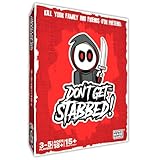
- ADULT CARD GAME FOR GAME NIGHT - Don’t Get Stabbed! is an adult party game where you get to kill your family and friends! ... for pretend of course. It’s inspired by horror movies of the 70’s, 80’s and 90’s, but is light-hearted enough for everyone to enjoy. The ultimate Halloween game!
- COMPETITIVE & EASY TO LEARN - This entertaining game is playable for 3 to 5 players. One person is elected as the killer (whoever is the most evil in your group) and the rest are victims. The killer wins by killing all the victims. The victims win by escaping.
- HILARIOUS & REPLAYABLE- The average player will love this game for its gameplay! The horror fan will love the art on many of these cards which features classic horror movie tropes. There is tons of fun in playing this game and in its artwork.
- ADULT PARTY GAME – It may look cute, but like most horror movies it has topics you probably don’t want your children knowing about. For ages 18+.
- WHAT’S IN THE BOX?! – Included in the box are 64 Main Deck Cards and 13 Car Deck Cards printed on premium glossy playing cards (2.5 x 3.5 inches), for a grand total of 77 cards. Also included is one instruction booklet.
For philosophical and science-fiction horror
Choose SOMA. Its PATHOS-II setting, machine-human mystery, and document-based investigation deliver dread through ideas as much as through pursuit.
For symbolic storytelling with combat
Choose Silent Hill 2. It provides the most expansive psychological-horror narrative here, but it is also the least confined to the particular corridor-and-loop format associated with P.T..
A practical play order
- Begin with Visage if you want the nearest documented influence and the strongest house-centered atmosphere.
- Move to MADiSON for a more object-focused, camera-driven puzzle experience.
- Play Layers of Fear if changing architecture is the feature you found most memorable.
- Choose SOMA when you are ready to trade domestic ghosts for existential questions and underwater isolation.
- Finish with Silent Hill 2 for a larger symbolic story that adds combat to psychological horror.
One reading companion for the genre
After choosing a game, Horror Video Games: Essays on the Fusion of Fear and Play offers critical and design context for readers who want to think about how games create fear. It is a book about horror games, not a playable substitute for any of the recommendations.
The bottom line
Visage is the first recommendation for most P.T. fans because its developers openly cite P.T. as a major influence and build their horror around a changing, oppressive house. Choose MADiSON for camera puzzles, Layers of Fear for unstable architecture, SOMA for existential investigation, and Silent Hill 2 for a larger symbolic journey. Each preserves a different part of the original appeal, so the best choice depends on which kind of psychological unease you want to carry forward.
Quick Recap
Product prices and availability are accurate as of the date/time indicated and are subject to change. Any price and availability information displayed on Amazon at the time of purchase will apply.

