
Quick wins for a faster PC:
Fix the driver behind crashes, sound loss and screen glitchesFind Drivers →Clear out junk files and repair common Windows errorsFree Scan →In an August 2018 CGMagazine interview, producer Kenichiro Tsukuda explained how Daemon X Machina began as a Nintendo Switch project, why its mecha deliberately avoided a uniform photorealistic look, and how story, combat and character growth were intended to create a power fantasy. Localization staff member Colin Wahlert also described the Japanese-to-English-to-other-languages process and its unavoidable tension between literal fidelity and natural English.
Because the conversation took place after the game’s E3 2018 announcement, these are development intentions and recollections—not a definitive checklist of what the released game ultimately contained.
| # | Preview | Product | Price | |
|---|---|---|---|---|
| 1 |

|
Daemon X Machina: Titanic Scion - Nintendo Switch 2 | $39.99 | Buy on Amazon |
| 2 |
|
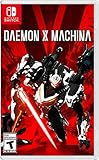
Daemon X Machina | $64.90 | Buy on Amazon |
| 3 |
![Switch - Daemon X Machina - Orbital Limited Edition - [PAL EU - NO NTSC] (Non-US Version)](https://m.media-amazon.com/images/I/31VRYSffElL._SL160_.jpg)
|
Switch - Daemon X Machina - Orbital Limited Edition - [PAL EU - NO NTSC] (Non-US Version) | $121.60 | Buy on Amazon |
| 4 |

|
Daemon X Machina: Titanic Scion - Xbox Series X | $38.97 | Buy on Amazon |
As an Amazon Associate I earn from qualifying purchases.
How the project started on Nintendo Switch
Tsukuda said the project began after Nintendo announced the Switch. He found the hardware interesting and wanted to make a game specifically for it, rather than treating the console as an afterthought. The interview presents the Switch’s ability to move between rooms as part of that appeal: a player could begin in one place and continue elsewhere, changing the social and practical context in which a large-scale mecha game might be played.
That explanation matters because it frames the platform as a creative starting point. Tsukuda was not describing a finished concept that happened to receive a Switch version. He was describing a project whose direction was influenced by what he thought the new console could enable. The interview does not provide technical specifications, performance figures or a final feature list; its evidence is the producer’s account of the project’s early motivation.
#1 Best Overall
- Full ROM on Game Card
- Trademark action debuts on new platforms, bringing epic sci-fi adventure, accessible gameplay for newcomers, & an expanded scope for returning fans
- Now a nimble suit of armor, your Arsenal can be fully customized both in design and in loadout, with the ability to craft or salvage new elements
- Cooperative & asynchronous multiplayer means you never truly fight alone so team up with friends online to tackle the epic story & battles
- Explore an alien planet in your Arsenal as you battle against mechanical and organic enemies
Why the visual direction rejected a single “correct” look
Tsukuda saw a trend toward similar lighting and aesthetics across many contemporary games. He contrasted that sameness with comics, films and manga, where each work can establish a clearly different visual language. His response was to pursue a more stylized identity instead of assuming that realism was the default destination.
“Many games, in particular, tend to have a photorealistic art style. But it’s not as if that’s some rule we have to follow, so we ended up going in this direction.”
— Kenichiro Tsukuda, producer, CGMagazine interview, August 1, 2018
Special offer. See more information about Outbyte and uninstall instructions. Please review EULA and Privacy policy.
The statement is not a rejection of detail or visual sophistication. It is an argument against treating photorealism as an obligation. In practical terms, the team could make lighting, color and silhouette serve the emotional tone of a mecha adventure rather than imitate live-action photography. The interview does not name a formal art-style label or define a technical rendering method, so the safest description is the one Tsukuda supplied: a deliberate departure from a prevailing photorealistic tendency.
Western films as an influence
Tsukuda cited Western movies among the influences on the project. He also pointed to a new emphasis on muscular forms in the mech’s thighs and chest. Those details suggest that the machines were designed to communicate physical force through their bodies, not merely to function as neutral vehicles for weapons.
The interview does not identify specific films or quantify how much of the final design came from them. What it does establish is the direction of thought: cinematic influence, an interest in expressive silhouettes, and a willingness to make the machines look powerful in a way that could be read immediately during action.
How the intended design pillars fit together
The following table organizes the interview’s stated aims. None of these rows should be read as a post-release measurement or a comparison with another game; they are the design questions Tsukuda discussed in 2018.
Do these 3 things before closing this tab:
1Repair Windows errors before they cause bigger problems2Fix the driver behind crashes, sound loss and screen glitches3Clear out junk files and repair common Windows errors| Design question | Tsukuda’s stated approach | Reader-facing implication |
|---|---|---|
| Visual identity | Move away from a common photorealistic tendency; use a distinct visual direction. | Mecha should be recognizable through stylized presentation rather than realism alone. |
| Mech construction | Use muscular elements in the thighs and chest. | Body shape itself communicates strength and impact. |
| Player progression | Make the player feel stronger as the story advances. | Narrative progress and mechanical improvement are intended to reinforce each other. |
| Combat expression | Emphasize weapon-firing animation and freedom of movement. | Power is communicated through how the machine moves and attacks, not only through damage numbers. |
| Social play | Local gathering and network play were still under consideration in the interview. | Multiplayer details were unresolved at that development stage. |
| Localization | Translate Japanese into English, then use English as the basis for other languages. | English functions as an important interpretive bridge, creating trade-offs in nuance. |
Story as a power fantasy, not a separate layer
Tsukuda described the story as a vehicle for a changing sense of capability. His goal was not simply to give players more equipment while leaving the character’s emotional experience untouched.
Rank #2
- They say it was the greatest disaster in recorded history…
- The moon tore apart, turning the sky into a kaleidoscope of red light that illuminated all who watched from below.
- Survive this apocalyptic new age when the self-evolving weapons called “Immortals” have turned on their creators and waged war on humanity.
“This story is one in which you will feel yourself getting stronger as you progress.”
— Kenichiro Tsukuda, producer, CGMagazine interview, August 1, 2018
He connected that feeling directly to the systems. The player should become more capable and also appear more impressive while playing.
What’s actually slowing this PC down?
Pick the symptom - the matching free tool is one click away.
“So I want to combine the story with the game systems so players feel strong and that they feel like they look cool.”
— Kenichiro Tsukuda, producer, CGMagazine interview, August 1, 2018
This is a useful distinction from a progression system described only in terms of unlocks. Tsukuda was talking about alignment: the fiction says the protagonist is becoming stronger, the controls let the player perform that strength, and the machine’s presentation makes the result look stylish. The interview does not specify a skill tree, numerical progression model or exact rewards, so those systems should not be inferred from his broader design objective.
Movement, weapons and the sensation of control
When discussing action, Tsukuda highlighted weapon-firing animations and freedom of movement. These choices address two sides of mecha fantasy. Weapon animation gives an attack visible weight and personality; mobility lets the player feel responsible for positioning and momentum rather than waiting for a cinematic to display the machine’s power.
Free tools Windows power users keep installed
One-click scans. No signup required.
The intended result was improvement that players could feel in their hands. A stronger machine would matter, but so would the player’s growing ability to move, aim and combine actions. The interview does not report control tests, frame-rate measurements or a ranking of weapons. It records the producer’s design aims, which is why the language of intention is important.
Mercenaries who can become allies or enemies
Tsukuda also mentioned mercenaries whose relationships with the player could move in different directions. They might become allies or enemies, creating a social dimension to the power fantasy. The point was not merely to populate missions with interchangeable pilots; relationships could affect how the player experiences the world and the consequences of action.
No branching chart, character roster or rule set is given in the interview. It therefore supports a cautious conclusion: the team wanted interpersonal allegiance to be part of the game’s dramatic texture, but the conversation does not establish every condition under which a mercenary would change sides.
What the 2018 interview says about multiplayer—and what it does not
At the time of the conversation, the team was still considering whether multiplayer would focus on local gatherings, network play, or some combination. That is a development snapshot, not confirmation of the released game’s multiplayer implementation.
This distinction is especially important when reading older promotional interviews. A producer can describe an option under discussion without promising that it will ship, remain unchanged, or be available in every region. The source supplies no final player count, mode list, subscription requirement or launch schedule, so none of those details can be derived from it.
Independent reader supportYour contribution helps us test, update, and keep practical guides available for everyone.How localization was planned
Colin Wahlert, identified in the interview as localization staff, explained that the game was made originally in Japanese and then passed through a two-step language path: Japanese to English, followed by English to other languages. That structure makes English more than one destination among many; it becomes an intermediate text that can influence how the source is understood elsewhere.
“Being faithful to the original, but at the same time, you want to make sure that the English feels natural.”
— Colin Wahlert, localization staff, CGMagazine interview, August 1, 2018
Recommended: PC Feels Slow? A Free Scan Shows What's Dragging Windows Down →Recommended: Update Every Outdated Driver on Your PC in One Scan - Free →Special offer. See more information about Outbyte and uninstall instructions. Please review EULA and Privacy policy.
Wahlert acknowledged that these goals can conflict. A highly literal rendering may preserve wording while sounding unnatural, whereas a fluent line may shift emphasis, humor or implied meaning. Once English is used as the basis for additional languages, an interpretive decision in English can travel farther through the process.
Rank #4
- Trademark action debuts on new platforms, bringing epic sci-fi adventure, accessible gameplay for newcomers, & an expanded scope for returning fans
- Now a nimble suit of armor, your Arsenal can be fully customized both in design and in loadout, with the ability to craft or salvage new elements
- Cooperative & asynchronous multiplayer means you never truly fight alone so team up with friends online to tackle the epic story & battles
- Explore an alien planet in your Arsenal as you battle against mechanical and organic enemies
- Trek through the vast open world on foot, fly through the skies, or when all else fails, gallop on horseback
Why the trade-off matters in a mecha story
Mecha fiction often relies on specialized terminology, military-style commands and distinct character voices. Natural English can make those lines readable and performable, while fidelity protects the relationships and ideas established in Japanese. Wahlert’s description indicates that the localization team had to negotiate both priorities rather than apply a mechanical word-for-word method.
The interview does not provide side-by-side examples, a glossary or a list of altered names. It supports a general understanding of the workflow and its constraints, not a verdict on individual translation choices.
Reading the interview as a pre-release document
CGMagazine published the conversation on August 1, 2018, after Daemon X Machina had been announced at E3 2018. Every feature-related statement should therefore be read in its proper tense. Tsukuda was explaining what the team wanted the game to accomplish, how the concept had evolved and which possibilities were still open.
Crashes, No Sound, or Screen Glitches?
Random freezes, missing sound and display glitches usually trace back to one bad driver. Find and replace yours safely.Free scan · under a minutePC Slower Than It Used to Be?
A free scan shows the junk files, broken settings and background clutter dragging Windows down - then fixes them in one click.Free scan · Windows 10 & 11- Established by the interview: the project was initiated after the Switch announcement; stylization was chosen deliberately; Western films and muscular mech forms influenced the visual thinking; story and systems were meant to produce a feeling of increasing strength and style; and localization was planned through Japanese, English and then other languages.
- Still unsettled in the interview: the exact shape of multiplayer, including whether local or network play would be emphasized.
- Not supplied by the interview: quantitative performance data, a complete mission or weapon list, final platform specifications, release outcomes, or evidence from hands-on testing.
This separation prevents a common mistake: treating an early creator statement as if it were a technical manual. The interview is most valuable for explaining the reasoning behind the project, not for replacing a current feature guide.
Why Tsukuda’s approach is notable for mecha design
Three ideas reinforce one another in his account. First, the visual language should be distinctive rather than obedient to a default realism. Second, the machines should look physically forceful, with muscular chest and thigh forms that make the silhouette expressive. Third, the player’s sense of strength should emerge from the combination of story, movement and presentation.
That combination treats mecha as both character and instrument. A machine can communicate personality through shape, communicate power through animation, and communicate growth through the player’s increasing command of it. Tsukuda’s comments do not claim that this approach is universally superior. They explain why the team chose it for this project and how the parts were intended to support one another.
Questions the interview leaves open
Readers looking for a definitive account of the released game will need sources from later in development. This interview cannot answer whether every planned system shipped unchanged, how the final multiplayer modes were organized, or how localization decisions appeared in the finished text. It also cannot establish comparative performance against other mecha games, because no competing titles were evaluated.
What it can answer is the creative “why” behind the announcement: why the Switch mattered at the start, why a non-photorealistic visual direction was chosen, why the machines were given muscular proportions, and why progression was supposed to feel both powerful and stylish. Those intentions provide a useful lens for understanding the game’s identity without confusing aspiration with verified final specifications.
Quick Recap
Product prices and availability are accurate as of the date/time indicated and are subject to change. Any price and availability information displayed on Amazon at the time of purchase will apply.

