
This guide assumes “the game” means Metal Gear Solid V: Ground Zeroes and Metal Gear Solid V: The Phantom Pain, whose stealth and ranking systems share the same design. In both games, a high mission rank comes from controlling three things at once: detection risk, completion speed, and objective discipline. Staying hidden protects the score, speed prevents a technically clean run from becoming inefficient, and unnecessary alerts, retries, and kills can pull the result down—especially in Ground Zeroes.
What the ranking system is measuring
Mission ranking is a performance grade, not simply a measure of whether you reached the extraction point. The game evaluates how cleanly and efficiently you completed the assigned work. The practical high-rank priorities are:
As an Amazon Associate I earn from qualifying purchases.
- Remain undetected. Preventing the first sighting is safer than recovering after a guard notices you.
- Finish quickly. In The Phantom Pain, stealth and speed are the two most reliable advantages for a top result.
- Complete the required objective efficiently. Optional objectives can be worth pursuing, but only when they do not create disproportionate time or detection risk.
- Limit costly mistakes. Alerts, retries, and unnecessary kills can reduce the final result; the penalty is especially clear in Ground Zeroes.
The available evidence does not establish a universal published point formula or fixed time thresholds for every mission. That means you should treat the letter grade as the outcome of several interacting factors rather than chase an invented checklist of exact values. A route that is fast but repeatedly triggers alerts is usually less dependable than a route that is both quick and consistently unseen.
Recommended Free Tools
How detection turns into an alert
The first sighting is the critical moment
Before an alert exists, a guard can enter a warning or observation state. If that guard confirms your presence and you do not stop the process, the game can escalate the encounter into an alert. Once the alert spreads, more enemies begin searching, movement routes become harder to control, and the chance of a forced fight rises. A separate account of the games describes enemies remaining on high alert for a substantial period, so simply hiding for a few seconds is not a dependable recovery plan.
#1 Best Overall
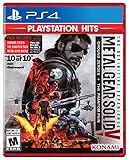
- What's included: Metal Gear Solid V: Ground Zeroes + all DLC, Metal Gear Solid V: The Phantom Pain + all DLC, Metal Gear Online + all DLC, $20 of Mother Base currency
- Metal Gear Solid V: Ground Zeroes is the first segment of the Metal Gear Solid V experience and prologue to the larger second segment, Metal Gear Solid V: The Phantom Pain
- Metal Gear Solid V: The Phantom Pain provides players a first-rate gaming experience as they utilize tactical freedom to carry out open-world missions
- Metal Gear Online is built around a dedicated squad-based competitive multiplayer structure, which has been redesigned with the familiar gameplay and aesthetic styling of the Metal Gear Solid series
That is why high-ranking play is built around preventing the initial sighting. Mark enemies before moving, identify overlapping fields of view, and use cover, darkness, and alternate approaches to keep the first guard from confirming your position. The goal is not merely to survive the search; it is to avoid creating the search in the first place.
What an alert does to a run
An alert changes the tactical problem and the ranking problem simultaneously. Tactically, you must break line of sight, avoid patrols, and wait for the search to subside. For the score, the alert itself can count against the mission result. In Ground Zeroes, alerts are explicitly described as harmful to the final score, alongside kills and retries.
Running and gunning can still complete a mission, but it is a poor strategy for a high rank because one noisy encounter can consume time, force additional combat, and lead to a retry. The penalties compound: the longer the search lasts, the more likely you are to kill guards or restart, and each added problem makes the final result harder to repair.
Windows Errors? Fix Them Before They Spread
Repair common Windows errors and clear accumulated junk for a smoother, more stable PC - no reinstall needed.Free scan · no reinstallOutdated Drivers Are Slowing You Down
One free scan finds every outdated or missing driver and matches the right update for your exact hardware.Free scan · exact hardware matchReflex Shot: emergency recovery, not a stealth strategy
What happens when Reflex begins
In Ground Zeroes, Reflex Shot briefly slows time when a guard spots Snake. This creates a short reaction window in which you can neutralize the discovering enemy. If you disable or kill that guard before the window ends, the alert does not propagate and that detection does not count in the end-of-mission ranking, according to the game’s documented behavior.
The mechanic is valuable because it can turn one mistake into a contained incident. It is not the same as remaining unseen: Reflex only appears after a guard has noticed you, and the opportunity disappears quickly. Missing the window allows the detection to become a normal alert, with the associated search and ranking cost.
Why repeated Reflex use still hurts high-rank attempts
A successful Reflex intervention can protect the result from that particular detection, but relying on it repeatedly is less safe than planning an unalerted route. Each activation means a guard has already acquired you, and a second enemy, a poor angle, or a delayed takedown can still trigger a full alert. In The Phantom Pain, guidance for high payouts specifically favors avoiding Reflex and using nonviolent takedowns when possible. That advice reflects the broader ranking loop: a clean approach is more valuable than repeatedly rescuing a compromised one.
Use Reflex as a recovery tool when an otherwise good run suffers one unavoidable mistake. Do not design the route around being seen so that you can shoot your way out of every encounter.
Quick wins for a faster PC:
Repair Windows errors before they cause bigger problemsFix Now →Fix the driver behind crashes, sound loss and screen glitchesFind Drivers →Clear out junk files and repair common Windows errorsFree Scan →Ground Zeroes and The Phantom Pain: what differs
| Factor | Ground Zeroes | The Phantom Pain |
|---|---|---|
| Detection recovery | Reflex Shot can briefly slow time; stopping the discovering enemy before the window closes prevents the alert from propagating and keeps that detection out of the final ranking. | High-rank guidance treats Reflex as something to avoid when possible rather than a routine part of the route. |
| Known ranking pressure | Kills, alerts, and retries hurt the score, making quiet, repeatable routes especially important. | Stealth and speed are the primary advantages; avoiding Reflex and choosing nonviolent takedowns can improve the GMP payout after a mission. |
| Enemy response | Guards can remain on high alert for a substantial period, so waiting out a mistake can be slow and risky. | The same basic principle applies: an alert creates a longer, less predictable operation and costs time that could have been spent completing the objective. |
| Improvement loop | Replay missions to remove alerts, reduce retries, and refine the route. | Replay missions with different routes and equipment while adding optional objectives and collectibles to pursue better outcomes. |
The games therefore reward the same habits but present different emphasis. Ground Zeroes makes the cost of alerts, kills, and retries particularly visible. The Phantom Pain adds a stronger speed-and-payout dimension, so a route must be quiet without becoming needlessly slow.
Rank #3
![Metal Gear Solid V: The Definitive Experience (Playstation 4) [UK IMPORT]](https://m.media-amazon.com/images/I/51Yvx2kAAML._SL160_.jpg)
- THE DEFINITIVE EXPERIENCE will give players an opportunity to play the complete MGSV experience
- Includes METAL GEAR SOLID V: GROUND ZEROES
- Includes METAL GEAR SOLID V: THE PHANTOM PAIN
- Includes METAL GEAR ONLINE
- Includes a selection of DLC for each product, as well as additional Mother Base currency
A practical route for a high mission rank
1. Mark the area before committing
Use the opening minutes to identify guards, patrol directions, fixed cameras or other visible hazards, and the position of the objective. Marking enemies turns an uncertain approach into a sequence of known gaps. Look for overlapping sight lines: the safest path is often the one that avoids two observers at once, not the one that is shortest on the map.
2. Choose an approach with a recovery option
Plan where you will break line of sight if something goes wrong. Cover, darkness, walls, and alternate paths give you a chance to disengage without triggering Reflex or a full alert. An approach that is marginally longer but has several escape points is usually more reliable than a direct crossing through exposed ground.
3. Resolve only the guards that matter
Every takedown should serve a purpose: opening a route, protecting the objective, or preventing a patrol from intersecting your movement. In The Phantom Pain, nonviolent takedowns are favored for high payouts. In Ground Zeroes, unnecessary kills can hurt the result, so avoid lethal force when a guard can simply be bypassed or quietly incapacitated.
Do these 3 things before closing this tab:
1Repair Windows errors before they cause bigger problems2Scan for outdated or missing drivers - takes under a minute3Clear out junk files and repair common Windows errors4. Keep the objective and extraction plan together
A fast approach followed by a long, improvised exit wastes the speed advantage. Before interacting with the objective, know which route leads to extraction and which guards will be affected by your movement. If an optional task sends you across the map, decide in advance whether its reward justifies the additional traversal and detection risk.
Rank #4

- Open-World game design allowing players ultimate freedom on how to approach missions and overall game progression
- Fox Engine delivers photorealistic graphics, thoughtful game design and true new-generation game production quality
- Online connectivity that carries the experience beyond the consoles to other devices to augment the overall functionality and access to the game
5. Treat a detection as a decision point
If Reflex starts in Ground Zeroes, immediately decide whether the discovering guard can be stopped within the brief window without exposing you to another enemy. If yes, contain the incident. If not, break contact and preserve the rest of the run rather than escalating into a firefight. In either game, do not continue along the original route as though the alert did not change enemy positions.
6. Review the result and change one variable
Replay is the intended way to improve. On the next attempt, change one factor—entry route, equipment, takedown choice, or extraction path—so you can identify what actually saved time or prevented detection. Repeating the same route without diagnosing the failure usually reproduces the same ranking.
How speed, objectives, and stealth trade off
| Approach | Detection risk | Time to objective | Takedown profile | Recovery burden | Likely ranking effect |
|---|---|---|---|---|---|
| Careful stealth route | Low when patrols and sight lines are mapped | Moderate; can be improved through replay | Bypass or nonlethal control | Low | Strong foundation for a high rank |
| Fast exposed route | High | Initially short | Often lethal or improvised | High if one sighting becomes an alert | Unreliable; speed can be erased by combat and searches |
| Reflex-based recovery | Detection has already occurred | Short only if the window is used immediately | Rapid neutralization of the discovering guard | Medium; another enemy can still escalate the incident | Useful for saving one mistake, poor as a repeated plan |
| Objective-heavy replay | Depends on added traversal | Longer if optional tasks are distant | Chosen to protect the extra route | Variable | Worthwhile when the objective can be added without alerts or excessive delay |
This trade-off explains why “fastest possible” is not always “best ranked.” A route that saves a few seconds but creates a high probability of an alert can finish slower overall than a controlled route. Conversely, stealth alone is not enough in The Phantom Pain; a cautious path that takes far longer than necessary may need another iteration focused on movement and objective order.
Retries, kills, and optional objectives
Retries
In Ground Zeroes, retries are among the factors that can lower the score. Restarting is still useful during practice, because it lets you test a better route, but a high-rank attempt should begin only after you understand the patrol pattern and equipment choice. If a run is already compromised, decide whether continuing teaches you something; otherwise, restart deliberately rather than repeatedly resetting without a plan.
Best Value

- THE POWER OF FOX ENGINE - Ground Zeroes showcases Kojima Productions' stunning FOX Engine, a true next-generation game engine which revolutionizes the Metal Gear Solid experience.
- INTRODUCTION TO OPEN WORLD DESIGN - The first Metal Gear Solid title to offer open world gameplay. Ground Zeroes offers total freedom of play: how missions are undertaken is entirely down to the user.
- UNRESTRICTED STEALTH - Imagine classic Metal Gear gameplay but with no restrictions or boundaries. Players use intelligence and cerebral strategy to sneak their way through entire missions, or go in all guns blazing.
- MULTIPLE MISSIONS AND TASKS -Ground Zeroes boasts a central story mode and Side-Ops missions ranging from tactical action, aerial assaults and "covert" missions that will be sure to surprise.
- REDESIGNED INTERFACE - Ground Zeroes users will benefit from a clean in-game HUD that shows the minimal amount of on-screen data to give a more intense gaming experience.
Kills
Kills are not automatically incompatible with completing a mission, but they are strategically expensive for ranking in Ground Zeroes. They can remove guards, yet they may also create bodies to discover, force additional movement, and count against the result. Nonlethal control or bypassing the guard preserves more options, which is why nonviolent takedowns are also emphasized for better GMP outcomes in The Phantom Pain.
Optional objectives and collectibles
Replayable missions provide optional objectives and collectibles in addition to the primary task. They are best treated as separate route problems. First establish a clean primary-objective run; then add one optional objective at a time and check whether the detour introduces a new sight line, a longer extraction, or a greater chance of an alert. This method prevents a collectible hunt from obscuring the cause of a lower rank.
Why replaying is the path to S-rank
S-rank attempts are not usually won by improvising under pressure. They are built through repeated runs in which you remove one source of waste at a time: an unnecessary takedown, a long detour, a late detection, or an extraction route that crosses a patrol. The games’ repeatable missions, optional objectives, collectibles, and dedicated S-rank walkthrough culture all support this refinement loop.
Use the first run to learn the map and enemy timing. Use the next run to eliminate alerts. Then reduce traversal time while preserving the same safety margin. Finally, test whether an equipment change or optional objective can be added without disturbing the route. This produces a faster, quieter operation rather than a lucky score that cannot be reproduced.
Common mistakes and their fixes
- “Reflex means detection is harmless.” It only gives a short chance to contain one sighting. Fix: plan to remain unseen and reserve Reflex for emergencies.
- “The shortest line on the map is the fastest route.” An exposed crossing can trigger a search that lasts longer than a careful detour. Fix: compare total time, including recovery and combat.
- “I should eliminate every guard.” Extra kills can damage the result and create body-discovery problems. Fix: neutralize only guards that block the route, favoring nonlethal options when practical.
- “A retry is wasted time, so I must continue any run.” Continuing a broken attempt can teach less than restarting with a changed plan, while retries themselves can hurt the score in Ground Zeroes. Fix: use retries as deliberate practice, then execute the scoring attempt once the route is understood.
- “Optional objectives should always be collected immediately.” A detour can erase the speed advantage. Fix: secure a clean primary run first, then add optional tasks individually.
A concise high-rank checklist
- Mark enemies and identify overlapping sight lines.
- Select a route that uses cover or darkness and includes a fallback position.
- Bypass guards where possible; use nonviolent takedowns when a guard must be controlled.
- Keep the objective and extraction route in mind before you begin the interaction.
- If Reflex activates in Ground Zeroes, stop the discovering guard within the brief window only if you can do so safely.
- Do not allow one detection to become a firefight; break contact when containment fails.
- Track whether the run was slowed by an alert, a kill, a detour, or a retry.
- Replay and change one route or equipment decision at a time until the result is fast and repeatable.
Frequently Asked Questions
Does a successful Reflex Shot guarantee an S-rank?
No. In Ground Zeroes, stopping the discovering guard during Reflex can prevent that detection from propagating and keep it out of the final ranking, but the mission is still judged on other factors such as speed, alerts, kills, and retries.
Are kills always forbidden for a high rank?
No. They can be used to complete a mission, but unnecessary kills are a poor ranking strategy, particularly in Ground Zeroes. Bypassing guards or using nonlethal takedowns generally preserves more scoring and tactical options.
Should I complete optional objectives during my first attempt?
Usually, establish a clean primary-objective route first. Add optional objectives and collectibles on later replays when you know whether their detours can be completed without alerts or excessive time.
Free tools Windows power users keep installed
One-click scans. No signup required.
Quick Recap
Product prices and availability are accurate as of the date/time indicated and are subject to change. Any price and availability information displayed on Amazon at the time of purchase will apply.

