PC Slower Than It Used to Be?
A free scan shows the junk files, broken settings and background clutter dragging Windows down - then fixes them in one click.Free scan · Windows 10 & 11Outdated Drivers Are Slowing You Down
One free scan finds every outdated or missing driver and matches the right update for your exact hardware.Free scan · exact hardware matchYes. Plex Media Server runs on supported Linux distributions on a VPS, and a VPS can provide an always-on public endpoint for remote streaming. The decision hinges on four checks: the host must allow personal media servers and inbound access, storage must be persistent, outbound transfer must cover your streams, and the virtual CPU or exposed hardware must handle any transcoding. Plex cautions that an online hosting provider may not work with every deployment, so verify those conditions before paying for a plan.
Antihost offers Linux VPS plans with full root access, unlimited traffic on a 1 Gbps port and a 14-day free trial.
What a VPS Plex server actually is
A virtual private server is a rented Linux machine in a datacenter. Plex Media Server, its database, posters, thumbnails and metadata run on that machine rather than on a computer in your home. You either upload or mount your media on persistent VPS storage, then Plex clients reach the server through the internet.
As an Amazon Associate I earn from qualifying purchases.
What’s actually slowing this PC down?
Pick the symptom - the matching free tool is one click away.
This arrangement is attractive when you want an always-on server, a datacenter connection with better upstream bandwidth than a home connection, or a server that is separate from your gaming PC. It is not automatically cheaper or faster than local hardware. You pay for storage and outbound transfer as well as compute, and a VPS may not expose an iGPU or GPU for hardware transcoding.
Plex supports Linux distributions including Ubuntu, Debian, Fedora, SUSE and CentOS. Plex describes approximately 4 GB of RAM and an Intel Core i3-equivalent processor as a typical starting point, not a guarantee for every library or stream pattern. Remote users often need transcoding, so the plan must be sized for the clients and files you actually serve.
#1 Best Overall

- 【Advanced Home Data & Media Hub】For advanced home users who need phone backup, file storage, and centralized data management. Centralize family photos, 4K videos, movies, computer backups, and personal files in one place while running multiple apps for home entertainment and everyday data management. Suitable for households with growing digital libraries and multiple NAS use cases.
- 【Built for Creators, Media Servers & Advanced Apps】Powered by the Intel N100 Quad-Core CPU, 8GB DDR5 RAM, 2.5GbE networking, and dual M.2 NVMe slots, DXP2800 handles large files and heavier workloads with ease. Run Docker, virtual machines, and media server applications compatible with Plex—ideal for content creators, tech enthusiasts, and advanced home users managing 4K videos, RAW photos, personal media libraries, and multiple NAS apps.
- 【Up to 80TB for Growing Digital Libraries】 Supports up to 80TB of storage using two HDD bays and two M.2 NVMe SSD slots for family photos, movies, RAW photos, 4K videos, work files, and device backups. AI photo management supports recognition of people, objects, scenes, and locations, album organization, and duplicate photo detection. HDDs and SSDs are not included.
- 【AI-powered Home Surveillance】Turn DXP2800 into a centralized home surveillance hub by connecting compatible network cameras and storing recordings locally on your NAS. AI-powered features include Face Recognition, People Detection, and Pet Detection, helping advanced home users review important events more efficiently while managing home surveillance and personal data in one place.
- 【One data Center Across Your Devices】Keep files from desktops, laptops, phones, tablets, and other devices together instead of scattered across cloud accounts and external drives. Access, back up, organize, and share data across Windows, macOS, Android, iOS, web browsers, and compatible smart TVs—ideal for creators and advanced home users working across multiple devices.
Check the provider before you deploy
Plex says a server hosted by an online company “may not work with all providers.” Read the provider’s acceptable-use and copyright policies and confirm the technical details below. A plan that looks inexpensive can be unusable if it blocks the required port or meters every gigabyte of egress.
| Check | What you need | Why it matters |
|---|---|---|
| Operating-system image | A current supported Ubuntu or Debian image is the simplest starting point. | Plex packages and community troubleshooting are most straightforward on mainstream Linux releases. |
| Reachable address | A public IPv4 address or another provider-supported method of reaching the VPS from the internet. | Remote Access cannot work if the server is hidden behind an unreachable carrier-grade NAT. |
| Inbound firewall control | Permission to allow TCP 32400, both in the provider’s network firewall and in the guest operating system. | Plex’s normal manual forwarding path uses external TCP port 32400 to the server’s internal TCP port 32400. |
| Persistent storage | SSD-backed disk or an attached volume that survives reboots and rebuilds. | The Plex database, metadata and transcode workspace must not disappear when a virtual machine restarts. |
| Transfer allowance | Monthly outbound transfer that covers your source bitrate, number of viewers and viewing hours. | Every remote stream uploads from the VPS; excess egress can be throttled or billed. |
| Performance policy | Published CPU model or sustained-performance limits, RAM, disk IOPS and any fair-use restrictions. | Shared virtual CPUs can be fast in a short burst but struggle with simultaneous transcodes. |
| Optional media hardware | Explicit support for Intel Quick Sync or NVIDIA hardware passed through to the guest, if you need hardware transcoding. | Many ordinary VPS plans expose no usable video-encode device even when the underlying host has one. |
| Snapshots and backups | Provider snapshots plus a way to copy Plex configuration and database data elsewhere. | A snapshot is useful for recovery, but it is not a substitute for an independent backup. |
Choose a sensible VPS size
Start with your playback mode, not with a headline CPU count. Direct Play sends a compatible file without changing its video or audio. Direct Stream usually remuxes the file into a container the client accepts, with little CPU use. Transcoding decodes and re-encodes video or audio and is the demanding case.
Do these 3 things before closing this tab:
1Repair Windows errors before they cause bigger problems2Fix the driver behind crashes, sound loss and screen glitches3Clear out junk files and repair common Windows errors| Expected use | Practical starting point | Important qualification |
|---|---|---|
| One or two mostly Direct Play clients | At least Plex’s typical baseline of about 4 GB RAM and an i3-equivalent CPU, with SSD storage. | Subtitle conversion, an incompatible audio track or a low remote bitrate can still trigger a transcode. |
| One 1080p transcode | Approximately 2,000 PassMark, using Plex’s current planning guidance. | This is a planning figure, not a guaranteed result; codecs, subtitles and HDR processing change the load. |
| Four simultaneous 1080p transcodes | Roughly 8,000 PassMark by multiplying Plex’s one-stream estimate. | Sustained VPS CPU limits and concurrent disk activity can make the real capacity lower. |
| 4K remote playback | Prefer a client and network path that can Direct Play the original 4K file; otherwise choose explicitly exposed hardware or substantial CPU headroom. | There is no universal “4K transcode” number. HDR tone mapping, 10-bit codecs and subtitles can make it far more demanding than a 1080p stream. |
Leave room for the operating system, Plex services, filesystem cache and temporary transcode files. Put the database and metadata on reliable local SSD storage even if large media files live on a separate attached volume. More RAM does not compensate for a CPU that cannot sustain the required encode workload.
Rank #2

- Entry-level NAS Personal Storage:UGREEN NAS DH2300 is your first and best NAS made easy. It is designed for beginners who want a simple, private way to store videos, photos and personal files, which is intuitive for users moving from cloud storage or external drives and move away from scattered date across devices. This entry-level NAS 2-bay perfect for personal entertainment, photo storage, and easy data backup (doesn't support Docker or virtual machines).
- Set Your Devices Free, Expand Your Digital World: This unified storage hub supports massive capacity up to 64TB.*Storage drives not included. Stop Deleting, Start Storing. You can store 22 million 3MB images, or 2 million 30MB songs, or 43K 1.5GB movies or 67 million 1MB documents! UGREEN NAS is a better way to free up storage across all your devices such as phones, computers, tablets and also does automatic backups across devices regardless of the operating system—Window, iOS, Android or macOS.
- The Smarter Long-term Way to Store: Unlike cloud storage with recurring monthly fees, a UGREEN NAS enclosure requires only a one-time purchase for long-term use. For example, you only need to pay $459.98 for a NAS, while for cloud storage, you need to pay $719.88 per year, $2,159.64 for 3 years, $3,599.40 for 5 years. You will save $6,738.82 over 10 years with UGREEN NAS! *NAS cost based on DH2300 + 12TB HDD; cloud cost based on 12TB plan (e.g. $59.99/month).
- Blazing Speed, Minimal Power: Equipped with a high-performance processor, 1GbE port, and 4GB RAM on Board, this NAS handles multiple tasks with ease. File transfers reach up to 125MB/s—a 1GB file takes only 8 seconds. Don't let slow clouds hold you back; they often need over 100 seconds for the same task. The difference is clear.
- Let AI Better Organize Your Memories: UGREEN NAS uses AI to tag faces, locations, texts, and objects—so you can effortlessly find any photo by searching for who or what's in it in seconds. It also automatically finds and deletes similar or duplicate photo, backs up live photos and allows you to share them with your friends or family with just one tap. Everything stays effortlessly organized, powered by intelligent tagging and recognition.
Prepare and harden the Linux host
- Deploy a current image. Select Ubuntu or Debian, set the correct time zone, and record the VPS’s public address. Confirm that the disk is persistent before copying any media.
- Create an administrator. Add a non-root account, grant it administrative privileges, and install your SSH public key. Disable password authentication and direct root login after testing key-based access.
- Patch before installing Plex. On Debian or Ubuntu, run
sudo apt updatefollowed bysudo apt full-upgrade, then reboot if the kernel or core libraries changed. - Enable a host firewall. With UFW, allow SSH from your administration address before enabling it, then allow only the Plex port:
sudo ufw allow 32400/tcp. Keep all other inbound services closed unless you have a specific reason to expose them. - Configure the provider firewall too. Add an inbound TCP rule for port 32400 to the VPS address. A rule in only one of the two firewalls is not enough.
- Plan mount points. Use separate paths for Plex configuration, transcodes and media, such as
/srv/plex/config,/srv/plex/transcodeand/srv/media. Mount attached volumes by stable filesystem identifiers so a device name change cannot make Plex see an empty library.
Do not expose the Plex administration interface through a collection of ad-hoc reverse proxies unless you understand the authentication and update implications. Plex’s own remote-access path is simpler: the client connects to the server’s published address and port, while the Plex account handles discovery and authentication.
Install Plex: native package or Docker
| Method | Best when | Trade-offs |
|---|---|---|
| Native Linux package | You want the fewest layers and are comfortable maintaining a system service. | Configuration, permissions and upgrades live directly on the host; reproducing the setup takes more manual documentation. |
Docker using plexinc/pms-docker |
You want the Plex configuration, transcode directory and media mounts declared explicitly and backed up consistently. | The container still depends on correct host mounts, permissions, networking and updates. Hardware acceleration requires the relevant host drivers and device mapping. |
Native installation workflow
- Download the current Plex Media Server package for the VPS’s CPU architecture from Plex’s official distribution channel.
- Install the package with the distribution’s package tool, then confirm that the Plex service starts at boot.
- Give the Plex service read access to media and write access to its configuration and transcode directories. Avoid making the entire filesystem writable by the service.
- Open Plex Web App through an SSH tunnel or the server’s initial local address, sign in, claim the server and complete the library wizard.
Docker workflow
- Install Docker Engine and the Compose plugin from the distribution’s current instructions.
- Declare persistent mounts for the Plex configuration, transcode workspace and media. Bind only the media directories Plex needs, preferably read-only if you do not use Plex to modify files.
- Publish TCP 32400 from the container to the VPS. Keep the host and provider firewall rules aligned with that published port.
- Start the container, finish setup in Plex Web App, and pin a deliberate image-update process. Do not let an unattended image replacement remove or relocate the configuration volume.
Whether you use a package or a container, back up the Plex configuration and database separately from the media. The database contains watched status, posters, collections and metadata that can take considerable time to rebuild.
Attach media and protect the Plex database
Upload only what you intend to stream remotely, or mount an attached volume that the VPS can read. Check ownership and permissions from the same account or container identity that runs Plex. A directory that is visible to your SSH user may still be unreadable to the Plex service.
Rank #3

- Your Personal Streaming Server - Build your own Netflix-style media library and stream 4K movies, shows and photos to any device without monthly fees
- Create Your Own Cloud - Store your entire photo, video and music collection; access from anywhere with fast 282 MB/s transfer speeds
- Creator-Grade Backup Solution - Protect your irreplaceable content with automated backups to cloud services, external drives and remote NAS
- Multi-Layered Data Protection - Combine RAID redundancy, automated backups and snapshot technology to prevent data loss from any cause
- Smart Home Surveillance - Support up to 30 IP cameras with AI detection, instant alerts and secure remote monitoring
- Keep the database and metadata on dependable local SSD storage rather than slow, highly latent network storage.
- Reserve free space for artwork, thumbnails and temporary transcode files; a nearly full volume can make scans and playback fail.
- Back up the configuration directory on a schedule and test restoring it to a spare instance.
- Treat the media copy and the Plex database as separate backup problems. A snapshot that contains both is convenient, but an independent copy protects against a bad deletion or corrupted snapshot.
Open Plex Remote Access on port 32400
Plex’s documented manual setup forwards an external port to the server’s internal TCP port 32400. On a VPS there is normally no home router in the path, but you still need the provider firewall and the guest firewall to permit the connection.
- In Plex Web App, open Settings > Server > Remote Access.
- Enable remote access. If Plex cannot establish it automatically, select the manual port option and use external TCP port 32400.
- Set the provider’s network firewall to allow inbound TCP 32400 to the VPS’s public address.
- Allow the same port in UFW or the firewall used by the Linux image.
- Save the Plex setting and wait for the Remote Access panel to report that the server is reachable outside your network.
- Test from a device on a different internet connection, such as a phone with Wi-Fi disabled. A test from the VPS itself does not prove public reachability.
If the panel remains unreachable, test each layer in order: confirm the VPS has a public address, check that the service is listening on TCP 32400, inspect both firewall rule sets, and verify that no provider policy blocks the port. Do not assume a DNS name or a successful SSH connection means Plex is reachable; SSH may be allowed while 32400 remains filtered.
Understand remote-playback licensing
Remote Access and playback licensing are separate. Since April 29, 2025, affected Plex apps require one of three conditions for remote playback of personal video: the server-admin account has Plex Pass, the viewing account has Plex Pass, or the viewer has Remote Watch Pass. Remote Access must still be enabled on the server. Check the account associated with the server and the account used by the remote viewer when a connection works locally but playback is restricted remotely.
Rank #4
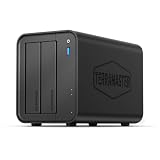
- Powerful Performance: Equipped with an Intel x86 quad-core processor and 4GB RAM, the F2-425 network attached storage effortlessly handles 4K transcoding and multitasking. The 2.5GbE port ensures ultra-fast file transfers and supports multi-user concurrent access
- Home Multimedia Hub: The F2-425 media server supports hardware-level 4K H.265 decoding, compatible with Plex, Emby, and Jellyfin for smooth HD video playback, with DLNA for seamless multi-device streaming. The Photos app features AI smart album and efficiently organizes millions of photos
- TNAS Mobile Full Control: Initialize setup for your F2-425 NAS storage via the TNAS Mobile app without a PC. The mobile app supports automatic photo and video backups, plus real-time local/remote synchronization, all managed through a single client
- Ultra-Quiet & User-Friendly: The F2-425 NAS server operates at just 19dB(A), suitable for quiet environments like bedrooms. Its tool-free Push-Lock design HDD trays enable to install HDDs in 10 seconds
- Massive Storage & Security: The F2-425 2-bay NAS supports up to 60TB storage (2 x 30TB for each bay), 50+ independent user accounts, and flexible TRAID arrays, saving 30% more storage space than traditional RAID while ensuring data redundancy. SPC security module and CloudSync (supporting Google Drive, OneDrive, Dropbox) guarantee worry-free data protection. Additionally, TerraSync enables two-way sync between the F2-425 and PCs/Macs
Plan for bandwidth and transcoding
A remote stream uploads from the VPS to the viewer. If the source bitrate is higher than the per-stream bitrate cap selected by Plex or the client, Plex may transcode to fit the connection. Four viewers at 8 Mbps each consume roughly 32 Mbps while they are all streaming, before protocol overhead and any other server traffic; the corresponding monthly transfer depends on how many hours they watch. Compare that usage with the provider’s monthly outbound allowance and overage price.
In a remote client, choose a quality setting that the viewer’s connection can sustain. In Plex Dashboard, inspect each session:
- Direct Play: the client accepts the original video, audio and container. This uses the least CPU.
- Direct Stream: Plex changes the container or stream layout without a full video re-encode. CPU use is usually modest.
- Transcode: Plex decodes and re-encodes video or audio, consuming CPU and often creating temporary files.
Subtitles can unexpectedly cause a video transcode when they must be burned into the picture. Client codec support, audio compatibility, HDR tone mapping and the selected bitrate all affect the result. Test with the actual television, phone or browser that remote viewers will use rather than relying on the file’s nominal resolution.
Best Value

- [Quad-Core Processor for Daily Tasks] Powered by Realtek RTD1619B quad-core 1.7GHz CPU, ensuring stable performance for file storage, backup, and personal cloud usage.
- [Fast 2.5GbE Network Upgrade] Equipped with 2.5-Gigabit Ethernet, delivering faster transfer speeds than traditional Gigabit NAS for home data management.
- [1GB DDR4 Efficient Memory] Optimized 1GB DDR4 memory ensures stable system performance for basic multitasking and background services.
- [Personal Cloud Backup Solution] Create your own private cloud to store, access, and manage files securely from anywhere with full data ownership.
- [Tool-Free Installation for Fast & Easy Setup] Designed for user convenience with tool-free drive installation, allowing quick HDD/SSD setup without screws—perfect for beginners and IT professionals.
Hardware acceleration: useful but not automatic
Hardware transcoding can increase throughput and the number of concurrent streams, but Plex says it can alter quality or compatibility and requires an active Plex Pass for the server owner. The VPS must expose compatible hardware to the guest. A provider advertising a modern physical CPU does not necessarily give your virtual machine access to Intel Quick Sync or an NVIDIA device.
Recommended Free Tools
For Docker, the official Plex container documentation covers Intel Quick Sync and NVIDIA driver prerequisites. You must install the host driver or runtime, map the device into the container and verify that Plex detects it. If the provider cannot document usable hardware access, size the VPS for CPU transcoding and treat any hardware claim as unconfirmed until Dashboard shows hardware acceleration in use.
Test the finished server
- Play a file that the intended client can Direct Play while you are on a local or high-bandwidth connection. Confirm that Dashboard reports Direct Play.
- Repeat from an external network. Confirm that the stream is reaching the VPS and note the actual upload rate.
- Force a lower remote bitrate than the source and observe whether Plex switches to transcoding.
- Start the number of simultaneous sessions you expect. Watch CPU, memory, disk activity, temperature or throttling indicators supplied by the VPS, and outbound transfer.
- Stop the sessions and verify that temporary transcode data is removed or capped so it cannot fill the disk.
- Reboot the VPS. Confirm that storage mounts, the Plex service or container, libraries and Remote Access all return without manual intervention.
Keep a short record of which clients Direct Play each major file type. That list is more useful for capacity planning than a processor’s advertised core count alone.
Troubleshoot the common failures
| Symptom | Likely cause | Fix |
|---|---|---|
| Remote Access says the server is not reachable | TCP 32400 is blocked, Plex is not listening, or the VPS has no public reachability. | Check the service, provider firewall, guest firewall and public address separately. Test from another network. |
| Library folders appear empty | The volume did not mount after reboot, or Plex lacks permission to read it. | Verify the mount by its stable identifier, inspect ownership and permissions, and rescan only after the path is correct. |
| Playback buffers while CPU is low | Outbound transfer is capped, the route to the viewer is poor, or the client requested a bitrate above the available connection. | Check VPS egress usage and the session bitrate, then lower the remote quality or move to a plan with more transfer. |
| Playback buffers while CPU is pinned | The stream is transcoding beyond the VPS’s sustained capacity. | Use a compatible client and Direct Play file, reduce the requested bitrate, add CPU capacity, or use verified hardware acceleration. |
| Hardware transcoding never appears | The VPS does not expose an iGPU/GPU, drivers are missing, or the container lacks the device mapping. | Confirm hardware availability with the provider, install the required runtime, map the device correctly, and check Plex Pass status. |
| Disk fills during a long session | The transcode directory is on a small volume or temporary files are accumulating. | Move transcodes to a larger local SSD, monitor free space and remove stale temporary data only when Plex is stopped. |
| Server works locally but remote playback is restricted | The viewer or server-admin account does not meet the post-April-29-2025 remote-playback requirement. | Check whether the relevant account has Plex Pass or Remote Watch Pass, and keep Remote Access enabled. |
When a VPS is the right choice
- Choose a VPS when you need an always-on server, have a manageable library, can pay for persistent storage and egress, and prefer not to expose a home connection.
- Choose local hardware when most playback is local, you already own storage, or you need predictable access to an integrated GPU for heavy transcoding.
- Choose a VPS with explicitly documented media hardware only when several remote users require transcoding and the provider supports the required drivers and device access.
- Avoid committing to a long-term plan until you have verified the provider’s port policy, personal-media policy, public address, transfer allowance and recovery options.
Final setup checklist
- Supported Ubuntu or Debian image, patched and administered without routine root login.
- Persistent SSD storage for Plex configuration, database, metadata and transcodes.
- Media volume mounted at a stable path with permissions Plex can read.
- Provider and guest firewalls allowing only required services, including TCP 32400.
- Remote Access enabled at Settings > Server > Remote Access and tested externally.
- CPU sized around Plex’s guidance of 2,000 PassMark per 1080p transcode, with margin for your codecs and subtitles.
- Hardware acceleration treated as optional until the VPS exposes compatible Intel Quick Sync or NVIDIA hardware and Plex confirms it is active.
- Outbound transfer compared with real bitrate and viewing hours.
- Independent backups of the Plex database and configuration, not only the media files.
A VPS can be a dependable Plex home when these constraints are verified up front. The server software is straightforward; the difficult parts are provider reachability, sustained transcoding capacity, storage durability, licensing for remote viewers and the recurring cost of outbound data.
Quick Recap
Product prices and availability are accurate as of the date/time indicated and are subject to change. Any price and availability information displayed on Amazon at the time of purchase will apply.




