
The reliable answer is not a single certificate or visual clue. To verify a high-end video-game collectible, build two independent lines of evidence: a documented ownership history (provenance) and a category-appropriate examination of the physical item. Confirm every report with its issuer, match paperwork to the exact object, investigate gaps, and obtain a written opinion from a qualified specialist before committing significant money.
This approach applies to rare cartridges and discs, limited-edition consoles, development hardware, promotional items, game artwork, signed memorabilia and related collectibles. The tests differ by object; a method that helps evaluate a signed photograph or a gemstone report cannot authenticate every game, console or accessory.
As an Amazon Associate I earn from qualifying purchases.
What authenticity and provenance each prove
Authenticity asks whether the object is what it is represented to be: for example, an original release rather than a reproduction, a genuine factory variant rather than a modern alteration, or a real signature rather than a printed facsimile. Provenance is the documented history of ownership and transfers. Christie’s lists receipts, auction and exhibition catalogues, museum records, catalogues raisonnés, archives, correspondence and expert certificates as possible provenance evidence.
The Tool Desk
Outbyte PC Repair FREERepair Windows errors before they cause bigger problemsFix Now →Outbyte Driver Updater FREEScan for outdated or missing drivers - takes under a minuteDriver Scan →The two questions overlap but are not interchangeable. A convincing ownership story does not prove that a cartridge shell, label or signed insert is genuine. Conversely, an apparently genuine object with no credible history may still carry significant uncertainty. Use both lines of evidence and record what each one actually establishes.
#1 Best Overall

- Officially licensed
- From the hit novels and video games
- A brand new sculpt of Geralt
- Features him ready for battle in his Grandmaster Ursine armor
- Figure stands 9.5" tall
Why a certificate is not a complete answer
A certificate can document an opinion, a grading result, a material analysis or an entry in an issuer’s database. It does not automatically prove that the certificate belongs to the item in front of you, that every component is original, or that the issuer guarantees future scholarly agreement. Christie’s describes authentication as potentially combining provenance research, specialist visual examination and scientific analysis. Responsible Art Market likewise presents connoisseurship, art-historical research and technical analysis as complementary approaches.
Why listings and condition reports need careful reading
Sotheby’s buyer guidance states that statements about authorship, attribution, origin, date, age, provenance and condition are opinions rather than statements of fact. Christie’s notes that an attribution can change as scholarship develops. Read the exact wording in a listing, catalogue, certificate and sale terms; do not convert “attributed to,” “in the style of,” “period,” “after,” “signed,” or a condition description into a broader guarantee than the document gives.
Step 1: Identify exactly what is being offered
Before asking whether an item is genuine, define the item precisely. “Rare game” or “prototype console” is not a sufficient identity for a high-value transaction. Create a written description and photograph the object before it changes hands.
| Identity field | What to record |
|---|---|
| Maker and attribution | Publisher, developer, artist, designer, manufacturer or person to whom the item is attributed; distinguish a confirmed maker from a seller’s attribution. |
| Category and claimed release | Cartridge, disc, console, controller, development kit, poster, packaging, artwork, signed item or another category; note the claimed region, edition, platform and release period. |
| Physical identifiers | Serial, lot, edition, inventory, barcode, catalog or certification number; record every number exactly as printed or engraved. |
| Construction and contents | Shell, board, chips, screws, labels, seals, manuals, inserts, cables, controllers, cases and any replaced, restored or reproduction components. |
| Measurements | Dimensions, weight where relevant, materials, color, markings, inscriptions and packaging configuration. |
| Condition | Cracks, fading, corrosion, tears, cleaning, reprints, replaced parts, opened seals, repairs and alterations. Photograph defects rather than relying on adjectives such as “mint.” |
Take overall photographs and close-ups of front, back, edges, ports, labels, signatures, boards, serials, fasteners, seams and packaging. For artwork or signed material, Responsible Art Market recommends high-resolution images of the front, back, inscriptions, details and signatures for an initial review, while emphasizing that an in-person examination is needed to confirm authenticity. The same principle is useful for game collectibles: photographs can screen a candidate, but they cannot replace inspection when the stakes are high.
Step 2: Build and test the provenance chain
Ask the seller for a chronological chain, not a single sentence such as “from an original collection.” For each ownership or transfer event, request the owner or institution, approximate date, location, method of transfer and supporting document. Keep a separate timeline so an attractive narrative does not hide an unexplained period.
Documents that can corroborate a game collectible’s history
- Original receipts, invoices, dealer records and private-sale agreements.
- Auction catalogues, lot numbers, realized-price records and post-sale invoices.
- Exhibition, museum, archive or publisher records where the item was displayed or held.
- Inventory numbers, collection ledgers, correspondence, photographs and dated shipping records.
- Earlier expert reports, grading records or certificates, together with the item images used at the time.
- Published references or a relevant catalogue raisonné when the object is an artwork or a documented design.
Compare the story across documents. Names, dates, dimensions, serials, labels, edition descriptions and photographs should describe the same physical object. A receipt for a game title is not proof that the current label, board or signature is the one originally sold; the paperwork must connect to identifying characteristics that survive today.
Rank #2

- GAMERVERSE FIGURE: Marvel's Juggernaut figure is inspired by his appearance in classic Marvel video games
- GAMING-INSPIRED ACCESSORIES: Hasbro Marvel Legends action figure comes with 3 accessories, including alternate hands and power FX
- 8.9-INCH-TALL ACTION FIGURE: Designed at the Marvel 6 inch action figure scale, this deluxe figure stands at 8.9 inches tall (22.6 cm) with premium design and deco
- DISPLAY-WORTHY ARTICULATION: Collectible action figure features over 20 points of articulation with fully poseable heads, arms, and legs
- RETRO-INSPIRED WINDOW BOX: Display this Marvel Legends figure on your shelf with collectible packaging featuring classic gaming -inspired artwork
How to handle a gap
Complete, unbroken records are uncommon. A missing year or change of ownership is a question to investigate, not by itself proof of forgery. Ask whether an archive, estate, dealer, auction house or family record could explain the period. Seek independent evidence such as a dated photograph, catalogue entry, correspondence or matching inventory mark. If the gap remains, state it plainly in your risk assessment and ask the specialist whether it changes the conclusion.
Step 3: Verify every certificate or report at its source
Use the issuing organization’s own verification channel whenever one exists. Do not rely on a seller’s screenshot, a copied number or a search result that is not controlled by the issuer. Compare the record with the object in hand, including descriptions, images, measurements, serials and distinctive marks.
| Issuer example | What its public check addresses | What it does not establish by itself |
|---|---|---|
| GIA | Report Check compares information printed on a GIA report with the organization’s database. | It does not authenticate an unrelated game, console or other certificate, and a matching number does not prove that the report belongs to the object you received. |
| PSA | Certified autographs can be checked through PSA’s public verification webpage or mobile application. | A valid record does not prove that a different signed item was substituted, that unsigned components are original, or that PSA evaluated every part of a mixed lot. |
| BADA | Its database allows the public to check whether a BADA Provenance certificate is genuine. | The check applies to BADA’s own certificates; it is not a universal authenticity service for video-game collectibles. |
These checks verify an issuer’s record, not every claim a seller makes. Inspect the certificate’s name, number, date, item description, photographs, dimensions and stated scope. If the certificate describes only an autograph, do not present it as certification of the paper, frame, cartridge or console. If a report lacks an image or sufficiently specific description, ask the issuer whether it can be linked unambiguously to the item.
Step 4: Select an examination that fits the object
Responsible Art Market says the examination and analytical techniques should be chosen for the question, the material and the available expertise. Start by stating the question: “Is this an original first-party cartridge with its original board and label?” is more useful than “Is this rare game real?” The specialist can then select appropriate comparisons and tests.
Cartridges, discs and game packaging
Ask a specialist familiar with the relevant platform, region and production period to compare the object with securely documented examples. The review may include construction, print quality, typography, plastics, labels, board layout, chip markings, fasteners, seals, manuals and packaging. If opening the item is necessary, agree in writing who will do it, how photographs will be taken, whether seals or screws may be disturbed and how the parts will be returned.
Do not treat a clean label, convincing shrink-wrap or a working game as conclusive. Reproductions can function correctly, and original parts can be assembled into a misleading combination. The report should distinguish the authenticity of the main item from the authenticity of individual components and any restoration.
Rank #3

- IDEAL COLLECTIBLE SIZE - At approximately 3.75 inches (9.5 cm) tall, this vinyl figurine complements other collectable merchandise and fits perfectly in your display case or on your desk.
- PREMIUM VINYL MATERIAL - Made from durable vinyl, this collectible is built to last and withstand daily wear, ensuring long-lasting enjoyment for fans and collectors alike.
- GIFT IDEA FOR BORDERLANDS 4 FANS - Ideal for holidays, birthdays, or special occasions and as a present this figurine is a must-have addition to any Borderlands 4 merchandise collection
- EXPAND YOUR COLLECTION - Add this unique Claptrap vinyl display piece to your growing assortment of Funko Pop! figures, and seek out other rare and exclusive collectible items for a complete set
- LEADING POP CULTURE BRAND - Trust in the expertise of Funko, the premier creator of pop culture merchandise that includes vinyl figures, action toys, plush, apparel, board games, and more.
Development hardware and prototypes
Prototype and development claims require unusually specific documentation because configurations can vary. Record board revisions, firmware or software identifiers, labels, serials, casing, connectors, test markings and any accompanying records. Ask the examiner what securely attributed comparison units or archival references were used and which features remain unverified. A specialist should separate “consistent with a development unit” from a definitive attribution when the evidence cannot support more.
Signed games, manuals and promotional material
For an autograph, PSA describes a process that can include ink and structure analysis, examination of the object, comparisons and possible use of a video spectral comparator. That process is specific to autograph evaluation; it is not a universal method for authenticating a cartridge, console or poster. Ask whether the signature was inspected in person, what comparison examples were used and whether the opinion covers the underlying item.
Artwork and design material
For original game artwork, the assessment may combine comparison with securely attributed works, signature and style study, technique, provenance and scholarship with targeted imaging or scientific analysis. Responsible Art Market lists ultraviolet, infrared and X-ray examination as examples, stressing that the appropriate method is selected case by case. Christie’s describes authentication assessment as considering provenance, visual inspection, scientific analysis and expert opinion. Use only methods justified by the material; more testing is not automatically better.
Outdated Drivers Are Slowing You Down
One free scan finds every outdated or missing driver and matches the right update for your exact hardware.Free scan · exact hardware matchWindows Errors? Fix Them Before They Spread
Repair common Windows errors and clear accumulated junk for a smoother, more stable PC - no reinstall needed.Free scan · no reinstallWatches, jewelry and mixed lots
If a collectible includes a watch or jewelry component, Sotheby’s advises prospective buyers to arrange inspection by a qualified watchmaker or contact its watch experts. A condition report remains an opinion, and individual component authenticity may not be guaranteed. For gemstones, use a qualified gemological laboratory and verify the report with that laboratory. Do not let a specialist’s opinion about one component stand in for an examination of the entire lot.
Step 5: Demand a written opinion with a defined scope
Verbal reassurance is difficult to preserve, compare or challenge. Request a dated, signed document that identifies the object and explains the reasoning. Responsible Art Market recommends that an expert’s written document describe the work, identify the analysis and reasoning, and state when a definitive conclusion cannot be reached.
Questions the report should answer
- Was the physical item examined, or were only photographs and documents reviewed?
- Which parts were examined: cartridge, board, label, packaging, signature, console, accessories or all of them?
- Which references, databases, archival records or comparison objects were used?
- What tests or imaging were performed, by whom and on what date?
- What conclusion applies to each component, and what remains uncertain?
- Were assumptions made about replacement parts, restoration, alterations, edition, region or ownership?
- Does the opinion identify the item with photographs, serials, dimensions or other durable markers?
A responsible conclusion may be “authentic,” “not authentic,” “consistent with,” “attributed to,” or “unable to determine.” The last two are not interchangeable with a guarantee. Ask the expert to explain what additional evidence could change the conclusion and whether the document may be shared with a buyer, insurer or auction house.
Rank #4

- This collectible Doom Slayer duck is part of the TUBBZ range, where iconic characters are turned into fun display figures for fans of Doom and pop culture merchandise.
- Packaged in an eco-friendly cardboard box featuring the Doom logo, designed for collectors who want to keep their figures display-ready in the packaging.
- Part of the official TUBBZ collection featuring characters from movies, video games, TV shows, anime, and music, all reimagined as cosplay rubber ducks.
- Stands approximately 9 cm (3.54 inches) tall outside of packaging, making it perfect for desks, shelves, and car dashboards.
- A great addition to any fan’s collection or Jeep ducking adventure, these unique ducks make memorable Christmas gifts for all ages collectors and pop culture lovers.
How to compare two expensive candidates
When several examples appear available, compare them on the same axes rather than choosing the one with the most impressive story or highest grade.
Do these 3 things before closing this tab:
1Scan for outdated or missing drivers - takes under a minute2Clear out junk files and repair common Windows errors3Fix the driver behind crashes, sound loss and screen glitches| Comparison axis | Questions to ask |
|---|---|
| Documentary provenance | How many ownership events are documented? Are dates, locations, names and identifying details consistent? |
| Independent corroboration | Can the seller’s account be checked against auction, archive, exhibition, dealer or published records? |
| Issuer verification | Can each certificate or report be checked with its issuer, and does the issuer’s record match this exact object? |
| Examination quality | Was the item inspected in person by a category specialist? Are methods and comparison references stated? |
| Component integrity | Are labels, boards, shells, seals, manuals, signatures and accessories original, replaced, restored or unknown? |
| Condition and alterations | Are repairs, cleaning, fading, corrosion, opened seals or reproduction parts clearly disclosed? |
| Terms and remedy | What exactly is guaranteed? What is the return period, evidence requirement and process if an issuer or expert later disagrees? |
A candidate with a lower grade but a documented chain and transparent component history may be easier to evaluate than a visually perfect example with an unexplained gap. That is a risk comparison, not a promise about future value.
Red flags that require a pause
- The seller refuses clear photographs, an in-person inspection or a written description of components.
- A certificate number checks out, but the issuer’s record describes different dimensions, images, serials or an entirely different object.
- The provenance begins with an unnamed “private collection” and offers no dates, documents or corroboration.
- The listing uses unconditional language while the sale terms describe attribution or condition as opinion.
- Packaging, labels, seals or signatures look new, but no specialist explains how they compare with period examples.
- The report covers an autograph or gemstone only, while the seller presents it as authentication of the complete game or console.
- The seller pressures you to pay before the specialist can inspect the item or before a return arrangement is written.
- A proposed test could damage the object, yet no chain of custody, photography plan or restoration disclosure is provided.
None of these signs alone proves fraud. They indicate that the evidence is incomplete or the transaction risk is higher. Stop, document the issue and obtain independent advice rather than trying to resolve uncertainty with a stronger magnifier or a second visual glance.
Independent reader supportYour contribution helps us test, update, and keep practical guides available for everyone.A practical buying workflow
- Define the object. Record category, claimed edition and region, identifiers, dimensions, components, condition and alterations. Photograph every identifying detail.
- Request the provenance file. Ask for the ownership timeline and copies of receipts, catalogues, archives, correspondence, certificates and earlier reports.
- Cross-check the timeline. Compare names, dates, descriptions, serials, dimensions and images; list every unexplained period.
- Verify issuers directly. Use the relevant public database or contact channel. Match the issuer’s record to the physical object, not merely to a number.
- Choose a category specialist. Select an auction-house specialist, qualified appraiser, category-specific authenticator, gemological laboratory or provenance researcher whose expertise matches the object and the question.
- Arrange an appropriate examination. Clarify whether the item will be inspected in person, which components will be opened or tested, and how evidence will be preserved.
- Obtain a scoped written opinion. Require the methods, references, conclusion, assumptions, limitations, date, signature and item-identifying photographs or numbers.
- Read the transaction terms. Confirm what is guaranteed, who pays for examination, how returns work and what evidence is required if authenticity is disputed.
- Decide using documented risk. If major gaps or component uncertainties remain, negotiate a price and remedy that reflect them—or walk away.
Preserve the evidence after purchase
Keep original receipts, invoices, issuer correspondence, reports, auction and exhibition records, high-resolution photographs and the expert’s written opinion together with the object’s identifying details. Christie’s identifies these records as useful provenance evidence, and Responsible Art Market recommends that experts preserve their research and supporting evidence.
Store digital files in more than one location and retain original email headers or downloaded reports where possible. Photograph the item again when it arrives, including packaging and seals, and record who handled it. If a component is removed for examination or repair, document the date, person, purpose and outcome. A clear chain of custody protects both authenticity analysis and future resale.
What tools can—and cannot—do
A 10× jeweler’s loupe can help you inspect or photograph visible markings, print edges, scratches and surface details. It cannot establish authenticity, ownership history or material composition. The sources describe expert visual examination, large-field stereomicroscopy and other imaging techniques for appropriate cases; those methods do not make a handheld loupe a sufficient authentication system.
Best Value
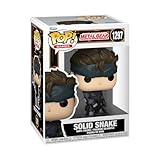
- IDEAL COLLECTIBLE SIZE - At approximately 3.75 inches (9.5 cm) tall, this vinyl mini figurine complements other collectable merchandise and fits perfectly in your display case or on your desk.
- PREMIUM VINYL MATERIAL - Made from high-quality, durable vinyl, this collectible is built to last and withstand daily wear, ensuring long-lasting enjoyment for fans and collectors alike.
- PERFECT GIFT FOR METAL GEAR SOLID FANS - Ideal for holidays, birthdays, or special occasions and as a present this figurine is a must-have addition to any Metal Gear Solid merchandise collection
- EXPAND YOUR COLLECTION - Add this unique Solid Snake vinyl display piece to your growing assortment of Funko Pop! figures, and seek out other rare and exclusive collectible items for a complete set
- LEADING POP CULTURE BRAND - Trust in the expertise of Funko, the premier creator of pop culture merchandise that includes vinyl figures, action toys, plush, apparel, board games, and more.
Use consumer tools to document questions for a specialist, not to close the case yourself. Avoid cleaning, polishing, removing labels, opening sealed hardware or applying chemicals before an expert advises you. An apparently minor intervention can erase evidence or reduce the object’s value.
Fees, availability and timing
There is no universal fee, turnaround time or coverage standard for authentication, provenance research or laboratory work. Availability, pricing, scope and any partner arrangements must be confirmed directly with the provider. Before sending an item, ask for the service scope, inspection location, required images, handling and insurance responsibilities, destructive or invasive-test policy, report format, expected timing and procedure for follow-up questions.
For a high-value purchase, treat the examination cost as part of due diligence. A lower-cost service that cannot inspect the relevant components may provide less useful evidence than a more targeted specialist assessment. Conversely, do not authorize expensive testing that does not answer a defined authenticity question.
Recommended Free Tools
How to state the final risk clearly
After collecting the evidence, write a one-page decision record. Identify what is established, what is only reported by the seller, what an issuer verified, what the specialist examined, which gaps remain and what remedy exists if the conclusion changes. Separate the authenticity of the principal object from the authenticity of parts, signatures, packaging and accessories.
The strongest conclusion is not always “proven genuine.” It may be that the item is consistent with the claimed issue but has an unfilled provenance gap, or that the main object is genuine while a replaced component is disclosed. A precise, limited conclusion is more useful than a confident sentence that silently covers matters no one examined.
Key source positions to keep in mind
“An authentication assessment considers provenance, visual inspection, scientific analysis and expert opinion.” — Christie’s, “How to authenticate a painting.”
“Any statement as to authorship, attribution, origin, date, age, provenance and condition is a statement of opinion and is not to be taken as a statement of fact.” — Sotheby’s, “Guide for Buyers | Glossary & Important Notices.”
Free tools Windows power users keep installed
One-click scans. No signup required.
Special offer. See more information about Outbyte and uninstall instructions. Please review EULA and Privacy policy.
“In order to confirm a work’s authenticity, the Expert should examine the work in person.” — Responsible Art Market, “Guidelines for Experts Authenticating Works of Fine Art.”
These statements describe the limits and responsibilities of the cited sources; the terms attached to a particular collectible, sale or jurisdiction still control your transaction.
Quick Recap
Product prices and availability are accurate as of the date/time indicated and are subject to change. Any price and availability information displayed on Amazon at the time of purchase will apply.

