
The Tool Desk
Outbyte Driver Updater FREEFix the driver behind crashes, sound loss and screen glitchesFind Drivers →Outbyte PC Repair FREERepair Windows errors before they cause bigger problemsFix Now →If your Microsoft Surface is stuck in portrait or landscape, first detach the Type Cover or other keyboard, unplug docks and external displays, and rotate the tablet by hand. Windows 11 changes tablet behavior automatically when it detects a keyboard being detached or attached, so a keyboard that remains detected can stop the expected tablet experience.
Then check Settings > System > Display for Rotation lock and the display-orientation menu. If Rotation lock is missing or disabled, install Windows, Surface, and optional driver updates, restart the device, and run the Surface app diagnostics. A persistent failure after those steps points to a sensor or hardware problem that needs Microsoft or authorized service.
As an Amazon Associate I earn from qualifying purchases.
Start with the state of the Surface
Rotation problems often come from the device being in the wrong form factor state rather than from a broken screen. Windows 11 does not provide a manual tablet-mode switch. Microsoft states that tablet mode is turned on automatically when Windows detects that a wired or wireless/Bluetooth keyboard has been detached.
Use this quick isolation test before changing drivers or resetting Windows:
#1 Best Overall

- [This is a Copilot+ PC] — The fastest, most intelligent Windows PC ever, with built-in AI tools that help you write, summarize, and multitask — all while keeping your data and privacy secure.
- [The Power of a Laptop, the Flexibility of a Tablet] — Surface Pro 12” is a 2-in-1 device that adapts to you. Use it as a tablet for on-the-go tasks, prop it up with the built-in kickstand, or attach the Surface Pro Keyboard (sold separately) to turn it into a full laptop.
- [Incredibly Fast and Intelligent] — Powered by the latest Snapdragon X Plus processor and an AI engine that delivers up to 45 trillion operations per second — for smooth, responsive, and smarter performance.
- [All Day Battery Life] — Up to 16 hours of battery life[1] means you can work, stream, and create wherever the day takes you — without reaching for a charger.
- [Brilliant 12” Touchscreen Display] — The PixelSense display delivers vibrant color and crisp detail in a sleek design — perfect for work, entertainment, or both.
- Save your work and detach the Surface Pro or Surface Go Type Cover, or disconnect any other keyboard.
- Unplug the Surface from a dock and remove USB-C dongles, display adapters, and other accessories.
- Disconnect external monitors so the built-in display is the only screen being tested.
- Hold the Surface as a tablet and rotate it from portrait to landscape and back. Wait several seconds after each movement.
If rotation works with the keyboard and dock removed, reconnect accessories one at a time. The item that makes the symptom return is the likely state or display conflict. If the internal screen never responds, continue with the software and sensor checks below.
Check Rotation lock and display orientation
Rotation lock prevents the screen from following the device’s physical orientation. On a Surface used as a tablet, it should normally be off when you want automatic rotation.
- Open Settings.
- Select System, then Display.
- Find Rotation lock. Turn it off if it is enabled.
- Use Display orientation to select Landscape, Portrait, Landscape (flipped), or Portrait (flipped), depending on the result you need.
- Rotate the detached Surface again and check whether Windows now follows the movement.
On some form factors, Rotation lock can be unavailable or greyed out while a keyboard is attached or while Windows treats the device as a conventional PC. That is why the detached-tablet test comes first. Do not install a third-party rotation utility as a first remedy; establish whether Windows can see the correct device state and sensor data.
Use the symptom to choose the next step
| What you see | Most useful next action |
|---|---|
| Rotation lock is visible and enabled | Turn it off, detach the keyboard, disconnect displays, and test physical rotation. |
| Rotation lock is visible but greyed out | Remove the keyboard and external-display hardware, then install Surface and Windows updates. |
| Rotation lock is missing | Check the device state, install optional Surface-named updates, restart, and run Surface diagnostics. |
| Rotation works only after a restart | Install current firmware and sensor drivers; a temporary recovery suggests a software or firmware state issue. |
| Rotation never works with only the internal display connected | Complete diagnostics. If the sensor still reports no orientation, escalate for service. |
Update Windows, Surface firmware, and sensor drivers
Out-of-date firmware or sensor drivers can remove or destabilize orientation data. Microsoft update histories include fixes for this class of problem. A Surface Pro 4 System Aggregator update addressed automatic rotation after hibernation, and Intel Serial IO updates improved auto-rotation reliability. These examples do not mean every Surface needs the same package; install updates that match your exact model and Windows installation.
Rank #2
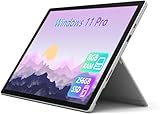
- Laptop Size: This renewed Microsoft Surface Pro 7+ Tablet, has a screen size of 12.3 " and touch display. The 2736 X 1824 Pixel anti-glare screen, mostly reduces fatigue when using it, allowing you to focus on work. With a light weight, this Microsoft Surface refurbished laptop is a great choice for your Business and entertainment.
- Processor: This Renewed Surface Pro 7 Plus Tablet is installed with Intel Core i5-1135 G7 (2.4GHz-4.2GHz, 4Cores, 8Threads, 8 MB Intel Smart Cache), meeting the fast and stable operation of most programs.
- Powerful Memory: This refurbished Tablet has installed 8GB of RAM running memory and 256GB of Solid State Drive for you, allowing you to run multiple software and browsers at the same time with confidence, the Microsoft Surface powerful hard drive gives you enough space to download files!
- Multiple Ports:USB 3.0, microSD card reader(Optional), Headphone jact, Mini DisplayPort, Cover port, Charging port, this Microsoft SurfaceTablet allows you to fully enjoy the pleasure brought by technology.
- System: Windows 11 Pro is recognized as the most stable operating system, which is mostly for both commercial and professional users. Windows 11 Pro provides more security and management features for this used Surface Pro 7 (+) Tablet, as well as supporting virtualization and remote access. Meanwhile, it supports multiple languages, including English, French, Spanish, German, etc.
Check from the Surface app
- Open the Surface app.
- Choose Help & support.
- Review the update status and install every recommended Surface update.
- Restart when the app or Windows requests it, even if the screen appears to work before restarting.
If the Surface app is not installed, Microsoft says it can be downloaded from the Microsoft Store. The app is useful because it identifies Surface-specific support and diagnostic options in one place.
Check Windows Update and optional updates
- Open Settings > Windows Update.
- Select Check for updates and install available updates.
- Open Advanced options > Optional updates.
- Install relevant driver updates, including entries that name Surface, Intel Serial IO, or another sensor-related component.
- Restart and retest with the keyboard, dock, and external monitors still disconnected.
For models that do not receive the needed package through Windows Update, Microsoft also publishes model-specific manual driver and firmware packages. Select the package for the exact Surface model and Windows version; do not substitute a package for a different generation.
A current model-specific example
Microsoft listed a September 29, 2026 release for Surface Pro 12th Edition that fixed sensor issues affecting access to tilt, direction, and orientation data. If you use that model, verify that the release is installed before treating missing rotation controls as a hardware failure. The release date applies to that model and should not be generalized to every Surface.
What’s actually slowing this PC down?
Pick the symptom - the matching free tool is one click away.
Restart normally, then force a clean shutdown if Windows is stuck
A normal restart clears a temporary tablet-state or sensor-driver failure. Use Start > Power > Restart, wait for Windows to return to the sign-in screen, detach the keyboard if necessary, and test rotation again.
Rank #3

- A PREMIUM PERFORMANCE 2-IN-1 LAPTOP & TABLET — Ready for work, school, and creativity. Built for busy days, big projects, and nonstop multitasking. Run video calls, school and work apps, 20+ browser tabs, and AI tools at the same time without slowing down.
- WITH AI BUILT IN — With a dedicated AI chip (Qualcomm Snapdragon X2 Plus), this Copilot+ PC[5] on Windows 11 helps you work smarter and faster. Prompt, create, and automate with ease — ready for even your most demanding tasks.
- A STUNNING 13" OLED TOUCHSCREEN — Sharp colors, real detail, and smooth 120Hz scrolling on the PixelSense touchscreen[1] with LCD display[2]. Tap, scroll, draw, or pinch to zoom — whichever feels right for streaming, sketching, or daily work.
- 15.5 HOURS OF BATTERY (LEAVE THE CHARGER) — Up to 15.5 hours of video playback[3] on a single charge. Work from a coffee shop, take it to class/work, or binge a season on a long flight — it'll keep up.
- THE PORTS YOU NEED — Two USB-C / USB4[4] ports for fast charging, big file transfers, or hooking up to three 4K monitors when you want a full desktop. Wi-Fi 7 keeps you online and fast wherever you are.
If Windows is frozen and will not restart normally, Microsoft instructs you to hold the power button until the Surface shuts down, restarts, and shows the Windows logo screen again—about 20 seconds—then release it. This is a forced shutdown, so unsaved work can be lost. Use it only when the normal restart path is unavailable.
- Disconnect the dock, external display, and accessories.
- Press and hold the Surface power button for about 20 seconds.
- Release it when the Windows logo appears during the restart.
- Allow Windows to load fully before reconnecting any peripheral.
- Test rotation with the Surface in tablet form.
When docks, adapters, and monitors are involved
A Surface can behave differently when Windows is managing more than one display or when a dock changes the device’s connection state. A dock, USB-C display adapter, dongle, or external monitor may not be the root cause, but it can create a display configuration in which the internal screen does not rotate as expected.
Use a controlled reconnection sequence:
- Shut down or restart with every dock, adapter, and monitor disconnected.
- Test the built-in Surface display by physically rotating the tablet.
- Reconnect the dock without adding the monitor, then test again.
- Reconnect the monitor and any remaining adapters one at a time.
- Record which connection changes the behavior and leave that item disconnected while you complete updates and diagnostics.
This test distinguishes an internal orientation-sensor problem from a multi-display or accessory-state conflict. It also prevents you from changing several variables at once.
If Rotation lock is still missing or greyed out
Missing controls are a useful symptom, not proof that the screen hardware has failed. Work through these branches in order:
Rank #4

- Intel Core i5-1035G4 3.70GHz processor, 128GB SSD Drive
- 8GB RAM, Wireless: 802.11a/b/g/n/ac Wi-Fi, Bluetooth 4.0
- Ports: Full-size USB 3.0; microSD card reader; Headphone jack; Mini DisplayPort; Cover port; Charging port, Camera: 5MP front-facing and 8MP rear-facing cameras with 1080p HD video recording
- Display: 12.3-inch PixelSense touchscreen display; 2736 x 1824 resolution, Stereo speakers with Dolby Audio-enhanced sound
- Operating System: Windows 10 Home, Intel Iris Plus Graphics
Keyboard still detected
Detach the Type Cover or other keyboard completely, close any hinge connection, and wait for Windows to recognize the change. Windows 11 tablet behavior is automatic; there is no supported manual toggle that forces tablet mode on.
External display still active
Disconnect the dock, dongle, adapter, and monitor. Confirm that Display settings shows the internal panel as the only active display, then check Rotation lock again.
Updates not installed
Use the Surface app, Windows Update, Optional updates, and the model-specific driver and firmware page. Restart after installation rather than relying on a pending update.
Do these 3 things before closing this tab:
1Clear out junk files and repair common Windows errors2Fix the driver behind crashes, sound loss and screen glitches3Repair Windows errors before they cause bigger problemsControl remains unavailable after a clean restart
Open the Surface app’s diagnostic and support flow. The outcome of that test determines whether the remaining problem is a Windows configuration issue or a sensor that is not reporting orientation data.
Best Value

- Microsoft Surface Pro 7+ 12.3" Tablet 2-in-1 Laptop, Amazon Renewed, Core i3 with 128GB SSD and 8GB RAM
- More ways to connect, with both USB-C and USB-A ports for connecting to displays, docking stations and more, as well as accessory charging, Platinum Silver Color
- Standout design that won’t weigh you down — ultra-slim and light Surface Pro 7+ starts at just 1.70 pounds. Aspect ratio: 3:2
- Intel Core i3-1114G5 (1.70-3.0Ghz) | 128GB SSD | 8GB RAM | Windows 11 Professional Installed
- Screen: 12.3” PixelSense Display | Resolution: 2736 x 1824 (267 PPI) | Faster than Surface Pro 6, with a 10th Gen Intel Core Processor – redefining what’s possible in a thin and light computer. Wireless : Wi-Fi 6: 802.11ax compatible. Bluetooth Wireless 5.0 technology
Run Surface diagnostics
Use the Surface app’s Help & support area to start its diagnostic and support flow. Follow the prompts with the Surface disconnected from external displays and with the keyboard detached unless the instructions say otherwise. Diagnostics are most useful after updates and a restart because they test the current software state rather than an already-pending update.
During the test, note three details:
- Whether Rotation lock appears in Display settings.
- Whether the screen changes when the device is physically rotated.
- Whether the diagnostic identifies a driver, firmware, or sensor issue.
Keep the model name and Windows version available if support asks for them. Those details determine which firmware package and service procedure apply.
When to contact Microsoft or an authorized service provider
Escalate when the internal display does not rotate after the keyboard and display-conflict test, all relevant updates, a clean restart, and Surface diagnostics. A sensor that still does not report orientation after those steps may require service. Contact Microsoft support or an authorized service provider rather than opening the Surface or replacing parts based only on the missing control.
Tell support exactly what you tested: keyboard attached or detached, dock and monitor connected or disconnected, Rotation lock visible or greyed out, updates installed, and whether a restart restored rotation temporarily. This separates a repeatable hardware symptom from a state that clears after reboot.
What not to do
- Do not assume a game or app is the cause before testing the Windows desktop with the keyboard and dock removed.
- Do not force tablet mode through unsupported registry edits or utilities; Windows 11 manages the state automatically.
- Do not install a driver intended for a different Surface generation.
- Do not keep changing orientation settings while an external monitor is connected; isolate the internal display first.
- Do not treat a one-time recovery after restarting as a permanent fix. Install the pending firmware and sensor updates and retest.
Practical decision path
For most users, the shortest reliable path is: detach the keyboard; disconnect the dock and every external display; check Settings > System > Display; install Surface and Windows updates, including optional Surface-named drivers; restart; and run Surface diagnostics. If rotation returns, reconnect peripherals individually. If it does not, and diagnostics cannot restore orientation data, arrange Microsoft or authorized service. Microsoft has not published a standalone prevalence or failure-rate statistic for this symptom, so the correct conclusion must come from these device-specific tests rather than from assuming that every non-rotating screen has the same cause.
Quick Recap
Product prices and availability are accurate as of the date/time indicated and are subject to change. Any price and availability information displayed on Amazon at the time of purchase will apply.

