What’s actually slowing this PC down?
Pick the symptom - the matching free tool is one click away.
Short answer: An RTX 5090 prebuilt is worth considering if you want uncompromised 4K gaming, demanding ray tracing or path tracing, high-refresh-rate 4K, VR, or GPU-heavy creator work. It is not automatically a good purchase: the case, cooling, power supply, CPU, memory, storage, warranty, and upgrade path determine whether the finished PC deserves its price.
This guide focuses on desktop systems in the U.S. market. Prices and availability are time-sensitive snapshots observed August 16–18, 2026, not permanent quotes.
| # | Preview | Product | Price | |
|---|---|---|---|---|
| 1 |
|
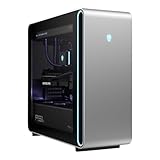
Dell Alienware Area-51 AAT2250 Gaming Desktop - Intel Core Ultra 9 285K, NVIDIA GeForce RTX 5090... | $9,199.00 | Buy on Amazon |
As an Amazon Associate I earn from qualifying purchases.
Quick verdict
Buy an RTX 5090 prebuilt when you can use its performance and value an assembled, tested system with one support channel. For most 1440p players, 1080p players, and conventional 60Hz setups, an RTX 5080- or RTX 5070 Ti-class PC is usually the more sensible choice.
- Best gaming configuration: RTX 5090, a modern gaming-focused CPU such as a Ryzen 7 X3D-class chip, 64GB of dual-channel memory, 2TB or 4TB SSD storage, a disclosed 1000W-or-larger ATX 3.x PSU, and a spacious mesh-airflow case.
- Best gaming-and-creation configuration: RTX 5090, Ryzen 9 or Core Ultra 9-class CPU, 64GB RAM, 4TB storage, and a quality 1200W-or-larger PSU if the complete system’s power requirements justify it.
- Best value test: a system around $5,000–$5,800 can be attractive only when it does not hide a generic PSU, weak cooler, low-end SSD, restricted case, or poor warranty.
- Best alternative: choose a lower-tier GPU and put the savings toward a better monitor, storage, UPS, or desk setup if you do not play demanding 4K ray-traced games.
What the RTX 5090 provides
NVIDIA’s RTX 5090 is based on its Blackwell architecture and has 32GB of GDDR7 memory, 21,760 CUDA cores, a 512-bit memory interface, fourth-generation ray-tracing cores, fifth-generation Tensor Cores, PCIe Gen 5, three ninth-generation NVENC encoders, and two sixth-generation NVDEC decoders. NVIDIA lists DLSS 4 and Reflex 2 support. It does not support NVIDIA SLI or NVLink. See the official RTX 5090 specifications.
#1 Best Overall
- Intel Core Ultra 9 285K 3.2GHz Processor
- NVIDIA GeForce RTX 5090 32GB GDDR7
- 64GB DDR5-6400 RAM
- 4TB Solid State Drive
- 2.5GbE LAN; 2x2 Intel Killer WiFi 7 BE1750+Bluetooth 5.4
| Specification | RTX 5090 |
|---|---|
| Architecture | NVIDIA Blackwell |
| CUDA cores | 21,760 |
| VRAM | 32GB GDDR7 |
| Memory interface | 512-bit |
| Ray-tracing cores | 4th generation |
| Tensor cores | 5th generation |
| Upscaling and AI features | DLSS 4, including Multi Frame Generation |
| Interface | PCIe Gen 5 |
| Media engines | 3× ninth-generation NVENC; 2× sixth-generation NVDEC |
| Multi-GPU technologies | No NVIDIA SLI or NVLink |
The intended use is demanding 4K gaming rather than simply displaying a game at 4K. A 5090 has the most headroom in modern titles using ultra settings, heavy ray tracing, path tracing, large texture packs, demanding mods, VR, or high refresh rates.
Native rendering versus generated frames
When comparing performance, separate four different results:
- Native rasterized performance: the GPU renders the image without ray tracing or upscaling.
- Native ray-traced performance: the GPU renders effects such as reflections, shadows, or global illumination directly.
- DLSS Super Resolution: the game renders internally at a lower resolution and reconstructs a higher-resolution image.
- Frame Generation or Multi Frame Generation: AI-generated frames are inserted between traditionally rendered frames.
Generated frames can make motion appear smoother, but they are not equivalent to additional natively rendered frames and do not eliminate the latency of the underlying game-rendered frames. Results depend on the game, starting frame rate, driver, settings, and display. NVIDIA describes DLSS 4.5 as adding Dynamic Multi Frame Generation and a second-generation transformer model, but support is workload- and game-dependent; treat DLSS as a feature advantage, not a universal performance multiplier.
Do these 3 things before closing this tab:
1Repair Windows errors before they cause bigger problems2Scan for outdated or missing drivers - takes under a minute3Clear out junk files and repair common Windows errorsWho should buy one?
A 5090 prebuilt makes the most sense for an enthusiast who has a suitable display and a workload that can expose the GPU’s capability:
- 4K ultra gaming with maximum settings.
- Heavy ray tracing or path tracing.
- High-refresh-rate 4K gaming.
- Large texture packs, demanding mods, and VR.
- GPU rendering, video effects, 3D work, CUDA applications, or AI tools that benefit from 32GB of VRAM.
- Buyers who would rather pay for assembly, testing, and support than build and troubleshoot a system themselves.
It is poor value for 1080p gaming, most 1440p gaming, older CPU-limited games, a conventional 60Hz display, or a budget that cannot comfortably accommodate roughly $5,000–$8,000 before tax, accessories, and upgrades. A 5090 can still be justified at 1440p for extremely high refresh rates or intensive ray tracing, but that is a specific use case rather than the default recommendation.
The ideal RTX 5090 prebuilt specification
- GPU: an exact RTX 5090 model with published length, height, thickness, power limit, and cooling design.
- CPU: a gaming-focused X3D processor for primarily gaming, or a higher-core Ryzen 9/Core Ultra 9-class processor for production work and heavy multitasking.
- Memory: 32GB minimum; 64GB preferred. Confirm that it uses two modules rather than one 32GB DIMM.
- Storage: 2TB minimum; 4TB is more practical for a large game library and creator projects. Identify the SSD model.
- PSU: a named, quality ATX 3.x unit rated at least 1000W, with a native 12V-2×6/PCIe Gen 5 cable where possible.
- Case: standard, spacious, mesh airflow with enough GPU and cable clearance.
- Motherboard: a standard socket and chipset with free M.2 slots, available DIMM capacity, useful USB-C, and current networking.
- Service: a clear warranty, return window, dead-on-arrival process, and repair-shipping policy.
How much should a good RTX 5090 prebuilt cost?
There is no single fair price. GPU availability, configuration, builder, warranty, storage, memory, case, and sales can move the total substantially. These U.S. price bands are a practical screening tool based on August 2026 observations:
| Price band | What to expect |
|---|---|
| $5,000–$5,800 | Potentially attractive if it includes a strong CPU, 32–64GB RAM, 2TB storage, a named 1000W-or-larger PSU, proper cooling, and a standard case. |
| $6,000–$7,000 | Common premium-prebuilt territory. The extra cost should buy better components, service, cooling, storage, memory, or construction. |
| Above $7,000 | Needs a clear reason such as 96GB RAM, 6TB storage, a premium chassis, workstation-oriented hardware, or unusually strong support. |
| Above $8,000 | Usually a luxury purchase unless the workload or service package is specialized. |
Observed examples included a CyberPowerPC Ryzen 9 9950X3D/RTX 5090 system with 32GB RAM and 2TB storage at about $6,205, and a 32GB/4TB Ryzen 9 9950X3D2 configuration at about $7,879; the listings showed an estimated August 24, 2026 ship date. Corsair listed a Vengeance a7500 AIR with Ryzen 9 9950X3D, 64GB RAM, and 4TB storage at $6,199.99, and a Vengeance i8300 with Core Ultra 9 285K, 64GB RAM, and 6TB storage at $7,499.99. ORIGIN PC ready-to-ship RTX 5090 systems began around $6,199. Check the CyberPowerPC listings, Corsair’s RTX 5090 systems, and ORIGIN PC’s gaming desktops for current prices. These are dated snapshots, not MSRP or guarantees.
Free tools Windows power users keep installed
One-click scans. No signup required.
Choosing the CPU
Primarily gaming
At 4K, the 5090 often becomes the limiting component, so paying for the most expensive CPU can produce little benefit in many games. A Ryzen 7 X3D-class processor can be the rational choice. A Ryzen 9 9900X3D, Ryzen 9 9950X3D, or Intel Core Ultra 9 285K may still be appropriate for high-refresh-rate gaming, simulation and strategy games, streaming, or heavy background work. Current vendor configurations include these processor classes and the Ryzen 7 9800X3D.
Gaming plus production
Choose a Ryzen 9 or Core Ultra 9-class CPU when you regularly render on the CPU, compile code, stream with CPU-side workloads, edit video, run heavy multitasking workloads, or use virtual machines. CPU choice affects minimum frame rates and responsiveness even when average 4K frame rates are GPU-limited.
Specialized professional work
Do not assume that a flagship gaming CPU is the best workstation processor. Check whether your software benefits more from CPU cores, large system memory, ECC memory, professional GPU certification, ISV support, or a workstation warranty.
PSU requirements: the component not to compromise
Use 1000W as the conservative minimum for a complete RTX 5090 desktop. NVIDIA’s web specification page lists an 850W minimum for the Founders Edition in certain configurations, but its current RTX 5090 quick-start guide specifies a 1000W minimum system PSU and either one 600W-or-greater PCIe Gen 5 cable or at least four PCIe 8-pin cables through the adapter. Board-partner cards and complete systems can require more.
The Tool Desk
Outbyte Driver Updater FREEScan for outdated or missing drivers - takes under a minuteDriver Scan →Outbyte PC Repair FREEClear out junk files and repair common Windows errorsFree Scan →- Consider 1200W–1500W for a high-end CPU, multiple drives, aggressive power limits, or future expansion.
- Prefer a native 12V-2×6/PCIe Gen 5 cable when the PSU provides one.
- If an adapter is used, confirm that the builder supplies the required number of separate PCIe cables.
- Demand the exact PSU manufacturer and model, efficiency rating, protections, and warranty.
- Do not accept “1000W power supply” as a complete specification.
- Check whether PSU failure requires returning the entire PC instead of replacing a standard part locally.
Case clearance, airflow, and cooling
NVIDIA’s Founders Edition preparation guidance calls for approximately 304mm of card length, 137mm of height, three-slot thickness, an additional 36mm of power-cable clearance, and three unused expansion slots for airflow. Partner cards can be larger. Verify the exact GPU model or dimensions rather than trusting the words “RTX 5090.”
- Confirm that the side panel closes without pressing against the power connector.
- Check whether a front radiator reduces the GPU’s intake space.
- Look for a deliberate front/bottom intake and rear/top exhaust path.
- Be cautious with narrow proprietary cases and glass-front cases with restricted intake.
- A vertical GPU mount should not place the card directly against glass.
- Identify the CPU cooler and radiator size, case-fan count, and fan-control method.
RGB, a large radiator, and marketing phrases such as “extreme cooling” do not prove thermal performance. Unless independent measurements exist for the exact model, treat temperature and noise claims as unverified. Sustained gaming and rendering are more revealing than a brief boot or benchmark run.
Memory and storage
32GB is the reasonable floor for an expensive gaming desktop; 64GB is preferable for a flagship system intended to last several years, run modded games, stream, create content, or use AI tools. Confirm speed, timings, motherboard support, and module count. A single 32GB DIMM can reduce memory bandwidth and leave fewer practical upgrade choices. Choose 96GB or 128GB only when a real workload needs it.
For storage, 2TB is the practical minimum above $5,000 and 4TB is more appropriate for a large game library or creator projects. Check the exact SSD model, interface, NAND type where disclosed, and remaining M.2 slots. A high sequential benchmark does not compensate for inadequate capacity or an unidentified low-end OEM drive. Corsair’s observed RTX 5090 configurations ranged from 4TB to 6TB in some systems.
Motherboard and upgradeability
Check the socket and chipset, number of M.2 slots, PCIe layout after the oversized GPU is installed, Wi-Fi generation, wired Ethernet speed, USB-C ports, DIMM capacity, and BIOS update support. Confirm whether the case accepts standard ATX or microATX parts and whether the PSU uses standard connectors.
Ask whether the BIOS is restricted and whether fan or RGB control depends on a proprietary controller. A system with an excellent GPU can be poor long-term value if its motherboard, case, or power supply prevents ordinary upgrades. Large OEM systems may offer integrated design and brand support in exchange for less component flexibility; evaluate that trade-off separately from performance.
How to compare vendors and listings
Evaluate the exact configuration, not the builder’s reputation or the GPU label. Boutique and configurable options from iBUYPOWER, CyberPowerPC, Corsair, and ORIGIN PC represent different pricing, customization, and support approaches. Inventory, exact parts, and shipping dates change quickly.
| Category | Weight |
|---|---|
| GPU model and cooling | 25% |
| CPU suitability | 15% |
| PSU quality and headroom | 15% |
| Case airflow and thermals | 15% |
| RAM capacity and configuration | 10% |
| SSD capacity and quality | 8% |
| Motherboard and upgradeability | 5% |
| Warranty, returns, and support | 7% |
Record the model, CPU, exact GPU, GPU dimensions, RAM modules and speed, SSD model and capacity, PSU model and wattage, cooler, case, price, shipping date, warranty, return window, and upgrade restrictions. Do not compare vendor FPS claims unless the resolution, settings, upscaling, and frame-generation mode are disclosed. Independent testing has found different results among RTX 5090 prebuilts: Tom’s Guide reported Cyberpunk 2077 4K results of 56 fps for Alienware Area-51, 57 fps for Corsair Vengeance i8300, and 53 fps for Maingear MG-1 in its displayed test data. That variation shows why the completed PC matters.
Quick wins for a faster PC:
Scan for outdated or missing drivers - takes under a minuteDriver Scan →Repair Windows errors before they cause bigger problemsFix Now →Warranty and support questions
Before buying, record the standard warranty length and whether it covers parts and labor. Also check depot versus onsite repair, return deadlines, restocking fees, shipping responsibility, dead-on-arrival procedures, case-opening rules, required troubleshooting, and whether individual parts retain their manufacturer warranties. A slightly more expensive standard-component system can be preferable if a failed part is easier to identify and replace.
Prebuilt versus self-built
A prebuilt offers assembly, initial testing, one support channel, and potentially better access to a scarce GPU. It also reduces installation mistakes and is useful for buyers who do not want to diagnose memory, boot, cooling, or cabling faults.
The trade-off is a possible premium, undisclosed low-tier components, builder-specific BIOS settings, bloatware, proprietary hardware, and a more complicated repair process. Compare the prebuilt with a same-spec parts list, but remember that component prices and availability are not static and that a self-build includes your own labor and troubleshooting risk.
Red flags
- “1000W PSU” with no make or model.
- No GPU dimensions or exact graphics-card model.
- A three- or four-slot card in a narrow case.
- 16GB RAM or only 1TB storage in a premium flagship system.
- One-stick memory configuration.
- Unknown SSD, PSU, motherboard, or cooler.
- Proprietary power connectors without documentation.
- A liquid cooler with no radiator size or replacement policy.
- FPS claims with no test settings.
- A large discount based on an implausible original price.
- A warranty that makes shipping or repair uneconomical.
- No clear dead-on-arrival process.
Alternatives worth considering
An RTX 5080 or RTX 5070 Ti desktop is the better fit for many 1440p players and some 4K buyers who do not use heavy ray tracing. CyberPowerPC observations showed systems around $3,309 with an RTX 5080 and roughly $2,719–$2,875 with an RTX 5070 Ti, illustrating the substantial price gap below the 5090. The saved money could improve the monitor, storage, desk, or backup power.
Recommended Free Tools
Build your own system if you can validate compatibility, source the GPU at a reasonable price, and are comfortable troubleshooting. Also exclude laptops from direct comparisons: an RTX 5090 laptop is a different product class with different power limits, cooling, display, battery, and upgrade constraints.
Delivery-day verification checklist
- Photograph the shipping box before opening it.
- Inspect the GPU support bracket, power connector, and side panel.
- Match the CPU, GPU, RAM, SSD, motherboard, and PSU to the invoice.
- Confirm that the GPU power connector is fully inserted and not sharply bent at the plug.
- Enter BIOS and verify memory capacity, storage devices, CPU model, and temperatures.
- Install current chipset and NVIDIA drivers from official sources.
- Record the factory software configuration before removing trial software.
- Run Windows Memory Diagnostic or a trusted memory test.
- Run a GPU stress test and sustained CPU workload while monitoring temperature, hotspot, clocks, fan noise, and power draw.
- Test every USB port, network connection, Wi-Fi, audio output, RGB controller, and display output.
- Save benchmark results, serial numbers, and photographs.
- Do not let the return deadline pass while waiting for a problem to worsen.
If the PC crashes, shows artifacts, overheats, or produces connector odor, shut it down and contact the vendor rather than repeatedly testing it.
Quick Recap
Product prices and availability are accurate as of the date/time indicated and are subject to change. Any price and availability information displayed on Amazon at the time of purchase will apply.




