Quick wins for a faster PC:
Fix the driver behind crashes, sound loss and screen glitchesFind Drivers →Clear out junk files and repair common Windows errorsFree Scan →Scan for outdated or missing drivers - takes under a minuteDriver Scan →The best way to progress in Roblox The Forge is to upgrade for thresholds, not shopping-list completion. Mine accessible ores, sell only surplus materials, forge equipment for a specific purpose, and use quests to unlock tools and regions. The Bard’s Lost Guitar questline makes the Arcane Pickaxe an important milestone, while the Goblin King route leads toward a reported 78-mining-damage ruby requirement. Because The Forge is a beta experience, exact ore values, recipes, weapon rankings, and pickaxe routes must be rechecked after updates.
Short answer: Progress in The Forge by treating mining, forging, combat, quests, and exploration as one connected system. Upgrade your pickaxe when it unlocks the next profitable ore tier, save rare materials for deliberate crafts instead of selling everything, and choose weapons and armor by attack speed, range, traits, rune compatibility, and material cost—not damage alone. The Arcane Pickaxe is a major milestone through the Bard’s Lost Guitar questline, but it should not be called the permanently best pickaxe because the beta continues to add tools and rebalance progression.
As an Amazon Associate I earn from qualifying purchases.
Update status: The Forge is still in beta and exact ore values, item statistics, recipes, locations, island access, and best-in-slot rankings can change. The supplied research did not include a reliable current patch number, so numeric claims below are labeled as reported requirements rather than permanent facts.
What is Roblox The Forge?
The Forge is a Roblox RPG and simulation experience by The Forge Community. Its main loop is to mine ores, sell or save materials, forge weapons and armor, fight enemies and bosses, collect and improve runes, complete quests, and explore new islands as updates expand the game. The official Roblox description says the forging system supports more than 1,000 item variations, which is why a single universal recipe or weapon ranking is unlikely to remain correct for every player or patch.
#1 Best Overall

- Premium Stainless Steel Design: Metal detection pick Crafted from high-grade, corrosion-resistant stainless steel with a polished finish. Features a thickened digging blade engineered for exceptional hardness, wear resistance, and resistance to bending or deformation, tackling tough American soil and roots with ease.
- Ergonomic Grip with Secure Hold: Metal Detecting Pickaxe handle boasts deep, wave-patterned texturing at the tail end, providing a superior non-slip grip even with wet or muddy hands. Designed for comfortable, extended use during long treasure hunting sessions or demanding garden work.
- Unmatched Strength at the Joint: Metal detecting pickFeatures seamless welding at the critical pick-to-handle connection point, reinforced with extra material. This robust construction delivers reliable, worry-free performance, preventing breakage under heavy prying or digging stress.
- Ultimate Versatility for Outdoors: A truly multi-purpose tool perfect for metal detecting adventures, garden digging, landscaping tasks, weeding, and light excavation. Your essential companion for exploring American backyards, parks, fields, and beyond.
- Built for Demanding Use - Confidence in Every Swing: Engineered for dependable quality. From the hardened steel to the fortified joint and secure grip, every aspect is designed for durability and longevity, ensuring it stands up to the rigors of frequent use in diverse US terrains.
The official game description also lists PC actions such as dashing, sprinting, heavy attacks, blocking, and opening the menu. Key bindings and combat balance can change, so use the in-game menu and the current Roblox listing to confirm controls rather than relying on an old control diagram.
The correct progression order
There is no completely linear route through The Forge. Your effective progression is determined by several gates working together:
- Character and quest progress: Some rewards, areas, and tools are tied to quests rather than shop purchases.
- Mining power: Your pickaxe determines which rocks and ore tiers you can break efficiently.
- Currency: You need money for tools, equipment, and quest-related progression, so spending on every temporary upgrade can delay a more important unlock.
- Combat readiness: A stronger pickaxe does not help much if enemies prevent you from reaching or farming the next mining area.
- Equipment quality: Forged weapons, armor, and runes determine whether a new region is profitable or simply dangerous.
- Area access: New islands, caves, and quest zones introduce better materials, but the route and available content can change as the beta expands.
When deciding what to do next, ask one question: which upgrade unlocks the next meaningful source of income or progression? If you cannot mine the next ore tier, prioritize a pickaxe. If you can mine it but cannot survive the area, prioritize a weapon, armor, or rune improvement. If you have the gear but lack access, work on the relevant questline.
Windows Errors? Fix Them Before They Spread
Repair common Windows errors and clear accumulated junk for a smoother, more stable PC - no reinstall needed.Free scan · no reinstallCrashes, No Sound, or Screen Glitches?
Random freezes, missing sound and display glitches usually trace back to one bad driver. Find and replace yours safely.Free scan · under a minuteYour first 30 minutes
1. Follow the introductory objectives
Start with the opening quest path instead of immediately wandering for rare materials. Early quests teach the basic loop, provide direction, and may supply rewards or access that would otherwise cost currency. Mine the accessible rocks along the route and keep enough material for your first useful craft.
2. Learn mining efficiency before chasing rarity
Break the rocks and veins you can mine consistently. Early income comes from completing runs quickly and selling surplus materials, not from spending several minutes attempting an ore you are not properly equipped to gather. Region-specific materials become more valuable as you reach deeper areas, but the best early ore is usually the one you can collect safely and repeatedly.
3. Spend currency selectively
Do not buy every intermediate pickaxe or every minor piece of equipment simply because it is available. Compare a purchase with the next mining threshold, its price, and how long it will remain useful. Keep a reserve for quest requirements and for the weapon or armor upgrade needed to survive the next area.
4. Forge a functional weapon before optimizing
Use your first reasonable ore mixture to create equipment that improves your immediate survival. The early goal is not a perfect trait combination; it is to clear enemies, complete quests, and reach better mining opportunities. Practice all three timing stages of the forge. Poor timing can reduce craft quality, and learning the process with inexpensive materials is safer than experimenting with your rarest ore.
Do these 3 things before closing this tab:
1Repair Windows errors before they cause bigger problems2Fix the driver behind crashes, sound loss and screen glitches3Clear out junk files and repair common Windows errorsRank #2
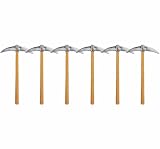
- Dwarf Costume Essential & Party Prop: Bring your dwarf costume to life with this 6-piece pickaxe prop set. Designed with a realistic axe shape and classic wood-and-metal look, these fake pickaxe are great for Halloween costumes, cosplay, stage performances, and themed parties
- Lightweight & Durable Material: Made from lightweight plastic and soft foam materials, these costume pickaxe are easy to hold and carry while providing a safer alternative to real tools. The smooth surface and sturdy construction allow repeated use at parties, performances, and events
- Realistic Cosplay Design: Featuring a dwarf pickaxe design with a wooden handle and silver-toned head appearance, these props create an authentic fantasy aesthetic for costume photos, role play, and stage shows
- 6-Piece Set for Group Fun: Includes 6 fake pickaxe, making them ideal for group costumes, party activities, team performances, and Halloween gatherings. Share them with friends and create memorable themed experiences
- Ideal for Various Occasions: Great for Halloween parties, cosplay events, costume contests, photo shoots, theater performances, and fantasy-themed celebrations. These decorative props add a fun final accent to dwarf, miner, and adventure-inspired outfits
5. Sell surplus, not your entire progression
Sell excess common materials and unwanted gear when you need currency, but keep rare or unusual ores until you know whether they are needed for a recipe, quest, or later threshold. A weapon can be useful even when it is not your final weapon: it may improve combat enough to generate more saleable gear and fund the next upgrade.
6. Begin the next relevant questline
Once your starting equipment is serviceable, alternate between mining and quests. Quests can unlock tools and locations, so grinding currency without progressing the story may leave you unable to use the materials you are collecting.
Ores: how to mine, save, and spend them
Ores are both the foundation of The Forge’s economy and the input for weapons and armor. Community databases commonly describe each ore with fields such as rarity, mining chance, value, multiplier, location, and special effects. Those fields are useful for comparison, but their exact numbers should be treated as patch-sensitive database data: the reviewed sources disagree on some prices, counts, and thresholds.
Ore roles at a glance
| Ore role | Best use | How to think about it |
|---|---|---|
| Accessible or common materials | Early equipment, practice crafts, and cash flow | Use them to learn the forge and fund progression. Keep a modest reserve if a quest or recipe requires them. |
| Materials from the next region | Threshold crafts and stronger transitional gear | Do not automatically sell them. First check whether they enable the next useful weapon, armor piece, or pickaxe route. |
| Cobalt and Mithril | Pickaxe progression and potentially stronger crafts | They appear in documented pickaxe routes, but the exact prices and stats vary between databases. Reserve enough currency and materials for the tool upgrade that unlocks your next profitable tier. |
| Ruby and other high-tier materials | Late objectives, high-value crafts, or selective selling | Ruby mining is connected to a late Goblin King objective. Do not assume a rare material is automatically best in every mixture. |
| Trait-bearing materials | Targeted weapon or armor builds | A material may be valuable because of an effect or multiplier, not just its sale price. Test mixtures with a clear goal. |
The table is a planning framework, not a permanent ore location list. The Forge’s regions and resource tables are actively changing, and the supplied sources do not provide a single consistent current database of every ore, depth, price, and mining requirement.
What’s actually slowing this PC down?
Pick the symptom - the matching free tool is one click away.
How to decide whether to sell an ore
- Keep quest-critical materials. If an ore is tied to an active objective or a known area gate, do not sell your entire supply.
- Keep enough for one planned craft. Decide whether your next craft is for damage, attack speed, defense, movement, luck, or an elemental effect before using rare materials.
- Sell surplus common ore. Common materials are usually more useful as reliable income once you have enough for your current recipe.
- Compare immediate currency with future access. A sale that funds a pickaxe capable of reaching a new ore tier can be better than holding a small amount of material for an uncertain craft.
- Record the result. If a mixture produces a useful multiplier or trait, note the ore types and quantities. Community recipes can become outdated, so your own patch notes are valuable.
Why the rarest ore is not always the best ore
Forging depends on the combination and quantity of ores, not only on the highest rarity in the mixture. Ores can contribute different multipliers and traits, and combining them can raise or lower the effective result or alter the chance of producing different weapon and armor classes. A cheaper mixture that gives the attack speed or defensive trait your build needs may outperform a more expensive mixture focused only on raw rarity.
Forging explained
Forging is a three-stage, timing-based process. You place ores into the forge, select an equipment outcome, and complete three timing mini-games. Performance in those stages affects craft quality; weak execution can reduce the resulting item’s statistics.
The four rules that matter
- Up to four ore types can be used in one craft according to the community documentation reviewed. More types do not automatically mean a better result.
- Quantity matters. The amount of each ore affects the mixture, so copying a list of ore names without copying quantities may not reproduce the same outcome.
- Mixture matters. Ores can add traits and multipliers, alter effective strength, and influence the probability of receiving a weapon or armor class.
- Timing matters. A theoretically strong recipe can still produce a disappointing item if the mini-games are performed poorly.
A practical forging method
- Set a goal first. Choose one priority: early survival, cheap weapon progression, attack speed, boss damage, defensive armor, farming or resale value, or a late-game trait combination.
- Use a controlled mixture. Start with one or two known materials before adding more variables. This makes it easier to understand which ore is changing the result.
- Use expendable materials for practice. Learn the timing stages with common ores before testing a rare combination.
- Complete all three timing stages carefully. Do not rush the final stage simply because the mixture looks promising.
- Compare the item with your current equipment. A higher displayed damage number may not be an upgrade if the weapon is much slower, shorter-ranged, or incompatible with your runes.
- Record successful crafts by patch. Include ore types, quantities, result, quality, traits, and the date or update in your notes.
Recipe recommendations by goal
| Goal | What to prioritize | What not to assume |
|---|---|---|
| Early-game survival | Reliable stats, affordable materials, and a weapon you can use consistently | That a rare ore is worth risking your entire inventory. |
| Cheap weapon progression | Material efficiency and a meaningful improvement over your current weapon | That the most expensive craft has the best return. |
| High attack speed | Weapon family, speed-related traits, and enough damage to finish enemies safely | That displayed base damage alone determines clear speed. |
| Boss damage | Damage, range, attack windows, rune compatibility, and survivability | That a slow high-damage weapon is automatically best for every boss. |
| Defensive armor | Defense, useful traits, movement trade-offs, and the enemies in your current region | That heavy armor is always better than lighter armor. |
| Farming or resale | Low material cost, repeatability, and the value of the finished item | That a high-rarity craft is profitable after accounting for all materials. |
| Late-game traits | A specific trait or multiplier combination and controlled testing | That an old community ‘best recipe’ remains optimal after a balance update. |
There is no responsibly universal “best recipe” in the current beta. A recipe recommendation should always state its goal and patch context—raw damage, attack speed, special effects, defense, or material efficiency.
Rank #3
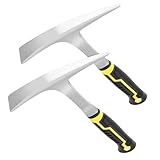
- DUAL HEAD DESIGN - This Garden Pick Tool has two different shapes of head design, one with a sharp tip to make it easier to break rocks and stones, and the other with a blunt head for leveling, compacting softer or loose soil, to cope with different work requirements.
- HIGH-QUALITY MATERIAL - Our Weeding Mattock Hoe is made of carbon steel, a strong and wear-resistant material that can be used for long periods of time without being easily deformed or damaged, making them a very practical and professional tool.
- WIDE OF USED - The Pick Axes For Digging are suitable for a variety of work scenarios. Whether for outdoor gardening, farmland reclamation, or indoor renovation, land preparation, it can be easily carried and used, providing convenient support for your various jobs.
- APPEAARANCE - The handle of the Small Rock Pick Axe of the masonry pick has a rubberized non-slip design with a textured surface that provides good grip and friction, allowing you to hold the tool more securely, enhancing control during operation and helping to get the job done.
- PACKAGE - You will receive 2 PCS Weeding Mattock Hoe, size 31 x 19.5 x 3.5cm /12 x 7.6 x 1.37 inch, the right size makes you easier to organize and manage, easy to pack into the toolbox or backpack, convenient to carry at any time, to meet different work needs.
Common forging mistakes
- Using all four ore slots without knowing what each material contributes.
- Copying ore names but ignoring quantities.
- Spending rare materials before deciding whether the item is for combat or resale.
- Judging armor only by defense and ignoring movement or traits.
- Judging weapons only by damage and ignoring speed, range, and rune compatibility.
- Blaming a recipe when a poor timing result reduced the item’s quality.
Pickaxe progression and the economic route
Pickaxes are not merely shop upgrades. They are access keys to better rocks and ores, so the right purchase is the one that crosses a meaningful mining threshold and pays for itself through the materials it unlocks.
Recommended Free Tools
A documented route: starter upgrades, Cobalt, Mithril, then Arcane
One documented progression route prioritizes early quest or starter upgrades, then Cobalt, Mithril, and the quest-related Arcane Pickaxe while skipping some intermediate shop tools. Other databases list additional later-game pickaxes and different statistics. Treat the Cobalt–Mithril–Arcane route as a practical, patch-sensitive route rather than a mandatory order.
| Stage | Decision | Economic logic |
|---|---|---|
| Starter | Use the initial tool and early quest rewards long enough to identify the next real mining threshold. | Do not waste early currency on a tool that unlocks nothing important. |
| Early upgrade | Buy or complete the upgrade that lets you mine the next useful region’s materials. | The value comes from access and mining speed, not from the tool’s name. |
| Cobalt | Consider it when it is the current efficient bridge to a better ore tier. | Check current price, mining damage, and whether the next tier is reachable. |
| Mithril | Prioritize it when it provides a substantial threshold increase rather than a small convenience improvement. | Keep currency for combat and quest progression instead of buying every tool between milestones. |
| Arcane | Work toward the Bard’s Lost Guitar questline and its related objectives. | It is a major mid-to-late-game milestone and can open a more productive route. |
| Later tools | Compare them against Arcane after the current update. | Later guides list additional tools, so Arcane is not permanently the endgame best. |
How to evaluate a pickaxe before buying it
- Write down the mining power or damage required for the next ore you want.
- Check whether the candidate pickaxe reaches that threshold.
- Estimate how much extra income the newly accessible ore can produce per run.
- Include the cost of the pickaxe and any combat equipment needed to survive the route.
- Skip the purchase if it only improves speed slightly and a later tool is close enough to justify saving.
- Recheck the route after a major update because prices, mining damage, and ore locations can change.
Arcane Pickaxe and the Bard’s Lost Guitar quest
The Bard’s Lost Guitar questline is repeatedly identified as the route connected to the Arcane Pickaxe. PC Gamer’s reported walkthrough says the quest leads to access to the pickaxe and that completing the related objectives can be worthwhile before attempting the most difficult ruby-mining route.
Do not interpret that as proof that Arcane is the final or best pickaxe in every version. It is safer to call it a major milestone: obtain it when the quest and combat requirements are practical, then compare any later tools using current mining power, price, and the ore tier they unlock.
The reported ruby requirement
PC Gamer reports that the final Goblin King quest’s ruby objective requires a pickaxe with at least 78 mining damage. This is a patch-sensitive requirement, not a permanent rule. If your current tool cannot meet it, do not repeatedly attempt the route; finish the relevant pickaxe or quest progression first and verify the requirement in the current game.
Weapons: choose for the fight and the route
Community documentation lists multiple weapon families, including daggers, axes, maces, spears, great swords, great axes, katanas, straight swords, gauntlets, and colossal swords. The best choice depends on your enemies, preferred spacing, crafting materials, and build—not on a single tier list.
Weapon comparison checklist
- Base damage: Important for burst and boss phases, but not the whole calculation.
- Attack speed: Faster attacks can improve sustained damage and make it easier to punish short openings.
- Range: Longer reach can reduce damage taken against dangerous enemies.
- Weapon traits: Special effects may fit a build better than a modest increase in base damage.
- Rune compatibility: A slightly weaker weapon may be better if it works with the runes you have developed.
- Craft probability: A powerful theoretical weapon is less useful if your mixture rarely produces it.
- Material cost: Compare the cost of repeated attempts, not only the cost of one successful craft.
- Mining-route suitability: A weapon that clears ordinary enemies quickly may be more useful for farming than a slow boss specialist.
Early-, mid-, and late-game weapon planning
Early game: Use affordable materials to produce a dependable weapon and learn its range and timing. Replace it when the new craft offers a meaningful improvement, not simply because a different weapon family becomes available.
Rank #4

- EMBEDDED MAGNETS - This pick was designed with strong pick-up capacity magnets embedded in the head and handle, so you can easily pick up black sand while prospecting. Pick up a maximum of 15 pounds with this magnetic separator
- COLLAPSIBLE - Conveniently designed to separate into 4 parts, you can collapse this prospecting tool down to fit snugly into the provided nylon canvas case. And because it has a belt loop, you can keep it on you at all times
- HARDENED STAINLESS STEEL - Ready for the toughest jobs, this extremely durable prospector pick also features a knurled aluminum handle for a secure grip. Plus, its easy-to-spot silver body means you'll never misplace it
- NYLON STORAGE CASE - This pick comes equipped with a black nylon canvas storage case that easily fits the tool once it's collapsed. Complete with a belt loop and individual slots for each part, it's easy to pack and go
- DESIGNED FOR GOLD PROSPECTING - Sona Enterprises has been long-time creators of gold panning kits, tools and accessories with a reputation professional and novice gold prospectors can trust. Designed for easy use - you'll love every product
Mid game: Start selecting a weapon around your route. If you spend most of your time clearing groups, speed and reach may matter more than maximum single-hit damage. If bosses are blocking progression, prioritize damage windows, survivability, and a rune setup that works reliably.
Late game: Test goal-specific mixtures and track the results. Late-game rankings are especially vulnerable to balance changes because a small adjustment to a trait, multiplier, or weapon probability can change the optimal craft.
Armor and runes
Armor is forged through the same ore-driven system, so its result can be affected by ore multipliers, traits, quantities, and timing performance. Community documentation generally distinguishes heavier armor for defense and lighter armor for mobility, but set bonuses, traits, enemy damage, and balance patches can change that trade-off.
Use heavier armor when surviving hits is the main obstacle and you can tolerate slower movement. Use lighter armor when positioning, dodging, or movement speed is more valuable than maximum defense. Compare the complete result rather than one stat: defense, mobility, traits, set effects, and the enemies in your current area all matter.
Runes add another layer to the decision. The game’s stated loop includes collecting and enhancing runes, so do not discard a weapon simply because its base number is lower if it supports a rune combination that fits your build. Conversely, do not invest heavily in a rune setup before confirming that the weapon and armor you plan to keep can use it effectively.
Quests, gates, and important areas
Quests in The Forge are progression tools, not just optional sources of money. They can provide equipment access, unlock locations, and direct you toward the next meaningful objective.
| Quest or location | Known progression relevance | Practical advice |
|---|---|---|
| Bard’s Lost Guitar | Associated with access to the Arcane Pickaxe. | Prioritize it when you are approaching the mid-to-late-game mining route and can handle its objectives. |
| Goblin King questline | Its final quest includes a ruby objective; a reported requirement is at least 78 mining damage. | Prepare the pickaxe and combat equipment before attempting the final mining route. Verify the requirement after updates. |
| Lost Cat sidequest | Connected in community coverage with the new location opened through the Goblin King route. | Check the current quest chain rather than assuming the sidequest is available from the start. |
| Sensei Moro | Identified in the reviewed progression material as another relevant questline. | Use the current quest marker and reward text to confirm its present purpose; the supplied research does not establish a permanent reward or unlock. |
| Stonewake’s Cross, Forgotten Kingdom, Goblin Cave, and Volcanic Depths | Community documentation identifies these among the game’s areas. | Do not treat this as a fixed linear world order. Access and later islands can change as content is added. |
The official Roblox page confirms that new islands and content are added through updates. For that reason, a guide that lists every region in one permanent sequence will age quickly. Use level, quest completion, mining power, currency, and combat readiness together to decide whether you are ready for the next area.
Best Value

- Brand new Fantastic Quality Fantasy Miner Pickaxe
- Great accessory for any Adult's or Child Fantasy Miner costume
- This posting includes: Hard plastic pickaxe as featured
- Please note that only the items listed above are included.
Combat and mining habits that save time
- Do not enter a new region with only mining power. You also need enough damage, defense, and healing or defensive options to complete a run.
- Use range and movement deliberately. Weapon reach, dashing, sprinting, blocking, and heavy attacks all affect how safely you can fight around mining routes.
- Farm a repeatable route. A safe route completed quickly is usually better income than a dangerous route that frequently forces a retreat.
- Keep a combat weapon separate from a resale experiment. A high-value craft is not necessarily the best weapon to take into a difficult area.
- Improve the bottleneck. If enemies are the problem, forge combat equipment. If rocks take too long, upgrade the pickaxe. If the area is locked, work on the quest.
- Practice forging before a boss attempt. A poor-quality craft can turn a manageable fight into an expensive failure.
A simple decision tree for what to upgrade next
- Can you mine the next profitable ore tier? If not, save for or quest toward the pickaxe that reaches it.
- Can you survive the route? If not, improve your weapon, armor, or runes before buying a marginal mining upgrade.
- Is access blocked by a quest? Stop farming the wrong area and complete the relevant questline.
- Are you spending more materials than you earn? Switch to a cheaper craft or a safer farming route.
- Are you chasing a specific trait? Use controlled mixtures, record quantities, and expect several attempts rather than assuming one recipe is guaranteed.
- Did the game recently update? Recheck ore locations, prices, mining damage, weapon tables, recipes, codes, island access, and rankings before following an old route.
What can change in this beta?
Expect the following information to become outdated first:
- ore locations, rarity, chance, value, and depth thresholds;
- pickaxe prices, mining power, and the order of efficient upgrades;
- weapon and armor statistics, traits, and craft probabilities;
- the number of weapons, armor pieces, ores, and islands;
- quest objectives, rewards, and area gates;
- forge recipes and the practical value of each multiplier;
- codes and time-limited rewards;
- which weapon, armor set, rune, or pickaxe is considered best.
When checking another wiki or guide, prefer a source that shows its update date and explains whether values came from the current game or an older database entry. If two tables disagree, do not average the numbers: check the current item tooltip, shop, quest objective, or mining requirement in-game.
Source confidence and limitations
The official Roblox listing is the strongest source for the game’s identity, developer attribution, beta status, stated gameplay loop, broad feature claims, and listed controls. Community documentation is useful for detailed ore, item, recipe, and route information but is more likely to become stale or disagree with another database. The reported 78 mining-damage ruby requirement and the Arcane Pickaxe quest context come from gaming-guide coverage and should be verified in the current build.
This guide therefore uses permanent system advice confidently, while treating exact prices, counts, thresholds, locations, and rankings as update-sensitive rather than presenting conflicting database values as fact.
Frequently Asked Questions
What is Roblox The Forge?
The Forge is a Roblox RPG and simulation experience by The Forge Community. Mine ores, forge weapons and armor, fight enemies and bosses, improve runes, complete quests, and explore new islands. It is still in beta, so item statistics and progression routes can change.
Should I sell ores or save them in The Forge?
Save rare materials until you have a clear crafting goal. Sell surplus common ores and unwanted gear, but keep enough material for quest requirements and a planned weapon or armor craft. The most expensive or rarest ore is not automatically the best in every mixture.
How do you get the Arcane Pickaxe in The Forge?
The Arcane Pickaxe is associated with the Bard’s Lost Guitar questline and is a major mid-to-late-game milestone. It should not be treated as the permanent best pickaxe because later tools and balance changes may exist.
The Tool Desk
Outbyte PC Repair FREERepair Windows errors before they cause bigger problemsFix Now →Outbyte Driver Updater FREEScan for outdated or missing drivers - takes under a minuteDriver Scan →What pickaxe is needed for the Goblin King ruby quest?
Community and gaming-guide coverage reports that the ruby objective in the Goblin King’s final quest requires a pickaxe with at least 78 mining damage. Verify the requirement in the current game because beta updates can change it.
What is the best forging recipe in The Forge?
No single recipe is universally best. Forging supports up to four ore types, and both ore quantities and combinations affect multipliers, traits, and the probability of different equipment outcomes. The three timing mini-games also affect craft quality.
The Bottom Line
Best evergreen route: follow quests, mine materials you can gather safely, save rare ores for a defined craft, upgrade your pickaxe only when it crosses the next useful threshold, and judge forged equipment by the whole build. The Arcane Pickaxe is an important Bard’s Lost Guitar milestone, not a permanent final answer. Recheck ore tables, recipes, stats, and quest gates after major beta updates.
Quick Recap
Product prices and availability are accurate as of the date/time indicated and are subject to change. Any price and availability information displayed on Amazon at the time of purchase will apply.
Free tools Windows power users keep installed
One-click scans. No signup required.




