Start with this diagnostic checklist
Before replacing anything, record three details:
- Which program shows the error. Note whether it appears during startup, when opening an old Creative mixer or control panel, or while launching another legacy application.
- When the problem began. Check whether it followed a Creative software uninstall, antivirus quarantine, disk cleanup, restored disk image, driver change, or moving an old program to another folder.
- Your Windows architecture. Go to Settings > System > About and check System type. A 64-bit Windows installation cannot directly load genuine 16-bit Windows DLLs.
The sbchs16.dll error usually points to missing or damaged Creative Sound Blaster AudioPCI software, not to a missing Windows runtime. The safest repair is to identify the sound card and reinstall its matching Creative driver and bundled applications.
What sbchs16.dll is
sbchs16.dll is identified as AudioPCI Driver Resources, part of the Creative Sound Blaster PCI128 software package. Archived package inventories place it with other AudioPCI resource files, including localized variants such as sbchs32.dll and sbcht16.dll.
As an Amazon Associate I earn from qualifying purchases.
The 16 in the filename likely identifies an older 16-bit resource variant. Third-party inventories describe the file as a Win16 DLL, but the exact architecture, version, and file properties should not be treated as independently verified unless you have the original Creative file.
This is a legacy driver-resource file. It is not a normal Microsoft Windows component, and there is no reliable reason to expect modern Windows to provide it in C:WindowsSystem32 or C:WindowsSysWOW64.
#1 Best Overall

- HIGH-RESOLUTION AUDIO - Delivers ultra-clear playback with 32-bit / 384 kHz and up to 120 dB SNR
- SURROUND SOUND - Supports discrete 7.1-channel analog output for immersive multi-channel audio on your PC
- VERSATILE CONNECTIVITY - Connects effortlessly to multi-channel PC speaker systems, SPDIF output and headset outputs, mic-in, as well as line-in sources
- ALL-NEW CREATIVE NEXUS APP - AutoEq customization that allows users to simulate the frequency response of various headphones for a tailored listening experience
- COMPACT LOW-PROFILE DESIGN - The card is 10.5 cm in length and comes with a half-height bracket to ensure compatibility with smaller cases and different build needs
Creative supplied AudioPCI and PCI128 cards with device drivers, mixers, control panels, and other applications. Those packages were designed for older Windows releases, including Windows 98 SE, Me, 2000, and XP. Modern Windows may still display an error when an old Creative startup entry or application tries to load the file.
Error messages you may see
Reported variants include:
- “The program can’t start because sbchs16.dll is missing from your computer.”
- “This application failed to start because sbchs16.dll was not found.”
- “Error loading sbchs16.dll. The specified module could not be found.”
- “Failed to load sbchs16.dll.”
- “Cannot find sbchs16.dll.”
- “Cannot register sbchs16.dll.”
- “sbchs16.dll access violation.”
The wording does not identify the cause by itself. “The specified module could not be found” can mean that the file is absent, that the old application is looking in the wrong folder, or that another dependency cannot load.
No particular modern game or application has been reliably identified as the unique owner of this file. The likely requester is an old Creative mixer, control panel, installer, or another application installed with the Sound Blaster package.
Fix 1: Identify the Sound Blaster card
Do this before downloading or installing a driver. AudioPCI packages are model-specific, and using a package for the wrong card can leave the device or its applications in a worse state.
Check Device Manager
- Right-click Start and select Device Manager.
- Expand Sound, video and game controllers.
- Look for a Sound Blaster, AudioPCI, or Creative device.
- Double-click the device and open the Details tab.
- In Property, select Hardware Ids.
- Copy the displayed values into a temporary note.
If the device has a warning icon, open Properties and read the Device status box. Also check Driver for the current provider and date.
Check the physical card and original media
If Device Manager does not identify the card:
- Shut down the computer and inspect the card label if it is accessible.
- Look for Creative model numbers such as CT4700, CT4750, CT4751, or CT5808.
- Check the original Creative CD, system restore media, or archived installation files.
- Look in the old program folder for setup notes or an INF file that identifies the model.
Do not assume that every PCI128 card uses the same package. Creative used different packages for different models and operating systems.
Fix 2: Reinstall the complete Creative package
This is the most likely repair when the file disappeared after an uninstall, cleanup operation, damaged installation, or restored disk image.
Rank #2

- REFERENCE-GRADE HI-RES AUDIO – Powered by the ESS ES9039Q2M DAC with up to 130 dB SNR, supporting 32-bit / 384 kHz playback for exceptional clarity and detail, far beyond typical onboard audio
- POWER FOR DEMANDING HEADPHONES – Built-in high-performance headphone amplifier delivers up to 350mW @ 32Ω. Easily drives studio-grade headphones
- LOW-LATENCY PERFORMANCE – Supports DSD256 and ASIO 2.3 for high-resolution playback and low-latency audio, ideal for music, gaming, and PC audio workflows.
- PRECISION SOUND PERSONALISATION – 10-band parametric EQ + AutoEq in Creative Nexus add meaningful personalization and offers advanced audio tuning and control
- FLEXIBLE CONNECTIVITY – Coaxial output and optical input for seamless integration with desktop audio setups.
Creative’s archived packages include model and operating-system-specific installers, including packages for PCI128 CT5808 and AudioPCI CT481x or CT4740 cards. The package names distinguish Windows 9x, Windows NT, and Windows 2000/XP/Me targets. Use the package matching both the card and the operating system for which the software was designed.
Remove the damaged installation
- Press Win+R.
- Type
appwiz.cpland press Enter. - Select the Creative Sound Blaster or AudioPCI application.
- Choose Uninstall.
- Restart the computer if prompted.
- Return to Device Manager.
- Expand Sound, video and game controllers.
- Right-click the Creative device and select Uninstall device only if you are deliberately reinstalling the hardware driver.
- If offered, select Attempt to remove the driver for this device.
- Restart Windows.
Do not remove unrelated audio devices, such as the motherboard’s High Definition Audio device, unless you have confirmed that it is part of the same failed installation.
Install the matching package
- Obtain the original Creative CD or the matching package from Creative’s archived support pages.
- If the installer is an archive, extract it to a local folder such as
C:CreativeInstall. - Right-click the setup program and select Properties.
- Open Compatibility and choose a suitable older Windows mode if the installer will not start.
- Select Run this program as an administrator.
- Run the installer.
- Follow its prompts to install both the driver and the bundled Creative applications.
- Restart Windows.
If you are installing from the original CD, follow the setup program supplied for the card. Older Creative instructions may use a path such as D:AUDIOENGLISHWIN95DRV or an EAPCI95.INF file. Those paths apply to the original media and should not be typed unless that media actually uses them.
After restarting, open Device Manager again. The Creative device should appear without a warning icon. Then launch the specific Creative application that previously produced the error. If the error remains but the device works, the remaining problem is probably an old application or startup entry rather than the driver itself.
What’s actually slowing this PC down?
Pick the symptom - the matching free tool is one click away.
When you are manually comparing several old packages, it is easy to install a close-looking but incorrect driver and repeat the process. Outbyte Driver Updater can scan for outdated or missing drivers and show what needs attention; its repair or driver installation is performed by the full version. It is optional, and for this file the exact Creative package remains the definitive repair.
Fix 3: Check whether antivirus quarantined the file
Security software may have removed a legacy DLL because old binaries can have unusual characteristics. Do not restore it automatically.
- Open Windows Security from the Start menu.
- Select Virus & threat protection.
- Select Protection history.
- Review entries created around the time the error began.
- Expand any entry referring to the Creative installation or
sbchs16.dll. - Confirm the file path and detection details.
- Restore or allow the file only if it came from the original Creative CD or a verified Creative package.
If the file came from an unknown DLL website, leave it quarantined and remove the package. Microsoft warns that restoring a genuine detection can expose the computer again.
After restoring a verified file, reinstall the complete Creative package rather than copying only sbchs16.dll into a Windows folder. A complete installation restores the expected folder structure, configuration, shortcuts, and related dependencies.
Outdated Drivers Are Slowing You Down
One free scan finds every outdated or missing driver and matches the right update for your exact hardware.Free scan · exact hardware matchWindows Errors? Fix Them Before They Spread
Repair common Windows errors and clear accumulated junk for a smoother, more stable PC - no reinstall needed.Free scan · no reinstallRank #3

- PRISTINE AUDIO CLARITY – With up to 116 dB SNR at an amazing bit rate of up to 24-bit / 192 kHz, enjoy impressive audio quality for your every need. The sound card also features gold-plated connectors, speaker optimization technology, and digital content encoding capability for the best digital audio performance. Coupled with Audio Stream Input / Output (ASIO) support, Sound Blaster Z SE delivers low-latency and high-fidelity audio, even for your recordings
- SBX GAMING EQ PROFILES – Emerge as the last man standing with our updated SBX Gaming Profiles for hot titles such as Apex Legends, Fortnite, Overwatch, PUBG, and more. In-house tuned and optimized to sound the best for the respective games, you can get started right away or further tweak the EQs, instead of having to create the profiles from scratch. Simply select the respective game from our latest Sound Blaster Command software’s menu, and be battle-ready instantly
- IMMERSIVE SURROUND SOUND – Get fully immersed and stay focused on your games with our surround sound. The Sound Blaster Z SE now supports 7.1 virtual on headphones and speakers alongside discrete 5.1 for speakers. You can even switch between headphones and your speakers via the software for those times you want to pump the bass, or go stealthier with your headphones. For extra delivery options to your external devices, the Z SE also supports Dolby Digital Live and DTS Encoding
- CRYSTAL CLEAR COMMUNICATION – Comes with a list of Microphone EQ Presets that compensates for your headset’s built-in mic so you can be heard clearly–whether it is to reduce the harshness of your tonality, sound more natural, or to increase the mids for vocal clarity. Together with our Sound Blaster Command Software’s CrystalVoice technology that helps remove echoes and ambient noises, the Z SE is perfect for games and even video conferences while working from home for better communications
Fix 4: Test legacy compatibility
A genuine 16-bit DLL cannot normally be loaded directly by a 64-bit process. Windows also separates 32-bit and 64-bit program locations through WOW64. Copying the same file into both System32 and SysWOW64 does not convert it or solve an architecture mismatch.
Try compatibility settings for the old application:
- Locate the application’s
.exefile. - Right-click it and select Properties.
- Open the Compatibility tab.
- Select Run this program in compatibility mode for.
- Choose an older Windows version appropriate to the application.
- Select Run this program as an administrator if the application requires it.
- Click Apply, then OK.
- Start the program again.
Compatibility mode cannot make Windows 11 load every Win16 component. If the program still fails, use a supported 32-bit legacy Windows environment or a virtual machine configured for the old Creative software. Keep that environment isolated and use it only for the hardware or application that requires it.
If the sound card has been removed but the error appears at every boot, an obsolete Creative startup entry may be calling the missing file. Uninstall the associated Creative software or disable its startup entry rather than restoring a DLL blindly.
The Tool Desk
Outbyte PC Repair FREERepair Windows errors before they cause bigger problemsFix Now →Outbyte Driver Updater FREEFix the driver behind crashes, sound loss and screen glitchesFind Drivers →Fix 5: Check the application path
If only one old program reports the error, it may have been moved or partially removed.
- Note the program named in the error or in Task Manager.
- Open Settings > Apps > Installed apps.
- Find that program or the associated Creative software.
- Choose Advanced options if available.
- Use Repair or Reset only when those options belong to the affected application.
- If no repair option exists, uninstall and reinstall the complete application package.
- Install it into its original folder where possible.
Do not place sbchs16.dll in a random application folder unless the original Creative installer places it there. A missing DLL message can be caused by a missing dependency or an incorrect search path, and manual copying hides that problem.
Fix 6: Use System Restore after a recent change
System Restore is appropriate when the error started immediately after a driver installation, software removal, or other system change and a suitable restore point exists.
Rank #4
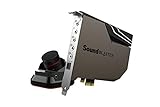
- PRISTINE AUDIO OUTPUT | Supreme audio fidelity with 127 dB DNR hi-res 32-bit / 384 kHz playback via ESS SABRE-class 9018 DAC and DSD64 playback support that satisfies even the most demanding needs of audiophiles for incredibly clean audio
- MASSIVELY POWERFUL HEADPHONE AUDIO | Custom Xamp discrete headphone bi-amp powers each earcup separately with 1Ω output impedance and drives studio-grade headphones of up to 600Ω, including high-end planar-magnetic headphones. And with the Audio Control Module, gain quick access to the Volume Control Knob, as well as the ¼” and ⅛” mic and headphones I/O connectors – all within your fingertips
- THEATRICAL-GRADE DISCREET AND VIRTUAL SURROUND | Supports discrete 5.1 on speakers with Dolby Digital Live / DTS Connect Encoding, and up to 7.1 virtual surround on headphones and speakers. To top it off, we have also integrated Sound Blaster’s Surround Virtualization technology onto AE-7 so that you can conveniently enjoy surround sound on most form of media
- TRUE HARDWARE ACCELERATED AUDIO | Dedicated quad-core processor designed to deliver incredibly pristine and enhanced sound on your PC without overstressing your CPU. Sound Blaster manages audio processing on the card itself, freeing your CPU to handle other tasks
- NEW AND IMPROVED SOFTWARE CUSTOMIZATION SUITE | Sound Blaster Command software interface provides hardware processed sound enhancements and complete control of audio output via the Sound Blaster Acoustic Engine for a full, customized audio experience that delivers clearer vocals, accurate cues, and bass boost
- Press Win+R.
- Type
rstrui.exeand press Enter. - Select Next.
- Choose a restore point dated before the error began.
- Select Scan for affected programs if available.
- Review the changes.
- Select Next, then Finish.
- Allow Windows to restart.
System Restore may restore an old Creative installation, but it will not correct an architecture mismatch or replace a physically missing sound card. If the error returns, reinstall the correct Creative package instead.
Fix 7: Run DISM and SFC only for broader Windows corruption
Because sbchs16.dll is associated with Creative AudioPCI rather than protected Windows files, SFC and DISM will not normally recreate it. Use them when Windows itself has other symptoms, such as damaged built-in applications, failed updates, or multiple system-file errors.
Open an elevated Command Prompt:
- Open Start.
- Type
Command Prompt. - Right-click it and select Run as administrator.
- Run:
DISM.exe /Online /Cleanup-Image /RestoreHealth
- Wait for it to complete.
- Then run:
sfc /scannow
- Restart Windows and test again.
Microsoft documents DISM for repairing the Windows image and System File Checker for protected Windows files. Neither command should be treated as a direct Creative DLL download.
Repeating SFC and DISM without knowing what changed can waste time when the actual problem is an old driver package. Outbyte PC Repair can scan for Windows problems and show what needs attention; its repair is performed by the full version. It is optional, and reinstalling the Creative package remains the correct fix for a missing sbchs16.dll.
Why you should not download sbchs16.dll separately
Avoid DLL download sites websites and random forum attachments. An isolated copy can have:
Recommended Free Tools
- The wrong Creative package or language resources.
- The wrong architecture.
- A damaged or modified binary.
- A different file version from the rest of the driver.
- Malware or an untrustworthy provenance.
- No matching installer configuration.
Reported third-party file sizes and version details are inconsistent, so copying a file based only on its name is especially unreliable. Do not copy it into C:WindowsSystem32, C:WindowsSysWOW64, or register it globally.
Use the original Creative installation CD or Creative’s archived, model-specific support packages instead. If no compatible package exists, use the original software in an appropriate older Windows environment or remove the obsolete application that is requesting the file.
Why regsvr32 usually does not apply
regsvr32 is not a general DLL repair command. It is intended for DLLs that provide registration entry points such as DllRegisterServer. A localized AudioPCI resource DLL may not provide that function.
Best Value
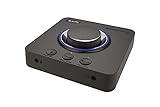
- 7.1 DISCRETE SURROUND WITH SUPER X-FI AND DOLBY DIGITAL LIVE - Supports up to 7.1 discrete for multi-channel speakers and virtual for headphones
- IMPROVED COMMUNICATION WITH SMARTCOMMS KIT AND CRYSTALVOICE - Features our SmartComms Kit, a suite of smart communication features that simplify the way you take work calls on Windows 10 platform. Turn on VoiceDetect to auto mute and unmute your mic, or get rid of static background noise in your own environment as well as the other parties' via our two-way noise cancellation feature NoiseClean. In tandem, CrystalVoice technology enhances voice for clear recordings and in-game communications
- CONNECT WITH EVERYTHING - With a newly added optical-in port, it is now much easier to connect multiple audio devices, from external microphones and headsets, to platforms like your PC, Mac, gaming consoles, and even your multi-channel speaker systems. Just power up the Sound Blaster X4 via the USB-C port, and enjoy high-quality audio with everything. The Sound Blaster X4 is also a headphone amplifier that is capable of driving studio-grade headphones of up to 600Ω
- EASY ACCESS TO ALL CONTROLS - Pick between three EQ modes or re-program them, and save your settings on the device. There are also the Direct Mic Mute, Direct Mode, Super X-Fi and SXFI BATTLE Mode on/off buttons, as well as a speaker (Line-out) and headphones switch button. After a one-time setup, instantly adjust the volume levels between two audio sources (SPDIF / Optical / USB) with the Audio Balance feature via the volume knob, perfect for communicating with music on
- GAME AND HEAR YOUR WAY – Choose between SXFI BATTLE Mode or Scout and get to winning your FPS game. Configure each element of your audio settings or switch them off completely via the Creative app. Access the full range of audio adjustments via the PC app, or make quick adjustments to your EQ settings from your phone. All these are powered by our Sound Blaster’s audio promise with 114 dB audio clarity and hi-res 192 kHz/24-bit playback
Running:
regsvr32 sbchs16.dll
may produce an error stating that DllRegisterServer is missing. That result usually means registration is the wrong repair path, not that Windows needs the file registered. Reinstall the Creative package instead.
Quick wins for a faster PC:
Scan for outdated or missing drivers - takes under a minuteDriver Scan →Clear out junk files and repair common Windows errorsFree Scan →Fix the driver behind crashes, sound loss and screen glitchesFind Drivers →What to do when the installer cannot detect the card
If Creative’s installer says that no supported card is present:
- Shut down the computer.
- Confirm that the PCI card is seated correctly.
- Check whether the card appears in Device Manager under Other devices or Sound, video and game controllers.
- Compare the model number on the card with the package you selected.
- Try the original CD for that exact card.
- Do not force installation of a package for another CT model.
- If the card is absent from Device Manager, resolve the hardware or BIOS detection issue first.
On a modern computer, the card may also be incompatible with the system even if Windows detects it. In that case, use the card and software in a compatible legacy machine or virtualized environment rather than modifying Windows system folders.
Final decision guide
- The Creative card is present and the package was damaged: uninstall and reinstall the exact Creative driver and applications.
- The file was quarantined: restore it only from verified Creative media, then reinstall the complete package.
- The error began after moving one old application: repair or reinstall that application in its original location.
- The error appears on 64-bit Windows with old software: use compatibility testing, a 32-bit environment, or a legacy virtual machine.
- The card was removed but the error appears at startup: remove the obsolete Creative software or startup entry.
- Windows has broader corruption: run DISM and SFC, but do not expect them to recreate this third-party file.
- The installer cannot detect the hardware: verify the card model and physical presence before trying another package.
FAQ
Is sbchs16.dll a Windows system file?
No. It is identified with Creative Sound Blaster PCI128 and AudioPCI software, not as a Microsoft Windows component.
Can I download sbchs16.dll by itself?
That is not a safe first-line repair. Use the original Creative media or the matching Creative driver package so the file and its related components are installed together.
Do these 3 things before closing this tab:
1Scan for outdated or missing drivers - takes under a minute2Repair Windows errors before they cause bigger problems3Fix the driver behind crashes, sound loss and screen glitchesDoes Microsoft Visual C++ fix this error?
Not normally. sbchs16.dll belongs to legacy Creative AudioPCI software, not a documented Visual C++ runtime.
Should I put the file in System32 or SysWOW64?
No. Those folders do not fix an incompatible legacy application, and placing a DLL in both folders can create additional confusion.
Will Windows 11 run the old Creative software?
Compatibility varies. The original software targeted older Windows releases, and a genuine 16-bit component may require an older 32-bit Windows environment or virtual machine.
Why does regsvr32 say that DllRegisterServer is missing?
That usually means the file is not a self-registering COM or ActiveX DLL. Registration is not the correct repair for this AudioPCI resource file.
Free tools Windows power users keep installed
One-click scans. No signup required.
What if the sound card is no longer installed?
Uninstall the old Creative software and disable its obsolete startup entry. There is no reason to restore a legacy DLL for hardware and applications you no longer use.
Quick Recap
Product prices and availability are accurate as of the date/time indicated and are subject to change. Any price and availability information displayed on Amazon at the time of purchase will apply.




