
By worldwide lifetime hardware sales for their main 16-bit consoles, Nintendo finished ahead. Nintendo reports 49.10 million Super Famicom/SNES systems sold worldwide, while a 2024 secondary retrospective puts Mega Drive/Genesis sales at about 30 million worldwide. That is a clear numerical advantage for Nintendo, but it is not a complete explanation of the rivalry. Sega launched earlier, built a powerful identity around Sonic, sold more than 15 million systems in North America and 8 million in Europe according to its own history, and remained a serious competitor for much of the generation.
“Lose” therefore needs a measurement. Worldwide lifetime units, regional performance, annual market share, software sales, cultural impact and the later health of each company are different questions. The evidence supports a Nintendo win on the most commonly used global hardware measure, not the claim that Sega was irrelevant or that it lost every market and every year.
As an Amazon Associate I earn from qualifying purchases.
What does “lose” mean in a Sega–Nintendo comparison?
The phrase “console war” is an informal description of several overlapping contests. A company can lead in one region for part of a generation and still finish behind on worldwide lifetime sales. Hardware units also do not equal software revenue, profit, installed-base engagement or cultural influence.
- Worldwide lifetime hardware: every console sold over its commercial life, across all territories.
- Regional performance: sales or share in markets such as Japan, North America or Europe.
- Timing: who gained attention or market share at a particular point, rather than who finished first.
- Software strength: game sales, exclusive series and the ability to keep owners buying titles.
- Long-term business outcome: what happened in later hardware generations, which introduced different competitors and conditions.
The strongest comparable evidence here concerns the first category: lifetime hardware for Super Famicom/SNES and Mega Drive/Genesis. It is less complete for year-by-year market share, software revenue and territory-by-territory rankings, so those conclusions must stay narrower.
#1 Best Overall

- Sega Genesis Core System 2 Bundle
- Includes Sonic 1 and 2
The lifetime hardware numbers
Nintendo’s investor sales page, reporting worldwide consolidated lifetime figures as of June 30, 2026, lists 49.10 million units for the combined Super Famicom/SNES family. The figure covers the Japanese Super Famicom and the Super Nintendo Entertainment System name used in other markets.
Sega’s official history gives regional totals rather than one audited worldwide number: more than 15 million Mega Drive/Genesis systems in North America and 8 million in Europe. A 2024 MeriStation retrospective gives a rounded estimate of about 30 million worldwide. Because that estimate comes from a secondary source and is not presented as a worldwide total on the Sega history page, it should not be treated as a same-source, same-method figure alongside Nintendo’s 49.10 million.
| Measure | Nintendo Super Famicom/SNES | Sega Mega Drive/Genesis | How to read it |
|---|---|---|---|
| Worldwide lifetime hardware | 49.10 million, Nintendo investor sales page, figure reported as of June 30, 2026 | About 30 million, rounded estimate from MeriStation, 2024 | Nintendo leads on the available worldwide comparison; the sources differ in status and methodology |
| North America | The cited Nintendo figure does not break out this territory | More than 15 million, Sega official history | Sega was highly successful in this region, but the available figures do not establish a direct Nintendo-versus-Sega ranking |
| Europe | The cited Nintendo figure does not break out this territory | 8 million, Sega official history | This is a Sega regional total, not a worldwide figure and not a complete cross-company comparison |
On the evidence that can be compared responsibly, the answer to “Did Sega lose?” is yes, if the question means worldwide lifetime sales of the principal 16-bit systems. Nintendo’s official total is roughly 19 million units higher than the secondary estimate for Sega. The qualification matters: the gap is not calculated from two identical corporate accounting disclosures.
Free tools Windows power users keep installed
One-click scans. No signup required.
How the rivalry developed
1988: Sega gets the first move
Sega released Mega Drive in Japan in October 1988. That gave it a head start over Nintendo’s next major home console, although an earlier launch by itself does not prove a lasting sales lead. Sega’s official history uses the Mega Drive name in Japan and Europe and the Genesis name in North America.
1989: Genesis arrives in North America
The North American launch followed in 1989 under the Genesis name. The different branding can make casual comparisons confusing, but Mega Drive and Genesis are the same 16-bit hardware family for the purposes of this sales discussion.
Rank #2

- Experience the classic era of 16-bit gaming in a streamlined, compact console design MK-1631.
- Console unit, one Sega Brand controller, AC power adapter, and A/V cable for TV connection
- The perfect choice for retro enthusiasts, offering a robust and reliable platform for SEGA's legendary catalog of games.
1990: Nintendo launches Super Famicom and Sega expands in Europe
Sega’s timeline dates the European Mega Drive release to 1990. Nintendo says the Super Famicom launched in Japan in autumn 1990. Nintendo subsequently used the SNES name in many other markets, creating the two names that appear in the official 49.10 million combined total.
1991: Sonic gives Sega a defining identity
The first Sonic the Hedgehog debuted on Genesis in North America in 1991. Sega’s company history says the game sold more than four million copies. That result made Sonic a major Sega identity marker and gave the Genesis a mascot capable of standing beside Nintendo’s established characters. A successful mascot, however, is not the same metric as total console shipments, so Sonic’s importance should not be used to overturn the hardware-sales result.
1994: Software keeps the contest active
Nintendo’s history highlights Donkey Kong Country taking the United States holiday season by storm in 1994. The example shows why software momentum mattered: a system’s appeal depended on what people could play, not only on its launch date or specifications. It also illustrates why a single holiday period cannot be treated as a lifetime sales verdict.
Why Sega was a genuine competitor, not a token challenger
Sega’s regional figures show substantial reach. More than 15 million systems in North America is a large installed base, and 8 million in Europe confirms that the Mega Drive was not confined to a niche audience. Those numbers support describing Sega as a major competitor even though Nintendo’s worldwide total was higher.
The available evidence does not provide a consistent annual market-share series for every territory. It would therefore be inaccurate to claim that Sega “never led,” “always trailed,” or won a particular year globally without naming a region, metric and date. A launch advantage, a strong holiday season or a regional lead can all coexist with a lower worldwide lifetime total.
Rank #3

- Original 16-Bit Sega Genesis System Console
- Extremely Large Video Game Library Available
It is also important not to add Sega’s North American and European numbers and call the result worldwide sales. The official figures cover only those two regions, and “more than 15 million” is open-ended. The approximately 30 million global estimate comes from a separate secondary account and should remain labeled as such.
Do these 3 things before closing this tab:
1Repair Windows errors before they cause bigger problems2Scan for outdated or missing drivers - takes under a minute3Clear out junk files and repair common Windows errorsDid the Genesis outsell the SNES?
Worldwide, the cited figures say no. Nintendo’s 49.10 million Super Famicom/SNES total exceeds the roughly 30 million worldwide Mega Drive estimate. That is the cleanest answer when “outsell” means lifetime global hardware units.
For North America, the available evidence is insufficient for a definitive head-to-head answer. Sega reports more than 15 million Genesis systems there, but the Nintendo figure supplied here is a worldwide total and does not provide a matching North American number. A claim that one system definitely outsold the other in that territory would require a compatible regional dataset.
For Europe, the same limitation applies. Sega reports 8 million units, while the cited Nintendo data does not provide a corresponding European total. The Sega number demonstrates meaningful performance, not a complete ranking.
What changed after the 16-bit generation?
The later history should not be folded into the SNES-versus-Genesis tally. Sega released Saturn in 1994 and Dreamcast in 1998, according to its official corporate history. By then the competitive field had changed, most notably with Sony’s PlayStation entering the market.
The Tool Desk
Outbyte PC Repair FREERepair Windows errors before they cause bigger problemsFix Now →Outbyte Driver Updater FREEScan for outdated or missing drivers - takes under a minuteDriver Scan →Rank #4
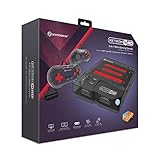
- 3-in-1 Retro Console: Compatible with NES, Super NES, Super Famicom, and Genesis/Mega Drive cartridges—play thousands of original classics on one system.
- HD Ready: Enjoy your favorite retro games in crisp 720p via HDMI; toggle between 4:3 and 16:9 aspect ratios for the perfect nostalgic feel.
- EverDrive Support: Fully compatible with most EverDrive and reproduction cartridges—expand your library and keep your originals safe.
- Includes 2 Controllers: Comes with two premium Hyperkin controllers for instant multiplayer action; console also supports original NES, SNES, and Genesis controllers.
- Classic Meets Modern: AV-compatible for CRT setups and HDMI-ready for modern TVs—perfect for collectors, streamers, and retro enthusiasts alike.
A HISTORY retrospective describes Saturn arriving early in the United States at a high price with few launch titles. The same retrospective reports around nine million Saturn systems sold and says Sega exited the console-hardware market in 2001. These points help explain why people sometimes describe Nintendo as having “won the console war,” but they concern a later generation with new products and competitors, not the lifetime sales comparison between SNES and Genesis.
Dreamcast’s 1998 launch and Sega’s 2001 hardware exit are part of the company’s broader console story. They do not prove that Nintendo defeated Sega in every measure during the 16-bit era, nor do they convert the later Saturn result into a SNES-versus-Genesis statistic.
Independent reader supportYour contribution helps us test, update, and keep practical guides available for everyone.A precise way to state the verdict
A careful answer can fit in one sentence: Nintendo won the worldwide lifetime hardware comparison between the Super Famicom/SNES and Mega Drive/Genesis, while Sega achieved major regional success and built one of gaming’s strongest identities.
That wording keeps four distinctions intact:
- Nintendo’s 49.10 million is an official worldwide consolidated figure reported as of June 30, 2026.
- Sega’s roughly 30 million worldwide figure is a rounded 2024 secondary estimate, not the worldwide number on the cited Sega history page.
- Sega’s more than 15 million in North America and 8 million in Europe are regional totals and should not be presented as a global sum.
- Saturn and Dreamcast belong to a later era in which Sony and other competitors changed the market.
Common misconceptions
“Sega lost, so the Genesis must have been a failure.”
The conclusion does not follow. A console can finish behind a rival and still sell tens of millions of units, support a valuable software ecosystem and establish a durable brand. Sega’s regional totals and Sonic’s reported sales are evidence of scale, even though they do not change Nintendo’s global lead.
What’s actually slowing this PC down?
Pick the symptom - the matching free tool is one click away.
“The first launch automatically determines the winner.”
Mega Drive launched in Japan in 1988, before Super Famicom arrived in Japan in autumn 1990. Timing can help a platform build an installed base, but lifetime results also depend on software, pricing, distribution, competition and how long the system remains commercially active. The dates establish a head start, not a guaranteed outcome.
“One market’s reputation settles the whole debate.”
Regional performance is valuable but bounded. North American or European success cannot be silently substituted for worldwide sales, and a worldwide total cannot answer every regional question. Always name the territory and metric before declaring a winner.
Final answer
Did Sega lose to Nintendo? On worldwide lifetime sales of the main 16-bit consoles, yes: Nintendo’s Super Famicom/SNES reached 49.10 million units, compared with a secondary estimate of about 30 million for Sega’s Mega Drive/Genesis. But Sega did not lose in the sense of being insignificant. It launched first, sold more than 15 million systems in North America and 8 million in Europe according to its official history, and used Sonic and other software to become a formidable rival. The most accurate history is a Nintendo win on the global hardware scoreboard alongside a substantial Sega challenge, not a story in which one company dominated every place, year and measure.
Quick Recap
Product prices and availability are accurate as of the date/time indicated and are subject to change. Any price and availability information displayed on Amazon at the time of purchase will apply.
Recommended Free Tools

