Recommended Free Tools
spuprodigy.dll may appear in messages such as “spuprodigy.dll is missing,” “spuprodigy.dll was not found,” or “Failed to load spuprodigy.dll.” The file belongs to an obsolete PlayStation 1 emulator audio plugin, so the reliable fix is usually to repair the emulator installation rather than Windows itself.
The 60-second answer
spuprodigy.dll is the spuProdigy sound plugin for older PSEmu Pro-compatible PlayStation emulators, including emulator packages based on ePSXe or PCSX. It is loaded by the emulator from its private plugins folder.
It is not:
- A Windows system file
- A DirectX component
- A Visual C++ Redistributable file
- A .NET runtime file
- A normal sound-card driver
- A DLL that should be copied to
C:WindowsSystem32orC:WindowsSysWOW64
Start by finding the emulator named in the error. Open its installation folder and inspect plugins. If spuprodigy.dll is missing, restore the complete emulator or plugin package from the original installer, archive, or backup. If the emulator has another SPU plugin available, select that plugin instead.
What causes the error
The most common causes are local to the old emulator:
#1 Best Overall

- TRIFORCE TITANIUM 50 MM DRIVERS — Our cutting-edge proprietary design divides the driver into 3 parts for the individual tuning of highs, mids, and lows—producing brighter, clearer audio with richer highs and more powerful lows
- HYPERCLEAR CARDIOID MIC — An improved pickup pattern ensures more voice and less noise as it tapers off towards the mic’s back and sides, with the sweet spot easily placed at the mouth because of the mic’s bendable design
- ADVANCED PASSIVE NOISE CANCELLATION — Sturdy closed earcups fully cover the ears to prevent noise from leaking into the headset, with its cushions providing a closer seal for more sound isolation
- LIGHTWEIGHT DESIGN WITH MEMORY FOAM EAR CUSHIONS — At just 240 g, the headset features thicker headband padding and memory foam ear cushions with leatherette to keep gaming in peak form during grueling tournaments and training sessions
- VOLUME WHEEL — Its on-headset control makes it convenient to adjust audio levels without having to fiddle with any system or program settings
- The plugin was omitted during installation.
- A cleanup utility or antivirus product deleted or quarantined it.
- The emulator still points to a plugin that is no longer present.
- The plugin is incompatible with the emulator build or executable architecture.
- The emulator installation or configuration has become corrupted.
- A dependency of the plugin is missing, even though Windows names
spuprodigy.dll. - The file is an impostor placed in an unexpected directory.
The filename alone cannot identify the exact emulator that produced the error. Several old PlayStation emulator packages used the same plugin format, and the same DLL can exist in separate emulator folders.
Find the emulator that is requesting the DLL
Do not begin by searching Windows system folders. First identify the application that is failing.
Check the error window
Read the title bar and message carefully. The application name may appear before the DLL error. If the error appears after opening a game shortcut, the emulator is usually the program behind that shortcut.
Inspect the shortcut
- Right-click the shortcut that starts the emulator.
- Select Properties.
- Open the Shortcut tab.
- Read the Target field.
- Note the folder containing the emulator executable.
- Select Cancel when finished.
Open that folder in File Explorer. Look for a directory named plugins, usually beside the emulator executable.
Search for the emulator executable
If the shortcut is unavailable:
- Press Windows key + S.
- Search for the emulator name shown in the error.
- Right-click the result.
- Select Open file location.
- If this opens a shortcut, right-click it and choose Open file location again.
The relevant plugin normally belongs in the emulator’s own directory, not in a shared Windows location.
Fix 1: Restore or reinstall the complete emulator package
This is the most likely solution.
If you have the original installer
- Close the emulator.
- Back up saved games, memory cards, BIOS files, controller settings, and configuration files.
- Open Settings.
- Select Apps.
- Select Installed apps.
- Find the emulator.
- Select the three-dot menu beside it.
- Choose Uninstall if no repair option is available.
- Reinstall it from the original installer or a known-good archive.
- During setup, retain the plugin components if the installer offers component choices.
- Start the emulator.
- Open its audio or SPU configuration.
- Select
spuProdigyif it is present, then save the configuration.
If the installer provides a Repair option, use it before uninstalling:
- Open Control Panel.
- Select Programs.
- Select Programs and Features.
- Right-click the emulator.
- Choose Repair or Change.
- Follow the repair wizard.
- Restart the emulator and test the game.
If you have a known-good emulator folder
- Close the emulator.
- Copy the complete emulator folder to a new location.
- Confirm that the new folder contains the emulator executable and
pluginsdirectory. - Confirm that the matching
spuprodigy.dllis insideplugins. - Start the executable from the new folder.
- Reconfigure the audio plugin if the emulator asks you to choose one.
Do not copy only a DLL from an unrelated emulator installation. The plugin must match the host’s plugin interface and configuration.
If the plugins folder is missing
A missing folder usually indicates an incomplete installation or an emulator package that was extracted incorrectly. Re-extract the complete archive to a new folder, or reinstall the emulator. Do not create a random plugins folder and populate it with files from unrelated downloads.
Fix 2: Select another installed SPU plugin
The emulator may work normally with a different audio plugin.
- Start the emulator.
- Open Options, Settings, or Configuration.
- Choose Audio, Sound, or SPU.
- Open the plugin drop-down list.
- Select another installed SPU plugin.
- Apply or save the change.
- Close and restart the emulator.
- Start the game again.
If another plugin works, the problem is limited to the obsolete spuProdigy path. Leaving the newer or compatible plugin selected is usually safer than forcing an old DLL to load.
If the emulator configuration names spuprodigy.dll but the file is no longer installed, remove the stale selection and choose an available plugin. Some old emulators store this setting in an .ini file; make a backup before editing it manually.
Fix 3: Check Windows Security quarantine
Antivirus software may have removed the file, or the emulator package may have been cleaned during a security scan.
Do these 3 things before closing this tab:
1Fix the driver behind crashes, sound loss and screen glitches2Repair Windows errors before they cause bigger problems3Scan for outdated or missing drivers - takes under a minute- Open Windows Security from the Start menu.
- Select Virus & threat protection.
- Select Protection history.
- Review recent detections.
- Select an entry associated with the emulator or
spuprodigy.dll. - Read the detection details and file path.
- Do not restore the file if the path is unexpected or the source is unknown.
Restore a quarantined file only when you can independently verify that it came from the original emulator package. If the file was downloaded from an unknown DLL site, do not restore it. Reinstall the complete emulator from a trusted original source instead.
Microsoft Defender may detect the file again after restoration. That is a reason to investigate the file and package, not a reason to disable antivirus protection.
Fix 4: Check for a dependency or architecture mismatch
A message saying that spuprodigy.dll could not be loaded does not always mean the named file is absent. Windows can show the same type of error when a dependency required by that DLL is missing.
Older PSEmu Pro plugins were built for old Windows emulator environments. Available archival evidence strongly suggests that this is an old 32-bit plugin, but there is no authoritative architecture statement here. Treat compatibility as something to verify rather than assume.
Check the following:
- Is the emulator itself an older 32-bit application?
- Did you replace the original emulator with a different build?
- Does the plugin come from the same package as the emulator?
- Does the error change when another SPU plugin is selected?
- Does Windows report a separate
MSVCP*.dllorVCRUNTIME*.dllfile? - Does the emulator run from its original folder, or was only the executable copied elsewhere?
If the error names MSVCP*.dll or VCRUNTIME*.dll, investigate the Microsoft Visual C++ Redistributable separately. spuprodigy.dll is not identified as part of that package. Installing a runtime will not recreate a missing emulator plugin.
Rank #2

- 【Multi-Platform Compatible】Support PlayStation 4, PlayStation 5, Xbox, Xbox Series X|S, Xbox One, PC, Nintendo 3DS, Laptop, PSP, Tablet, iPad, Computer, Mobile Phone. Please note you need an extra Microsoft Adapter (Not Included) when connect with an old version Xbox One controller.
- 【7.1 Surround Sound】Clear sound operating strong brass, splendid ambient noise isolation and high precision 40mm magnetic neodymium driver, acoustic positioning precision enhance the sensitivity of the speaker unit, bringing you vivid sound field, sound clarity, shock feeling sound. Perfect for various games like Halo 5 Guardians, Metal Gear Solid, Call of Duty, Star Wars Battlefront, Overwatch, World of Warcraft Legion, etc.
- 【Noise Isolating Microphone】Headset integrated onmi-directional microphone can transmits high quality communication with its premium noise-concellng feature, can pick up sounds with great sensitivity and remove the noise, which enables you clearly deliver or receive messages while you are in a game. Long flexible mic design very convenient to adjust angle of the microphone.
- 【Great Humanized Design】Superior comfortable and good air permeability protein over-ear pads, muti-points headbeam, acord with human body engineering specification can reduce hearing impairment and heat sweat.Skin friendly leather material for a longer period of wearing. Glaring LED lights desigend on the earcups to highlight game atmosphere.
- 【Effortlessly Volume Control】High tensile strength, anti-winding braided USB cable with rotary volume controller and key microphone mute effectively prevents the 49-inches long cable from twining and allows you to control the volume easily and mute the mic as effortless volume control one key mute.
Do not install a 64-bit runtime or replace the emulator solely because the plugin is old. Restore a plugin and host combination designed to work together, or select another compatible SPU plugin.
Fix 5: Repair the parent application
Windows can repair some installed applications without removing their data.
From Settings
- Open Settings.
- Select Apps.
- Select Installed apps.
- Find the emulator.
- Select its three-dot menu.
- Choose Advanced options, if available.
- Select Repair.
- Start the emulator after Windows finishes.
If Repair does not resolve the error, return to the same screen and use Reset only after backing up emulator saves and configuration files. Reset behavior varies by application and may remove local settings.
Crashes, No Sound, or Screen Glitches?
Random freezes, missing sound and display glitches usually trace back to one bad driver. Find and replace yours safely.Free scan · under a minutePC Slower Than It Used to Be?
A free scan shows the junk files, broken settings and background clutter dragging Windows down - then fixes them in one click.Free scan · Windows 10 & 11From Control Panel
- Press Windows key + R.
- Type
appwiz.cpl. - Press Enter.
- Select the emulator.
- Choose Repair or Change, if available.
- Complete the wizard.
- Restart Windows if requested.
This process repairs the application package. It does not prove that the DLL is a Windows component.
Fix 6: Investigate an actual audio-driver problem separately
Despite some generic file listings calling spuprodigy.dll a “driver,” it is an emulator SPU plugin, not a normal Windows sound-card driver. It should not normally appear under Device Manager.
Check Device Manager only if Windows also reports a separate audio-device problem:
- Right-click Start.
- Select Device Manager.
- Expand Sound, video and game controllers.
- Right-click the actual audio device.
- Select Properties.
- Open the Driver tab.
- Review the provider, date, and status.
- Use Update driver to search automatically, or use Uninstall device and restart Windows if the device itself is malfunctioning.
Use the computer or sound-device manufacturer’s official driver source when a hardware driver must be reinstalled. Do not expect that process to recreate spuprodigy.dll.
What’s actually slowing this PC down?
Pick the symptom - the matching free tool is one click away.
When you are manually hunting through several hardware drivers and repeating updates without knowing which component is stale, Outbyte Driver Updater can scan for outdated drivers; its free scan identifies issues, while driver installation requires the full version.
Fix 7: Repair Windows components only when Windows has broader problems
System File Checker and DISM repair Windows components. They do not normally recreate a third-party emulator plugin.
Use them when you also have symptoms such as damaged Windows features, failed system repairs, or multiple unrelated system errors.
- Open Start.
- Type
Command Prompt. - Right-click Command Prompt.
- Select Run as administrator.
- Select Yes at the User Account Control prompt.
- Run:
DISM.exe /Online /Cleanup-Image /RestoreHealth
- Wait for DISM to finish.
- Then run:
sfc /scannow
- Wait until verification reaches 100 percent.
- Restart Windows.
- Test the emulator again.
Microsoft recommends running DISM before SFC. If SFC reports that it repaired files, test the emulator after restarting. If both commands complete without finding a problem, return to the emulator installation rather than repeating them.
Quick wins for a faster PC:
Scan for outdated or missing drivers - takes under a minuteDriver Scan →Repair Windows errors before they cause bigger problemsFix Now →Fix the driver behind crashes, sound loss and screen glitchesFind Drivers →If you are manually comparing repair logs, locating damaged components, and repeating SFC or DISM without knowing what changed, Outbyte PC Repair can scan for Windows issues; its free scan shows detected problems, while repair requires the full version.
Windows Features are usually unrelated
Turning Windows Features on or off is not a normal repair for this plugin.
You can still check optional components if the emulator’s own documentation specifically requires one:
- Press Windows key + R.
- Type
optionalfeatures. - Press Enter.
- Review the listed Windows features.
- Change only a feature required by the emulator.
- Select OK.
- Restart if Windows requests it.
Do not enable random legacy components to compensate for a missing spuprodigy.dll. Windows Features will not install the Prodigy SPU plugin.
Free tools Windows power users keep installed
One-click scans. No signup required.
Do not use regsvr32 for this file
regsvr32 is intended for DLLs that provide the appropriate COM self-registration entry points. A PSEmu Pro audio plugin is normally loaded through the emulator’s plugin interface.
Running a command such as this is therefore not a general repair:
regsvr32 spuprodigy.dll
It may produce an entry-point or module error and will not add the plugin to the emulator’s audio configuration. Use the emulator’s plugin selector or reinstall the matching package instead.
Independent reader supportYour contribution helps us test, update, and keep practical guides available for everyone.Do not copy it to System32
Copying spuprodigy.dll to C:WindowsSystem32 or C:WindowsSysWOW64 is inappropriate.
Rank #3
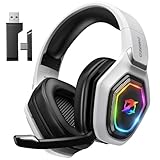
- 【Amazing Stable Connection-Quick Access to Games】Real-time gaming audio with our 2.4GHz USB & Type-C ultra-low latency wireless connection. With less than 30ms delay, you can enjoy smoother operation and stay ahead of the competition, so you can enjoy an immersive lag-free wireless gaming experience.
- 【Game Communication-Better Bass and Accuracy】The 50mm driver plus 2.4G lossless wireless transports you to the gaming world, letting you hear every critical step, reload, or vocal in Fortnite, Call of Duty, The Legend of Zelda and RPG, so you will never miss a step or shot during game playing. You will completely in awe with the range, precision, and audio quality your ears were experiencing.
- 【Flexible and Convenient Design-Effortless in Game】Ideal intuitive button layout on the headphones for user. Multi-functional button controls let you instantly crank or lower volume and mute, quickly answer phone calls, cut songs, turn on lights, etc. Ease of use and customization, are all done with passion and priority for the user.
- 【Less plug, More Play-Dual Input From 2.4GHz & Bluetooth】 Wireless gaming headset adopts high performance dual mode design. With a 2.4GHz USB dongle, which is super sturdy, lag<30ms, perfectly made for gamers. Bluetooth mode only work for phone, laptop and switch. And 3.5mm wired mode (Only support music and call).
- 【Wide Compatibility with Gaming Devices】Setup the perfect entertainment system by plugging in 2.4G USB. The convenience of dual USB work seamlessly with your PS5,PS4, PC, Mac, Laptop, Switch and saves you from swapping cables.
The emulator’s application directory and its plugins directory are part of how the program finds its private plugins. Placing a DLL in a system directory can create version conflicts and may cause an application to load an unintended file. It also makes later troubleshooting harder.
The same filename can safely exist in multiple emulator folders when each copy belongs to its own package. The important detail is that the emulator loads the copy associated with its installation.
Avoid random DLL downloads
Do not download spuprodigy.dll from an arbitrary DLL repository or use a bundled “DLL fixer.” That approach can introduce:
- Malware or a tampered file
- The wrong plugin build
- An incompatible architecture
- Missing dependencies
- A DLL with the correct name but the wrong contents
- A file placed where another application can load it
There is no verified current official vendor download page for spuprodigy.dll or spuprodigy.zip. The safer sources are the original emulator installer, the original emulator archive, a known-good backup, or a complete package supplied by the emulator’s trusted distributor.
The Tool Desk
Outbyte Driver Updater FREEFix the driver behind crashes, sound loss and screen glitchesFind Drivers →Outbyte PC Repair FREEClear out junk files and repair common Windows errorsFree Scan →If you already downloaded a replacement, delete it, scan the containing folder, and restore the emulator from a trusted package instead.
What old metadata can and cannot tell you
Historical inventories describe spuprodigy.dll as spuProdigySoundDriver DLL, with the alternate plugin name spuProdigy. Archival records associate it with an old PlayStation emulator plugin package named spuprodigy.zip.
Published historical details such as version, date, and file size are inconsistent. They are not reliable identification checks, and matching a third-party listing by size does not prove that a replacement is authentic. The file’s location inside the correct emulator package and its ability to load through that emulator are more useful practical checks.
FAQ
Is spuprodigy.dll part of Windows?
No. It is an obsolete third-party audio plugin for PlayStation 1 emulators.
Recommended Free Tools
Is it a DirectX or Visual C++ file?
No evidence identifies it as a DirectX, .NET, or Microsoft Visual C++ runtime component. Install a Microsoft runtime only when the error separately names a missing runtime dependency.
Should I put it in System32?
No. Keep it in the emulator’s private plugins folder beside the emulator installation.
Can I register it with regsvr32?
Normally no. The emulator loads this type of plugin through its own interface rather than system-wide COM registration.
Is it definitely 32-bit?
The available evidence strongly suggests an old 32-bit plugin, but that has not been authoritatively verified from the binary. Match the plugin to the emulator build instead of relying on an assumption.
Why does Windows say the module is missing when the file exists?
A required dependency may be missing, the plugin may be incompatible with the host, or Windows may be loading a different copy from an unexpected path.
Can another SPU plugin solve the problem?
Often, yes. If the emulator supports plugin selection, choosing another installed SPU plugin is usually safer than forcing an obsolete one to load.
Should I run SFC and DISM?
Only when there are broader Windows corruption symptoms. These commands normally will not restore an emulator plugin.
What should I do if the error remains?
Record the exact emulator name, executable path, full error text, plugin folder contents, whether another SPU plugin loads, and whether Windows Security quarantined the file. That information distinguishes a missing plugin from a dependency, architecture, or security problem.
Quick Recap
Product prices and availability are accurate as of the date/time indicated and are subject to change. Any price and availability information displayed on Amazon at the time of purchase will apply.



