
Windows Errors? Fix Them Before They Spread
Repair common Windows errors and clear accumulated junk for a smoother, more stable PC - no reinstall needed.Free scan · no reinstallOutdated Drivers Are Slowing You Down
One free scan finds every outdated or missing driver and matches the right update for your exact hardware.Free scan · exact hardware matchValve’s publicly released Steam Frame Linux kernel source contains references to an OLED-capable configuration codenamed Plano. The code and branch history indicate hardware experimentation, not a confirmed consumer headset: Valve has announced no OLED Steam Frame, price, launch window or retail plan.
What the kernel source appears to show
Reporting on Valve’s Steam Frame kernel source found development branches associated with a possible OLED or MicroOLED configuration. Steam Frame Hub’s timeline identifies work on a deckard-oled branch from December 17, 2025, through February 9, 2026, followed by a deckard-plano branch from March 3 through October 2, 2026.
| # | Preview | Product | Price | |
|---|---|---|---|---|
| 1 |

|
Valve Index VR Full Kit (Renewed) | $1,135.00 | Buy on Amazon |
| 2 |
|
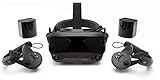
Valve Index VR Full Kit | $1,849.99 | Buy on Amazon |
| 3 |

|
HTC Vive Focus Vision — Mixed Reality and PC VR Headset + Controllers — Consumer Edition | $1,228.98 | Buy on Amazon |
| 4 |

|
Spigen Cushioned Controller Grips for Steam Frame VR Controller (2026) | $24.99 | Buy on Amazon |
As an Amazon Associate I earn from qualifying purchases.
That sequence is evidence that Valve has investigated a different display configuration for the headset platform. It does not establish that Plano passed prototype testing, that it is still in development, or that Valve intends to sell it. Kernel branches can support internal tests, engineering samples or hardware that is ultimately abandoned.
Free tools Windows power users keep installed
One-click scans. No signup required.
How Plano reportedly differs from the current Steam Frame
| Specification | Current Steam Frame | Plano reports |
|---|---|---|
| Display technology | LCD | OLED or MicroOLED, reported rather than confirmed |
| Resolution per eye | 2160 × 2160 pixels | 3552 × 3840 pixels |
| Refresh rate | Not stated in the supplied reporting | Up to 90Hz reported, with experiments toward 120Hz |
| Chip platform | Qualcomm Snapdragon 8 Gen 3 | Reportedly the same Qualcomm Snapdragon 8 Gen 3 |
| Availability | Current headset product | No confirmed retail product |
| Price and release date | Not relevant to the rumored configuration | Not announced by Valve |
The reported 3552 × 3840-per-eye panels would provide a much denser image than the current headset’s 2160 × 2160 LCD panels. Higher panel resolution can make text, distant geometry and fine edges look clearer, although the visible result also depends on optics, lens quality, rendered resolution and the software driving the headset.
#1 Best Overall
Why the reported render modes matter
Driving every pixel at the panel’s maximum resolution would place a heavy load on a mobile VR platform. Reports therefore describe a default mode of 1776 × 1920 pixels per eye and an experimental mode of 2368 × 2560 pixels per eye. These are render targets used to manage bandwidth and performance; they are not evidence that the panels have lower native resolution.
The same reporting links Plano to the Snapdragon 8 Gen 3 used by the current Steam Frame. If that information is accurate, Valve would be balancing a sharper display against the limits of an existing mobile chipset rather than simply increasing panel resolution without changing the performance target.
Rank #2
- Displays - Dual 1440 x 1600 LCDs, full RGB per pixel, ultra-low persistence global backlight illumination (0.330ms at 144Hz)
- Ergonomic Adjustments - Head size, eye relief (FOV), IPD, speaker positions. Rear cradle adapter included.
- Inter-pupillary Distance (IPD) - 58mm - 70mm range physical adjustment
- Optics - Double element, canted lens design
- NOTE - PC compatible with Valve Index is required
What “foveated scaling” could do
Plano-related code is reported to experiment with foveated scaling. This approach increases display pixel density around the area where the user is looking while using lower scaling elsewhere, with hardware handling parts of the process. The goal is to make the important region appear sharper without calculating every displayed pixel at the highest possible cost.
Foveated scaling is not the same as game-level foveated rendering. Game-level rendering changes how a game generates its image, while display-side scaling can operate as part of the headset’s presentation pipeline. The practical benefit would depend on eye-tracking accuracy, latency, the scaler’s quality and how individual games submit frames. The source evidence does not establish which of those systems would ship in a retail product.
Rank #3
- All-In-One VR Solution: The VIVE Focus series offers standalone and PC VR experiences. Harness the power of virtual reality with high-resolution displays, versatile tracking features, and immersive applications. Base station-free.
- PC VR Gaming Headset: Immerse yourself in low-latency VIVEPORT and SteamVR gameplay. DisplayPort mode delivers lossless, high-fidelity visuals straight from your PC.(1) Connect your PC directly to your Wi-Fi router using an Ethernet cable for PC VR streaming.
- Make Interactions Real: Connect in VRChat like never before. With built-in eye tracking and low-light hand tracking; plus face and body tracker support, movement in VR is intuitive and lifelike.(2)(3)
- Immersive 5k Headset Display: The immersive display puts you right at the heart of the action with a 5K resolution of 2448 x 2448 pixels per eye, up to 120° field of view, and 90 Hz refresh rate.
- Personalize Your Fit: Auto-IPD adjustment aligns the XR headset's lenses with the centers of your pupils, giving your eyes the clearest, most comfortable viewing experience.(4)
Is the Steam Frame OLED confirmed?
No. Valve has not publicly confirmed the Plano name, an OLED Steam Frame, the reported panel specifications, a launch date, a price or retail availability. The current evidence supports the narrower conclusion that Valve’s published kernel source contains work consistent with OLED-capable hardware.
That distinction matters because source code can outlive a cancelled project or describe a laboratory configuration that never reaches consumers. Until Valve publishes product information, every Plano specification—including display technology, refresh-rate modes, render targets and chipset pairing—should be treated as reported or inferred.
Rank #4
- DOTTED PATTERN GRIP – Non-slip texture placed exactly where hands grip resists sweat during 50+ minute VR sessions, purpose-molded for Steam Frame controllers.
- SIZE-ADJUSTABLE SECURITY STRAP – Adjusts to any hand size and locks the controller to your wrist, eliminating drop risk during fast, dynamic VR movement.
- PADDED FOAM COMFORT STRAP – Interior foam cushioning plus an ergonomic silicone cover cut hand and wrist fatigue across extended play sessions
- FULL SILICONE PROTECTION – Complete controller coverage shields against scratches, drops, sweat, and daily wear without adding bulk or blocking sensors.
- CHECK FOR COMPATIBILITY – Designed for Valve Steam Frame VR Headset Controllers (2026)
Should you wait for an OLED Steam Frame?
Wait if the display upgrade is your main reason to buy
If your decision depends on OLED contrast, higher per-eye resolution or a possible 120Hz mode, waiting avoids paying for a current headset and then discovering that the rumored configuration launches soon—or never launches at all. There is, however, no announced timetable to wait for.
Quick wins for a faster PC:
Clear out junk files and repair common Windows errorsFree Scan →Fix the driver behind crashes, sound loss and screen glitchesFind Drivers →Buy the current model if you need a headset now
Plano cannot be preordered and has no confirmed consumer availability. Choosing the current Steam Frame is therefore a decision based on an available product rather than a guaranteed upgrade path. Do not treat kernel references as a reservation, specification sheet or product roadmap.
Use the rumor as a feature checklist
- Confirm whether Valve announces OLED or MicroOLED panels.
- Check the final per-eye resolution and which modes are actually supported.
- Look for measured or official refresh-rate options rather than prototype experiments.
- Verify whether foveated scaling and eye tracking are included in shipping hardware.
- Compare the announced chipset, software support, price and launch regions with the current headset.
What to watch for next
The most meaningful confirmation would be an official Valve product page, technical specification or launch announcement naming Plano or an equivalent OLED model. Until then, the branch dates and display details remain useful clues about Valve’s experiments, but they are not a promise that an OLED Steam Frame will reach stores.
Bottom line: Plano is a credible source-code rumor pointing to OLED-capable Steam Frame experimentation. The reported 3552 × 3840-per-eye panels, 90Hz target and foveated-scaling work suggest a potentially sharper headset, yet Valve has confirmed neither the product nor its specifications, price or release.
Quick Recap
Product prices and availability are accurate as of the date/time indicated and are subject to change. Any price and availability information displayed on Amazon at the time of purchase will apply.
What’s actually slowing this PC down?
Pick the symptom - the matching free tool is one click away.

