
Recommended Free Tools
There is no defensible universal winner in this matchup yet: the other 2D open-world RPG is not identified. Without its title, platform, price and feature set, any claim that it has better combat, graphics, performance or value than Terraria would be guesswork.
What can be answered now is whether Terraria matches the kind of sandbox adventure you want, and which questions will settle the choice once you name the other game. Terraria is the safer pick for players who want a large, system-driven 2D world where digging, crafting, building, exploration and boss fights can all become the main activity. The framework below shows how to make a fair comparison rather than treating “open world” or “RPG” as an automatic recommendation.
| # | Preview | Product | Price | |
|---|---|---|---|---|
| 1 |

|
Terraria Playstation Hits (PS4) | $21.49 | Buy on Amazon |
| 2 |

|
Terraria - Xbox 360 (Renewed) | $13.30 | Buy on Amazon |
| 3 |

|
Terraria - PlayStation 3 | $24.97 | Buy on Amazon |
| 4 |
|
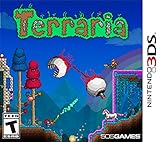
Terraria - Nintendo 3DS | $50.49 | Buy on Amazon |
As an Amazon Associate I earn from qualifying purchases.
What Terraria actually is
Terraria is a 2D sandbox action-adventure/RPG built around player-directed goals. Re-Logic describes the premise this way: “Delve deep into cavernous expanses, seek out ever-greater foes to test your mettle in combat, or construct your own city – in the World of Terraria, the choice is yours!” That sentence is a useful definition of the game’s design: the world supplies systems, materials and threats, while you decide what to pursue.
The game combines several activities that are often separated in other genres:
#1 Best Overall
- Hd graphical upgrades, with enhanced day night cycle
- new weather cycles, with rain and blizzards
- a new hard mode jungle Temple, with rare beehives throughout the jungle
- several new mini caves with unique backgrounds
- hammers can now be used for creating slopes, half-tiles, and breaking wallsPickaxes will now remove blocks, peaceable objects and items such as life crystals and chestsability to craft magic robes and staves, and blend together bricks, wood, Stone and glasswater now changes color based on the specific Biome and depth undergroundin total there are over 1, 000 new items added to the original console Gamewith so Much to discover, explore, craft and build - Make it your own!
- Digging and resource gathering: you alter the world to obtain materials and reach places that are not accessible from the surface.
- Exploration: you investigate a randomly generated world rather than following one fixed map.
- Crafting and equipment improvement: gathered resources feed into better gear and other useful creations.
- Construction: you can make functional homes and larger settlements instead of treating the environment as scenery only.
- Combat: ordinary enemies and increasingly demanding bosses provide tests for the equipment and preparation you choose.
- Self-directed progression: the game does not require one single campaign route, so building, exploring and fighting can take different priorities from one player to the next.
Steam’s official feature description characterizes the blend as “elements of classic action games with the freedom of sandbox-style creativity.” That is why calling Terraria only a building game or only an RPG gives a misleading picture. It has RPG-like improvement and boss progression, but the world is also a construction set and an exploration challenge.
Why a universal winner cannot be named
The matchup’s second game has not been named. That omission affects every category that normally decides a versus article:
| Comparison point | What is established for Terraria | What is established for the other RPG | What you must verify |
|---|---|---|---|
| Combat and bosses | Combat includes enemies and progressively greater foes, with player-chosen preparation and gear improvement. | Not stated because the title is unknown. | Input feel, weapon variety, defensive options, boss pattern design and whether encounters are optional or required. |
| Building | Construction is a central activity; Re-Logic explicitly presents constructing a city as one of the game’s possible goals. | Not stated. | Whether structures are decorative, functional, physics-based, blueprint-driven or limited by a plot. |
| World generation | Steam lists randomly generated worlds and sandbox play. | Not stated. | Seed variety, biome or region differences, persistence, reset rules and how much exploration changes between saves. |
| Solo play | Steam lists single-player. | Not stated. | Whether the full progression works alone and whether difficulty or rewards change in solo mode. |
| Co-op | Steam lists online co-op. | Not stated. | Player limit, local or online support, host requirements, cross-play and what happens when players join or leave. |
| Content scale | Nintendo’s current Switch listing states 5,000+ items, 25+ NPCs and 400+ enemies. | Not stated. | How the other game counts content and whether its figure includes cosmetic, duplicate or procedurally generated objects. |
| Platforms and price | An official Nintendo Switch edition exists; Steam lists a May 16, 2011 release date. | Not stated. | Edition availability, current regional price, update parity and save compatibility. |
| Guidance | The game emphasizes freedom and player-directed goals rather than one mandatory campaign path. | Not stated. | Tutorial quality, quest direction, readable recipes, map tools and how clearly the next objective is communicated. |
Until the other title is supplied, “better” can only mean “better for a particular player.” A game with a shorter, more directed story may suit someone who dislikes open-ended systems, while Terraria may suit someone who wants a world that remains useful after the first objective is complete. Neither result is a fact about the unnamed game; it is a decision rule you can apply once its details are known.
How Terraria’s progression works as a sandbox
Improvement comes from systems, not a single prescribed route
Terraria gives you a loop rather than a fixed checklist. You gather resources, turn them into equipment or construction materials, use that improvement to reach more dangerous places, and decide whether the next priority is another expedition, a building project or a fight. The official descriptions support this structure but do not establish one mandatory campaign path. You should therefore expect to set short-term goals yourself: obtain a material, prepare for a stronger foe, make a safer base or investigate an unexplored section.
Bosses provide milestones without removing freedom
Enemies and increasingly powerful foes give combat-focused players recognizable milestones. Preparation matters because gear improvement and resource gathering are connected to the fights. At the same time, the game’s sandbox structure means a boss is not the only valid reason to play. A player can spend a session improving a settlement or exploring underground spaces and still be participating in the same progression system.
Building is part of progression, not a separate mode
Construction can be practical as well as aesthetic. A settlement gives building-minded players a concrete project, while the ability to reshape the world makes exploration and preparation feel connected to the environment. If the unnamed RPG treats building as a small decoration feature, Terraria will feel substantially more like a construction sandbox. If that game offers deeper structural simulation or specialized building tools, it could appeal more to players who want architecture above all else; its actual systems must be checked before choosing.
Rank #2
- Classic Terraria gameplay now with console specific control system, and a friendly crafting/item interface.
- Online multiplayer with you to 8 players! Split-screen multiplayer 2-4 players.
- New Enemies and Final Boss, as well as Ultimate Weapons, new Armors and Pets never seen before!
- Hundreds of weapons, armor and other items to craft, with character advancement.
- Over 25 different block types to build whatever you imagine!
What the content numbers mean
Nintendo’s current Switch product listing advertises “5,000+ items, 25+ NPCs, and 400+ enemies.” Those figures communicate breadth, not a promise that every player will use every object or meet every character in one world. They indicate that Terraria has a large collection of things to discover, collect and combine, and that combat encounters are not limited to a handful of enemy types.
Use the figures carefully when comparing games. Ask whether the other developer counts only unique functional items, includes decorative variants, or uses a different definition of an enemy. A smaller published total could still support a more focused experience, while a larger total could include many objects you rarely need. The useful question is how much of the content changes your choices, not which marketing number is larger.
Solo and multiplayer: choose the social shape first
Playing alone
Steam lists Terraria as a single-player game. Solo play suits players who want to control the pace of gathering, construction and combat without coordinating with anyone else. Because the progression is system-driven, an individual player can choose whether a session is an expedition, a workshop period or a combat preparation session.
Playing with friends
Steam also lists online co-op. That makes shared building and joint exploration part of the supported design rather than an unofficial workaround. Before buying the unnamed RPG for a group, verify whether it supports online co-op at all, how many players can join, and whether everyone can progress equally. “Multiplayer” can mean a small co-op mode, a shared persistent world or a separate competitive feature; those are not interchangeable.
What’s actually slowing this PC down?
Pick the symptom - the matching free tool is one click away.
Questions for a household or mixed group
- Does everyone need the same platform and edition?
- Is local play available, or is an internet connection required?
- Does the host need to be present for the world to load?
- Can a new player join an established world without losing access to important progression?
- Do difficulty and enemy behavior change when more players are present?
The answers for the unnamed game are not established, so do not infer them from a trailer or a generic “co-op” label.
Which player profile is likely to prefer Terraria?
Choose Terraria if you want a world that supplies goals but does not dictate them
Terraria is a strong fit when you enjoy deciding what “progress” means. You can pursue equipment, enemies, materials, exploration or construction in whatever order the systems allow. This is especially valuable if you dislike being rushed from one quest marker to the next.
Rank #3
Choose Terraria if replayable world discovery matters
Randomly generated worlds, listed by Steam as a feature, mean a new save is not simply a replay of one authored map. Players who enjoy learning a world through exploration and adapting to what they find will get more from that structure than players who want every location placed for a carefully scripted story.
Choose Terraria if you want building and combat in the same save
The game does not force a choice between a construction sandbox and an action adventure. A player can make a city, then leave it to gather resources or confront stronger foes. If the other RPG separates these activities into disconnected modes, Terraria offers the more integrated option; if it combines them with a more elaborate narrative, that may be the better fit for story-first players.
The Tool Desk
Outbyte Driver Updater FREEScan for outdated or missing drivers - takes under a minuteDriver Scan →Outbyte PC Repair FREERepair Windows errors before they cause bigger problemsFix Now →Look elsewhere if you require a known story path before you start
The cited official pages do not establish a single mandatory campaign route. Players who need explicit chapters, a fixed ending order or constant objective markers should inspect the unnamed title’s quest and tutorial structure before choosing. Freedom is an advantage only when you enjoy setting your own next step.
A practical comparison method once you identify the other game
- Record the exact edition. Write down the game’s title, platform, edition and update date. A PC release and a console release may not contain the same features.
- Test the first hour. Note how quickly each game explains movement, gathering, crafting, building and combat. Record whether you can understand the next useful action without an external guide.
- Compare the first meaningful milestone. In Terraria, that might be improved equipment, a new area or preparation for a stronger foe. In the other game, identify the equivalent milestone and ask whether it is mandatory.
- Measure freedom honestly. List activities you can do immediately and activities locked behind a quest, boss or recipe. Count options, not just map size.
- Inspect building depth. Build a small shelter, test whether structures have practical functions, and check how much control you have over layout and materials.
- Check exploration variety. Start more than one world or save if the game allows it. Compare whether the route, resources and risks actually change.
- Play the intended social mode. Test solo and co-op separately. Check joining, saving, progression ownership and what happens when the host leaves.
- Compare the purchase you will make. Use the current regional store price, platform availability and edition feature list, not an old launch price or a different platform’s listing.
- Score your priorities. Give each category a weight from one to five based on your own habits. A player who mainly builds should weight construction more heavily than a player who wants boss fights.
| Category | Question to answer | Who should weight it heavily? |
|---|---|---|
| Combat | Do attacks, equipment and enemy encounters feel satisfying over a long save? | Players who treat bosses and preparation as their main milestones. |
| Building | Can structures change how you play, or are they mainly decoration? | Architects, decorators and players who enjoy making a persistent home. |
| Exploration | Does a new world create new routes, materials and decisions? | Players who prefer discovery to replaying a fixed story map. |
| Direction | Does the game explain the next step clearly enough? | Newcomers and players who dislike consulting external guides. |
| Co-op | Can your group play together on the platforms you own? | Households and friend groups buying for shared sessions. |
| Content breadth | Are there enough distinct items, NPCs and enemies to support your preferred activities? | Completionists and players planning a long-term save. |
Which version of Terraria should you buy?
Nintendo Switch
An official Nintendo Switch edition is available. Nintendo’s current listing is the source for the 5,000+ items, 25+ NPCs and 400+ enemies figures. Choose this edition when portable play or Nintendo hardware is the deciding factor, but verify the current regional listing and included features before purchase.
PC and Steam
Steam lists single-player, online co-op, sandbox play, randomly generated worlds and free content updates. Its store listing gives the release date as May 16, 2011. That date identifies the original Steam release, not the age of your particular save or the date of every update. Confirm the current system requirements, controller support and version compatibility on the store page before installing.
Do not assume every platform is identical
Platform, edition and update parity can affect multiplayer, controls, saves and available content. If you already own the game on one system, check whether another purchase transfers saves or grants access to the same world. The existence of a Switch edition does not establish a universal cross-save or cross-play policy.
Rank #4
- Dig!: Gather, transform, and utilize raw materials as you explore an assortment of distinct biomes and structures. Each world is unique, so you never know what you will find!
- Fight!: Wield a vast arsenal of weaponry and armor - from swords to magic spells to firearms and beyond - as you triumph over the enemy hordes that are intent on your destruction!
- Build!: Construct the world you desire! From simple dwellings to immense fortresses to intricate machinery, the choice is yours! Become the architect of your very own world!
Buying checklist
- Confirm the exact platform you intend to use.
- Check the current regional price rather than relying on a historical launch price.
- Read the current feature list for that edition, especially co-op and update information.
- Verify that your friends own compatible editions if multiplayer is central to the decision.
- Check available storage, controller or keyboard preferences and account requirements.
- For a Nintendo purchase, search the official store listing for “Terraria Nintendo Switch” and verify region, price and stock at checkout.
Amazon stock, pricing, regional availability and affiliate eligibility were not established here, so treat any marketplace result as something to verify rather than a guaranteed offer.
Common mistakes when comparing the two games
Declaring a winner from genre labels
“2D open-world RPG” describes a category, not a consistent experience. Two games can share the label while differing radically in combat, building, story direction and multiplayer. Compare the systems you will use, not the tags on the store page.
Equating more content with better content
Terraria’s Nintendo-listed totals are impressive, but quantity does not tell you whether the other game’s smaller set is more coherent or easier to learn. Ask how often the content changes a decision.
Free tools Windows power users keep installed
One-click scans. No signup required.
Confusing freedom with lack of guidance
A player-directed sandbox can feel liberating or opaque. If you prefer clear objectives, test the onboarding and recipe discovery before committing. If you enjoy experimentation, limited direction may be exactly the appeal.
Using an outdated platform assumption
Release dates, prices and feature parity change by platform and region. Steam’s May 16, 2011 date is a historical release fact; it is not a current price, update promise or statement about another edition.
Bottom line: make the comparison personal, then name the game
Terraria is the evidence-backed choice for a player seeking a broad 2D sandbox with digging, exploration, crafting, construction, combat, randomly generated worlds, solo play and online co-op. Its design lets you make building, discovery or boss preparation the center of a save, and Nintendo’s current Switch listing illustrates the breadth with 5,000+ items, 25+ NPCs and 400+ enemies.
A final “Terraria versus” verdict requires the other RPG’s name. Once you provide it, compare the two on combat, building, generation, solo and co-op support, platforms, content breadth, onboarding and player freedom using the decision steps above. Until then, the honest answer is not that one game wins: Terraria is the better fit for self-directed sandbox play, while the unnamed game remains impossible to judge on evidence.
Windows Errors? Fix Them Before They Spread
Repair common Windows errors and clear accumulated junk for a smoother, more stable PC - no reinstall needed.Free scan · no reinstallCrashes, No Sound, or Screen Glitches?
Random freezes, missing sound and display glitches usually trace back to one bad driver. Find and replace yours safely.Free scan · under a minuteQuick Recap
Product prices and availability are accurate as of the date/time indicated and are subject to change. Any price and availability information displayed on Amazon at the time of purchase will apply.

