
What’s actually slowing this PC down?
Pick the symptom - the matching free tool is one click away.
Start with Castlevania: Symphony of the Night if you can access it legally. It is the clearest introduction to Castlevania’s exploration-focused design: a large interconnected castle, ability-gated routes, character growth and secrets that reward returning to earlier rooms. If you want the easiest current purchase instead, choose Castlevania: Aria of Sorrow in Castlevania Advance Collection. It delivers the same broad style in a compact, beginner-friendly form without requiring prior knowledge of the series.
Castlevania divides into two very different traditions. Classic entries use discrete stages, a whip, sub-weapons, enemy patterns and fixed checkpoints. Later games build an explorable map around leveling, equipment and newly acquired abilities. The ranking below weighs that format, difficulty, progression, story dependence and present-day access, because a technically brilliant game is a poor first choice if a new player cannot easily obtain or understand it.
As an Amazon Associate I earn from qualifying purchases.
How to choose your first Castlevania
New players usually mean one of two things when they ask for the “best” Castlevania. They may want the series’ classic action: a sequence of demanding stages in which every jump, enemy pattern and limited-use sub-weapon matters. Or they may be looking for the exploration-heavy format that became associated with the term “Metroidvania”: one connected world, locked routes opened by abilities, role-playing progression and optional secrets.
Do these 3 things before closing this tab:
1Clear out junk files and repair common Windows errors2Fix the driver behind crashes, sound loss and screen glitches3Repair Windows errors before they cause bigger problemsNeither format is a prerequisite for the other. You do not need to play the original game before trying an exploration-focused entry, and you do not need to understand the family history of Dracula and the Belmont clan to enjoy a stage-based game. For a first purchase, format and access matter more than release chronology.
#1 Best Overall

- Classics that defined the Castlevania series.
- Includes the "History of Castlevania - Book of the Crescent Moon" ebook.
- This includes eight classic Castlevania games preserved on one disc with a full-color manual.
- The Castlevania Anniversary Collection on physical disc for the PlayStation 4. Also works on PlayStation 5. Region-free.
| What you want | Best first choice | Why |
|---|---|---|
| Exploration, leveling and ability collecting | Aria of Sorrow | Modern collection access, approachable progression and no required series knowledge |
| The definitive exploration-focused experience | Symphony of the Night | The clearest expression of the interconnected-castle design |
| Linear stages and classic whip combat | Super Castlevania IV | Teaches movement, sub-weapons, patterns and checkpoints without lore homework |
| A complete classic package | Castlevania Anniversary Collection | Practical route into the series’ origins |
| All three DS-era exploration games on a current console | Castlevania Dominus Collection | Includes Dawn of Sorrow, Portrait of Ruin and Order of Ecclesia |
Use the ranking as a guide rather than a commandment. A player who dislikes backtracking should begin with Super Castlevania IV, even though Symphony of the Night ranks first overall. A player who wants a modern console purchase should let the available collection decide.
The ranking
1. Castlevania: Symphony of the Night — best overall starting point
Symphony of the Night is the strongest first Castlevania when a legal copy or supported release is available. Its 2D presentation remains highly readable, and its castle teaches the exploration format naturally: a blocked route suggests a future ability, a suspicious wall invites investigation, and every new power changes how you read spaces you have already visited. Character levels, equipment and a large collection of weapons soften the series’ traditional rigidity without removing challenge.
You can begin without knowing the earlier games. The story continues Castlevania’s mythology, but the immediate goals are clear and the mechanics carry the experience. GameSpot’s ranking describes the 2D presentation as timeless, a useful explanation for why the game still works as an introduction rather than merely as a historical curiosity.
Quick wins for a faster PC:
Repair Windows errors before they cause bigger problemsFix Now →Fix the driver behind crashes, sound loss and screen glitchesFind Drivers →Clear out junk files and repair common Windows errorsFree Scan →The main drawback is access. Nintendo Life notes that the game is not currently included on Nintendo platforms, so a Switch owner cannot simply select it from the Nintendo collections listed here. Castlevania Requiem pairs Symphony of the Night with Rondo of Blood on supported PlayStation storefronts, but platform and region availability can change. Check the storefront for your country before buying.
- Format: exploration-focused castle with role-playing progression.
- Difficulty: generally forgiving because leveling and equipment provide multiple ways to recover from a difficult area.
- Story continuity: helpful but not required.
- Best for: players who want the design most associated with Castlevania’s genre legacy.
2. Castlevania: Aria of Sorrow — best practical modern starting point
Aria of Sorrow is the safest recommendation for most new players. It has the interconnected map, ability-gated exploration and character growth that define the later format, yet its scope is compact enough that the game rarely overwhelms a newcomer. Its central ability-collection system gives exploration a clear purpose: enemies can yield powers that change combat and open new routes, so experimentation is useful rather than ornamental.
No earlier Castlevania knowledge is needed. The setting and characters stand on their own, and the structure teaches the player what to do through map design rather than a long explanation. The game is included in Castlevania Advance Collection, which Nintendo Life characterizes as the series’ Metroidvania-style collection. On Switch, that collection is the clearest beginner route for someone who wants to buy and play an exploration-focused Castlevania on a current Nintendo system.
Aria also makes a good bridge to older games. Once you understand its movement, rooms and ability gates, Symphony of the Night becomes easier to appreciate; once you finish it, Dawn of Sorrow is the natural sequel. A secondary ranking source has reported a 91 Metacritic score for Aria of Sorrow, but that figure should be treated as historical secondary reporting rather than a freshly verified official statistic.
- Format: exploration-focused with leveling and collectible abilities.
- Difficulty: approachable for the style, with room to grow into harder encounters.
- Story continuity: self-contained enough for a first game.
- Best for: Switch owners and anyone who wants the least complicated modern entry point.
3. Super Castlevania IV — best classic stage-based introduction
Super Castlevania IV is the right first game for players who want stages rather than a map to fill in. Each area presents a sequence of rooms and hazards, and progress depends on learning enemy patterns, judging jumps, using the whip deliberately and choosing when to spend a sub-weapon. Checkpoints create a clear rhythm: reach the next safe point, study the next threat and try again with better information.
The game does not ask you to understand the wider timeline. Its controls and visual feedback explain the fundamentals directly, making it a useful first lesson in classic Castlevania even for someone who has never touched an older action game. Nintendo’s official description of Castlevania Anniversary Collection calls that package “the best first step for anyone to take into the world of Castlevania and the fight against Dracula”; that is a vendor statement, but it accurately identifies the collection’s role as an entry to the series’ origins.
Expect a different kind of difficulty from Aria or Symphony. There is no leveling system to rescue an underpowered character, and a missed jump cannot be solved by searching for a new ability. If you prefer mastery through repetition to character optimization, this is the classic to choose.
Rank #2
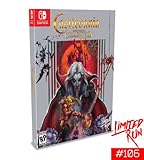
- Classic edition includes Konami-style silver box, physical game and soundtrack CD, 18 by 24" poster, and a NES-style dust sleeve to protect the game.
- Games Included in collection: Castlevania, Castlevania II Simon's Quest, Castlevania III Dracula's Curse, Super Castlevania IV, Castlevania The Adventure, Castlevania II Belmont's Revenge, Castlevania Bloodlines, and Kid Dracula.
- Box features all new art from legendary Konami cover artist Tom duBois.
- Format: linear stages with classic whip-and-sub-weapon combat.
- Difficulty: fair but demanding; pattern learning and checkpoint discipline matter.
- Story continuity: not needed.
- Best for: newcomers who want the traditional Castlevania formula in a polished form.
4. Castlevania: Rondo of Blood — best classic challenge after the basics
Rondo of Blood is an excellent second classic game, especially after you understand how stage-based Castlevania expects you to move and fight. It combines precise platforming, enemy-pattern recognition and route decisions with a higher demand for execution than the most welcoming entries. Its relationship with Symphony of the Night also makes it an attractive companion: Castlevania Requiem packages the two together where supported.
The Tool Desk
Outbyte Driver Updater FREEFix the driver behind crashes, sound loss and screen glitchesFind Drivers →Outbyte PC Repair FREEClear out junk files and repair common Windows errorsFree Scan →It ranks below Super Castlevania IV for a newcomer because it is less interested in easing you into the formula. The challenge is part of its identity, and the game is more rewarding when you already know how to conserve sub-weapons, recognize safe spacing and treat a failed attempt as information rather than a dead end.
- Format: linear stages with branching and replay value.
- Difficulty: high for a first game; better as a follow-up to a classic entry.
- Story continuity: no prerequisite, though it pairs naturally with Symphony of the Night.
- Best for: players who want a demanding, focused classic route.
5. Castlevania: Dawn of Sorrow — best follow-up to Aria
Dawn of Sorrow is the direct follow-up to Aria of Sorrow, so it makes the most sense after that game rather than before it. The shared continuity and returning ideas are more satisfying when you already know Aria, while a complete newcomer gains little by starting with the sequel. Its exploration, equipment and ability systems build on the same broad formula and provide a strong continuation for a player who has just learned it.
The game is part of Castlevania Dominus Collection, alongside Portrait of Ruin and Order of Ecclesia. That makes the collection valuable for anyone who wants the three DS-era exploration games on a current console, but it does not change the recommended order: play Aria of Sorrow first when possible, then move to Dawn of Sorrow.
- Format: exploration-focused sequel with role-playing systems.
- Difficulty: moderate, with the familiarity of Aria making its systems easier to read.
- Story continuity: meaningful sequel connection; play Aria first.
- Best for: players who want more of Aria’s style after finishing it.
6. Castlevania: Portrait of Ruin — best flexible DS-era option
Portrait of Ruin is a good second exploration-focused Castlevania because its multi-character structure changes how you approach rooms, enemies and problem solving. Switching between the two protagonists adds flexibility and gives the adventure a different texture from the single-character progression of Aria or Dawn of Sorrow.
Recommended Free Tools
It is less foundational than Aria for a first purchase. The character-switching design is easiest to appreciate after you already understand the basic exploration loop, and its place in Dominus Collection means it is often encountered beside two other games that assume some familiarity with the format. Choose it when cooperation between distinct abilities sounds more appealing than a straightforward solo progression path.
- Format: exploration-focused adventure built around two playable characters.
- Difficulty: moderate, with flexibility that can reduce some encounters’ pressure.
- Story continuity: independent enough to play alone.
- Best for: returning players who want a different character-management structure.
7. Castlevania: Order of Ecclesia — best choice for experienced players seeking difficulty
Order of Ecclesia is the challenge pick among the three games in Dominus Collection. Nintendo Life specifically describes it as raising the series’ difficulty level, and that reputation is important when deciding whether it should be your first Castlevania. The game rewards careful preparation, deliberate combat and willingness to revisit difficult sections with a better plan.
Its exploration is not a reason to skip the classic entries, nor is its difficulty a sign that it is poorly suited to beginners. It is simply less forgiving as a first lesson. Players who have completed Aria or another exploration-focused game will understand the map logic and ability progression, leaving them free to concentrate on the harder encounters. If challenge is your primary criterion, start here within the modern collections; otherwise, save it for later.
- Format: exploration-focused with a more demanding combat and progression curve.
- Difficulty: the highest recommendation in this ranking for experienced players.
- Story continuity: no need to play a specific earlier title.
- Best for: players who actively want Castlevania to test them.
8. Castlevania: Bloodlines — best shorter Genesis-style classic
Bloodlines suits players who want a compact, arcade-influenced route through classic Castlevania. It emphasizes immediate stage action rather than a large map or extended character build, so you can understand its appeal in a shorter commitment than an exploration-focused game. It is represented in Castlevania Anniversary Collection materials, making it easier to place alongside the series’ other classic entries.
It ranks below Super Castlevania IV as a first recommendation because its shorter, more arcade-like design is less of a complete introduction to every classic-system idea. Pick it when you want brisk stages, repeated attempts and a strong emphasis on execution rather than secrets, leveling or equipment.
Rank #3
- 819976026033
- 1186668
- Format: linear stages with an arcade-influenced pace.
- Difficulty: demanding in the traditional action-game sense.
- Story continuity: not required.
- Best for: players who want a concise classic experience.
9. Castlevania: Circle of the Moon — best darker, more demanding GBA entry
Circle of the Moon belongs to the exploration-focused side of Castlevania and is included in Castlevania Advance Collection. Its darker presentation and demanding design appeal to players who want a more severe GBA adventure, particularly after they have learned the format elsewhere.
It is not the safest first game because its tone and difficulty are less immediately welcoming than Aria of Sorrow. A newcomer may spend more time wrestling with the game’s demands than learning why ability-gated exploration is compelling. Once Aria has established the basic loop, however, Circle of the Moon offers a worthwhile contrast within the same collection.
- Format: exploration-focused GBA adventure.
- Difficulty: darker and more demanding than the recommended first entries.
- Story continuity: no prerequisite.
- Best for: players who want a tougher, moodier handheld-style experience.
10. Castlevania: Belmont’s Curse — a 2026 option to watch
Castlevania: Belmont’s Curse deserves a separate note because it is the newest game in this ranking rather than an established historical recommendation. It released on October 15, 2026. GamesRadar reported an 86 Metascore from 45 critic reviews shortly after launch, but that evidence is much newer than the long-standing reception of the other games here. A score from the first days of release can change as additional reviews and updates arrive.
Free tools Windows power users keep installed
One-click scans. No signup required.
For that reason, it is a current option worth considering, not the default first Castlevania. New players who want a newly released game should check its platform, region and current critical record directly before purchase. Players seeking the safest introduction should choose Aria of Sorrow, Symphony of the Night or Super Castlevania IV, whose roles in the series are better established.
- Format: confirm the current release details for your platform before buying.
- Difficulty: not established here as a comparative beginner measure.
- Story continuity: check the game’s own listing for requirements.
- Best for: players specifically interested in the 2026 release and comfortable with a newer evidence base.
Which Castlevania collection should you buy?
Collections are often more important than rankings because they determine what a new player can actually install. Their contents also separate the two major Castlevania traditions.
| Collection | Best use | Key games relevant to a newcomer | Decision note |
|---|---|---|---|
| Castlevania Advance Collection | Modern entry to exploration-focused Castlevania | Aria of Sorrow; Circle of the Moon | Clearest beginner route on Switch for the Metroidvania-style games |
| Castlevania Anniversary Collection | Introduction to classic origins | Super Castlevania IV; Bloodlines; original Castlevania | Choose it for stages, whip combat and pattern learning |
| Castlevania Dominus Collection | Complete DS-era set | Dawn of Sorrow; Portrait of Ruin; Order of Ecclesia | Play Aria before Dawn; reserve Order of Ecclesia for a challenge |
| Castlevania Requiem | Pairing of two major classic-era games | Rondo of Blood; Symphony of the Night | Check supported PlayStation storefronts and regional availability |
Availability, stock and regional storefront listings change. Treat the table as a buying framework, then verify the current edition and platform in your region. A collection’s title does not guarantee that every game is sold separately or on every console.
Recommended play orders for different players
If you want the exploration format
- Start with Aria of Sorrow in Castlevania Advance Collection.
- Play Symphony of the Night next when a supported legal release is available.
- Continue to Dawn of Sorrow for the direct sequel to Aria.
- Try Portrait of Ruin for its two-character structure.
- Finish with Order of Ecclesia if you want the collection’s highest recommended difficulty.
If you want classic stages
- Begin with Super Castlevania IV.
- Use Anniversary Collection to sample the original Castlevania and Bloodlines.
- Move to Rondo of Blood when you want a harder, more execution-focused challenge.
- Play Symphony of the Night afterward to see how the series’ design shifts from stages to exploration.
If you own a Switch
Choose Castlevania Advance Collection first if you want exploration, because it includes Aria of Sorrow. Choose Anniversary Collection if you want the classic stage formula. Choose Dominus Collection when your priority is all three DS-era games, understanding that Aria is still the better first game before Dawn of Sorrow.
What beginners should know before starting
- Backtracking is intentional in exploration games. When a route is blocked, mark it mentally or on the map and return after gaining a new ability; repeatedly forcing the same door is usually wasted effort.
- Classic games reward observation before speed. Watch enemy movement, learn where a checkpoint sits and use sub-weapons on threats that are difficult to approach with the whip.
- Story order is optional except for direct sequels. You can start with any self-contained entry, but Dawn of Sorrow is more rewarding after Aria of Sorrow.
- Difficulty is format-dependent. A stage-based game can feel harsher because there is no leveling system, while an exploration game may let equipment and experience compensate for mistakes.
- Do not buy by chronology alone. The oldest game is not automatically the best tutorial, and the newest collection is not automatically the best first purchase.
Final ranking at a glance
| Rank | Game | Best for | First-game verdict |
|---|---|---|---|
| 1 | Symphony of the Night | Overall exploration introduction | Best overall when legally accessible |
| 2 | Aria of Sorrow | Practical modern exploration start | Safest purchase for most newcomers |
| 3 | Super Castlevania IV | Classic stage-based action | Best traditional tutorial |
| 4 | Rondo of Blood | Classic challenge | Better after learning the basics |
| 5 | Dawn of Sorrow | Follow-up to Aria | Play Aria first |
| 6 | Portrait of Ruin | Flexible two-character exploration | Strong second Metroidvania choice |
| 7 | Order of Ecclesia | Experienced players seeking difficulty | Save for later unless challenge is the goal |
| 8 | Bloodlines | Shorter Genesis-style action | Good classic alternative |
| 9 | Circle of the Moon | Darker, demanding GBA exploration | Less welcoming than Aria |
| 10 | Belmont’s Curse | Newest 2026 release | Interesting current option, but too new for the default recommendation |
Frequently Asked Questions
Is Symphony of the Night still the best Castlevania game to start with?
Yes, when you can access a legal supported release. It remains the strongest introduction to the exploration-focused design, while Aria of Sorrow is the more practical modern purchase.
Should I play Aria of Sorrow before Dawn of Sorrow?
Yes. Dawn of Sorrow is the direct follow-up, so Aria provides the better first experience and makes the sequel’s returning ideas more meaningful.
What is the best Castlevania game on Switch?
For exploration, choose Aria of Sorrow in Castlevania Advance Collection. For linear classic stages, choose Super Castlevania IV through Castlevania Anniversary Collection. Verify the current regional listing before buying.
Which Castlevania collection should a beginner buy?
Buy Advance Collection for exploration-focused games, Anniversary Collection for classic stages, Dominus Collection for all three DS-era titles, or Requiem if you specifically want Rondo of Blood and Symphony of the Night on a supported PlayStation storefront.
Quick Recap
Product prices and availability are accurate as of the date/time indicated and are subject to change. Any price and availability information displayed on Amazon at the time of purchase will apply.

