
Choose a clan by matching its battlefield identity to its starting geography and the problem that identity creates. Chosokabe is the clearest starting point for learning the campaign loop because the official manual uses it as the tutorial clan. Oda suits players who want inexpensive mass infantry, Takeda rewards cavalry specialists, and Shimazu offers a comparatively contained melee opening. None is universally “best”: a powerful roster bonus can be offset by a dangerous border, a vassal obligation, religious penalties, upkeep, or a long route to Kyoto.
Total War: SHOGUN 2 combines turn-based provincial management with real-time battles. The Feral Interactive manual warns that “Not all clans and their starting positions are equal.” That warning is the key to reading every profile below: each recommendation pairs a clan’s appeal with the strategic cost you must manage.
| # | Preview | Product | Price | |
|---|---|---|---|---|
| 1 |

|
Total War: Shogun 2 | $11.95 | Buy on Amazon |
| 2 |
|
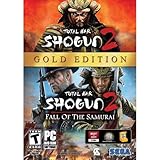
Total War: Shogun 2 Gold - PC | $28.49 | Buy on Amazon |
| 3 |

|
Total War: Shogun 2 - PC | $22.99 | Buy on Amazon |
| 4 |

|
Total War : Shogun 2 | $10.85 | Buy on Amazon |
| 5 |

|
Shogun 2: Fall of the Samurai, Limited Edition - PC | $12.95 | Buy on Amazon |
As an Amazon Associate I earn from qualifying purchases.
What actually determines a clan’s difficulty
A clan’s headline bonus matters, but it does not operate in isolation. Four factors shape the opening and the kind of decisions you will make for the rest of the campaign.
PC Slower Than It Used to Be?
A free scan shows the junk files, broken settings and background clutter dragging Windows down - then fixes them in one click.Free scan · Windows 10 & 11Outdated Drivers Are Slowing You Down
One free scan finds every outdated or missing driver and matches the right update for your exact hardware.Free scan · exact hardware matchRoster identity
Each clan nudges you toward a style: cheap ashigaru, elite cavalry, bows, warrior monks, ships, fortifications, infiltration, or firearms. Specialization can make a preferred unit efficient and effective, but it also encourages an army composition with clear counters. A cavalry-heavy plan needs room to maneuver; monks need protection; archers need a line that enemies cannot quickly close; and ships require land forces to turn maritime control into provinces.
#1 Best Overall
- Choose from 9 different clans and compete online and offline for the undisputed supremacy of Medieval Japan
- Play through the Main Campaign in single player or invite a friend online to play competitively or cooperatively in Campaign Multiplayer mode
- Developed according to Sun Tzu's principles in the Art of War, the Artificial Intelligence constantly analyzes its situation
- Build and govern cities, recruit and train troops, conduct diplomacy and manage your agents
- Improved land and naval battle gameplay, now with the ability to combine forces and attacks
Starting geography
Island and corner positions usually face fewer immediate land enemies. That can buy time to consolidate, but it may also slow contact with the central map and force you to invest in sea access. Central starts offer more routes for expansion and more trade opportunities, while exposing you to several neighbors and possible multi-front wars.
Political constraints
Vassalage, diplomacy, religious differences, and clan relationships can determine whether your first war is voluntary. Tokugawa’s opening relationship with the Imagawa, for example, makes timing and diplomacy part of the challenge before you can pursue an independent expansion plan.
Campaign objective and distance
Reaching Kyoto and becoming shogun is a map-wide project. A northern or island start can be safer in the first turns yet require a longer march or naval campaign later. “Easy” therefore depends on whether you value a calm opening, a simple economy, tactical control, or rapid access to the center.
The Tool Desk
Outbyte Driver Updater FREEScan for outdated or missing drivers - takes under a minuteDriver Scan →Outbyte PC Repair FREEClear out junk files and repair common Windows errorsFree Scan →All 12 major Sengoku clans at a glance
| Clan | Core identity | Opening situation | Best fit |
|---|---|---|---|
| Oda | Low-cost ashigaru and infantry mass | Central and exposed | Players comfortable with pressure and large inexpensive armies |
| Shimazu | Katana samurai and loyal generals | Kyushu island start | Players wanting a contained melee opening |
| Takeda | Cavalry and mobility | Landlocked, active neighbors | Players who enjoy flanking and choosing engagements |
| Tokugawa | Ninja support and diplomacy | Imagawa vassal opening | Indirect players who plan around politics |
| Hojo | Castles and siege economy | Defensive, settlement-focused game | Patient builders who fortify before expanding |
| Uesugi | Warrior monks | Challenging northern position | Players willing to protect fragile specialists |
| Mori | Naval power and cheaper ships | Sea-lane and island opportunities | Players who want fleets to shape the campaign |
| Chosokabe | Bows and archery economy | Tosa on Shikoku; tutorial clan | New players and ranged-army enthusiasts |
| Date | No-dachi charge attacks | Far north | Players happy to build up before a long advance |
| Hattori | Kisho-trained specialists and concealment | Central and pressured | Experienced players who like stealth and setup |
| Ikko-Ikki | Warrior monks and distinct religious systems | Unconventional religious campaign | Players seeking a different social and research challenge |
| Otomo | Christian identity and early firearms | Alternative faith and technology path | Players drawn to guns and religious trade-offs |
Clan profiles: strengths, costs, and player fit
Oda: inexpensive infantry under constant pressure
Oda’s appeal is straightforward: ashigaru are cheap, so you can field more bodies earlier and replace losses without the expense of an elite samurai core. That supports a broad infantry economy in which numbers, screening, and multiple armies matter more than a small collection of premium units. It is a good match for players who enjoy making a simple roster work through positioning and campaign logistics.
The price is geography. Oda begins in a central position with nearby rivals, so the savings on troops do not remove the need for diplomacy, garrison planning, and rapid responses on more than one front. Pick Oda if you want to expand with mass infantry; expect the map to test your ability to keep several borders quiet.
Shimazu: a contained katana opening
Shimazu starts on Kyushu and receives cheaper katana samurai plus increased general loyalty in the official faction description. The combination favors a melee-focused army with dependable leadership and gives you room to consolidate an island before committing to the mainland. Players who prefer direct engagements and a clear early objective will find the plan easy to understand.
Rank #2
- Brand New in box. The product ships with all relevant accessories
Kyushu’s separation is also a strategic commitment. You may have fewer immediate land threats, but reaching mainland opportunities requires sea access and a deliberate crossing. The island advantage is therefore time and security, not automatic economic superiority.
Takeda: cavalry mobility with a composition trade-off
Takeda reduces cavalry costs and builds its identity around mounted troops. Cavalry lets you threaten flanks, punish isolated units, scout routes, and disengage before a bad fight becomes decisive. This clan suits players who enjoy selecting when and where battles happen rather than grinding through every engagement head-on.
Mounted armies are less comfortable when terrain, walls, or a siege-focused campaign limits maneuver. That does not make Takeda incapable of taking castles; it means you must budget for infantry and missile support instead of treating cavalry as a complete roster. Choose Takeda when tactical movement is the fun, not when you want the simplest siege plan.
Tokugawa: diplomacy and ninja timing
Tokugawa emphasizes ninja actions and diplomacy and begins as an Imagawa vassal in the faction reference. Your early game is consequently about information, relationships, and choosing the moment to change your political status. Indirect tools can soften a target before an army arrives, while diplomacy can prevent a second war from opening at the wrong time.
The vassal opening constrains your freedom. You cannot treat the first turns as a blank expansion sandbox, and nearby powers can force political decisions before your economy is ready. Tokugawa fits players who enjoy preparation and leverage more than immediate conquest.
Quick wins for a faster PC:
Repair Windows errors before they cause bigger problemsFix Now →Fix the driver behind crashes, sound loss and screen glitchesFind Drivers →Clear out junk files and repair common Windows errorsFree Scan →Hojo: fortifications and methodical sieges
Hojo receives discounts for castles and siege units, encouraging a defensive economy in which strong settlements anchor your borders and specialized siege forces make assaults more predictable. This is a natural choice for players who like improving a position, forcing an enemy to attack prepared ground, and taking provinces one methodical step at a time.
Rank #3
- Choose from 9 different clans and compete on and offline for the undisputed supremacy of Medieval Japan. Gain experience to level up your own character-warlord as well as your generals and agents.
- Play through the Main Campaign in single player or invite a friend online to play competitively or cooperatively in Campaign Multiplayer mode.
- Developed according to Sun Tzu's principles in the Art of War, the Artificial Intelligence constantly analyzes its situation and reacts to your every move with greater precision and variety.
- A streamlined User Interface makes management of your kingdom much easier. Build and govern cities, recruit and train troops, conduct diplomacy and manage your agents - each feature is now introduced with comprehensive tutorials
Fortifications and siege equipment consume resources that could otherwise fund field armies or rapid expansion. Hojo’s strength is not a free pass to turtle indefinitely; it is a way to convert preparation into security. Pick Hojo if you enjoy patient investment and understand that every defensive purchase delays something else.
Uesugi: high-impact warrior monks that need cover
Uesugi’s roster identity is the warrior monk. These specialist infantry can give an army a distinctive shock element and reward players who understand morale, timing, and target selection. The reference also describes Uesugi’s northern position as challenging, so the clan combines a demanding map with a demanding unit-management task.
Monks have low armor and are vulnerable to enemy archers. They need screening, terrain, and a battle plan that prevents missiles from working uninterrupted. Uesugi is for players who want powerful specialists and are willing to build the rest of the army around protecting them.
Mori: naval control as campaign infrastructure
Mori’s naval strength and reduced ship costs make the sea a central part of your strategy rather than a side system. Fleets can protect trade routes, move armies between islands, intercept invasions, and open amphibious options that land-focused clans cannot use as cheaply. Players who enjoy managing a map-wide network will get more from Mori than players who want every decision resolved on land.
Ships have upkeep, and a fleet cannot occupy or hold a province. Mori still needs field armies, garrisons, and a plan for converting maritime access into territory. Treat naval power as infrastructure that enables expansion, not a substitute for conquering and defending land.
Chosokabe: the clearest learning route for ranged armies
Chosokabe specializes in bows and begins in Tosa on Shikoku. The official manual identifies Chosokabe as the tutorial clan, making it a defensible first campaign for learning the turn-based and real-time halves of the game. Shikoku gives you an island-consolidation objective, while archers teach target priority, ammunition management, and the value of terrain.
Rank #4
Ranged armies lose much of their advantage if an enemy reaches the line. You must screen archers with infantry, protect flanks, and avoid letting a successful volley create false confidence. Choose Chosokabe if you are new to the campaign or if controlling battles from a distance sounds more appealing than cavalry charges.
Recommended Free Tools
Date: explosive charges from a remote northern base
Date is associated with the no-dachi charge bonus and starts in the far north. The roster rewards decisive melee attacks and a player who can build momentum when the timing is right. The remote position gives you room to develop before the central powers become your immediate problem.
Distance is the defining cost. The route toward Kyoto is long, and northern isolation can delay contact, trade, and diplomatic involvement in the central campaign. Date suits players who enjoy an economic and military buildup followed by a committed southern advance.
Hattori: concealment and tactical setup for veterans
Hattori’s official faction page lists Kisho-trained specialist units, effective concealment, and a small boost to ninja action success. Those tools let you shape deployment and information before the battle begins, rewarding scouting, ambush planning, and careful use of terrain. This is the clan for players who regard setup as part of the fight rather than a prelude to it.
The start is central and pressured, so there is little room for an unplanned learning curve. Infiltration tools are strongest when you already understand movement, reinforcement timing, and the political map. Hattori is a specialist choice for experienced players, not a claim that stealth removes the need for conventional armies.
Ikko-Ikki: a different religious and social campaign
Ikko-Ikki centers on warrior monks and a distinct religious and research identity. The appeal is not merely a different unit list; it is a campaign that asks you to manage faith, relationships, and development differently from a standard Buddhist-clan pattern. Players looking for a genuinely altered strategic rhythm should consider it.
Best Value
- The American, British and French nations played an important part in the story of the Boshin war and your relations with these foreign powers will be integral to unit recruitment and to advancing your technology trees.
- Thirty nine new land units, including modern ranged units - such as the Gatling gun and Armstrong gun - controllable in a new third-person mode.
- New port siege battle type, this new battle type triggers when attempting a naval assault on an occupied enemy port. The attacking fleet must sail into the harbour and capture the port, running the gauntlet of coastal gun defences.
- New land and sea unit interactions, during a land battle, armies can call in offshore artillery support barrages.
- Campaign map bombardments: offshore naval units can bombard armies and cities in adjacent coastal areas on the campaign map itself.
The same systems create friction. Religious differences can produce diplomatic penalties, and the campaign’s social rules are less familiar if you have only played conventional clans. Choose Ikko-Ikki when learning a new framework is part of the attraction.
Otomo: firearms and a Christian technology path
Otomo’s identity is Christian, with early access to firearms described by the secondary faction guide. Guns give you a distinctive way to think about defensive lines, volleys, and research priorities, while the religious identity changes how you interact with the campaign’s broader systems.
The cost is complexity. You are learning a different faith and research path at the same time as you learn firearm employment. Otomo fits players who specifically want guns and are prepared to manage the diplomatic and developmental consequences of that choice.
Do these 3 things before closing this tab:
1Scan for outdated or missing drivers - takes under a minute2Repair Windows errors before they cause bigger problems3Fix the driver behind crashes, sound loss and screen glitchesWhich clan should you pick for your first campaign?
Use your preferred problem, not a universal tier list, as the deciding test.
- Want the official tutorial route? Start with Chosokabe, then learn to protect your archers while consolidating Shikoku.
- Want the simplest economic idea? Oda lets you replace losses and field large ashigaru armies, but its central position demands diplomacy.
- Want a relatively contained opening? Shimazu’s Kyushu start offers time to consolidate before a mainland crossing.
- Want mobility and tactical flanking? Takeda turns cavalry movement into the core challenge.
- Want defensive preparation? Hojo makes castles and siege planning central, at the cost of slower spending elsewhere.
- Want indirect or stealth play? Tokugawa offers diplomacy and ninja timing; Hattori goes further into concealment but begins under heavier pressure.
- Want ships to define the map? Mori makes naval management meaningful, provided you still fund armies that hold provinces.
- Want a specialist-unit challenge? Uesugi’s monks demand protection, while Date’s no-dachi identity favors decisive charges.
- Want a different religion and research structure? Ikko-Ikki and Otomo both change the campaign’s assumptions; Otomo adds the firearm focus.
Do not call any clan objectively easiest or strongest without specifying difficulty setting, campaign conditions, player experience, and what “easy” means. A safe opening, fast expansion, forgiving economy, and simple battles are different measures.
Edition and DLC checks before you start
The 12-clan reference roster includes content associated with clan packs. Availability can vary by edition and DLC ownership, so verify that Hattori, Ikko-Ikki, or Otomo is selectable in your installation before planning a campaign around it. If a clan is missing, that is an edition or ownership issue rather than evidence that the faction was removed from the game’s design.
A practical pre-campaign checklist
- Identify your preferred battlefield problem: mass infantry, cavalry movement, bows, ships, fortifications, monks, infiltration, or firearms.
- Mark the opening map risk: central starts require early diplomacy and garrisons; island and corner starts trade immediate safety for distance and sea access.
- Budget for the counter to your specialty: infantry for cavalry, screens for archers and monks, armies for fleets, and conventional forces for infiltration-heavy plans.
- Check political and religious rules: vassalage, diplomatic penalties, and alternative faith systems can matter more than a unit discount during the first turns.
- Confirm content ownership: make sure any clan-pack faction you want is available in your edition.
- Set a first objective that matches the map: consolidate an island, secure a border, build a fleet, or prepare the route to Kyoto instead of chasing an abstract “best” opening.
Sources and limits of the comparisons
The campaign principles and the Chosokabe tutorial designation come from Feral Interactive’s Total War: SHOGUN 2 — Manual. Faction identities and several listed bonuses are drawn from the official Total War Wiki’s faction pages, including Shimazu, Hattori, Hojo, and Takeda, alongside a secondary Total War: SHOGUN 2 Wiki faction reference. The player-fit recommendations are strategic interpretations of those identities and starts, not a measured ranking, win-rate study, or personal gameplay test.
Quick Recap
Product prices and availability are accurate as of the date/time indicated and are subject to change. Any price and availability information displayed on Amazon at the time of purchase will apply.

