
When a controller fails in UFL Mobile, the cause is usually one of four separate problems: the phone never completed Bluetooth pairing, the operating system assigned the wrong controls, network or wireless conditions are delaying responses, or UFL is receiving the input incorrectly. Fix the problem in that order. Pair and test the controller in the phone first, correct its system mapping, isolate connection delay with a wired test when possible, then submit an evidence-rich bug report if UFL still behaves incorrectly.
UFL Mobile is still in an early regional release, and UFL has not published a model-by-model controller compatibility list. Support can therefore vary with the phone, operating-system version, controller firmware and UFL build. The steps below separate what you can verify locally from issues that need UFL Support.
As an Amazon Associate I earn from qualifying purchases.
Start with a three-minute diagnosis
Do not begin by changing random in-game settings. First identify where the signal stops.
The Tool Desk
Outbyte Driver Updater FREEFix the driver behind crashes, sound loss and screen glitchesFind Drivers →Outbyte PC Repair FREEClear out junk files and repair common Windows errorsFree Scan →- The phone cannot see the controller: this is a pairing, Bluetooth-mode or controller-power problem.
- The phone says it is connected, but UFL ignores every press: verify that the game can run on the device, then report the behavior with Input Overlay enabled if other apps recognize the controller.
- Buttons work but perform the wrong actions: correct the operating-system mapping before changing anything in UFL.
- Inputs arrive late or in bursts: test the controller link separately from the internet connection. Network instability, interference, device load and the controller connection can all feel like “lag.”
- Only UFL is wrong after those checks: capture the behavior and submit it under Bugs and glitches so support can investigate the specific build and device combination.
This order prevents a network restart from being used to fix a button assignment, or an operating-system reset from being used to fix an overloaded Wi-Fi connection.
#1 Best Overall
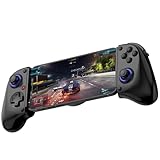
- Bluetooth Mobile Game Controller for Nintendo Switch 2 & iOS & Android & Tablets, Wireless Gamepad Grip with Hall Effect Trigger Joystick, Ergonomic Phone Controller for iPhone, iPad Pro, Samsung
- TURBO FUNCTION This MFi wireless controller has a turbo function, you can adjust the turbo button according to your needs and achieve one-click bursts, programming buttons are designed on the behind of the stretched gamepad, support macro programming, customise personalised game. making it easier for you to win in FPS games, and it is a good helper for you to play games.
- Hall effect joystick and linear trigger: mobile controller is with hall effect joystick, high precision, stable performance, faster response speed and long service life. Linear trigger has such high fluidity and response speed that gives you a competitive advantage in any game.
- ERGONOMIC DESIGN: Game accessory controllers are ergonomically designed to ensure flawless control and execution. The shape of the gamepad fits naturally in the hand, so you can better immerse yourself in the fun even during prolonged use. 360° rotating joystick analog sticks and trigger buttons ensure precise accuracy and comfort as well as increased sensitivity so you can better control your gaming remote control.
- Supports controllers up to 11 inch: Scalable design supports most tablets such as 11 inch iPad Pro (M5), 11 inch iPad Air (M3), iPad (A16), iPad mini (A17 Pro), 11 inch iPad Pro (M4), 11 inch iPad Pro 4/3/2/1, for Samsung, Lenovo, Amazon, Huawei tablets etc. (Not compatible with the 12.9-inch iPad Pro and 13-inch iPad Air)
Confirm that UFL Mobile can run on the phone
Android requirements
UFL’s Android guidance requires Android 10 or later, at least 4 GB of RAM and at least 3 GB of free storage for the initial launch files. A device that falls short may not show UFL in Google Play, may fail during installation, or may close before a controller can be tested. Free space is needed for the launch download, not merely for the size displayed beside the store listing.
- Open the phone’s system information and verify the Android version is 10 or newer.
- Check the memory specification or the manufacturer’s device information for at least 4 GB of RAM.
- Open storage settings and leave at least 3 GB free before installing or launching UFL for the first time.
- Install UFL from the official Google Play listing. If the listing is unavailable, the device or region may not be eligible for the early regional release.
Apple’s controller settings differ by device and operating-system release. Use the official App Store installation and the current Bluetooth and Game Controller menus available on the iPhone or iPad. UFL’s published material here does not provide a model-by-model Apple compatibility list.
If the game will not start
A controller cannot be diagnosed from a game that never reaches its main menu. Restart the phone, make sure the installation completed, and free storage before trying again. If UFL does not start at all, UFL says to use the in-app Support button when it is available or email [email protected]. Include the phone model and operating-system version so support can determine whether the failure is a launch problem rather than a controller problem.
Pair the controller outside UFL first
UFL should be opened only after the phone lists the controller as connected. Pairing inside or while launching the game can leave an old Bluetooth session active and makes it difficult to tell whether the operating system or UFL is at fault.
Android pairing procedure
- Turn off other phones, tablets, computers or consoles that have previously paired with the controller, or move them out of range. A controller that reconnects to another device is not available for the phone you are testing.
- Charge or power on the controller and hold its platform-specific pairing button until its indicator shows pairing mode. The exact button combination is controller-specific; consult the controller’s own instructions rather than guessing.
- On the Android phone, open Settings > Connected devices > Pair new device.
- Wait for the controller name to appear, select it and accept the pairing request.
- Remain in the Bluetooth or connected-device screen long enough to confirm a connected status. If the name appears only under available devices, pairing has not completed.
- Open the phone’s connected controller entry and then open Game controller settings. This is where Android exposes the control assignments and joystick behavior.
- Only after the controller is shown as connected, launch UFL and test a menu movement before starting a match.
If the controller never appears, turn Bluetooth off and on, power-cycle the controller, and repeat the scan with other previously paired devices disabled. Remove an obsolete duplicate entry from the phone’s saved Bluetooth devices before pairing again. A duplicate record can make the phone reconnect to an old profile or report a connection that the controller has already abandoned.
Apple pairing procedure
- Place the controller in its pairing mode using the manufacturer’s documented button combination.
- Open the iPhone or iPad’s Bluetooth settings and select the controller when it appears.
- Wait for the controller to move from the available list to the connected list before opening UFL.
- Open Settings > General > Game Controller. If the controller and operating-system version support customization, select the controller and review its controls.
- Launch UFL and test the menu, a player movement and at least one face button.
Some controllers can use a wired USB data-and-charging connection with an Apple device. The cable must carry data, not only power, and the phone, controller, adapter and UFL build must all support that arrangement. A cable that charges the controller but does not create a game-controller connection is not a valid wired test.
Rank #2

- Bluetooth Controller for iPhone & Android: Mocagen mobile gaming controller Compatible with all iPhone models (including 18/17 series) and Android devices. Pairing steps: 1. Turn on Bluetooth on your phone and go to the pairing screen. 2. Press and hold the Home button for 3 sec until LED4 flashes. 3. Find "XBOX Wireless Controller" on your phone and tap to pair. Quick reconnect: After first pairing, simply press the Home button once (with Bluetooth on) to reconnect
- Play Most Controller-Compatible Games: This iPhone game controller supports cloud gaming (e.g., Xb*x Game Pass, GeForce NOW), Xbox Remote Play, emulator games, and native mobile games (e.g., Apple Arcade). Enjoy effortless control and play Fortnite, Call of Duty, Roblox, Genshin Impact, and many more anytime, anywhere. Note: Controller only works with games that support controller input, and does not support PS Remote Play
- 5M-Cycle Lifespan & Zero Drift: MC1 mobile gaming controller features a Hall-effect joystick with a 5M cycle lifespan, 2.5x longer than standard carbon-film sticks. Its innovative electromagnetic induction technology ensures drift-free operation, enabling precise character control in intense games and significantly extending this phone game controller durability
- Ergonomic Grip Design: The handle is ergonomically shaped with a l*ser-engraved texture for anti-slip and enhanced grip, effectively reducing fatigue during long gaming sessions. The scientifically designed joystick and button layout ensures smooth operation. Whether for personal use or as a gift, it delivers a more comfortable and healthier gaming experience
- 7-Color RGB Light Ring & 600mAh Battery: The mobile game controller features a 7-color adjustable light ring on the joystick(ABXY button lights can be turned off, but their colors are not adjustable). The lighting is vibrant yet eye-friendly. The built-in 600mAh battery provides up to 6 hours of battery life in brightness mode — enough for a full day of gaming
Use the controller’s correct mode
Many wireless controllers offer separate modes for different operating systems or input standards. UFL does not publish a universal mode table, so the correct choice depends on the controller model. If the phone sees the controller but the controls are nonsensical, disconnect it, remove duplicate Bluetooth entries, select the mode intended for the phone’s operating system, and pair again. Do not assume that a mode that works on a console will expose the same buttons to Android or Apple.
Recommended Free Tools
Fix wrong buttons and sticks at the operating-system level
Wrong mapping is different from lag: a delayed pass button is a timing problem, while a pass that consistently performs a different action is an assignment problem. Correct the assignment before investigating the network.
Android mapping
- Open Settings > Connected devices and select the connected controller.
- Enter Game controller settings.
- Review the face buttons, shoulder buttons, triggers and joystick directions using a simple test: press one control at a time and note what Android reports.
- Use the reassignment controls to swap any incorrect buttons or sticks.
- Save the profile, disconnect and reconnect the controller, then test the same controls in UFL.
Android allows button and joystick reassignment, but menu names can vary slightly by manufacturer. If a setting is missing, update the phone’s system software and check the controller’s own configuration utility, if it has one. Do not create several competing profiles while diagnosing; keep one known mapping and change one control at a time.
Apple mapping
- Open Settings > General > Game Controller.
- Select the paired controller.
- When Default Controls is available, review the displayed assignments and customize the controls that are reversed or misplaced.
- Return to the controller screen, confirm the changes, and reopen UFL.
Apple exposes customization only for supported controller and operating-system combinations. If the Game Controller screen offers no remapping option, the limitation may be in the controller or operating-system support rather than in UFL. Keep the controller in its phone-compatible mode and remove old Bluetooth pairings before trying again.
Distinguish a mapping fault from an in-game fault
Use the phone’s controller settings or another compatible game to check whether the same button is wrong everywhere. If the assignment is wrong system-wide, fix the operating-system profile. If Android or Apple reports the expected button but UFL performs a different action, leave the system mapping unchanged and collect an in-game report instead. Reassigning a correctly mapped button can hide the evidence support needs.
What’s actually slowing this PC down?
Pick the symptom - the matching free tool is one click away.
Find the source of input lag
UFL matches depend on an internet connection, while the controller itself usually reaches the phone over Bluetooth. A delay can therefore originate in the match connection, the local wireless link, phone workload or interference. The most useful test is to change one link at a time.
Rank #3

- WIDE SCREEN COMPATIBILITY — PHONE TO TABLET: X5 Lite is a versatile phone controller that stretches up to 213mm to fit iPhone 15/16, most Android phones, iPad mini 6/7, and compatible Android tablets. Secure Type-C connection keeps gameplay stable and responsive.
- MOBILE, CLOUD & REMOTE GAMING: Play supported mobile games like Zenless Zone Zero, or stream console and PC games through Xbox Game Pass, Steam Link, Moonlight, and remote play. Enjoy physical controls wherever you play.
- HALL EFFECT STICKS — PRECISE CONTROL: GameSir Hall Effect sensing sticks deliver smooth 360° control for accurate aiming, movement, and camera adjustments. Built for fast-paced mobile games and streamed console or PC titles.
- LIGHTWEIGHT & ERGONOMIC — 135.4G: At just 135.4g, X5 Lite stays lightweight during extended gaming. Ergonomic, laser-engraved textured grips provide a secure, comfortable hold at home or on the go.
- CUSHIONED MEMBRANE CONTROLS — COMFORTABLE & QUIETER: Cushioned membrane buttons and triggers provide comfortable feedback for repeated inputs while keeping operation quieter. Ideal for extended sessions or gaming in shared spaces.
Run a wired diagnostic when available
Connect the controller with a compatible USB data cable and play a short training or menu sequence. If the delay disappears on a valid wired connection, Bluetooth interference or the wireless controller link is the leading suspect. If the delay remains, focus on the phone, game build or network rather than buying a different Bluetooth controller.
Wired play is a diagnostic aid, not a guarantee. The cable must support data, the phone may require an adapter, and not every controller or UFL build accepts wired input. Disconnecting a cable that only supplies power does not prove anything about latency.
Stabilize the internet path
- Restart the phone and router, then reconnect the controller after both devices are ready.
- Move the phone closer to the router and avoid walls, metal surfaces and crowded wireless areas during the test.
- Pause video streaming, cloud backups, downloads and other traffic on the same connection.
- Use a stable traditional broadband connection when possible. UFL’s guidance treats mobile and satellite links as less stable than traditional broadband for this type of play.
- Update the controller firmware and the phone’s operating system where updates are available.
- Run the same short test at a quiet time. A delay that changes with household traffic points toward the network rather than button mapping.
Do not infer a precise latency number from how a match feels. UFL has not published an authoritative controller-latency threshold or failure rate, so describe the symptom—such as inputs arriving in batches or actions appearing after a pause—instead of inventing a millisecond measurement.
Do these 3 things before closing this tab:
1Repair Windows errors before they cause bigger problems2Scan for outdated or missing drivers - takes under a minute3Clear out junk files and repair common Windows errorsReduce local wireless interference and device load
Keep the controller and phone close together, maintain a clear path between them, and temporarily turn off nearby devices that repeatedly attempt to reconnect to the controller. Close demanding background apps and let the phone cool if it is hot. A heavily loaded device can delay rendering and input processing even when Bluetooth and broadband are stable.
Test one change at a time: first the router distance, then competing traffic, then controller firmware, then a wired connection. If several changes are made simultaneously, you may improve the symptom without learning which condition caused it.
Independent reader supportYour contribution helps us test, update, and keep practical guides available for everyone.When the phone sees the controller but UFL responds incorrectly
This pattern is the key boundary between platform setup and a possible UFL defect. Confirm that the controller is connected in Android’s connected-device screen or Apple’s Bluetooth settings, and confirm that the operating system reports the expected buttons. Then reproduce the problem in UFL with the fewest variables possible.
Rank #4

- Compatible with Android devices and fits mobile devices ranging from 100mm to 170mm in length.
- Hall Effect Joysticks and Triggers
- Refined bumpers and D-pad. Light and tactile.
- 2 Pro back paddle buttons
- Profile button. Wear-resistant metal joystick rings. Turbo function.
- Restart UFL after the controller is connected; do not pair it while the game is already running.
- Use the same controller mode and operating-system mapping that passed the platform test.
- Open Options > Settings > HUD and enable Input Overlay. The overlay makes each button press visible while you record the issue.
- Capture a short video showing the phone’s connected-controller status, the physical button press, the overlay response and the resulting in-game action. Include a screenshot if a video is not possible.
- Repeat the test once after restarting the phone so the report demonstrates that the behavior is reproducible.
Input Overlay is especially useful when a support technician cannot reproduce the issue on the same controller. It distinguishes “the phone never sent the press” from “UFL received a press but assigned the wrong action.”
PC Slower Than It Used to Be?
A free scan shows the junk files, broken settings and background clutter dragging Windows down - then fixes them in one click.Free scan · Windows 10 & 11Outdated Drivers Are Slowing You Down
One free scan finds every outdated or missing driver and matches the right update for your exact hardware.Free scan · exact hardware matchSubmit a useful UFL bug report
For a persistent problem, report it through UFL’s support flow as Bugs and glitches. UFL Support asks players to report issues so the team can investigate and fix them. A report with the following details is far more actionable than “controller does not work.”
- Phone or tablet model.
- Android, iOS or iPadOS version.
- Installed RAM and free storage, especially on Android.
- Controller make and model, including the selected operating-system mode.
- Bluetooth or wired connection type.
- UFL version and the date the issue was observed.
- Whether the phone listed the controller as connected.
- Which buttons or sticks were wrong, delayed or ignored.
- Whether Android Game controller settings or Apple Default Controls showed the expected mapping.
- Network type and whether a router restart, closer position, reduced traffic or a wired test changed the symptom.
- Screenshots or video with Input Overlay visible.
Keep the report focused on one reproducible behavior. For example: “Android 13 phone, controller connected in Settings, left stick correct in Game controller settings, but UFL moves right when the stick is pushed left; reproduced after restart with Input Overlay enabled.” That format gives support a device, a baseline and an observable failure.
Bluetooth versus wired: which test fits the problem?
| Connection | What it verifies | Advantages | Limits |
|---|---|---|---|
| Bluetooth | Normal wireless controller pairing and phone-level mapping | Supported pairing and customization paths exist on Android and Apple devices | Can be affected by interference, reconnection to another device and the controller’s wireless mode |
| USB data-and-charging cable | Whether delay remains when the Bluetooth link is removed | Useful diagnostic comparison and, where supported, a wired play option | Requires data-capable cable and compatible phone, adapter, controller and UFL build; charging alone is not enough |
Use Bluetooth for the ordinary setup. Use wired input only to isolate a suspected local wireless problem or to play wired when every component explicitly supports it.
Android and Apple setup differences
| Task | Android | Apple devices |
|---|---|---|
| Pair outside the game | Settings > Connected devices > Pair new device | Bluetooth settings, then select the controller |
| Review mapping | Connected controller > Game controller settings | Settings > General > Game Controller |
| Customization | Android allows button and joystick reassignment | Default Controls customization appears when the controller and OS support it |
| Wired option | Use a compatible USB data connection where the phone and controller support it | Some controllers support a wired USB data-and-charging connection |
| UFL-specific evidence | Input Overlay under Options > Settings > HUD | Input Overlay under Options > Settings > HUD |
Common mistakes that make troubleshooting harder
- Launching UFL before pairing: the game may open with no controller session even after Bluetooth connects. Pair first, then launch.
- Leaving a second device nearby: automatic reconnection can silently move the controller away from the phone under test.
- Changing several mappings at once: you lose the original baseline and cannot tell which assignment fixed the problem.
- Calling every delay “input lag”: network delay, frame drops and Bluetooth interference require different fixes.
- Using a charge-only cable: power delivery does not establish a wired game-controller data path.
- Reporting without device details: controller behavior can vary by model, firmware, operating-system version and UFL release.
- Assuming a missing store listing is a controller fault: on Android, an unsupported device may not show UFL in Google Play because of the published requirements or regional availability.
When to stop troubleshooting locally
Stop changing settings when the phone consistently recognizes the controller, the platform mapping is correct, a stable connection has been tested and UFL still ignores or misinterprets a reproducible input. At that point, further remapping can obscure the fault. Submit the report under Bugs and glitches with Input Overlay enabled and the complete device, controller, software and connection details.
Because UFL Mobile remains in an early regional release and no official model-by-model compatibility list is published, a controller that works on one phone or UFL version is not proof that every combination is supported. Recheck UFL’s current support guidance and the platform’s controller documentation after major UFL, Android or iOS updates.
Quick Recap
Product prices and availability are accurate as of the date/time indicated and are subject to change. Any price and availability information displayed on Amazon at the time of purchase will apply.

