
Free tools Windows power users keep installed
One-click scans. No signup required.
No. Undying Sentinel does not make an Oath of the Ancients paladin impossible to kill. Its protection is narrower: under the commonly cited 2014 interpretation, the paladin does not die simply because the character has accumulated too many years. A statement attributed to D&D rules designer Jeremy Crawford says the feature includes protection from dying of old age while explicitly confirming that the character can still be killed by other means.
The short answer: age-proof, not unkillable
Undying Sentinel is the 15th-level feature of the Oath of the Ancients paladin. The wording that creates the immortality question says the paladin suffers none of the drawbacks of old age and cannot be aged magically. Read literally, that sounds like permanent life. In play, however, the important distinction is between not dying from age and not being able to die at all.
As an Amazon Associate I earn from qualifying purchases.
The most direct clarification is a statement attributed to Jeremy Crawford and reproduced in a D&D Beyond forum discussion from a 2017 social-media post: “The Undying Sentinel feature protects you from the drawbacks of old age, including dying of old age. You can still be killed, but not by the accumulation of years.” Because the original post was not retrieved, treat that sentence as an attributed rules clarification rather than as the printed feature text itself.
Do these 3 things before closing this tab:
1Fix the driver behind crashes, sound loss and screen glitches2Repair Windows errors before they cause bigger problems3Scan for outdated or missing drivers - takes under a minuteFor the familiar 2014 rules, that gives a practical answer: the paladin can remain alive indefinitely with respect to natural aging, but attacks, hazards and other lethal effects can still kill the character.
#1 Best Overall

- UNLEASH NEW POSSIBILITIES—Introducing the 2024 Player’s Handbook, the new and improved guide for fifth edition Dungeons and Dragons. Redesigned with 10 years of feedback from the D and D community, the essential Dungeons and Dragons rulebook is bigger and better than ever before
- NEW CHARACTER OPTIONS YOU’LL LOVE—Create unforgettable characters with 12 core classes, 48 intriguing subclasses, and 10 distinctive species. Buff up your character’s backstory with 16 compelling backgrounds and 75 fantastic feats.
- STUNNING ARTWORK—With vibrant new illustrations of every single character class, subclass, background, species, weapon, and armor, our thrilling artwork also features new and familiar spells, brought to life for the first time ever.
- FRESH and ENGAGING GAMEPLAY—Change up your combat style with fascinating new Weapon Masteries for your character class. Our new Tools and Crafting system lets you use your tools to craft items and impact travel and exploration.
- DESIGNED JUST FOR YOU—We’ve thoughtfully redesigned this book with an improved layout, better organization, and an alphabetized Rules Glossary. Find whatever you’re looking for with ease
What the feature protects against
Dying because of accumulated years
Normal aging eventually creates a rules problem: a character reaches the end of a natural lifespan and dies. The Crawford clarification treats that outcome as one of the “drawbacks of old age” covered by Undying Sentinel. The paladin therefore does not reach a point where the passage of time alone ends the character’s life.
This is the sense in which players can call the feature “immortality.” It is an immunity to a particular route to death, not a guarantee that the character survives every danger. The distinction matters most in campaigns that span decades or centuries, include long periods of downtime, or use a setting where an ancient character’s history is part of the story.
Magical aging
The feature also says that the paladin cannot be aged magically. That clause addresses effects intended to accelerate the character’s age rather than waiting for ordinary time to pass. A spell, monster ability or supernatural effect that would make the paladin older cannot use aging itself as its intended consequence against this feature.
Recommended Free Tools
“Cannot be aged magically” should not be expanded into “immune to every magical effect.” The protection is tied to aging. Magic that deals damage, imposes a condition, removes hit points, or otherwise kills without aging the character is not converted into harmlessness by this wording. The feature’s subject is the aging process and its drawbacks.
Rank #2

- COMPLETE YOUR COLLECTION—Get all three 2024 Core Rulebooks and discover new character options you’ll love, creative world-building inspiration, stunning artwork, and monsters galore
- STUNNING ARTWORK—Delight in spectacular new artwork for character classes, subclasses, weapons, armor, legendary D&D figures, almost every monster, and so much more
- FRESH & ENGAGING GAMEPLAY—Change up your combat style with fascinating new Weapon Masteries for your character class. Our new Tools and Crafting system lets you use your tools to craft items and impact travel and exploration
- NEW CHARACTER OPTIONS YOU’LL LOVE—Create unforgettable characters with 12 core classes, 48 intriguing subclasses, and 10 distinctive species. Buff up your character’s backstory with 16 compelling backgrounds and 75 fantastic feats
What it does not promise
Nothing in the quoted clarification says that the paladin is invulnerable, immune to damage, immune to every disease, or protected from every kind of death. It says the character can still be killed. The safest adjudication is therefore to ask what actually caused the death: if the cause is the accumulation of years, Undying Sentinel matters; if the cause is another lethal event, the feature does not supply a general “cannot die” rule.
Old age versus other causes of death
The following comparison keeps the rule’s boundary clear without treating “immortal” as a synonym for “indestructible.”
| Situation | How the established interpretation treats it | Practical reading |
|---|---|---|
| Death from the accumulation of years | Covered as a drawback of old age | The paladin does not die merely because a natural lifespan has run out. |
| An effect that magically ages the paladin | The feature says the paladin cannot be aged magically | The aging component is prevented; resolve any separate effect according to its own wording. |
| Being killed by an ordinary attack or other lethal event | The attributed clarification says the paladin can still be killed | Undying Sentinel is not a blanket protection against killing. |
The table is deliberately narrow. It does not turn every possible spell, monster ability or condition into a yes-or-no ruling, because those interactions depend on the exact effect’s text and on the edition being used. It does establish the central line: years do not kill the paladin; other dangers still can.
PC Slower Than It Used to Be?
A free scan shows the junk files, broken settings and background clutter dragging Windows down - then fixes them in one click.Free scan · Windows 10 & 11Crashes, No Sound, or Screen Glitches?
Random freezes, missing sound and display glitches usually trace back to one bad driver. Find and replace yours safely.Free scan · under a minuteWhy the word “immortal” causes arguments
“Immortal” has at least two meanings in ordinary conversation. It can mean “does not die of old age,” or it can mean “cannot be killed.” Undying Sentinel supports only the first meaning. A player asking whether a character is immortal may be asking about lifespan, while a Dungeon Master may hear a claim of absolute invulnerability. State which definition is being used before resolving a dispute.
Rank #3
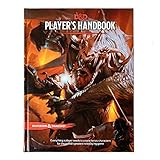
- The essential rulebook for Dungeons & Dragons (5th edition)
- Contains all the rules you need to know to play D&D
- Step-by-step guide to creating and leveling up characters
- Go-to player reference for over 350 spells, equipment, and more
- 1 of 3 D&D Core Rulebooks—the Player’s Handbook (rules for playing the game), the Dungeon Master’s Guide (how to run the game), and Monster Manual (creatures to encounter in your game)
The feature’s phrase about suffering none of the drawbacks of old age can also invite broader readings. The attributed clarification is useful because it names the most consequential consequence—dying of old age—while preserving the explicit limit that the paladin can still be killed. It does not authorize adding unrelated immunities that the feature does not mention.
That distinction also prevents a common narrative mistake. An ageless paladin may have watched generations pass and may be able to continue adventuring for centuries, but a battle can still end the character’s story. Longevity changes the character’s timeline and backstory; it does not remove ordinary stakes from an encounter.
Which edition are you using?
The 2014 rules context
The familiar Undying Sentinel question comes from the 2014-era Oath of the Ancients feature. In that context, the wording about old-age drawbacks and magical aging is the basis for the age-related immortality reading. The attributed Crawford statement and an Oath of the Ancients guide reach the same practical conclusion: dying of age is prevented, but the paladin can still be killed.
What’s actually slowing this PC down?
Pick the symptom - the matching free tool is one click away.
When a table quotes the feature, identify the 2014 rules context rather than presenting the answer as edition-neutral. A campaign may use the original Player’s Handbook, a later reprint, or a house conversion, and the exact text at the table controls the ruling.
Rank #4

- NIFTY RESOURCES FOR DUNGEON MASTERS—We've packed this book with incredibly useful tools and advice for Dungeon Masters of all levels. Make your game sessions special with over 400 total and 18 new magic items, practical solutions for common Dungeon Master pitfalls, and Greyhawk, a customizable premade campaign setting.
- WONDERFUL WORLDBUILDING INSPIRATION—Introduce inspiring new mechanics into your game! Tinker away with revised rules for crafting magic items, creating NPCs, and more. Excite your party and keep them engaged between sessions with the new system for bastions, which are strongholds built and controlled by players.
- STUNNING ARTWORK—Delight in spectacular artwork featuring new magic items, legendary D&D figures, cinematic fantasy landscapes, a double-sided poster map of the Greyhawk setting, and more!
- LEVEL UP YOUR DUNGEON MASTER EXPERIENCE—We’ve built useful handouts and resources to help you keep track of your campaigns and added a Lore Glossary that helps you easily find information about key D&D characters and locations.
- PART OF THE 2024 CORE COLLECTION—1 of 3 revised Dungeons & Dragons core rulebooks, the 2024 Dungeon Master’s Guide is designed for use with the fifth edition 2024 Player’s Handbook and 2024 Monster Manual
The revised 2024 feature
A transition guide reports that the 15th-level feature changed in the 2024 Player’s Handbook. According to that guide, the revised feature adds a healing effect after the paladin drops to 1 hit point and changes the aging-related wording. The guide describes the healing amount as three times the paladin’s level, but the complete official 2024 text should be checked before quoting that amount as a current rule.
The important point for this question is that the 2024 wording is not established here in full. Do not silently substitute the 2014 sentence for the revised text, and do not assume that a discussion of the older wording proves every detail of the new feature. If your campaign uses the 2024 Player’s Handbook, read the feature in that book or its official digital equivalent and apply that text first. The age-related conclusion may be similar, but the wording has changed enough that an edition-specific citation matters.
How to rule an Undying Sentinel question at the table
- Identify the rules version. Ask whether the character uses the 2014 feature or the revised 2024 feature. Write the source beside the character sheet if the campaign is mixing material.
- Name the immediate cause. Is the character dying because of accumulated years, being magically aged, or a separate lethal effect? Do not start with the label “immortal”; start with the effect that produced the death.
- Apply the aging language only to the aging component. If the effect’s consequence is increased age, the feature’s anti-aging clause is relevant. If the effect also contains damage or another independent consequence, resolve that part under its own wording.
- Check for a direct killing result. The attributed clarification expressly preserves the possibility of being killed. A ruling that treats every lethal event as blocked would go beyond that clarification.
- Record the ruling for future sessions. Aging questions often arise again when a campaign jumps forward in time. Note the edition, the exact feature text used, and whether the table is following the attributed clarification for old-age death.
This procedure keeps a dramatic disagreement from becoming a semantic argument. It also gives the Dungeon Master a repeatable way to handle a new aging effect without making a sweeping claim about every form of magic.
Quick wins for a faster PC:
Fix the driver behind crashes, sound loss and screen glitchesFind Drivers →Repair Windows errors before they cause bigger problemsFix Now →Scan for outdated or missing drivers - takes under a minuteDriver Scan →What this means for character stories
Long-lived characters
Under the 2014 interpretation, an Oath of the Ancients paladin can plausibly remain active far beyond an ordinary human lifetime. That opens story options such as a character who carries memories across eras, returns to a homeland after generations, or serves as a continuing guardian while political borders change. Those are narrative consequences of avoiding age-related death, not additional mechanical immunities.
Best Value

- 𝟮𝟬𝟮𝟰 𝗣𝗹𝗮𝘆𝗲𝗿’𝘀 𝗛𝗮𝗻𝗱𝗯𝗼𝗼𝗸: It is an upgraded rule book based on ten years of feedback from the D&D community; improved edition is bigger and better; includes vibrant new illustrations and exciting artwork for fresh and engaging gameplay
- 𝗜𝗻 𝘁𝗵𝗲 𝗦𝗲𝘁: The Player's Handbook, six additional dice sets in various colors, six flannel dice storage bags for added mystery, also quest, status, initiative cards and battlemap, e-materials for downloading and printing additional game content online, and many other exciting features
- 𝗔𝗱𝗱𝗶𝘁𝗶𝗼𝗻𝗮𝗹 𝗛𝗲𝗿𝗼𝗲𝘀 & 𝗠𝗶𝗻𝗶𝗮𝘁𝘂𝗿𝗲𝘀: Printable 1 000 characters with descriptions; each character has its own skills and statistics; 30 mini figures of heroes for more realistic and immersive experience in the D&D world of fantasy
- 𝗚𝗮𝗺𝗲 𝗛𝗼𝘀𝘁 𝗕𝗼𝗻𝘂𝘀: The master screen is an essential thing for the game host, providing quick access to all necessary information; If your imagination leads you beyond the main storyline, use the sheets to create a new battle map for your adventure; a dice guide is also included, offering tips on rolling to maximize your chances of success
- 𝗣𝗿𝗶𝗻𝘁𝗮𝗯𝗹𝗲 𝗠𝗮𝘁𝗲𝗿𝗶𝗮𝗹𝘀 𝗳𝗼𝗿 𝘁𝗵𝗲 𝗚𝗮𝗺𝗲: To get additional materials for core book scan the QR code on the insert found with rulebook to access printable materials, including the Master Screen, 1 000 Extra Heroes, 30 Action Figures, Hero Statistic Record Cards, Battle Map Foams, and a Dice Guide
Continuing danger
The feature does not remove the need for normal defensive play. A paladin who enters a dangerous fight still faces the consequences of attacks and other lethal effects. The character’s unusual lifespan may make the stakes more personal—an ageless hero can still lose companions, homes and battles—but it does not make an encounter automatically safe.
Campaign time skips
If the party spends decades away from the table’s ordinary action, the Undying Sentinel paladin does not need a special “death by old age” event under the 2014 reading. The Dungeon Master can still decide what happens to the world, the party’s resources and the character’s relationships during the gap. The feature answers the age-related survival question; it does not narrate the intervening years for you.
Common misreadings to avoid
“Immortal” means invulnerable
This is the central error. The attributed clarification uses both halves of the answer: protection from dying of old age and the ability to be killed. Leave out either half and the ruling becomes misleading.
Anti-aging means anti-magic
Preventing magical aging does not make every spell fail. Determine whether a magical effect is actually aging the paladin or doing something else. Only the aging portion is addressed by the clause.
The Crawford statement is the printed rule
The sentence is reproduced in a D&D Beyond forum discussion and attributed to a 2017 social-media statement. It is valuable interpretive guidance, but it is not a substitute for reading the feature in the edition your table uses. Present the attribution accurately rather than describing the forum reproduction as the original post.
The 2014 answer automatically settles 2024 play
A transition guide reports that the 2024 feature changed, including its healing effect and aging wording. Because the full revised text is not reproduced here, quote and apply the 2024 book itself when that is the rules version in use.
Bottom line
For the 2014 Oath of the Ancients feature, Undying Sentinel provides age-related immortality: the paladin is protected from dying through the accumulation of years and cannot be magically aged. It does not provide absolute immortality. The character can still be killed by other means, and the 2024 revision must be checked on its own wording rather than assumed to be identical.
The Tool Desk
Outbyte Driver Updater FREEScan for outdated or missing drivers - takes under a minuteDriver Scan →Outbyte PC Repair FREERepair Windows errors before they cause bigger problemsFix Now →Quick Recap
Product prices and availability are accurate as of the date/time indicated and are subject to change. Any price and availability information displayed on Amazon at the time of purchase will apply.

