
Probably wary, but not canonically confirmed as afraid. The clearest fear attached to Odin in God of War Ragnarök is the prophecy of his own death during Ragnarök. His first conversation with Kratos shows a calculating ruler trying to manage a dangerous opponent: he offers peace, invokes Atreus, and then probes Kratos about the god he used to be. That behavior can reasonably be read as caution, but no cited official statement says Odin feared Kratos specifically.
What the story actually confirms
Answering this question requires separating an explicit statement from an interpretation of a scene. Santa Monica Studio’s official material gives a direct explanation for Odin’s fear: in a 2026 PlayStation Blog announcement, the studio says Odin was “haunted by the prophecy of his demise during the events of Ragnarök.” The same description presents his pursuit of knowledge beyond mortal afterlives as an obsession. It does not identify Kratos as the object of that fear.
| # | Preview | Product | Price | |
|---|---|---|---|---|
| 1 |
|
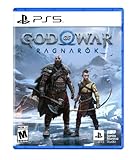
God of War Ragnarök - PlayStation 5 | $37.95 | Buy on Amazon |
| 2 |
![God of War Ragnarök - Standard - PC [Online Game Code]](https://m.media-amazon.com/images/I/51xJR6gHF1L._SL160_.jpg)
|
God of War Ragnarök - Standard - PC [Online Game Code] | $59.99 | Buy on Amazon |
| 3 |

|
God of War: Ragnarok (PS4) | $29.86 | Buy on Amazon |
| 4 |

|
God of War Ragnarök | $31.95 | Buy on Amazon |
| 5 |
|
God of War Ragnarök - Deluxe - PC [Online Game Code] | $69.99 | Buy on Amazon |
As an Amazon Associate I earn from qualifying purchases.
That distinction matters because Odin’s anxiety about Ragnarök and his treatment of Kratos can coexist. A person who expects a prophesied death may be especially careful around a powerful outsider who could affect the prophecy. Caution around Kratos is therefore a sensible inference, while “Odin was afraid of Kratos” is stronger than the available canon supports.
Do these 3 things before closing this tab:
1Clear out junk files and repair common Windows errors2Scan for outdated or missing drivers - takes under a minute3Repair Windows errors before they cause bigger problems| Claim | What is established | Confidence |
|---|---|---|
| Odin feared something | Santa Monica Studio explicitly connects his haunting fear to the prophecy of his death during Ragnarök. | Directly stated |
| Odin feared Kratos by name | No cited official source directly makes that claim. | Not established |
| Odin treated Kratos as dangerous | His attempt to negotiate, gather rapport through Atreus, and challenge Kratos’s identity supports that reading. | Strong interpretation |
| Kratos could threaten Odin’s plans | Kratos’s history with gods and his determination to protect Atreus make him a credible obstacle. | Story-supported inference |
Why Odin’s prophecy is the strongest evidence of fear
Odin’s defining anxiety is not a vague concern about losing a fight. It is the possibility that Ragnarök will bring about his death. The official studio description frames him as haunted by that prediction and driven to seek knowledge that might reach beyond ordinary mortal afterlives. His behavior is consequently shaped by a need to know, control, and prevent what he believes is coming.
#1 Best Overall
- Feel your journey through the Norse realms, made possible by immersive haptic feedback and adaptive trigger functionality.
- Take advantage of multidirectional 3D Audio; hear enemies approaching from any direction. (3D audio with stereo headphones (analog or USB))
- Bask in the beautiful worlds you travel through, brought to life by precise art direction and arresting attention to detail.
- Switch between full 4K resolution at a targeted 30 frames per second, or dynamic resolution upscaled to 4K at a targeted 60fps. (4K resolution requires a compatible 4K TV or display)
That motivation explains more of Odin’s conduct than a simple fear of Kratos does. His schemes, questions, and willingness to bargain are consistent with someone trying to manipulate the conditions around a prophecy. If Kratos is useful, Odin may want to recruit or redirect him; if Kratos is dangerous, Odin may prefer to contain him rather than provoke an immediate battle. Neither choice requires private terror.
The wording from Santa Monica Studio is also important. “Haunted by the prophecy” describes a continuing psychological burden, not a single moment of alarm. It gives the audience an explicit cause for Odin’s urgency. By contrast, there is no equivalent developer statement such as “Odin feared Kratos” or “Kratos was the one opponent Odin could not face.” The absence does not prove Odin felt nothing, but it prevents that conclusion from being presented as canon.
What happens when Odin speaks with Kratos
The negotiation scene is the main evidence used to argue that Odin fears Kratos. A screenplay-style PDF hosted by ACTRA Toronto reproduces Odin opening with, “You don’t really want war, do you Kratos?” Because that document is a secondary-hosted transcript aid rather than an official game transcript, the exact wording should be treated cautiously. The scene’s structure, however, is useful for interpreting Odin’s strategy.
Recommended Free Tools
He opens with de-escalation
Odin does not begin by issuing a straightforward threat or ordering an attack. He presents himself as someone interested in avoiding war. That can signal several things at once: a desire to buy time, an attempt to frame Kratos as the unreasonable party, or a genuine preference for negotiation. It also acknowledges that a confrontation with Kratos has costs Odin would rather avoid.
Calling for peace is not proof of fear. Powerful leaders negotiate when war would be inefficient, unpredictable, or damaging to their larger plans. Odin’s prophecy-driven worldview makes that calculation especially plausible. A fight could produce consequences he cannot control, even if he believes he could win it.
Rank #2
- Unlocked framerates and the option of true 4K resolution expand the full potential of our cinematic no-cut camera as you travel through the stunning vistas of the Nine Realms. Behold enhanced reflections, lighting, and higher fidelity shadows, as well as increased geometric detail.
- Full integration with NVIDIA RTX Deep Learning Super Sampling (DLSS) 3.7, AMD FidelityFX Super Resolution (FSR) 3.1, and Intel XeSS (Xe Super Sampling) 1.2 will allow you to reach higher graphical settings and output resolutions
- Utilize NVIDIA Reflex low latency technology allowing you to react quicker and hit harder combos with the responsive gameplay.
- Enjoy the breathtaking beauty of the Nine Realms in panoramic widescreen with 21:9 ultra-widescreen and 32:9 super ultra-widescreen support!
- Play your way. With support for the DUALSHOCK 4 and DUALSENSE wireless controllers, a wide range of other gamepads, and fully customizable bindings for mouse and keyboard, you have the power to fine-tune every action to match your playstyle.
He uses Atreus to create a point of contact
Odin’s conversation turns toward Atreus rather than staying focused on military power. The move gives him a more personal route into the discussion and tries to establish common ground with Kratos as a father. It also places Atreus at the center of the decision, where Odin can present himself as a source of answers or protection.
This is a form of pressure as much as rapport. Odin understands that Kratos’s choices are tied to Atreus’s safety and future. Speaking through that concern lets Odin influence Kratos without immediately testing their strength in combat. A manipulator may choose this approach because it is effective, not because he is emotionally frightened.
He provokes Kratos about his past
After offering peace and discussing Atreus, Odin needles Kratos about what kind of god he is. The tactic is deliberately personal. Kratos carries the consequences of earlier conflicts with gods, and Odin tries to make him react to that history instead of controlling the terms of the conversation.
Provocation can look inconsistent with fear, but it often belongs to the same strategy. An opponent who wants information may push for an emotional response. An opponent who wants to control the room may alternate reassurance with insult. Odin’s switch from conciliation to provocation suggests confidence in his ability to manipulate the exchange, while the initial offer of peace suggests he does not treat Kratos as a problem to dismiss.
Kratos warns him about the god he used to be
Kratos answers that Odin may meet “the god I once was.” The line turns the conversation back on Odin. It recalls Kratos’s violent past without requiring him to boast, and it warns that the restrained father Odin is addressing is not the only version of Kratos available to the conflict.
Rank #3
- 711719407492
Odin’s reaction is not, by itself, a confession of fear. The line does establish the stakes of the exchange: Kratos knows he has a reputation, and Odin knows that invoking it may change the balance between them. The scene therefore supports “Odin treated Kratos as a serious threat” more securely than “Odin was scared of Kratos.”
Why Kratos was a credible threat to Odin
Kratos’s danger is grounded in his history, not merely in fan interpretation. Santa Monica Studio’s 2021 preview says Kratos wants to spare Atreus the bloody lessons he learned through conflict with gods. The same preview says the confrontation with Baldur reinforced Kratos’s belief that further entanglement with the Aesir would bring tragedy.
That context gives Odin reasons to take Kratos seriously:
- He has already fought gods. Kratos is not an ordinary warrior confronting divine power for the first time. His past gives Odin reason to assume that intimidation alone will not work.
- He is motivated by Atreus. Kratos’s choices are not based only on personal survival. Threats to his son can make him more determined and less willing to accept a compromise.
- He is trying to change. The older, more controlled Kratos may be less predictable than the openly destructive figure from his past. Odin cannot assume that restraint means weakness.
- He has already become entangled with the Aesir. The Baldur conflict demonstrates that attempts to avoid divine conflict can still end in violence. Odin has reason to expect that Kratos’s presence will alter events around him.
These facts establish capability and motive. They do not reveal Odin’s private emotional state. A person can recognize an opponent as lethal while remaining confident, arrogant, or determined to use that opponent for a larger objective.
Fear, caution, and tactical respect are different readings
The word “fear” can describe several reactions, and the answer changes depending on which one is meant. The evidence fits some meanings better than others.
Rank #4
| Meaning of fear | Does Odin fit it? | Why |
|---|---|---|
| Emotional panic or terror | Not demonstrated | The conversation does not provide an explicit confession, breakdown, or statement that Kratos frightens him. |
| Fear of a foretold death | Yes, explicitly | The studio says Odin is haunted by the prophecy of his demise during Ragnarök. |
| Strategic caution | Very plausible | He negotiates, engages Atreus as leverage, and probes Kratos instead of treating him as an irrelevant enemy. |
| Respect for an opponent’s ability | Supported by context | Kratos’s history with gods makes him a credible danger, even if Odin considers himself superior. |
| Fear that Kratos will fulfill the prophecy | Possible, but unconfirmed | The prophecy and Kratos’s role in the conflict overlap, yet no cited official statement identifies him as the prophecy’s specific source. |
“Wary” is therefore the safest single adjective for Odin’s attitude toward Kratos. It captures the practical caution visible in the scene without claiming an emotional certainty the story does not supply. “Possibly afraid” is defensible when clearly labeled as interpretation. “Definitely terrified of Kratos” goes beyond the evidence.
Independent reader supportYour contribution helps us test, update, and keep practical guides available for everyone.Was Odin more afraid of Ragnarök than of Kratos?
Based on the studio’s own description, yes: Ragnarök is the only fear explicitly assigned to Odin. His obsession with knowledge beyond mortal afterlives follows from that fear, suggesting that the central problem is his anticipated death and the limits of his ability to prevent it.
Kratos matters because he is part of the network of people and events surrounding Ragnarök. A powerful outsider can become a variable in a prophecy, an obstacle to Odin’s plans, or a tool Odin hopes to redirect. That makes Kratos strategically important without making him the original object of Odin’s dread.
This distinction also explains why Odin can appear both bold and careful. He may believe he can outthink Kratos while still recognizing that a direct confrontation could move events toward the outcome he is desperate to avoid. Confidence in manipulation and fear of a foretold death are not contradictions.
Common mistakes when interpreting the scene
“Odin offered peace, so he must have been scared.”
Negotiation proves that Odin sees value in conversation. It does not identify the emotion behind that choice. He could be buying time, seeking information, protecting a plan, or trying to recruit Kratos. The scene supports caution more directly than panic.
Best Value
- Unlocked framerates and the option of true 4K resolution expand the full potential of our cinematic no-cut camera as you travel through the stunning vistas of the Nine Realms. Behold enhanced reflections, lighting, and higher fidelity shadows, as well as increased geometric detail.
- Full integration with NVIDIA RTX Deep Learning Super Sampling (DLSS) 3.7, AMD FidelityFX Super Resolution (FSR) 3.1, and Intel XeSS (Xe Super Sampling) 1.2 will allow you to reach higher graphical settings and output resolutions
- Utilize NVIDIA Reflex low latency technology allowing you to react quicker and hit harder combos with the responsive gameplay.
- Enjoy the breathtaking beauty of the Nine Realms in panoramic widescreen with 21:9 ultra-widescreen and 32:9 super ultra-widescreen support!
- Play your way. With support for the DUALSHOCK 4 and DUALSENSE wireless controllers, a wide range of other gamepads, and fully customizable bindings for mouse and keyboard, you have the power to fine-tune every action to match your playstyle.
“Odin insulted Kratos, so he was not afraid.”
Insults can be tools. Odin’s challenge about Kratos’s past may be intended to provoke an impulsive answer or establish dominance. A manipulator can taunt a dangerous opponent precisely because he wants that opponent to reveal something.
“The prophecy proves Odin feared Kratos specifically.”
The prophecy establishes a fear of Odin’s demise during Ragnarök. It does not, in the cited material, name Kratos as the cause. Connecting the two requires an interpretation of the story’s events, not a direct quotation from the studio.
“Kratos’s warning is proof Odin was intimidated.”
Kratos’s line demonstrates that he wants Odin to understand his capacity for violence. Odin hearing that warning may alter his calculations, but the scene does not state what he feels internally. Treat the line as evidence of the threat being communicated, not a psychological diagnosis.
What’s actually slowing this PC down?
Pick the symptom - the matching free tool is one click away.
How to give the most accurate one-sentence answer
If someone asks whether Odin feared Kratos, the precise answer is: Odin was likely wary of Kratos and treated him as a dangerous variable, but the story explicitly depicts Odin as haunted by the prophecy of his own death, not as definitively afraid of Kratos. That wording keeps the official statement, the scene’s behavior, and the interpretation in their proper places.
Quick Recap
Product prices and availability are accurate as of the date/time indicated and are subject to change. Any price and availability information displayed on Amazon at the time of purchase will apply.

