
NPCs may repeat lines or behave awkwardly because open-world games rely on limited authored dialogue, recurring triggers, simplified simulation at a distance, and multiple AI systems that have to coordinate. A character walking into a wall is not automatically a bug—but whether a specific incident is expected behavior depends on the game, platform, version, and circumstances.
Why does an NPC keep saying the same thing?
Dialogue is usually authored and tied to conditions such as a quest state, location, topic, or player action. If you trigger the same interaction again—or the game has no new line for the current situation—the character may deliver a familiar response. That does not establish how many lines a game contains or explain every repeated line; those details differ by game.
| # | Preview | Product | Price | |
|---|---|---|---|---|
| 1 |

|
Open World: Video Games and Contemporary Art | $53.58 | Buy on Amazon |
| 2 |

|
Ghost of Tsushima - PlayStation 4 | $22.99 | Buy on Amazon |
| 3 |

|
Mad Max - PlayStation Hits (PS4) | $18.64 | Buy on Amazon |
| 4 |
|
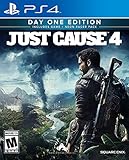
Just Cause 4 - PlayStation 4 | $11.80 | Buy on Amazon |
| 5 |

|
Elden Ring - PlayStation 4 | $33.15 | Buy on Amazon |
As an Amazon Associate I earn from qualifying purchases.
Dialogue also has to fit around gameplay. Ubisoft Toronto describes Watch Dogs: Legion’s system for deciding when contextual dialogue can play: banter competes for the player’s attention with missions, checks whether the player is busy, and may expire if its opportunity passes. This is one example of timing and priority rules at work, not a universal account of how every game schedules speech. Ubisoft Toronto explains the Player Attention System.
Do these 3 things before closing this tab:
1Repair Windows errors before they cause bigger problems2Scan for outdated or missing drivers - takes under a minute3Clear out junk files and repair common Windows errorsWhy do NPCs walk into walls, get stuck, or move awkwardly?
Several systems shape one visible action
What looks like one decision can involve separate systems for goals and behavior, intermediate action choices, navigation, and animation. In an account of a presentation by Youichiro Miyake about Final Fantasy XV, Game Developer describes Meta AI governing behavior, Character AI handling an intermediate decision layer, and Animation AI turning choices into visible motion. Even a conversation can require systems to coordinate a character’s spacing and facing. If a choice, route, or animation does not line up with the others, the result can look awkward even when each component is following its own rules. Game Developer’s account of the Final Fantasy XV AI systems puts the design goal this way: “an AI’s actions must be in harmony with its artificial environment, sensibly responding to the world before it and the people (including the player) within it.”
#1 Best Overall
Routes depend on navigation data and constraints
NPCs do not necessarily navigate terrain as freely as players do. Game Developer’s coverage of a GDC talk about Death Stranding describes developers adjusting navmesh step height, using raycasts to detect small ledges, and adding step-up and step-down animations to help MULEs follow players. Terrain cost areas encouraged them to route around rocks; memory limits also constrained how they searched after detecting the player. Those choices help explain why an NPC in that game might take an indirect route or search a limited area, but they do not diagnose similar behavior in another title. Game Developer’s account of NPC navigation in Death Stranding describes the implementation.
Why can nearby and distant NPCs behave differently?
Simulating every character at full detail all the time can consume substantial processing and memory. Some games therefore use different levels of simulation depending on distance or visibility. Ubisoft’s description of Assassin’s Creed Origins distinguishes virtual, bulk, and real states. It says distant virtual characters update every five to 15 seconds, depending on distance, while real-state entities within 80 meters are fully rendered and updated each frame. These are implementation details Ubisoft published for Assassin’s Creed Origins, not standard settings for open-world games as a whole. Ubisoft’s explanation of the Origins living-world systems gives more detail.
Rank #2
- Available Now - Ghost of Tsushima: Legends, a new cooperative multiplayer experience inspired by Japanese folk tales and mythology.
- Beyond war, ancient beauty endures: Uncover the hidden wonders of Tsushima in this open-world action adventure.
- The rise of the Ghost: Forge a new path and wage an unconventional war for the freedom of Tsushima.
The scale of a world can also make simulation choices visible. A Game Developers Conference session overview says Kingdom Come: Deliverance II has nearly 2,400 NPCs on the map, around half concentrated in one city, and describes AI level-of-detail techniques used to keep frame times and memory reasonably low. That figure is specific to this game and the 2026 session overview; it is not a typical NPC count for the genre. The GDC Vault session overview covers the approach.
Can game systems conflict with each other?
Yes. A system designed to simulate behavior cheaply over long distances can interact poorly with a more detailed planner meant for nearby characters. A postmortem on Assassin’s Creed Odyssey and Immortals Fenyx Rising describes distant Meta AI and high-detail planning interrupting one another when a character was close to and engaged with the player. The authors also discuss compromises made in the architecture and modularity under production demands. This is a documented example of interacting systems, not evidence that every odd NPC action comes from a conflict. Game Developer’s postmortem explains the case.
Rank #3
- Be Mad Max - Become the iconic post-apocalyptic warrior, crafting and upgrading Max's equipment and weapons to survive by combining melee combat, gunplay and tactical techniques. Gamers must form alliances as they work towards the goal of building their "Magnum opus."
- Immersive savage Wasteland - Explore the gritty, dynamic world while braving the treacherous landscapes, hostile weather patterns and deadly marauders.
- survive the open-world landscape - Staying alive isn't easy. Players clash with deadly factions and gangs through scores of dangerous side-missions and quests in the dynamic open-world full of exploration.
- intense vehicular combat - Engage in dynamic inter-vehicular combat, taking down enemy vehicles with a range of powerful weapons. Car combat is entirely physics-based, so no two battles are ever the Same.
- build the ultimate survival machine - Players design, customize and upgrade their ultimate vehicle-the Magnum Opus-choosing from different car chassis and a slew of upgrades including mounted weapons, armour and engines to survive another day
Is strange behavior a bug or just how the game works?
The symptom alone rarely settles that question. A line that recurs after the same trigger, a distant NPC behaving less precisely, or a character taking a route shaped by terrain data can be consistent with a game’s design. A character repeatedly trapped in the same spot, failing to advance a quest, or behaving differently after an update may point to a game-specific defect—but confirmation requires evidence about that title and situation.
- Note the context: record the game, platform, version, location, quest state, and what you did immediately before the behavior.
- Check whether it repeats: if the same action reliably produces the same result, the trigger may be part of the explanation; reproducibility alone does not prove it is intended.
- Look for game-specific confirmation: consult the developer’s patch notes or support information for a matching issue. Without a named game and reproducible circumstances, broad explanations are possibilities, not a diagnosis.
Does generative AI explain repetitive NPC dialogue?
Not as a general explanation for released open-world games. Ubisoft has described NEO NPC as a generative-AI prototype in which writers shape character backstories and data scientists tune model behavior with instructions and guardrails. Ubisoft described the project as a prototype that still had a way to go before implementation in a game. Its narrative director, Virginie Mosser, said: “It’s important to us to reiterate that these characters do not have free will,” Ubisoft’s account of the NEO NPC prototype provides the project’s scope.
Quick Recap
Best Value
- ELDEN RING is a fantasy action-RPG adventure set within a world created by Hidetaka Miyazaki—creator of the influential DARK SOULS video game series; and George R.R. Martin—author of The New York Times best-selling fantasy series, A Song of Ice and Fire
- Danger and discovery lurk around every corner in FromSoftware’s largest game to-date
- HIDETAKA MIYAZAKI: President and Game Director of FromSoftware Inc. Known for directing critically-acclaimed games in beloved franchises including Armored Core and Dark Souls
- GEORGE R. R. MARTIN: the #1 The New York Times bestselling author of many novels, including the acclaimed series A Song of Ice and Fire—A Game of Thrones, A Clash of Kings, A Storm of Swords, A Feast For Crows, and A Dance with Dragons
Rank #4
- Day One Edition includes Neon Racer Pack with these DLC items Neon Racer Supercar, Neon Racer Wingsuit, Neon Racer Parachute; see description for full details
- Bring The Thunder Soar through the skies with your wingsuit Skydive, Base Jump and Free Dive, as you fight your enemies harnessing extreme weather to your advantage
- Rico’s Ultimate Mission Spearhead the rebellion and defeat a hi tech private military organization; Face off against the most capable adversary yet; Uncover the mystery behind Rico’s Father’s past
- Huge South American World 100 square kilometers to explore from rainforest to desert, and across snowy mountain peaks as you explore the world of Solis from bustling cities to rural grasslands
- Creative destruction at its best Customize your new grapple hook with evolved and new capabilities; Experiment with military jets, helicopters, turbo fueled sports cars, and construction vehicles
Product prices and availability are accurate as of the date/time indicated and are subject to change. Any price and availability information displayed on Amazon at the time of purchase will apply.
The Tool Desk
Outbyte PC Repair FREEClear out junk files and repair common Windows errorsFree Scan →Outbyte Driver Updater FREEFix the driver behind crashes, sound loss and screen glitchesFind Drivers →
