
Quick wins for a faster PC:
Fix the driver behind crashes, sound loss and screen glitchesFind Drivers →Clear out junk files and repair common Windows errorsFree Scan →Scan for outdated or missing drivers - takes under a minuteDriver Scan →A low Intelligence score can be more than a penalty in a role-playing game. In games such as Fallout 2 and Fallout: New Vegas, it can change a character’s vocabulary, trigger misunderstandings, alter how non-player characters respond, and occasionally open a different way through a quest. The reward is not that a foolish build is secretly optimal. It is that the build becomes a real role-playing choice with consequences in conversation as well as combat or skill checks.
This is a deliberate, conditional design technique, not a rule followed by every RPG. It works when writers and designers are willing to create, test, and localize additional dialogue and to preserve a playable route for characters who cannot use the normal one.
As an Amazon Associate I earn from qualifying purchases.
What “low Intelligence” dialogue is designed to do
Most RPG attributes are felt through numbers: a lower score may reduce skill points, limit equipment, or make a check harder. A low-Intelligence dialogue system makes the attribute visible in the character’s voice. Instead of selecting the same polished responses as every other build, the player may see shorter, confused, literal, or badly phrased lines.
Windows Errors? Fix Them Before They Spread
Repair common Windows errors and clear accumulated junk for a smoother, more stable PC - no reinstall needed.Free scan · no reinstallCrashes, No Sound, or Screen Glitches?
Random freezes, missing sound and display glitches usually trace back to one bad driver. Find and replace yours safely.Free scan · under a minuteThat change serves several purposes at once:
- Expression: the build communicates who the character is, even when the player is not choosing a formal role-playing option.
- Humor: misunderstandings and blunt phrasing can create comic timing without requiring a separate joke scene.
- Reactivity: an NPC’s response signals that the world noticed the attribute.
- Route variation: in the most ambitious implementations, a character who cannot persuade or understand someone can still reach the objective by another method.
The key distinction is between a cosmetic rewrite and a structural branch. Replacing “I would like to purchase that” with a simpler phrase changes tone. Giving the character a different way into a guarded location changes the game’s sequence of problems. Both can be rewarding, but the second demands much more design work.
#1 Best Overall

- UNLEASH NEW POSSIBILITIES—Introducing the 2024 Player’s Handbook, the new and improved guide for fifth edition Dungeons and Dragons. Redesigned with 10 years of feedback from the D and D community, the essential Dungeons and Dragons rulebook is bigger and better than ever before
- NEW CHARACTER OPTIONS YOU’LL LOVE—Create unforgettable characters with 12 core classes, 48 intriguing subclasses, and 10 distinctive species. Buff up your character’s backstory with 16 compelling backgrounds and 75 fantastic feats.
- STUNNING ARTWORK—With vibrant new illustrations of every single character class, subclass, background, species, weapon, and armor, our thrilling artwork also features new and familiar spells, brought to life for the first time ever.
- FRESH and ENGAGING GAMEPLAY—Change up your combat style with fascinating new Weapon Masteries for your character class. Our new Tools and Crafting system lets you use your tools to craft items and impact travel and exploration.
- DESIGNED JUST FOR YOU—We’ve thoughtfully redesigned this book with an improved layout, better organization, and an alphabetized Rules Glossary. Find whatever you’re looking for with ease
Why the apparent liability feels rewarding
The build becomes a role-playing commitment
Players usually accept a disadvantage when it produces a recognizable identity. A low Intelligence score that only subtracts points feels like an optimization mistake. A score that changes conversations tells the player, immediately and repeatedly, that the choice matters. The character is not merely weaker at an abstract statistic; the character thinks and speaks differently.
Misunderstandings create unscripted-feeling comedy
Dialogue can be funny because the player understands a situation that the character does not. A vendor, guard, or quest giver may be discussing a technical subject while the low-Intelligence response interprets it literally. The joke comes from the gap between the player’s knowledge and the character’s wording, rather than from a narrator announcing that the character is stupid.
NPC reactions make the setting seem responsive
A special line from the protagonist is only half the effect. The other half is the person on the other side of the conversation: confusion, impatience, condescension, or an attempt to simplify the explanation. Those reactions make the attribute feel like part of the social world. Fallout: New Vegas is a useful example because its large amount of authored reactivity was supported by hierarchical dialogue tools, according to senior producer Larry Liberty in a PC Gamer interview.
The Tool Desk
Outbyte Driver Updater FREEFix the driver behind crashes, sound loss and screen glitchesFind Drivers →Outbyte PC Repair FREEClear out junk files and repair common Windows errorsFree Scan →A different route can turn weakness into agency
If the standard solution depends on reasoning, a low-Intelligence character should not simply be locked out of the story. An alternate route lets the player solve the same problem according to the build’s limitations. This does not make the low score universally beneficial: the alternate route may be slower, less dignified, riskier, or simply stranger. Its value is that the player still has a meaningful way forward.
Fallout 2: when a joke requires a complete quest path
Chris Avellone described the production challenge in a 2011 Game Developer interview. In Fallout 2, making a low-Intelligence character viable meant checking that locations remained accessible “in stupid ways.” His example is Vault City: such a character could gain access most easily by being enslaved and made a servant. That is not an alternate punch line in one conversation. It is another quest path that had to be written and tested.
Rank #2

- COMPLETE YOUR COLLECTION—Get all three 2024 Core Rulebooks and discover new character options you’ll love, creative world-building inspiration, stunning artwork, and monsters galore
- STUNNING ARTWORK—Delight in spectacular new artwork for character classes, subclasses, weapons, armor, legendary D&D figures, almost every monster, and so much more
- FRESH & ENGAGING GAMEPLAY—Change up your combat style with fascinating new Weapon Masteries for your character class. Our new Tools and Crafting system lets you use your tools to craft items and impact travel and exploration
- NEW CHARACTER OPTIONS YOU’LL LOVE—Create unforgettable characters with 12 core classes, 48 intriguing subclasses, and 10 distinctive species. Buff up your character’s backstory with 16 compelling backgrounds and 75 fantastic feats
“It takes some work, it’s not easy if you’re doing the extent it was done in F2 – you have to carefully make sure that all locations are accessible in stupid ways (for example, stupid characters can gain access to Vault City most easily by being enslaved and made a servant, which is another quest path to write and test).”
The example explains why this feature is uncommon in its fullest form. A writer must account for the initial conversation, the new objective, the location’s permissions, the consequences of completing the route, and what happens afterward. Designers also need to test that the branch cannot strand the player or make a later mission impossible. The low-Intelligence route has to connect to the same larger game, even when its local steps are different.
Avellone also described the options as fun to write. That creative freedom is part of the incentive for developers: an unusual constraint can produce scenes that would not exist in a conventional “smart” dialogue tree. The cost is additional text. Every extra line increases the amount that must be edited, recorded where applicable, and translated, and Avellone noted that word count matters to localization budgets.
Fallout: New Vegas examples, thresholds, and reactions
A community-maintained Fallout Wiki reference catalogs several low-Intelligence conversations in Fallout: New Vegas. It reports that most of the listed options require Intelligence 3 or less, with a specific exception for the REPCONN password exchange, which appears at Intelligence 1 or 2. These are game-specific thresholds, not a general RPG formula.
| Example | What changes | Design effect |
|---|---|---|
| Vendor conversation | The buying request can appear as “Me buy things.” | The wording itself communicates the character’s limited reasoning and creates a comic contrast with ordinary merchant dialogue. |
| Implant misunderstanding | A low-Intelligence response misunderstands what an implant is or does. | The player sees a familiar game system through the character’s confused interpretation, while the NPC must respond to that confusion. |
| REPCONN password exchange | At Intelligence 1 or 2, the attempt can become “ICE CREAM!” | A serious security interaction becomes an absurd, memorable failure or near-solution shaped by the character’s cognition. |
| “That Lucky Old Sun” | The quest includes unique low-Intelligence dialogue. | The build changes a quest conversation rather than only a generic shop interaction. |
The table shows several levels of implementation. “Me buy things” is primarily a voice change. The implant exchange adds misunderstanding and NPC reaction. The REPCONN scene uses a low-Intelligence line to transform the tone of a password attempt. Quest-specific lines demonstrate that the writers applied the idea beyond one reusable gag.
Rank #3

- NIFTY RESOURCES FOR DUNGEON MASTERS—We've packed this book with incredibly useful tools and advice for Dungeon Masters of all levels. Make your game sessions special with over 400 total and 18 new magic items, practical solutions for common Dungeon Master pitfalls, and Greyhawk, a customizable premade campaign setting.
- WONDERFUL WORLDBUILDING INSPIRATION—Introduce inspiring new mechanics into your game! Tinker away with revised rules for crafting magic items, creating NPCs, and more. Excite your party and keep them engaged between sessions with the new system for bastions, which are strongholds built and controlled by players.
- STUNNING ARTWORK—Delight in spectacular artwork featuring new magic items, legendary D&D figures, cinematic fantasy landscapes, a double-sided poster map of the Greyhawk setting, and more!
- LEVEL UP YOUR DUNGEON MASTER EXPERIENCE—We’ve built useful handouts and resources to help you keep track of your campaigns and added a Lore Glossary that helps you easily find information about key D&D characters and locations.
- PART OF THE 2024 CORE COLLECTION—1 of 3 revised Dungeons & Dragons core rulebooks, the 2024 Dungeon Master’s Guide is designed for use with the fifth edition 2024 Player’s Handbook and 2024 Monster Manual
The wiki’s list should be read as a reference for New Vegas, not as evidence that every game uses the same cutoff. It also does not establish that a low score produces more successful outcomes. Some responses are jokes, some provide information in an unusual form, and some may simply be less effective than a conventional answer.
Four design questions that determine whether the mechanic works
Does the stat change wording or choices?
Wording changes are comparatively inexpensive and can be inserted into an existing conversation branch. They are useful for signaling identity, but they may not alter the player’s plan. A choice change can provide a new action, target, or method and therefore has greater mechanical weight.
Does anyone in the world react?
A protagonist-only line can feel like a hidden joke for the player. An NPC response completes the social exchange. Writers must decide whether the other character misunderstands, corrects, exploits, insults, or accommodates the low-Intelligence speaker. Each reaction should fit that NPC’s personality rather than treating every person as a generic straight man.
Does the branch create a route or outcome?
The strongest version preserves access to a location or objective through a different chain of events, as in Avellone’s Vault City example. Route design also requires consequence tracking: later scenes must recognize that the player entered, worked, or obtained information in an unusual way.
Can the team support the extra content?
Conversation structure, player expression, narrative goals, and gameplay are linked design concerns; those are the subjects identified in Joshua Sawyer’s GDC Vault session on conversation design. In practice, a team needs tools for organizing conditional lines and enough testing coverage to verify every relevant Intelligence threshold. The larger the dialogue system, the more valuable clear hierarchy and condition management become.
Free tools Windows power users keep installed
One-click scans. No signup required.
Rank #4
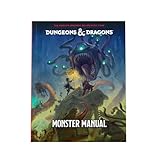
- MONSTERS GALORE—Venture into the mightiest Monster Manual yet! In addition to iconic D&D favorites like dragons and mind flayers, this monstrous menagerie introduces over 75 brand-new monsters and contains over 500 unique creatures in total.
- INTRIGUING NEW ENCOUNTERS—Inject more variety into your games with unique encounters! Raise the stakes with terrifying new monsters for higher level play, such as the arch-hag and blob of annihilation. Craft unusual and memorable NPC encounters by using over 40 humanoid stat blocks as inspiration.
- STUNNING ARTWORK—Gaze upon the legendary D&D dragons in all their splendor. In this book of majestic beasts, we’ve created stunning redesigns of the chromatic and metallic dragons, and over 300 pieces of breathtaking new artwork for almost every monster.
- DESIGNED JUST FOR YOU—Easily locate whatever monster you’re looking for and save prep time with revised, easy-to-use stat blocks. We’ve categorized all monsters by creature type and have redesigned their stat blocks to be easier to use and understand. Running encounters has never been easier!
- PART OF THE 2024 CORE COLLECTION—1 of 3 revised Dungeons & Dragons core rulebooks, the 2024 Monster Manual is designed for use with the fifth edition 2024 Player’s Handbook and 2024 Dungeon Master’s Guide
What implementation costs are easy to underestimate
Authoring and branching
Every alternate response must be written in a consistent voice and placed where it cannot accidentally bypass an essential piece of information. A branch that is funny but omits a password, destination, or warning can become a progression bug. Writers therefore need to preserve the functional content of a conversation while changing its expression or route.
Testing and state coverage
Testers must play with the relevant attribute ranges, not just one sample character. They need to verify the threshold before and after equipment or temporary effects, check that the line appears in the intended context, and follow the resulting route far enough to catch broken dependencies. The Fallout 2 example illustrates why route testing matters as much as line testing.
Localization load
Additional words are not free when a game is translated. New lines add editing, translation, linguistic review, and often voice or subtitle integration. A studio may therefore reserve elaborate low-Intelligence branches for games whose budget and tools can support them. Avellone’s comments explicitly connect the creative appeal of these options with the localization burden.
Tooling and dialogue volume
Large reactive systems need a way to organize conditions, priorities, and fallback lines. Liberty’s description of hierarchical dialogue tools for New Vegas supports a practical conclusion: unusual reactivity is easier to maintain when the technology can represent a substantial conversation tree without turning every change into manual scripting.
What’s actually slowing this PC down?
Pick the symptom - the matching free tool is one click away.
How to evaluate a low-Intelligence option as a player
When deciding whether to build around a low score, ask what kind of reward you want rather than assuming the attribute is secretly powerful:
Best Value

- ALL THE TOOLS: The Dungeons & Dragons Core Rules Gift Set includes a copy of all three core rulebooks (Player's Handbook, Dungeon Master's Guide, Monster Manual) plus a Dungeon Master's Screen, all collected in a stylish slipcase. It's the perfect gift for any D&D fan.
- PLAYER'S HANDBOOK: The essential reference for every D&D player, the Player's Handbook contains rules for character creation and advancement, backgrounds and skills, exploration and combat, equipment, spells, and much more.
- DUNGEON MASTER'S GUIDE: Teaches how to run D&D adventures for other players and how to give them monsters to fight, mysteries to solve, and fantasy worlds to explore.
- MONSTER MANUAL: Helps the Dungeon Master (the game's narrator) fill games with iconic fantasy creatures. Includes details and rules for over 400 monsters from goblins to dragons, with over 150 illustrations.
- DUNGEON MASTER'S SCREEN: Helps the Dungeon Master keep die rolls and notes hidden from players. Plus, the inside is filled with quick references for the most commonly used in-game information to help keep things running smoothly..UNLEASH YOUR IMAGINATION: Dungeons & Dragons is a cooperative storytelling game that harnesses your imagination and invites you to explore a fantastic world of adventure, where heroes battle monsters, find treasures, and overcome quests.
- For role-play: choose it if altered phrasing and NPC reactions are more important to you than efficient checks.
- For discovery: look for games that advertise reactive conversations or show examples of attribute-specific writing, but expect implementation to vary by title.
- For completion: keep a backup plan. A special line may change tone without guaranteeing a better reward, and an alternate route can carry different risks or costs.
- For challenge: treat the score as a constraint that changes how you solve problems, not as a bonus stat.
The most satisfying runs usually come from accepting the consequences. If every disadvantage is immediately canceled by a superior reward, the attribute stops feeling like a character choice and starts feeling like an exploit.
Why the mechanic is not universal
Implementing low-Intelligence dialogue requires more than adding a few silly sentences. The team must decide where the condition applies, preserve essential information, create alternate access when necessary, test the resulting states, and pay for the additional text in localization. Many RPGs prioritize a smaller conversation tree, a different attribute model, or a fixed protagonist voice instead.
Even within a single game, the effect may be uneven. One conversation can contain a memorable gag while another uses only the standard lines. Thresholds can differ between scenes, and a special response can be cosmetic rather than advantageous. The New Vegas examples demonstrate what that game authored; they do not establish a genre-wide frequency or a universal benefit.
The larger lesson for RPG conversation design
Low-Intelligence dialogue works because it aligns mechanics, writing, and player expression. The attribute changes a rule, the rule changes what the character can say or understand, and the world responds. When the design goes further, the same constraint changes the route through a location or quest. That chain makes the build legible and memorable.
Fallout 2 shows the production commitment required to make alternate access credible. Fallout: New Vegas shows how small wording changes, misunderstandings, password attempts, and quest-specific lines can make a low score visible throughout a playthrough. Together, they explain the apparent paradox: the character is disadvantaged according to the game’s fiction, but the player is rewarded with content that a conventional build will never see.
Quick Recap
Product prices and availability are accurate as of the date/time indicated and are subject to change. Any price and availability information displayed on Amazon at the time of purchase will apply.

