
Do these 3 things before closing this tab:
1Fix the driver behind crashes, sound loss and screen glitches2Repair Windows errors before they cause bigger problems3Scan for outdated or missing drivers - takes under a minuteCritical Role can make a dwarf feel like more than a bundle of stone jokes and heavy armor. If this is your first D&D character, start by asking the Dungeon Master which rules the group uses, then choose a class that matches the way you want to play. In the 2024 rules walkthrough, D&D Beyond demonstrates a level 1 dwarf fighter, but fighter is an example—not a required or universally best choice.
Build the character around one clear desire, one memorable personality trait and a reason to leave home. The dwarf’s rules features then support that idea instead of replacing it.
As an Amazon Associate I earn from qualifying purchases.
Start with the table’s rules, not a character sheet
Before selecting numbers or equipment, ask the Dungeon Master (DM) which rules edition the campaign uses and whether the setting has any house rules. D&D Beyond’s editor’s note dated March 2, 2026 says the site labels the updated fifth-edition rules “5.5e” and the 2014 rules “5e.” Both remain supported and compatible, but a group may still use one set consistently for character options and terminology.
The official D&D Beyond walkthrough, published August 5, 2024, demonstrates character creation with the 2024 Player’s Handbook. Use that walkthrough only when it matches your group’s rules. You do not need to buy multiple versions before talking to the DM, and you should not assume that a trait, background option or step from one rules set exists at every table.
#1 Best Overall

- UNLEASH NEW POSSIBILITIES—Introducing the 2024 Player’s Handbook, the new and improved guide for fifth edition Dungeons and Dragons. Redesigned with 10 years of feedback from the D and D community, the essential Dungeons and Dragons rulebook is bigger and better than ever before
- NEW CHARACTER OPTIONS YOU’LL LOVE—Create unforgettable characters with 12 core classes, 48 intriguing subclasses, and 10 distinctive species. Buff up your character’s backstory with 16 compelling backgrounds and 75 fantastic feats.
- STUNNING ARTWORK—With vibrant new illustrations of every single character class, subclass, background, species, weapon, and armor, our thrilling artwork also features new and familiar spells, brought to life for the first time ever.
- FRESH and ENGAGING GAMEPLAY—Change up your combat style with fascinating new Weapon Masteries for your character class. Our new Tools and Crafting system lets you use your tools to craft items and impact travel and exploration.
- DESIGNED JUST FOR YOU—We’ve thoughtfully redesigned this book with an improved layout, better organization, and an alphabetized Rules Glossary. Find whatever you’re looking for with ease
What makes a dwarf a good first character?
A dwarf gives a new player an immediate identity: someone shaped by family, craft, community, tradition or a deliberate decision to leave familiar ground. That identity is more useful than trying to copy a performer’s character. Critical Role may be the spark, but your dwarf can be quiet, theatrical, scholarly, reckless, devout, curious or completely uninterested in the expectations of their clan.
Choose a single sentence that explains why this person is adventuring. “I need to finish a masterwork,” “I am searching for a lost hold,” “I promised to protect someone,” “I am repairing a family relationship,” and “I want to see the wider world” are all workable starting points. They are story prompts, not mandatory rules.
Then add one behavior other players can recognize quickly. Your dwarf might polish a tool whenever they are nervous, address everyone with formal titles, collect unusual stones, speak too bluntly, tell elaborate family stories or become fascinated by surface customs. One repeatable detail gives the table something to respond to without forcing you to perform a voice or deliver a speech every turn.
Recommended Free Tools
Follow the 2024 creation sequence
D&D Beyond’s 2024 walkthrough begins with class and explains that the choice affects later decisions, including species and background. Follow your group’s full process, but this order keeps a first character manageable.
- Choose a class by play experience. Decide whether you want to stand near danger, protect allies, solve problems with skills, use spells, or combine several of those activities. The walkthrough’s example is a level 1 fighter because it is a clear demonstration, not because dwarf fighters are mandatory.
- Select dwarf as your species. Once you know what you want to do in encounters, choose the dwarf traits that reinforce the concept. Read the exact wording for the rules version your DM selected.
- Choose a background. Pick the history that explains what your dwarf did before adventuring and what skills or proficiencies the table’s rules attach to that background. If the group uses a customized background, let the DM approve it before you finalize the sheet.
- Set ability scores and starting equipment. Use the method your DM specifies—such as an array, point allocation or rolled scores—and apply the class and background instructions from the correct rules book. Do not mix a 2014 option with a 2024 option unless the DM says the combination is allowed.
- Write the character’s reason to travel. Tie the immediate goal to the campaign premise. A dwarf seeking a lost mine needs a different first scene from one trying to reconcile with a sibling, even if their mechanical choices are identical.
- Prepare only what you need for session one. Know your attack or primary action, your defenses, any species feature you can activate, and one personality cue. You can learn the rest during play.
The dwarf traits in the 2024 walkthrough
The D&D Beyond example describes these traits for a 2024-rules dwarf. Treat the descriptions as belonging to that rules context; an older book or a different campaign may use different wording or features.
Rank #2

- COMPLETE YOUR COLLECTION—Get all three 2024 Core Rulebooks and discover new character options you’ll love, creative world-building inspiration, stunning artwork, and monsters galore
- STUNNING ARTWORK—Delight in spectacular new artwork for character classes, subclasses, weapons, armor, legendary D&D figures, almost every monster, and so much more
- FRESH & ENGAGING GAMEPLAY—Change up your combat style with fascinating new Weapon Masteries for your character class. Our new Tools and Crafting system lets you use your tools to craft items and impact travel and exploration
- NEW CHARACTER OPTIONS YOU’LL LOVE—Create unforgettable characters with 12 core classes, 48 intriguing subclasses, and 10 distinctive species. Buff up your character’s backstory with 16 compelling backgrounds and 75 fantastic feats
| Trait | What the walkthrough says | How a new player might use it |
|---|---|---|
| Darkvision | You can see in darkness without a light source, but the vision is in shades of gray. | Tell the DM when you are relying on your sight in a dark area, and remember that seeing does not automatically reveal hidden creatures or remove every risk. |
| Dwarven Resilience | You have resistance to poison damage and advantage on saving throws against the Poisoned condition. | Pay attention when an effect mentions poison damage or the Poisoned condition. Ask whether the feature applies before rolling or taking damage. |
| Dwarven Toughness | You gain one additional Hit Point at each level, including level 1. | Record the extra Hit Point when you create the character and again whenever the character gains a level. |
| Stonecunning | While on or touching stone, you can gain tremorsense out to 60 feet for 10 minutes. | Tell the DM when your dwarf is in contact with stone and you want to activate the feature. Clarify what the tremorsense reveals in that situation. |
| Languages | You know Common and one language of your choice. | Choose a language that connects to the campaign, your background or a relationship you want to explore, and confirm that the setting includes speakers of it. |
These features suggest durability and underground awareness, but they do not dictate personality or class. A dwarf who dislikes caves is still a dwarf; a dwarf wizard is still entitled to the species traits if the table’s rules allow that combination.
Pick a class for the fantasy you want to play
Instead of asking which class is “best” for a dwarf, describe the moments you want to have at the table. The same species can support very different turns, relationships and story beats.
| If you want to… | Consider starting with… | Character question |
|---|---|---|
| Be close to danger and make straightforward choices in a fight | Fighter, as shown in the D&D Beyond level 1 example | What did your dwarf learn to protect: a person, a place, a trade or a reputation? |
| Support companions through faith, service or a sacred duty | A class built around divine or supportive abilities, such as a cleric where available in your rules | Is your devotion comforting, demanding, inherited or newly discovered? |
| Explore, track and survive away from settled communities | A class with an exploration-oriented fantasy, such as a ranger where available | Why does this dwarf know the roads, wilds or borders beyond home? |
| Solve problems through stealth, expertise and clever timing | A class focused on skills and precision, such as a rogue where available | What did your dwarf have to learn that their family considered improper? |
| Use study, strange power or a specialized tradition | A spellcasting class that matches your preferred complexity and the campaign’s options | Who taught your dwarf, and what does that teacher expect in return? |
The table is a preference guide, not a balance ranking. Ask the DM which classes and subclasses are available, then choose the one whose decisions you will enjoy making repeatedly. If you are uncertain, say so; a DM can explain how complicated a class is at level 1 and help you change direction before play begins.
Give the dwarf a background that creates play
A background works best when it creates a relationship, obligation or unanswered question. Start with the dwarf’s previous life rather than a list of adjectives.
A craft to finish
Your dwarf left home with an unfinished blade, map, instrument, bridge design or piece of jewelry. Adventuring supplies the rare materials or experiences needed to complete it. The project gives you an easy reason to investigate locations and talk to specialists.
Rank #3
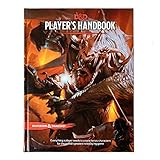
- The essential rulebook for Dungeons & Dragons (5th edition)
- Contains all the rules you need to know to play D&D
- Step-by-step guide to creating and leveling up characters
- Go-to player reference for over 350 spells, equipment, and more
- 1 of 3 D&D Core Rulebooks—the Player’s Handbook (rules for playing the game), the Dungeon Master’s Guide (how to run the game), and Monster Manual (creatures to encounter in your game)
A place to find
A ruined settlement, sealed tunnel or forgotten family workshop appears in an old record. You do not need to decide the entire history; give the DM a target and let the campaign reveal what is true.
A promise to keep
Perhaps your dwarf promised to escort someone, deliver a message or return with proof that a dangerous route is safe. A promise creates an action you can pursue even when the main plot is unfamiliar.
A relationship to repair
Family conflict is a motivation, not a requirement that every dwarf be stern or traditional. Decide what went wrong, what your dwarf regrets and what evidence would count as a genuine attempt to make amends.
Curiosity about the wider world
Your dwarf may be the first in their family to travel, or simply the first willing to admit they are bored. Curiosity lets you ask questions in character and gives the DM permission to show you the setting through your eyes.
Use Critical Role as inspiration, not a template
Critical Role’s official Handbooker Helper: Dwarf (EP42) page features Matthew Mercer and presents the video as guidance on playing a dwarf in fifth-edition D&D. It is a useful optional resource for tone, role-playing prompts and table confidence.
What’s actually slowing this PC down?
Pick the symptom - the matching free tool is one click away.
Rank #4

- Laminated Durable Tabs (Book not Included): The tabs are laminated with 3 mil film for durability and stiffness and made specifically for The D&D Player's Handbook (Dungeons & Dragons Core Rulebook) 2024 5.5 Edition
- Color-Coded Organization System: Highlight the most important sections for The D&D Player's Handbook with color-coded tabs that match each section for easy reference
- Easy Navigation with Large Font: Color-coded tabs feature large font and are printed on both sides so you can easily navigate the guide and find sections efficiently
- Alignment Card for Installation: Tabs are easy to install in alignment using the included tabs alignment system, with each tab showing the location and page number for super easy installation
- Blank Tabs Included: Additionally includes blank tabs so you can highlight anything specific to your needs and customize your handbook organization
Watch it for ideas you can adapt, then write down three choices that are yours alone: a personal goal, a relationship and a habit. Do not assume the cast’s humor, accent, backstory or dramatic style belongs on your sheet. A character can be inspired by a show while remaining easy for you to portray in a group of people who have never seen it.
Independent reader supportYour contribution helps us test, update, and keep practical guides available for everyone.Decide how your dwarf behaves at the table
Choose contrasts rather than stereotypes. A traditional dwarf can be generous; a restless dwarf can value family; a ceremonious dwarf can make terrible jokes at formal occasions. Pick one public trait and one private tension so the character has room to change.
- Reserved or talkative: Does your dwarf observe before speaking, or fill silence with stories?
- Traditional or restless: Are customs a source of comfort, a burden or both?
- Ceremonious or irreverent: Which rituals matter, and which does your dwarf quietly mock?
- Confident or uncertain: What does the dwarf know they can do, and what are they pretending to understand?
Tell the group your character’s goal and one boundary before the first session. This gives other players material for collaboration and helps the DM avoid making your backstory irrelevant.
Print book or digital walkthrough?
Wizards of the Coast describes the physical 2024 Player’s Handbook as covering character creation and advancement. It is the relevant print purchase if you want the rules at the table, with no price or stock assumption attached here. D&D Beyond’s walkthrough is useful when you want a guided example of the process and the level 1 dwarf fighter demonstration.
Free tools Windows power users keep installed
One-click scans. No signup required.
Choose the format that matches how your group plays. A physical book is convenient for shared table reference and note-taking; digital access can make searching and character management faster. Either way, confirm that the book or digital rules set matches the edition your DM named.
Best Value

- NIFTY RESOURCES FOR DUNGEON MASTERS—We've packed this book with incredibly useful tools and advice for Dungeon Masters of all levels. Make your game sessions special with over 400 total and 18 new magic items, practical solutions for common Dungeon Master pitfalls, and Greyhawk, a customizable premade campaign setting.
- WONDERFUL WORLDBUILDING INSPIRATION—Introduce inspiring new mechanics into your game! Tinker away with revised rules for crafting magic items, creating NPCs, and more. Excite your party and keep them engaged between sessions with the new system for bastions, which are strongholds built and controlled by players.
- STUNNING ARTWORK—Delight in spectacular artwork featuring new magic items, legendary D&D figures, cinematic fantasy landscapes, a double-sided poster map of the Greyhawk setting, and more!
- LEVEL UP YOUR DUNGEON MASTER EXPERIENCE—We’ve built useful handouts and resources to help you keep track of your campaigns and added a Lore Glossary that helps you easily find information about key D&D characters and locations.
- PART OF THE 2024 CORE COLLECTION—1 of 3 revised Dungeons & Dragons core rulebooks, the 2024 Dungeon Master’s Guide is designed for use with the fifth edition 2024 Player’s Handbook and 2024 Monster Manual
Common first-character problems and fixes
“I copied a character I liked and now the choices feel wrong.”
Keep the appealing element—a stubborn outlook, a family duty or a dramatic goal—and replace the rest. Change the class, setting connection or personality until you can describe what the dwarf wants without mentioning the show.
“I cannot decide between several classes.”
Ask the DM to describe a typical level 1 turn for each option. Choose the one whose ordinary decisions sound enjoyable, not the one with the most impressive description at high level.
“I am mixing rules from different books.”
Stop at the first unclear feature and show the DM the exact text. Use the group’s selected rules version consistently unless the DM approves a conversion.
Quick wins for a faster PC:
Clear out junk files and repair common Windows errorsFree Scan →Scan for outdated or missing drivers - takes under a minuteDriver Scan →Repair Windows errors before they cause bigger problemsFix Now →“I forget my species features during play.”
Write Darkvision, Dwarven Resilience, Dwarven Toughness and Stonecunning on a visible reference card, including Stonecunning’s 60-foot range and 10-minute duration. Add a reminder that Dwarven Toughness increases Hit Points at every level.
“My backstory is too long.”
Reduce it to three sentences: where the dwarf came from, what they want now and who might care whether they succeed. Keep extra history in notes for the DM to use later.
Session-one checklist
- Confirm whether the group calls its rules “5e” (2014) or “5.5e” (updated rules) and follow the DM’s choice.
- Write your class, species, background and one-sentence adventuring goal.
- Record your Hit Points, including the 2024 walkthrough’s one-per-level Dwarven Toughness bonus when that rules set applies.
- Know when to mention Darkvision, Dwarven Resilience and Stonecunning.
- Choose Common plus one language in the 2024 context, after checking what fits the setting.
- Prepare one question to ask another character and one detail your dwarf notices in a new place.
Your first dwarf does not need an optimized build, an elaborate accent or a backstory worthy of a television campaign. It needs a clear reason to travel, a few choices you understand and enough flexibility to discover who the character becomes with the rest of the table.
Quick Recap
Product prices and availability are accurate as of the date/time indicated and are subject to change. Any price and availability information displayed on Amazon at the time of purchase will apply.

