
Quick wins for a faster PC:
Clear out junk files and repair common Windows errorsFree Scan →Scan for outdated or missing drivers - takes under a minuteDriver Scan →Repair Windows errors before they cause bigger problemsFix Now →Amaranth can mean grain used in cooking, a leafy vegetable, or an ornamental plant. This guide covers food-grade amaranth grain and edible vegetable amaranth; they are related plants, but you should not assume every species, seed packet, or food product is interchangeable.
What is amaranth?
Amaranth is a genus of plants, not one single crop. Some types are grown for their seeds, some for tender leaves and shoots, and others as ornamentals. Grain amaranth is often called a pseudocereal because people prepare and eat it much like cereal grains; botanically, it is not a grass grain.
As an Amazon Associate I earn from qualifying purchases.
For kitchen use, look for food-grade grain or a clearly labeled edible leafy vegetable. Seeds sold for planting are intended for growing, and should not be assumed to be packaged or sold as food. The University of Kentucky Cooperative Extension discusses grain amaranth as a food crop, while the University of Florida IFAS guide covers vegetable amaranth and its edible leaves (Kentucky Cooperative Extension; UF/IFAS production guide).
Free tools Windows power users keep installed
One-click scans. No signup required.
Is amaranth a grain?
Amaranth seed is commonly used as a grain in the kitchen, though “pseudocereal” is the more precise category: it is not a cereal grass. Grain amaranth can be cooked whole, popped, flaked, or ground into flour. Extension sources also describe its use in breakfast cereals, snack foods, and multigrain breads (Nebraska Extension production manual).
#1 Best Overall

- Beautiful – Large premium packets of Green Garnet (Amaranthus croetus var. ‘Green’, Red Garnet (Amaranthus croetus var. ‘Red’), Bronze (Amaranthus paniculatus), and Love Lies Bleeding (Amaranthus caudatus) Amaranth seeds. The giant plants of the annual Garnet Amaranths reach 6' tall or more and add beauty to your garden and nutrition to your kitchen. The leaves are edible, cooked or raw. The flower seed heads can be harvested as grain or left on the plant to feed the birds.
- Productive – Amaranths germinate in 14-21 days when soil temps are 65-75°F. Plant ⅛” deep and space 6-12” apart in an area with full sun. This variety will grow up to 6’ tall with a spread of 1-2’. Seed heads will mature in 50-60 days, plant in USDA zones 5-12.
- Versatile – Amaranth can bring many joys to your garden! Use the beautiful foliage and flowers in bouquets, harvest the grains for a great wheat alternative, cook the leaves for a unique side dish, or feed wildlife with the high fatty oil content in amaranth seeds.
- Easy to Grow – Instructions included on each packet. Plus, we are available to answer all your questions. If these seeds don’t germinate, we will happily make it right for you.
- Safe and Sustainable - Our operation is fully solar powered, and Sow Right Seeds has taken the Safe Seed Pledge to sell only fresh Non-GMO heirloom seeds for you and your family.
How do you cook amaranth grain?
There is no single cooking ratio or method established by the extension sources cited here, so follow the directions on your specific product or recipe. The documented options are:
- Cook it whole: Prepare the seed as a grain, using a recipe that specifies the liquid amount and cooking time.
- Pop it: Heat small amounts of dry grain; Kentucky Extension describes popping it like popcorn. Some grain-amaranth seed heads also produce seeds that pop when heated, according to UF/IFAS Gardening Solutions (Kentucky Cooperative Extension; UF/IFAS Gardening Solutions).
- Use flakes or flour: Amaranth can be flaked for cereal-style uses or milled into flour. Recipes may combine the flour with other flours, so use a recipe formulated for that blend.
Can you eat amaranth leaves?
Yes, leaves and tender shoots from vegetable amaranth are used as food. UF/IFAS describes young, tender leaves as mild and spinach-like. It reports that they can be eaten raw in salad mixes or cooked, including stir-fried; soft stems may be steamed or fried, and sprouted seeds can be added to stews (UF/IFAS production guide).
Rank #2

- ORGANIC ANCIENT GRAIN: There are grains, and then there's amaranth. Along with buckwheat and quinoa, amaranth is one of the few plant sources to offer a complete set of amino acids, making it a rare plant source of complete protein.
- GOOD SOURCE OF PROTEIN AND FIBER: It's naturally gluten-free and a good source of protein and fiber.
- SWEET AND NUTTY MILD FLAVOR: Living Now Organic Amaranth is perfect for making gluten-free pasta but should be combined with other grains/flours for baked goods since it has no gluten and will not rise on its own.
- Certified Gluten Free;Kosher (CRC);Non-GMO Project Verified;Terracycle;USDA Organic
- Packaged in the USA by a family owned and operated company since 1968.
That guidance concerns edible vegetable amaranth, not every ornamental plant or unidentified species. UF/IFAS also notes that leaves and stems may contain nitrates and oxalates and discusses cooking as a way to reduce antinutrients, with a caution for people prone to kidney stones. It does not establish a universal safe amount or apply that caution equally to every species and preparation. People with relevant health concerns should seek advice from a qualified clinician.
What nutrition does amaranth provide?
Nutrition varies with species, plant part, and preparation, so leaf results should not be applied to grain, or to every packaged product. A 2017 study of 15 leafy Amaranthus species, recorded by USDA Agricultural Research Service, found species-dependent variation. Across the leafy types studied, a 1-cup (30 g fresh-weight) serving contributed 13–34% of the FDA daily value for magnesium and up to 68% for vitamin C (USDA ARS, Jimenez-Aguilar and Grusak, 2017).
Rank #3
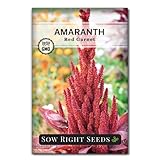
- Productive - Amaranth germinates in 14-21 days when soil temps are 65-75°F. Plant 1/8” deep and space 6-12” apart in an area with full sun. This variety will grow 6’ tall with a spread of 1-2’. Seed heads will mature in 50-60 days, plant in USDA zones 5-12.
- Good Eats - Produces edible leaves and seed heads that can be eaten or left to feed goldfinches and other wildlife. Young leaves can be harvested and eaten as greens, or try toasting the grains. It is lovely in flower beds or your vegetable garden!
- Easy to Grow - Instructions included on each packet. Plus, we are available to answer all your questions. If these seeds don’t germinate, we will happily make it right for you.
- Safe and Sustainable - Our operation is fully solar powered, and Sow Right Seeds has taken the Safe Seed Pledge to sell only fresh Non-GMO heirloom seeds for you and your family.
A separate USDA ARS meeting abstract from 2007 reported about 7% dietary fiber and more than 6% fat in its amaranth grain sample comparisons; those sample figures are not a guarantee for every cultivar or product (USDA ARS, Gebhardt and Thomas, 2007). For exact values, search USDA FoodData Central for the matching food form and preparation, or check the product’s nutrition facts.
Independent reader supportYour contribution helps us test, update, and keep practical guides available for everyone.How do you grow vegetable amaranth?
Vegetable amaranth is a warm-season annual and is sensitive to frost. UF/IFAS gives Florida planting windows that vary by hardiness zone; these are regional recommendations, not a calendar for other locations.
Rank #4

- HIGH YIELD FOOD CROP - Red Amaranth (Amaranthus tricolor) produces nutrient dense leafy greens and grain from one versatile plant; harvest young leaves for salads or mature seeds for long term food storage and self reliance
- FAST GROWING GREENS - Enjoy quick harvest microgreens in as little as 10 days or allow plants to mature for full sized red leaves; plant to enjoy a continuous harvest throughout the season
- HEAT LOVING SUMMER CROP - Red amaranth thrives in hot weather where other greens struggle; this plant is drought tolerant once established and perfect for southern gardens and challenging growing conditions
- VERSATILE GARDEN USE - Red amaranth is grown for vibrant red leaves with mild spinach-like flavor, its edible pseudo-grain seeds, as well as its ornamental value; valuable for fresh eating, cooking, or adding color and flowers to garden beds and edible landscapes
- FAMILY OWNED USA SMALL BUSINESS – Heirloom non-GMO seeds from Survival Garden Seeds, a trusted American brand; always open-pollinated, untreated, and quality tested for garden success
| Florida hardiness zone | Earliest planting window in the UF/IFAS guide |
|---|---|
| Zone 8, north Florida | May |
| Zone 9, central Florida | April |
| Zones 10–11, south Florida | December through February |
For other regions, use local frost dates and extension advice rather than transferring Florida’s dates. The guide places optimal growth at 70–85°F. It reports optimal germination around 70–75°F, germination in about a week under suitable conditions, and slower or risky germination below 50°F soil temperature; cold injury may occur below 40°F (UF/IFAS production guide).
Sowing and spacing
- Sow the tiny seeds about 1/8–1/4 inch deep.
- For a home garden, the Florida guide suggests sowing seeds about 1 inch apart, then thinning plants to 6 inches as they grow.
- Adjust spacing and timing for the species, cultivar, climate, and local growing guidance.
Harvesting leaves
UF/IFAS Gardening Solutions says young leaves and shoot tips can be harvested 3–6 weeks after planting. Actual timing depends on growing conditions and variety; plant during warm weather because cold can kill the crop (UF/IFAS Gardening Solutions).
Quick Recap
Best Value

- Fast Growing Edible Greens: Red amaranth seeds for planting produce tender red and green leaves in just 20–30 days. These red flower garden seeds thrive in zones 3–12 for home garden and containers.
- High Germination Performance: Amaranth seed sprout in 8–10 days. Reliable heirloom seeds ensure strong early growth. Young leaves can be cooked like spinach, sometimes these vegetable plants & seeds called chinese spinach seeds or thotakura seeds indian.
- Dual Purpose Crop: Amaranthus burgundy offers nutritious leafy greens and gluten free amaranth grain. Amaranth seeds for eating are ideal for stir fry, soups, flour, and traditional dishes like Mexican alegría.
- Heat And Drought Tolerant: Deep red amaranthus seeds develops best color in hot weather. Once veggie seeds established, the amaranth plant tolerates drought while maintaining steady growth in outdoor garden beds.
- Ornamental And Productive: amaranthus flower seed features striking burgundy foliage and attracts birds if allowed to seed. These vegetables seeds combine visual appeal with practical food production.
Which amaranth should you choose?
| Your goal | What to look for | Useful distinction |
|---|---|---|
| Cooking with seed | Food-grade amaranth grain | Used whole, popped, flaked, or milled; do not substitute a planting-seed packet. |
| Eating leaves and shoots | A clearly identified edible vegetable-amaranth type | Harvest young leaves and shoots; use local growing guidance. |
| Growing for appearance | An ornamental amaranth variety | Do not assume it is a food crop based only on the genus name. |
Product prices and availability are accurate as of the date/time indicated and are subject to change. Any price and availability information displayed on Amazon at the time of purchase will apply.

