Recommended Free Tools
For a small, containerized Counter-Strike 2 dedicated server, a practical published starting point is 2 CPUs, 2 GiB of RAM and 60 GB of disk. That figure comes from the maintainer of a CS2 container project, not from Valve and not from an independent performance test. A separate hosting guide gives a similar 2 GB RAM baseline for a plain match server and recommends 65 GB of free disk, with more capacity for plugins, GOTV, updates, logs and backups.
Those numbers are planning references rather than a universal specification. Your real requirement depends on whether the server is a private LAN session or a public service, how many instances you run, whether plugins or spectators are enabled, how much recording you do, and how much operational headroom you want. The sections below separate the official client requirements from dedicated-server guidance, then show how to choose hardware, networking and a hosting model without treating a minimum as a guarantee.
As an Amazon Associate I earn from qualifying purchases.
What “CS2 server requirements” actually means
Counter-Strike 2 has two different resource questions:
- Client requirements: the PC running the game for a player.
- Dedicated-server requirements: the machine or virtual server running the game service for other players.
Valve’s Steam listing specifies the first category. Its minimum for the playable client includes Windows 10 or Ubuntu 20.04, a processor with four hardware threads comparable to an Intel Core i5-750 or better, 8 GB of RAM and 85 GB of available storage. Graphics requirements vary by platform. Those figures describe the game client and should not be copied into a server-sizing table.
#1 Best Overall

- 【AMD Ryzen 5 3501U Mini PC For Enhanced Daily Performance】Powered by AMD Ryzen 5 3501U processor with 4 cores and 8 threads, this mini pc provides responsive performance for office applications, home entertainment, online learning, media playback, and everyday computing.
- 【16GB Memory & 512GB Storage With Expansion Options】Built with 16GB DDR4 RAM and 512GB PCIe 3.0 NVMe SSD, this mini computer provides more space for applications, files, videos, and daily content. Upgrade memory up to 32GB, expand SSD storage up to 2TB, or add a 2.5-inch HDD.
- 【Flexible Small Desktop Computer For Home Applications】This small desktop computer is designed for home office, streaming, personal server setups, digital entertainment, and light gaming. The upgraded memory helps support smoother operation when using more applications.
- 【Triple Display Setup & Flexible Connectivity】Dual HDMI ports and a full-function USB-C port support up to three displays. This micro pc offers convenient connectivity with WiFi 6, Bluetooth 5.3, Gigabit Ethernet, and multiple USB ports.
- 【Compact Mini Desktop With Space-Saving Design】Measuring only 5.0 × 4.4 × 1.6 inches, this small pc saves valuable desk space. VESA mount support allows installation behind compatible monitors, making it suitable for home offices and compact workspaces.
Valve has not published a dedicated-server minimum for RAM, a CPU model, player capacity or a formula that scales resources by player. Consequently, any number presented as “the CS2 server requirement” should identify its source and scope. The most useful published baselines are community or hosting references, not Valve specifications.
How much RAM does a CS2 server need?
A small plain server can start from 2 GiB of RAM, but that is a minimum reference, not a comfortable capacity for every setup. The joedwards32 CS2 container project lists 2 GiB RAM in its minimum alongside two CPUs and 60 GB of disk. A third-party hosting guide reviewed on 29 July 2026 also cites 2 GB for a plain match server and advises adding resources for plugins and GOTV.
There is no reliable published “RAM per player” rule. Player count, map, server build, plugins, spectators, recording, operating-system overhead and other services all change the result. A machine that starts a small private match may have little room for a second instance, a replay service, monitoring, backups or an update.
Use 2 GiB as a starting baseline, not a promise
For a single, lightly configured instance, 2 GiB is a defensible place to test. Treat it as the floor stated by the container maintainer, then observe actual memory use during a full match and during updates. If memory approaches the host limit, the operating system may reclaim caches, terminate the process or begin swapping; all three can produce stalls or disconnects.
When to allocate more memory
Move above the baseline when you add any workload that is not part of a plain match:
- server-side plugins or extensive scripting;
- GOTV or other spectator and recording functions;
- multiple CS2 instances on one host;
- scheduled backups, log processing, databases or panels on the same machine;
- extra operating-system services, containers or game servers.
The available guidance confirms that these workloads need additional resources but does not establish a safe universal amount. Measure peak usage with the exact configuration you intend to operate instead of multiplying a guessed number by player count.
What CPU does a CS2 server need?
The clearest dedicated-server reference is 2 CPUs in the joedwards32 container project’s minimum. It does not name a processor model, clock speed or benchmark score. “Two CPUs” in a container or hosting plan can mean two virtual CPUs, so it should not be read as two physical sockets or as a guarantee of a particular tick-time result.
Do these 3 things before closing this tab:
1Clear out junk files and repair common Windows errors2Fix the driver behind crashes, sound loss and screen glitches3Repair Windows errors before they cause bigger problemsRank #2

- 【1-Year Worry-Free Warranty】Your satisfaction is our priority. Glorlin provides a 1-year warranty covering any hardware malfunctions. We support returns or exchanges to ensure a 100% worry-free shopping experience. Have a question? Reach out to us through our official after-sales email for a prompt solution.
- 【Reliable Performance with Ryzen 7 Processor】Powered by AMD Ryzen 7 8745HS (8 cores, 16 threads, up to 4.9GHz), this mini pc delivers stable performance for daily workloads. Suitable for office tasks, programming, and multitasking, it works well as a ryzen mini pc for both home and business use.
- 【Radeon 780M Graphics for Media and Light Gaming】Equipped with integrated Radeon 780M graphics, this mini gaming pc supports smooth 4K video playback and handles many popular games at adjusted settings. A practical mini computer for media, editing, and casual gaming.
- 【Mini PC 16GB RAM and Fast Storage】This mini pc 16gb ram configuration includes single 16GB DDR5 memory (4800MHz,3GB is assigned to VRAM by default) and a 1TB NVMe SSD, offering quick boot times and responsive system performance. Dual M.2 slots allow storage expansion up to 4TB for growing files and projects.
- 【Quad 4K Display Support for Productivity】The mini desktop computer supports up to four 4K displays via HDMI, DisplayPort, and dual USB-C ports. Ideal for multi-screen workflows such as coding, trading, or content creation with improved efficiency.
Valve’s four-hardware-thread Core i5-750-or-higher requirement belongs to the playable client. It is not a dedicated-server recommendation. No official Valve source retrieved for this topic states a server CPU model, minimum thread count or player-to-core ratio.
Prioritize consistent CPU time
For a server, sustained and predictable CPU availability matters more than a familiar retail model name. A busy shared VPS can have two advertised vCPUs but still experience contention with neighboring tenants. A self-hosted system may have a faster desktop processor yet lose consistency when someone starts another workload, runs an update or enables aggressive power saving.
CPU headroom for more than one workload
Use the two-CPU baseline only for a small, focused service. Add headroom when the host also runs multiple instances, recording, plugins, monitoring or unrelated applications. Because no benchmark establishes exact scaling, validate with live CPU utilization and tick or frame-time behavior under the largest expected match rather than choosing a model from a generic “best CPU” list.
How much disk space should a CS2 server have?
The container project’s minimum is 60 GB of disk. The hosting guide recommends 65 GB free for a plain match server and specifically calls for additional room for updates, logs, plugins and backups. The extra space is operational capacity, not a claim that the game binaries alone consume exactly 65 GB.
Do not confuse these figures with Steam’s 85 GB client-storage minimum. The client listing covers a player installation and its platform requirements; it is not a dedicated-server disk specification.
Plan for growth and recovery
Reserve space for:
- the server installation and downloaded updates;
- configuration files and plugin packages;
- logs that accumulate over time;
- maps or other custom content you deliberately install;
- local backups before upgrades or configuration changes;
- temporary files created during updates and extraction.
A full disk can stop logging, prevent an update from unpacking or corrupt backups. Monitor free space and set a retention policy for logs and old archives. If backups live on the same physical disk, they do not protect you from disk failure; copy important data to a separate destination.
Dedicated-server figures: what the evidence supports
| Source and date | RAM | CPU | Disk | How to interpret it |
|---|---|---|---|---|
| joedwards32 CS2 container project README, accessed 2026 | 2 GiB | 2 CPUs | 60 GB | Maintainer’s stated minimum for that container project; not a Valve specification or independent benchmark. |
| DeinServerHost Wiki, reviewed 29 July 2026 | 2 GB for a plain match server | Not stated | 65 GB free | Third-party planning guidance; recommends more capacity for plugins and GOTV and room for updates, logs, plugins and backups. |
| Valve Steam product listing, accessed 2026 | 8 GB | Four hardware threads, Core i5-750-or-higher class | 85 GB available | Minimum for the playable CS2 client on Windows and SteamOS/Linux, not for a dedicated server. |
The differences are about scope and provenance, not a contradiction to resolve into one official number. For a small server, begin with the dedicated-server baseline that matches your deployment, then measure the actual host under load.
Rank #3
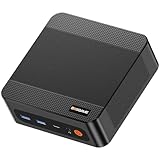
- ❓Why Choose Mini PC: Reclaim 60% of your workspace with the ultra-compact Mini Computers 24GB 1TB. Small enough to slip into your backpack for travel, business trips, or remote work, it’s a powerhouse that defies its size. Designed to handle everyday professional tasks with ease, the Ryzen 9 6900HX provides smooth and stable responsiveness for multitasking and essential content creation. It’s an efficient solution for those who need a snappy, compact system for consistent daily workloads—at a price point far more accessible than bulky towers or laptops. it’s the ultimate high-value investment for good performance and total peace of mind.
- ⚡Unleash Powerful Performance with Ryzen 9 6900HX: Bosgame P6 mini pc ryzen 9 powers through demanding tasks with the AMD Ryzen 9 6900HX(8C/16T,up to 4.9GHz). It makes Handles smooth 1080p video editing in DaVinci Resolve, runs 2–3 lightweight virtual machines, and plays esports titles like CS2 at high settings.This CPU delivers powerful performance in a compact form factor—ideal for creators, developers, and power users who need speed without compromise.
- 🖥️ Experience Smooth Light Gaming & Multitasking on Three Monitors: Drive three 4K displays simultaneously via HDMI, DisplayPort, and USB-C (all supporting 4K@60Hz). The ryzen 9 mini desktop pc is perfect for light gaming, professional workflows, or content creation where every screen matters. Enjoy lag-free performance across all monitors with powerful integrated Radeon 680M graphics.
- 🚀 Fast Memory & Storage for Instant Responsiveness: Equipped with 24GB onboard LPDDR5X RAM (4800MT/s) and a 1TB M.2 NVMe PCIe 4.0 x4 SSD, this mini desktop computer ryzen 9 boots instantly and handles large files effortlessly. Great for office tasks, light photo editing (Photoshop), and 2D drafting in AutoCAD, ensuring seamless multitasking and zero slowdowns.
- 🌍 Future-Proof Expansion & Connectivity for Professional Needs: Expand storage up to 8TB with an additional M.2 NVMe drive. This ryzen mini pc features dual USB 3.2 Gen2 ports and a full-function USB-C (supports data, PD3.0, and DP). The dual 1Gbps Ethernet ports are purpose-built for advanced setups, including DIY soft routers (OpenWrt/pfsense), home servers, hardware firewalls, and high-speed network switching. With built-in Wi-Fi 6E and Bluetooth 5.3, it’s the ultimate hub for home offices, media streaming, or complex lab environments. {Please note: To activate Bluetooth 5.3, please download the latest driver from the official Intel website; otherwise, it defaults to Bluetooth 5.2.}
Choose the right hosting model
There are three practical choices: a listen server for a small local session, a self-managed dedicated server on your own hardware or VPS, and a managed game-server service.
Free tools Windows power users keep installed
One-click scans. No signup required.
Listen server: simplest for a small LAN
Steam Support describes listen servers as suitable for small LAN games and not intended to operate as public servers. The host runs the game session and normally needs to remain active for others to play. This is convenient for an occasional gathering, but it ties the session to the host player’s machine, connection and availability.
- Choose it for short, private LAN sessions.
- Expect the session to end or become unavailable when the host quits or loses connectivity.
- Do not treat it as an always-on public-service design.
Self-managed dedicated server: control and responsibility
A dedicated process on a home machine, mini PC or VPS gives you persistent configuration and control over updates, maps, logs and access. You are responsible for the operating system, firewall, port forwarding, backups, credentials, patching and incident recovery. A home connection must accept inbound traffic and provide enough upload capacity and stability; some networks use carrier-grade NAT or block inbound ports.
Managed game-server provider: less administration
A managed service can remove much of the operating-system and network work. Compare it by CPU consistency, memory allocation, storage type and quota, locations, DDoS protections, backup options, mod or plugin support, control-panel features, port flexibility, cancellation terms and renewal price. No provider pricing or regional availability is established here, so verify those details for the location and plan you would actually buy.
Network, ports and reachability
Hardware cannot compensate for an unreachable or unstable network. Before inviting public players, verify that your host has a public route, a stable connection and firewall rules that allow the server traffic. The container project’s examples map 27015 TCP and 27015 UDP for the game service, with optional 27020 UDP for CSTV. These are implementation examples for that project; confirm current CS2 and project documentation before applying them to another installation.
The Tool Desk
Outbyte Driver Updater FREEFix the driver behind crashes, sound loss and screen glitchesFind Drivers →Outbyte PC Repair FREERepair Windows errors before they cause bigger problemsFix Now →Home-host checklist
- Give the server host a stable local address, preferably a DHCP reservation.
- Allow the required game ports through the host firewall.
- Forward the same ports from the router to the host when the server is behind NAT.
- Check whether the ISP uses carrier-grade NAT; if it does, ordinary port forwarding may not expose the server.
- Test from a different network, not only from the same LAN.
- Record the public address and any non-default port so players can connect consistently.
Steam’s older Source-server documentation uses 27015 as a default UDP port and discusses Internet versus LAN, max players, RCON and VAC. Those examples cover older Source games, so use them as general concepts rather than unqualified CS2 instructions. The CS2 container documentation is the more relevant reference for its own port mappings.
Configuration and launch basics
Valve’s Counter-Strike 2 release notes dated 29 September 2023 provide this reference launch command for a community dedicated server:
Rank #4
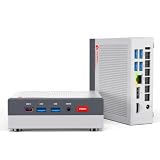
- MEET THE RETRO X3 POWERED BY AMD RYZEN 7 H 255: This Ryzen mini PC is equipped with an AMD Ryzen 7 H 255 processor (8C/16T, 16MB Cache, up to 4.9GHz), unlocked full 54W TDP for sustained high performance ,running much faster than i7-13700H, i9-13900H, R7-8745HS, and 6800H. This Ryzen Mini PC is Ideal for home studios, compact offices, mobile workstations, photo/video editing, 3D modeling, and big data analysis
- Powerful Radeon 780M iGPU, Retro Gaming Aesthetic Mini Gaming PC Boasting AMD Radeon 780M integrated graphics (12 Compute Units, 2600MHz core frequency, RDNA3 architecture), this retro mini gaming PC delivers fluid 1080p gameplay for LOL for CS2, Genshin Impact, retro emulators and casual AAA titles, outperforming older Vega & Intel Iris Xe graphics significantly on 3DMark benchmark. Adopted vintage console-inspired retro appearance with modern industrial design, it combines nostalgic gaming vibe with compact size, perfect for game lovers seeking unique desktop aesthetics. Note: This model uses onboard soldered LPDDR5 RAM, not upgradeable memory slots.
- MODERN POWER IN A RETRO-INSPIRED FORM: ACEMAGIC Flagship Retro X3 MINI PC is designed for players who love the charm of classic games and the thrill of modern play. Classic home console colors and elements meet modern industrial design, evoking nostalgic gaming memories! The Radeon 780M delivers ~8x the frame rate of Vega 2 in most games, and scores ~55% higher than Intel Iris Xe (11th/12th gen) in 3DMark & Superposition. Known as the most powerful integrated graphics, it rivals entry-level discrete GPUs
- 16GB LPDDR5 RAM & 1TB NVMe PCIe 4.0 SSD: Comes with 16GB LPDDR5 6400MT/s RAM and a 1TB NVMe PCIe 4.0 SSD (expandable up to 4TB). Data transfer speed is 10x faster than traditional SATA SSDs, greatly improving boot times and app responsiveness. The tool-free removable top cover grants instant access to PCIe slots — upgrade in seconds without tools. Future-proof your storage with ease
- DP2.0/ 4K Triple Display & Full-Featured Connectivity Support triple independent display output via DP2.0, HDMI 2.1 and USB4 Type-C, bringing up to 4K@60Hz or 4K@120Hz ultra-high resolution visual experience for gaming and content creation. Rich ports include: USB4 40Gbps Type-C (DP1.4, PD100W power input & PD15W output), 6×USB-A 3.2 Gen ports, 2.5Gbps RJ45 wired LAN, 3.5mm audio jack. The 2.5G high-speed Ethernet eliminates lag for online competitive gaming and large file transmission.
cs2 -dedicated +map de_dust2The command selects dedicated mode and starts on de_dust2. It is an example, not a complete production configuration.
Set the essentials
Whichever installation method you use, define and document:
- the map and game mode;
- maximum players;
- a valid game-server token where required;
- an RCON password kept out of public chat and shell history;
- Internet or LAN exposure;
- log and backup locations;
- the ports opened in the host and router.
The container project demonstrates persistent storage, port mappings, game mode, map, server token, RCON password and maximum-player settings. Its README is an implementation guide for that project, not a promise that variable names or launch details will remain unchanged. Recheck the current documentation after image or game updates.
Enable useful logging
Valve’s release notes show two equivalent logging approaches: launch with +sv_logfile 1 -serverlogging, or set sv_logfile 1 and log on in configuration. Keep logs on long enough to diagnose joins, crashes and configuration errors, then rotate them so they cannot consume the disk you reserved for updates and backups.
How to size a server for your workload
Use the following process instead of picking hardware from the client minimum.
- Define the service. Decide whether it is a short LAN session, one public match server, a plugin-enabled server, a spectator or recording server, or several instances.
- Start from a cited baseline. For a small containerized instance, that is 2 CPUs, 2 GiB RAM and 60 GB disk; the hosting guide’s plain-server reference is 2 GB RAM and 65 GB free disk.
- Add operational capacity. Reserve room for the operating system, updates, logs, backups and any other services sharing the host.
- Test the complete configuration. Run the expected map and maximum player count, enable the plugins and recording features you will actually use, and observe peak CPU, memory and disk behavior.
- Stress the failure points. Perform an update, rotate logs, restore a backup and restart the service. A server that survives a match but fails during maintenance is undersized operationally.
- Recheck after changes. New game builds, plugins, maps or a second instance can alter resource use; repeat measurements rather than assuming the old margin still exists.
This approach produces a workload-specific decision without inventing a player-scaling formula that current evidence does not support.
What’s actually slowing this PC down?
Pick the symptom - the matching free tool is one click away.
Common mistakes and how to fix them
Mistake: using the 8 GB client minimum for the server
Why it fails: the figure belongs to the playable client. Fix: use a dedicated-server baseline and measure the server process and host overhead separately.
Best Value

- 【FAST RYZEN 7 PERFORMANCE】 – Powered by AMD Ryzen 7 7730U (8 Cores/16 Threads, up to 4.5GHz Turbo, a 7nm process using the Zen 3 (Cezanne) architecture), this mini PC delivers ~30% faster multi-core performance than Ryzen 5825U/7430U models. Ideal for multitasking, smooth 1080p video editing in DaVinci Resolve or Lightroom, and running 20+ Chrome tabs smoothly. Handles light gaming like League of Legends, Minecraft, and CS:GO at 60+ FPS. Note: Not designed for AAA titles like Elden Ring.
- 【16GB UPGRADABLE RAM & 1TB PCIe SSD】 – P4 Ultra mini computers come with 16GB DDR4 3200MHz RAM (expandable to 64GB via dual SODIMM slots) and a spacious 1TB PCIe 3.0 NVMe SSD—double the storage of standard 512GB competitors. Store 500+ light modern games, 10,000+ high-res photos, or 200+ hours of 4K video without worrying about space. Features an additional M.2 slot for future expansion up to 16TB total, perfect for growing data needs.
- 【TRIPLE 4K DISPLAY & VERSATILE CONNECTIVITY】 – P4 Ultra mini desktop pc computers upport three independent 4K@60Hz displays simultaneously via HDMI, DisplayPort, and USB-C, boosting productivity for traders, designers, and programmers. Equipped with 2x USB 3.2 ports, 2x USB 2.0 ports, 1x Full Function USB-C port and a combined audio/mic jack. WiFi 6E (6GHz band) ensures lag-free streaming and faster downloads, while Bluetooth 5.2 provides stable connections for wireless keyboards, mice, and headphones.
- 【DUAL 2.5GbE LAN FOR PRO USERS】 – Unlike standard mini PCs with single Gigabit Ethernet, the P4 Ultra mini pc ryzen 7 features dual 2.5G LAN ports, enabling link aggregation for up to 5Gbps throughput. Perfect for setting up a home NAS, Plex media server, pfSense/Untangle firewall, or home lab environment. Compact 3.2L chassis fits anywhere—mount it behind your monitor with the included VESA bracket, or place it discreetly on your desk or shelf.
- 【WHISPER-QUIET COOLING】– Engineered with an advanced thermal design and low-noise fan system, P4 Ultra ryzen 7 mini pc is ideal for home offices, media rooms, or late-night productivity. Its efficient cooling ensures stable operation under load without distracting noise, making it a perfect fit among Mini Desktop Computers that prioritize both power and peace.
Mistake: treating 2 GiB as a recommended final size
Why it fails: it is a maintainer’s minimum, and a separate guide limits its 2 GB advice to a plain match server. Fix: add headroom for plugins, GOTV, multiple instances and shared services, then verify peak use.
Mistake: buying CPU by model name alone
Why it fails: no cited source establishes a CS2 server CPU model or benchmark threshold. Fix: prioritize consistent dedicated CPU time and test the actual host under load.
Mistake: filling the disk with logs and backups
Why it fails: updates and recovery operations need free working space. Fix: monitor capacity, rotate logs and store important backups separately.
Mistake: forwarding only one port or testing only on the LAN
Why it fails: the required transport and external reachability depend on the deployment. Fix: apply the current project’s TCP/UDP mappings, configure the host firewall and test from outside the home network.
Mistake: exposing RCON credentials
Why it fails: anyone who obtains the password may control the server. Fix: use a unique secret, restrict administrative access and avoid publishing it in scripts or screenshots.
Self-hosting hardware: when a mini PC makes sense
A small mini PC can be a sensible self-hosting category because the cited container baseline is modest. The category is not a recommendation for a particular model, and no device has been reviewed or tested here. Before buying, check that the system can run your chosen operating system or container runtime, has reliable wired networking, provides the required sustained CPU time, accepts enough memory, and offers more storage than the initial installation needs.
Also account for electricity, cooling, automatic restart after a power cut, router configuration and the fact that a residential connection may not provide a stable public endpoint. A low purchase price does not eliminate those operating requirements.
Quick wins for a faster PC:
Scan for outdated or missing drivers - takes under a minuteDriver Scan →Clear out junk files and repair common Windows errorsFree Scan →Monitoring and maintenance checklist
- Record CPU and memory peaks during a real match, not only at idle.
- Watch free disk space and log growth.
- Keep the game build, container image and operating system patched.
- Back up configuration, tokens and maps before major updates; store a copy away from the server disk.
- Test restart and restore procedures while the server is not needed.
- Review open ports and firewall rules after network or hosting changes.
- Check that the host clock, DNS and public address remain usable.
- Document who has RCON or operating-system access.
Bottom line: a defensible CS2 server starting point
For one small, lightly configured CS2 dedicated server, start with the container project’s published minimum of 2 CPUs, 2 GiB RAM and 60 GB disk, or the hosting guide’s closely related planning reference of 2 GB RAM and 65 GB free disk. Label both as nonofficial guidance. Increase capacity when you add plugins, GOTV, recording, spectators, multiple instances or other services, because no reliable universal scaling formula is available.
Do not use the client’s 8 GB RAM and 85 GB storage figures as server requirements. Choose listen hosting only for the small-LAN use case Steam describes; use a dedicated self-managed or managed service for public and always-on operation. Finally, validate CPU, memory, storage and network behavior on the exact configuration you plan to run, including updates and backups.
Quick Recap
Product prices and availability are accurate as of the date/time indicated and are subject to change. Any price and availability information displayed on Amazon at the time of purchase will apply.




