The Lenovo Legion 5 or Legion 5i with a GTX 1660 Ti is the best overall choice for January 2026—provided the exact unit has a 144Hz 1080p display, 16GB of dual-channel RAM, a capable six- or eight-core CPU, healthy cooling, and a proper return policy. The Acer Predator Helios 300 is the best value-oriented alternative, while the ASUS Zephyrus M15 is the better premium portable option.
These are 2019–2020-era laptops, so this is primarily a used, refurbished, or old-stock buying guide. Do not pay current gaming-laptop prices for aging hardware, and do not choose by model family alone: screen, RAM, GPU power, battery condition, charger, and warranty can matter more than small benchmark differences.
As an Amazon Associate I earn from qualifying purchases.
Quick verdict
| Rank | Laptop | Best for | Main caution |
|---|---|---|---|
| 1 | Lenovo Legion 5/5i | Best overall balance | Many different configurations share the same name |
| 2 | Acer Predator Helios 300 PH315-52 | Cooling, sustained performance, and value | Heavy chassis, aging battery, and variable screens |
| 3 | ASUS ROG Zephyrus M15 | Premium construction and portability | Thin chassis, heat, battery wear, and limited upgradeability on some SKUs |
| 4 | ASUS TUF A15/F15 | Battery capacity and value | Display quality varies significantly |
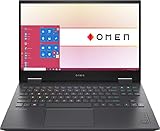
| 5 | HP Omen 15 | A discounted alternative | Buy only after checking the exact panel and battery |
| 6 | Lenovo Legion Y540 | Lowest-cost fallback | 60Hz panels and thermal throttling risk |
1. Lenovo Legion 5/5i: best overall
The Legion 5 and Legion 5i are the safest default recommendation because they combine strong 1080p gaming performance with generally practical cooling, upgradeability, and a good selection of high-refresh displays. Depending on the generation, they were paired with Ryzen 5, Ryzen 7, Core i5, or Core i7 processors.
What’s actually slowing this PC down?
Pick the symptom - the matching free tool is one click away.
Look specifically for a 144Hz 1080p panel, 16GB of RAM, a 512GB SSD, and a six- or eight-core CPU. Some configurations also include hybrid-graphics or MUX functionality, which can let the discrete GPU drive the internal display directly. That can improve performance and latency in some games, although it may reduce battery life and can require a restart.
#1 Best Overall

- Beyond Performance: The Intel Core i5-13420H processor goes beyond performance to let your PC do even more at once. With a first-of-its-kind design, you get the performance you need to play, record and stream games with high FPS and effortlessly switch to heavy multitasking workloads like video, music and photo editing.
- AI-Powered Graphics: The state-of-the-art GeForce RTX 4050 graphics (194 AI TOPS) provide stunning visuals and exceptional performance. DLSS 3.5 enhances ray tracing quality using AI, elevating your gaming experience with increased beauty, immersion, and realism.
- Visual Excellence: See your digital conquests unfold in vibrant Full HD on a 15.6" screen, perfectly timed at a quick 165Hz refresh rate and a wide 16:9 aspect ratio providing 82.64% screen-to-body ratio. Now you can land those reflexive shots with pinpoint accuracy and minimal ghosting. It's like having a portal to the gaming universe right on your lap.
- Internal Specifications: 8GB DDR5 Memory (2 DDR5 Slots Total, Maximum 32GB); 512GB PCIe Gen 4 SSD
- Stay Connected: Your gaming sanctuary is wherever you are. On the couch? Settle in with fast and stable Wi-Fi 6. Gaming cafe? Get an edge online with Killer Ethernet E2600 Gigabit Ethernet. No matter your location, Nitro V 15 ensures you're always in the driver's seat. With the powerful Thunderbolt 4 port, you have the trifecta of power charging and data transfer with bidirectional movement and video display in one interface.
“Legion 5” is not one fixed specification. Confirm the GPU, CPU, screen, memory arrangement, charger, and exact model number before buying. The Legion 5/5i is the editorial best overall pick because of its combination of features, not because every Legion-branded listing is equally good. Comparison coverage also identifies it as the strongest all-round GTX 1660 Ti laptop. See the comparison coverage.
2. Acer Predator Helios 300 PH315-52: best value and cooling alternative
The Helios 300 PH315-52 is a strong choice when it is substantially cheaper than a comparable Legion. A representative Acer configuration includes a Core i7-9750H, GTX 1660 Ti with 6GB of GDDR6, a 15.6-inch 1920×1080 144Hz display, up to 32GB of DDR4 memory, a 58.7Wh battery, and a 180W adapter. It is approximately 2.4kg and is built more for sustained performance than portability. Check Acer’s specification page.
The thick chassis and upgradeable memory make it attractive for long gaming sessions, but used examples may have dusty fans, worn batteries, noisy bearings, damaged hinges, or degraded thermal paste. Storage also varies: some listings combine a small SSD with a 1TB hard drive, while others have a larger SSD. Verify what is actually installed.
Quick wins for a faster PC:
Scan for outdated or missing drivers - takes under a minuteDriver Scan →Repair Windows errors before they cause bigger problemsFix Now →3. ASUS ROG Zephyrus M15: best premium and portable option
The Zephyrus M15 is the choice for buyers who value a thinner, more refined chassis and easier portability than a Helios 300 or Y540. Its stronger CPU/GPU combinations and premium construction made it one of the more desirable GTX 1660 Ti designs, and comparison coverage has described it as the most powerful model in its selection. That is a source-attributed editorial assessment rather than an independent benchmark result here.
The trade-off is important in the used market. Thin gaming laptops can run hotter and louder, their batteries may be more expensive to replace, and memory upgrade options depend on the exact configuration. Do not pay a premium for the M15 unless its battery, display, cooling, and warranty are clearly better than those of thicker alternatives.
4. ASUS TUF A15/F15: best battery and value-oriented option
The TUF A15 and F15 families are worth considering when you find a clean unit with a large battery and a good price. Representative configurations include a Ryzen 7 4800H or 10th-generation six-core Intel Core i7, GTX 1660 Ti graphics, up to 32GB of DDR4 memory, a 512GB or 1TB NVMe SSD, a second SSD slot, and displays up to 144Hz. The highlighted F15 configuration has a 90Wh battery. Review ASUS’s family specifications.
This family has particularly wide variation. A high refresh rate does not guarantee good color coverage or brightness, so ask for the exact panel specification. Also confirm that the listing contains the GTX 1660 Ti version rather than a GTX 1650 or a different RTX configuration. The TUF is a good value pick when its battery, CPU, and upgradeability beat similarly priced rivals.
Rank #2

- Lightweight for work, travel, or gaming anywhere: A thin-and-light build makes the Thin A15 easy to carry for commuting, trips, or playing when you have downtime.
- Smooth performance for everyday games and multitasking: Ryzen 5-7535HS and GeForce RTX 3050 keep popular titles, apps, and daily tasks running smoothly.
- Clear, fluid motion on a 144Hz FHD display: The 15.6" 144Hz panel keeps action crisp and responsive whether you’re gaming or streaming during breaks.
- Cooling technology built for longer sessions: Cooler Boost’s dual-fan thermal design helps maintain steady performance through extended gaming or work sessions.
- Fast memory and storage for quick loading: 16GB DDR5 and a 512GB SSD offer fast startup, quick access to files, and room for apps and games, supported by HDMI, USB-C, and Wi-Fi 6E.
5. HP Omen 15: buy when meaningfully discounted
The HP Omen 15 is a credible alternative if it costs less than a comparable Legion or Helios 300. HP documentation confirms GTX 1660 Ti versions with 6GB of dedicated GDDR6 memory. One documented configuration has a 15.6-inch 1920×1080 IPS display with a 144Hz refresh rate, 300-nit brightness, 72% NTSC color coverage, and a 7ms response time. See HP’s specifications and the documented 144Hz configuration.
Check the exact screen, battery health, hinge condition, RAM arrangement, and fan noise. The Omen makes sense as a bargain, not as a reason to pay extra for an older platform.
6. Lenovo Legion Y540: budget fallback only
The Legion Y540-15IRH is still worth considering at the right price. Lenovo offered it with a GTX 1660 Ti, 6GB of GDDR6, Core i5-9300H or Core i7-9750H processors, two DDR4 SO-DIMM slots, up to 32GB of RAM, and one or two storage drives depending on configuration. It weighed approximately 5.07 pounds. Read Lenovo’s PSREF.
Do not assume every Y540 has the same display. Lenovo listed both 60Hz and 144Hz options, including materially different 250-nit 45% NTSC and 300-nit 72% NTSC panels. The 144Hz version is strongly preferable for gaming. The Y540 also carries greater risk of thermal throttling, a large power brick, an awkward webcam position, and an older CPU platform. Buy it only when it is clearly cheaper than a similarly equipped Legion 5, Helios 300, or TUF.
What the GTX 1660 Ti can do in 2026
The laptop GTX 1660 Ti is a Turing GPU with 6GB of GDDR6 memory and DirectX 12 support. It remains well suited to 1080p esports games and older AAA titles. Newer demanding games may require medium or low settings, reduced textures, or upscaling. 1440p is not its natural target.
It has no hardware ray tracing and does not support DLSS, so those features should not influence a purchase in its favor. The 6GB VRAM capacity is useful compared with 4GB cards, but it does not make the laptop future-proof.
One comparison reports roughly 100–144-plus FPS in esports games, 50–80 FPS in several 2020–2021 AAA games, and approximately 30–60 FPS in newer demanding games at reduced settings. Those are publication-specific results, not guaranteed figures: game version, drivers, CPU, RAM, power mode, thermals, resolution, and settings all change performance. See the source’s testing context.
Rank #3
- 【Memory & Storage】DDR5 16GB RAM | 1TB PCIe SSD. Everything is original from manufacturer. With massive amounts of storage and advanced communication power, PCI-e SSD are great for major gaming applications, multiple servers & more.
- 【16.1" & 144Hz】HP Victus 16.1" Gaming Laptop with Full HD, 144Hz, IPS, Micro-Edge, Anti-Glare Display.
- 【 i7-13700H & RTX 4060】Intel 13th Generation 14-Core i7-13700H up to 5 GHz Processor, NVIDIA GeForce RTX 4060 Laptop GPU (8 GB GDDR6 dedicated), Windows 11 Home.
- 【Features】Up to 9 Hours & 15 Minutes Video Playback Battery, Wi-Fi 6E & Bluetooth 5.3 Wireless Card, 1-Zone RGB Backlit Keyboard, FHD Camera with Camera Privacy Shutter, HYPERX Coud Stinger 2 Headphone is Included .
- 【Includes Hyper X Cloud Stinger 2 Wired Headset】
GTX 1660 Ti versus newer RTX laptops
GTX 1660 Ti versus RTX 3050 Ti
The GTX 1660 Ti can remain competitive in traditional rasterized games because common laptop versions have 6GB of VRAM and higher memory bandwidth than many RTX 3050 Ti laptops. One comparison cites 288GB/s versus 192GB/s and reports that the GTX 1660 Ti can match or exceed the RTX 3050 Ti in some games.
PC Slower Than It Used to Be?
A free scan shows the junk files, broken settings and background clutter dragging Windows down - then fixes them in one click.Free scan · Windows 10 & 11Crashes, No Sound, or Screen Glitches?
Random freezes, missing sound and display glitches usually trace back to one bad driver. Find and replace yours safely.Free scan · under a minuteThe RTX 3050 Ti is the better choice when prices are close and you want DLSS, hardware ray tracing, or a newer platform. Choose the GTX 1660 Ti only when its lower price and raster performance justify the older hardware.
GTX 1660 Ti versus RTX 3060
The RTX 3060 is generally the better purchase when the price difference is modest. It offers newer architecture, DLSS, ray tracing, and typically stronger overall performance. Compare the complete laptop—not just the GPU—including screen, CPU, RAM, battery, warranty, and power limit.
GTX 1660 Ti versus RTX 4050
For a new laptop at a similar total price, the RTX 4050 is normally preferable. It brings a newer platform, better efficiency, DLSS 3 and frame generation, and usually a newer CPU. The GTX 1660 Ti remains attractive only when a well-maintained used unit is substantially cheaper.
Specifications that matter most
- GPU: Confirm GTX 1660 Ti, not GTX 1650, GTX 1650 Ti, RTX 2060, or RTX 3050. Laptop GPU power limits vary by model, cooling system, and BIOS.
- Display: Prefer 1920×1080, 144Hz, IPS or equivalent viewing angles, and roughly 300 nits or better where possible. A 144Hz label alone does not guarantee good color or response time.
- RAM: Target 16GB in two matched modules. Avoid 8GB unless it is inexpensive and upgradeable; single-channel memory can cause lower performance and stutter.
- CPU: Prefer Ryzen 7 4800H, Ryzen 5 4600H, Core i7-10750H, or Core i7-9750H-class processors. A Core i5-9300H is acceptable at a low price, particularly in GPU-limited games.
- Storage: A 512GB NVMe SSD is the practical baseline. A 256GB SSD fills quickly, while an old secondary hard drive may need replacement.
- Graphics switching: A MUX or hybrid-graphics mode can improve internal-display performance, but availability must be confirmed for the exact SKU.
- Condition: Clean fans, healthy battery, intact hinges, a genuine full-power charger, and a return window are more valuable than a small CPU specification difference.
Used and refurbished buying checklist
- Request the exact model number and a screenshot showing the GTX 1660 Ti in Windows, BIOS, or GPU-Z.
- Confirm the internal display’s refresh rate and panel specification.
- Verify RAM capacity, whether it is dual-channel, and whether both slots are accessible.
- Ask for battery-health information and the original charger’s wattage.
- Check for fan noise, high temperatures, thermal throttling, dust, missing feet, loose hinges, and damaged vents.
- Within the return period, test a CPU load and GPU load, then check temperatures and clock speeds.
- Test every USB port, video output, headphone jack, Wi-Fi, webcam, speakers, keyboard, trackpad, and charging connector.
- Check for BIOS passwords, enterprise locks, Windows activation issues, and regional keyboard or power-plug problems.
- Prefer sellers offering a meaningful return period. Avoid “as-is” listings unless the price leaves room for repairs.
- Reset Windows after purchase and verify that the advertised SSD and memory are actually installed.
How much should you pay?
There is no reliable single January 2026 US street price for these discontinued-era laptops because condition, configuration, warranty, and seller vary substantially. Treat any fixed ceiling as buying guidance, not a market average. One recent comparison says it would not pay more than $1,000 for a GTX 1660 Ti laptop in 2026 and recommends looking at RTX 3060 or RTX 4050 alternatives above that level. That is an editorial threshold, not verified nationwide transaction data.
The practical rule is simpler: if a GTX 1660 Ti laptop approaches the price of a newer RTX 3060 or RTX 4050 system, skip it. A cheaper Legion 5 with a healthy battery and 144Hz screen is a better deal than a premium Zephyrus M15 with a worn battery, and a clean Helios 300 is preferable to a damaged Legion with slightly better specifications on paper.
Important compatibility and age considerations
Many of these laptops originally shipped with Windows 10. Driver and operating-system support can differ by model and region, so verify support for the exact machine rather than assuming every configuration receives identical updates. Acer’s documentation also notes that battery life varies with configuration, applications, power settings, and operating conditions. Used battery life will additionally depend on years of wear.
Rank #4

- HP Victus 15.6" Gaming Laptop with FHD, 144Hz refresh rate, IPS micro-edge anti-glare display
- NVIDIA GeForce RTX 4050 6GB GDDR6
- 16 GB DDR4 RAM, 512 GB PCIe Gen4 NVMe M.2 solid-state drive
- Windows 11 Home, 13th Generation Intel Core i5-13420H Processor, NVIDIA GeForce RTX 4050 Laptop GPU (6 GB GDDR6 dedicated)
- 16 GB DDR4 RAM, 512 GB PCIe Gen4 NVMe M.2 solid-state drive
Do not compare laptop GTX 1660 Ti models as though they all operate identically. Cooling capacity, power limit, adapter wattage, RAM configuration, and display connection can affect both performance and usability. For example, Acer lists a 180W adapter for the representative Helios 300 configuration, while Lenovo lists a 230W adapter for the Y540 family.
Frequently Asked Questions
Is the GTX 1660 Ti laptop still worth buying in 2026?
Yes, but only as a discounted 1080p used or refurbished purchase. It is most sensible with 16GB dual-channel RAM, a 144Hz display, good cooling, and a return policy.
Free tools Windows power users keep installed
One-click scans. No signup required.
Is 8GB RAM enough for a GTX 1660 Ti laptop?
It is usable for some games, but 16GB is the practical target. Avoid 8GB if the laptop has no upgrade path or uses a single memory module.
Is a 144Hz display worth prioritizing?
Yes. It makes the most sense for esports and fast games, but confirm panel brightness and color because some older laptops had poor 144Hz screens.
Should I buy a GTX 1660 Ti or a newer RTX laptop?
Buy the GTX 1660 Ti only when it is substantially cheaper. Choose an RTX 3060 or RTX 4050 when the price is close, especially if you want DLSS, ray tracing, newer drivers, or a warranty.
The Bottom Line
Buy the Lenovo Legion 5 or 5i if the exact unit has a 144Hz 1080p screen, 16GB dual-channel RAM, a capable CPU, healthy cooling, the correct charger, and a fair return policy. Choose the Helios 300 or TUF A15/F15 when the condition and price are better, consider the Zephyrus M15 only for genuine portability value, and skip any GTX 1660 Ti laptop priced like a newer RTX system.
Quick Recap
Product prices and availability are accurate as of the date/time indicated and are subject to change. Any price and availability information displayed on Amazon at the time of purchase will apply.




