
Short answer: DMZ spawn points could give a squad an early positional advantage by changing its route to objectives, access to nearby loot and Buy Stations, available cover, and the likelihood of immediate player contact. However, the official 2023 material does not establish one permanently “best” spawn or publish spawn-specific win rates. The pay-to-win debate had a more concrete basis: Season 03 gave every player three Active Duty Operator slots, while some Store bundles added slots and persistent equipment that could provide information, survivability, or support benefits.
This article describes Warzone 2.0 DMZ as documented in Seasons 02 through 06 of 2023. The reviewed official notes do not establish whether that version of DMZ, its bundles, or these mechanics remain available today, so treat current availability as unverified.


As an Amazon Associate I earn from qualifying purchases.
What DMZ was, and why the spawn mattered
DMZ was the extraction-style mode within Warzone 2.0. A squad entered a map, pursued missions and contracts, collected equipment, fought AI and other players, and attempted to extract. Operators could carry equipment between deployments, making the opening minutes important: a favorable route could let a team reach a mission area, buy station, or defensible building before another squad.
Do these 3 things before closing this tab:
1Fix the driver behind crashes, sound loss and screen glitches2Repair Windows errors before they cause bigger problems3Scan for outdated or missing drivers - takes under a minuteThat did not make a spawn an automatic win. The value of a location depended on the squad’s objective, map knowledge, equipment, and willingness to fight. The Season 02 tactical overview confirms that spawn points were adjusted as part of DMZ balance work, and that Buy Station locations were consistent within a match. It does not provide a lasting ranking from best to worst.
Do DMZ spawns give some players an advantage?
Yes, a spawn could affect the first route and the timing of the first engagement. The advantage was contextual rather than a permanent statistical buff. Evaluate a spawn on these five factors.
Distance to the immediate objective
If a squad’s mission required a particular sector, a nearby starting point reduced travel time and exposure while crossing open ground. A farther spawn could force an early vehicle search or a longer traverse before the team could begin the same task. The shorter route was useful, but only for that objective and that match.
Nearby loot, contracts, and Buy Stations
Early access to loot could determine whether a squad had plates, weapons, cash, or mission items before meeting another team. A nearby contract could provide a clear first activity, while a Buy Station offered a known place to spend cash. Season 02 documentation established consistent Buy Station placement during a match, not that every spawn had equal access to one.
What’s actually slowing this PC down?
Pick the symptom - the matching free tool is one click away.
Terrain and cover
Buildings, ridgelines, walls, and other cover influence how safely a squad can leave its starting area. A location with concealed approaches can reduce the chance of being seen while looting. Conversely, an exposed start can make even a short trip dangerous. This is a terrain advantage, not a guarantee that enemies cannot reach you.
Distance from other likely spawns
Spawn spacing affects how quickly squads can encounter one another. A location close to several known starting areas may produce immediate player-versus-player contact; a more isolated one may allow time to complete a contract or gather supplies. The official material confirms spawn adjustments but does not publish a measured encounter rate for each point.
Rank #2
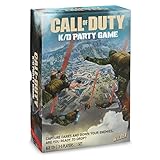
- BRING YOUR Call of Duty SKILLS TO GAME NIGHT! Like the best-selling Call of Duty video game, Call of Duty K/D Party Game is the ultimate battle of strategy. Use Loadout cards to down enemy operators, deflect dares to other players, and more!
- ARE YOU READY TO DROP? Down your enemies and make them perform hilarious dares! Capture dare tiles and assign them to opponents to collect K/D tokens. The player with the highest K/D token count wins. Sounds easy? Think again.
- DARE ZONE! Move your operator pawns around the map to capture dares before other players. From push up challenges, party rules, and blank dare tiles for you to fill in yourself, this board game will have your squad laughing all night long.
- COD GAMERS UNITE! Gather 3-5 friends and get ready to drop in. The Call of Duty: K/D Party Game is fun for any occasion – game night, parties, or just hanging out with friends.
- WHAT’S INCLUDED. 1 K/D Party Game board, 100 Loadout cards, 45 K/D tokens, 32 dare tiles, 15 pawns, 3 dice, 1 dry erase marker, and instruction manual. For ages 17+.
Map knowledge and intended risk
An experienced squad can turn an ordinary spawn into a strong opening by knowing rotations, hiding places, extraction routes, and the locations of mission targets. A cautious team may value separation and cover, while an aggressive team may prefer a route that reaches other players quickly. The “best” location therefore changes with the plan.
How to judge a spawn without an official ranking
Because no official source reviewed here supplies a universal ranking, use a repeatable decision process rather than relying on a tier list.
Outdated Drivers Are Slowing You Down
One free scan finds every outdated or missing driver and matches the right update for your exact hardware.Free scan · exact hardware matchWindows Errors? Fix Them Before They Spread
Repair common Windows errors and clear accumulated junk for a smoother, more stable PC - no reinstall needed.Free scan · no reinstall- Read the mission first. Identify the exact area, item, contract, or extraction requirement that matters for this deployment.
- Measure the opening route. Compare walking distance, vehicle access, elevation changes, and stretches without cover.
- Check the first resource point. Note the closest reliable loot buildings, contract, and Buy Station shown on the current map.
- Estimate contact risk. Look for neighboring spawn areas and the shortest routes another squad could take toward you.
- Match the route to your squad. A team carrying valuable contraband may choose cover and separation; a geared team pursuing a PvP mission may accept a contested approach.
- Reassess after the first engagement. Once the initial route is complete, the original spawn matters less than information about nearby squads, the next objective, and the available exfiltration options.
This method explains why players can report different “best spawns” without either side having a definitive official answer. They may be optimizing for different objectives, risk levels, or maps.
What “pay to win” means in the DMZ context
“Pay to win” is an evaluative label, not an official classification. A useful test is whether a paid purchase supplies repeatable gameplay utility at deployment, rather than changing appearance only. Under that test, extra Active Duty capacity and certain equipment effects can reasonably be described as paid starting advantages. They still do not prove that a buyer will win a fight or successfully extract.
The distinction matters because DMZ combined persistent progression with one-life deployment risk. A player who could keep more ready operators, each with stored equipment, had more options after a failed run. A player whose operator entered with information, revival, or radar-concealment benefits could also begin a fight from a stronger position. Those are advantages at the start of a match, not guaranteed outcomes.
Rank #3

- Bakker & Elkhuizen
- Mouse
- Colour: Black
- Package Dimensions: 14.8 L x 9.2 H x 10.2 W (cm)
- Model number: BNEEVR4S
Active Duty Operator slots: the documented paid advantage
Season 03 baseline
The Season 03 patch notes stated: “Only one Active Duty slot can be equipped at a time, but all Players will start with 3 slots.” Each slot represented a separate operator that could be prepared for deployment. Some Store bundles included additional Active Duty slots, so a purchase could expand the number of operators a player kept available.
Why multiple slots mattered
Each Active Duty Operator held its own persistent loadout. The documented items included a backpack, plate carrier, killstreak, gas mask, and self-revive. If one operator was lost, another slot could preserve a different set of equipment and reduce the practical disruption of a failed deployment. The benefit was flexibility and recovery capacity across runs, not extra operators fighting simultaneously; only one slot could be equipped at a time.
Later slot-cap changes
Season 06 notes documented a subsequent increase to the possible maximum number of Active Duty slots. The reviewed material does not establish a single current cap for every version or bundle, so it should not be converted into a universal number. The important historical point is that the capacity could be expanded beyond the Season 03 baseline through later changes and, for some slots, Store purchases.
Which persistent gear effects had gameplay value?
The Season 03 overview described persistent operator equipment and specified functions for several vests. These effects were materially different from cosmetic skins.
| Equipment | Documented effect | Type of advantage |
|---|---|---|
| Comms Vest | Improved UAV information and added an enemy-proximity cue | Information and threat awareness |
| Medic Vest | Sped up revives | Team support and recovery |
| Stealth Vest | Concealed the wearer from enemy radar | Detection avoidance |
These effects could change how a squad gathered information, rescued a teammate, or approached a fight. They did not remove the need to aim, position, communicate, or extract successfully. The documentation also lists backpacks, plate carriers, killstreaks, gas masks, and self-revives as persistent gear, but the cited overview does not assign every listed item a single universal advantage beyond its normal in-game function.
Quick wins for a faster PC:
Repair Windows errors before they cause bigger problemsFix Now →Fix the driver behind crashes, sound loss and screen glitchesFind Drivers →Rank #4

- Call of Duty: Modern Warfare II - Xbox One/ Xbox Series X
Did paid bundles give players a free UAV?
Not as a universal rule established by the reviewed notes. The Comms Vest improved UAV information and supplied an enemy-proximity cue, but that description is not the same as a promise that every paid bundle granted a free UAV killstreak. Store bundles were not documented as identical, and the evidence does not support claiming that every purchase supplied the same vest or equipment.
The accurate conclusion is narrower: some paid access could place an operator into a deployment with useful information or support gear, depending on the bundle and the operator’s stored equipment. That is a functional starting benefit, not a guaranteed UAV, automatic detection of every enemy, or assured victory.
Could players earn meaningful advantages without paying?
Yes. Season 04 FOB notes described objectives that unlocked permanent DMZ upgrades through in-game progression. The listed upgrade categories included insured-weapon slots and cooldowns, stash capacity, a personal exfil, barter recipes, Buy Station discounts, and additional improvements.
This progression does not erase the paid-slot distinction: a player could still value extra ready operators or a bundle-specific vest. It does show that important long-term power and convenience were also available through play. The system was therefore mixed rather than a simple division in which every useful advantage required a purchase.
How the two advantage types interacted
Spawn position affected the opening minutes of one deployment. Active Duty capacity and persistent equipment affected how a player entered that deployment and what remained available after failure. A squad with a favorable route and a prepared operator could reach a mission area sooner; a squad with a poor route could still compensate through map knowledge, stealth, or a different objective.
Best Value
Likewise, an operator with a Stealth Vest could avoid radar exposure in situations where another operator could not, but concealment did not reveal enemy positions or prevent visual detection. A Medic Vest could shorten a revive, but the team still had to secure the area. These limits are why “paid starting advantage” is more precise than “pays and automatically wins.”
Practical ways to reduce spawn and loadout disadvantages
Choose an objective-first route
Do not cross the map simply because another player calls a spawn “best.” Select the shortest defensible path to the mission item or contract that determines the run’s success.
Use the first minutes for information
Listen for gunfire, watch likely approach lanes, and treat the opening as a scouting phase when your spawn is exposed. The value of a Comms Vest or similar information effect is highest when the squad acts on that information rather than ignoring it.
Free tools Windows power users keep installed
One-click scans. No signup required.
Preserve an alternate operator when possible
Multiple slots were useful because they separated one failed deployment from the next. Even without paid slots, careful extraction and FOB progression could improve recovery options over time.
Build around the squad’s weakness
If the team regularly loses players during revives, support-oriented equipment has practical value. If radar exposure causes repeated ambushes, concealment may fit the route. If the problem is lack of information, prioritize communication and reconnaissance instead of assuming a bundle will solve it.
Do not confuse equipment with a guaranteed outcome
Every documented advantage had a counter: cover and patience reduce information gaps, visual checks can reveal a concealed operator, and a faster revive still requires a safe enough moment to perform it. Treat paid gear as one variable in a larger fight.
What the official evidence does—and does not—prove
- It establishes that DMZ spawn points were adjusted in Season 02.
- It does not establish a permanent best spawn, a worst spawn, or a spawn-specific win-rate table.
- It establishes a Season 03 baseline of three Active Duty slots per player and additional slots in some Store bundles.
- It establishes persistent operator equipment and the documented Comms, Medic, and Stealth Vest effects.
- It establishes Season 04 FOB progression that unlocked permanent upgrades.
- It establishes a later Season 06 increase to the possible slot count, without establishing one universal cap for every version or bundle.
- It does not establish current availability, current prices, identical contents for all bundles, or a measured percentage increase in winning.
On that evidence, the fairest historical verdict is that DMZ had situational spawn advantages and documented paid gameplay advantages. Calling the system “pay to win” depends on how broadly a reader defines the term, but calling every purchase a guaranteed win would go beyond what the official mechanics show.
Quick Recap
Product prices and availability are accurate as of the date/time indicated and are subject to change. Any price and availability information displayed on Amazon at the time of purchase will apply.

